Which Jeep Wrangler Is the Best
As an Amazon Associate we earn from qualifying purchases.
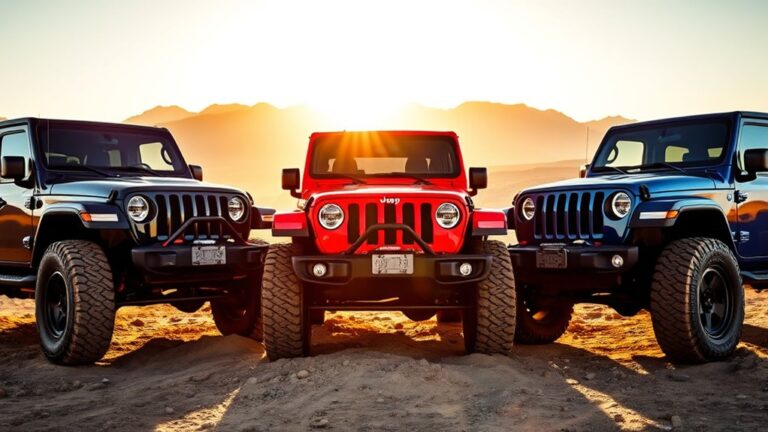
Choosing the best Jeep Wrangler depends on how you’ll actually use it. If you drive mostly on pavement, you’ll likely prefer a Sahara or Sport S for comfort and balance.
If you want trail-ready capability without going all-in, the Willys makes sense. For serious off-roading, the Rubicon brings the hardware that matters most.
The real question isn’t which badge looks best, but which setup fits your daily life—and that’s where the answer gets more interesting.
Key Takeaways
- The best Wrangler depends on your routine: daily driving, mixed use, or serious off-roading.
- JL is the best all-around choice for modern comfort, capability, and technology.
- JK is a strong value pick with better highway manners and more interior space than a TJ.
- TJ is best for drivers wanting a simpler, lighter, old-school Wrangler experience.
- For trims, choose Sahara or Sport S for daily use, Willys for mixed use, and Rubicon for serious trails.
Which Jeep Wrangler Is Best for You?
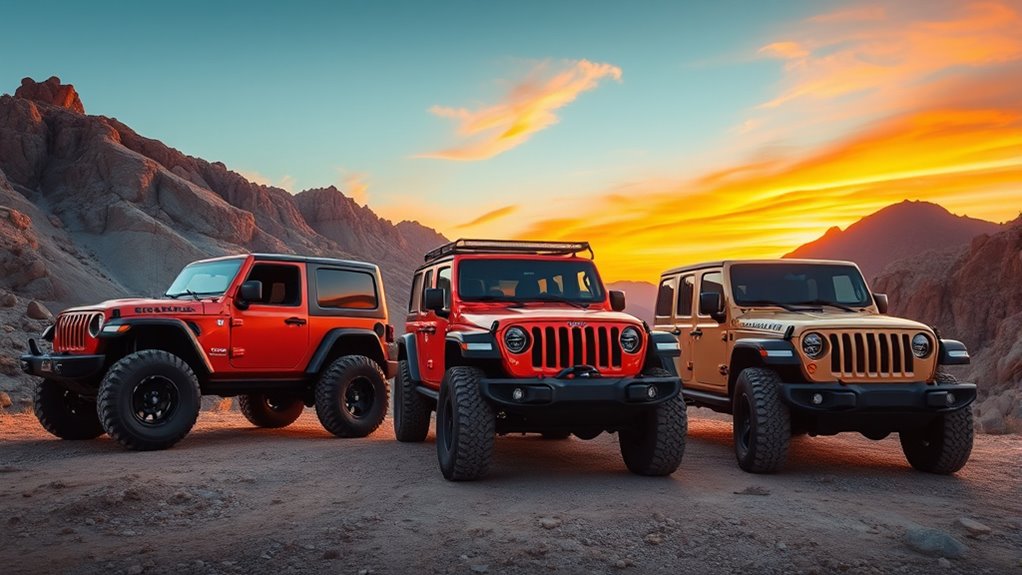
Which Jeep Wrangler is best for you depends on how you plan to use it, because each trim balances capability, comfort, and cost a little differently. If you want the best daily driver, focus on models with smoother ride tuning, easier controls, and more standard convenience features.
If you care more about off-road performance, you’ll want stronger axles, better traction tech, and equipment that handles rough terrain. You should also weigh value tradeoffs carefully: lower-priced trims can save money up front, but higher trims may bundle features you’d otherwise add later.
For most buyers, the best choice is the one that matches your commute, weekend use, and budget without paying for capability you won’t use. Consider fuel economy, towing needs, and maintenance costs too.
JL vs. JK vs. TJ: Which Wrangler Is Best?
When you compare the JL, JK, and TJ, you’ll see that the JL brings the most modern capability, with stronger tech, better ride quality, and improved efficiency. The JK gives you a solid middle ground with updated comfort and off-road performance, while the TJ stays appealing for its simpler design and classic trail feel.
Your best choice depends on whether you value modern features, everyday usability, or a more traditional Wrangler experience.
JL Modern Capability
The JL is the most capable all-around Wrangler if you want the best mix of trail performance, daily drivability, and modern features. You get stronger Jeep JL capability through improved suspension tuning, refined steering, and more available tech than earlier models.
Across Wrangler trims, you can choose the setup that fits your use case without giving up core off-road ability.
| Feature | JL Benefit | Why It Matters |
|---|---|---|
| Axles | Updated strength | Better trail confidence |
| Steering | More precise | Easier on-road control |
| Infotainment | Current interfaces | Daily convenience |
| Safety tech | More available | Added road support |
If you drive every day and still hit difficult trails, the JL gives you the broadest skill set.
JK Vs. TJ Differences
If you’re comparing the JL with the JK and TJ, the biggest difference is how each Wrangler balances capability, comfort, and age. With jk vs tj, you’ll notice the JK feels larger, quieter, and easier to live with, while the TJ stays lighter, simpler, and more mechanical.
The JK adds stronger safety features, more interior space, and better highway manners, but it also carries more weight and a less connected feel off-road. The TJ gives you classic Jeep steering, compact dimensions, and easier trail maneuvering, though it lacks the refinement you get in newer models.
When you review the differences jk tj, think about your priorities: daily driving favors the JK, while purists often prefer the TJ’s old-school character and leaner design.
Best Jeep Wrangler Trims for Off-Roading
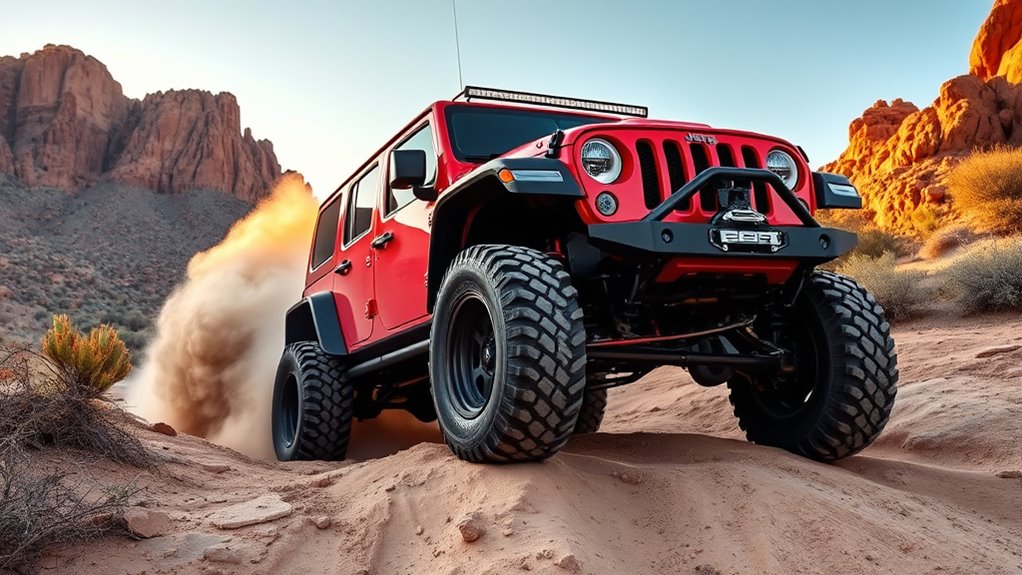
If you want the strongest off-road setup, the Rubicon gives you the most advanced hardware, including locking differentials and aggressive trail-focused capability.
The Willys trim offers solid trail performance with useful upgrades that handle rough terrain well without reaching Rubicon pricing.
If you need a Wrangler that still works well on pavement, the Sahara keeps a better on-road balance while remaining capable on light off-road routes.
Rubicon Off-Road Capability
When you want a Wrangler that’s built to tackle serious terrain, the Rubicon stands out as the off-road benchmark in the lineup. You get front and rear locking differentials, an electronic disconnecting sway bar, and aggressive tires that help you keep traction on rocks, ruts, and loose climbs.
Its suspension tuning favors articulation, while the universal wheelbase balances maneuverability with stability on narrow trails. You also benefit from solid payload capacity for gear without compromising control.
Jeep doesn’t prioritize aerodynamic efficiency here; it prioritizes approach, breakover, and departure angles, so you can clear obstacles more confidently. If you want a Wrangler that maximizes technical off-road ability, the Rubicon gives you the hardware and calibration to handle demanding terrain with less guesswork.
Willys Trail Performance
The Willys trim delivers a strong off-road package for drivers who want trail-ready capability without stepping up to the Rubicon. You get the Willys trail setup, including an off road suspension, aggressive all-terrain tires, locking rear differential, and rock rails on many builds.
That combination helps you maintain traction on rutted paths, mud, and loose gravel while keeping the Wrangler’s core 4×4 hardware intact.
| Feature | Benefit |
|---|---|
| All-terrain tires | Better grip on dirt and stone |
| Off road suspension | Improved articulation and control |
| Rear locker | Stronger traction in uneven terrain |
| Rock rails | Added underbody protection |
If you want a practical trail-focused trim, the Willys gives you real off-road value without extra complexity or cost.
Sahara On-Road Balance
For drivers who split time between pavement and trails, the Sahara strikes a useful balance. You get a Wrangler tuned more for composed commuting than for extreme crawling, which makes its Sahara on-road balance easy to appreciate.
The suspension softens broken pavement, the steering feels calmer than lower trims, and the cabin insulation helps reduce noise at highway speeds. You still keep genuine off-road hardware, including available four-wheel drive and respectable ground clearance, so you aren’t giving up trail capability.
If you value daily driving comfort, the Sahara fits well because it handles errands, long trips, and moderate dirt roads without demanding constant compromise. It’s not the most specialized Wrangler, but it’s one of the most versatile choices.
Best Jeep Wrangler for Daily Driving
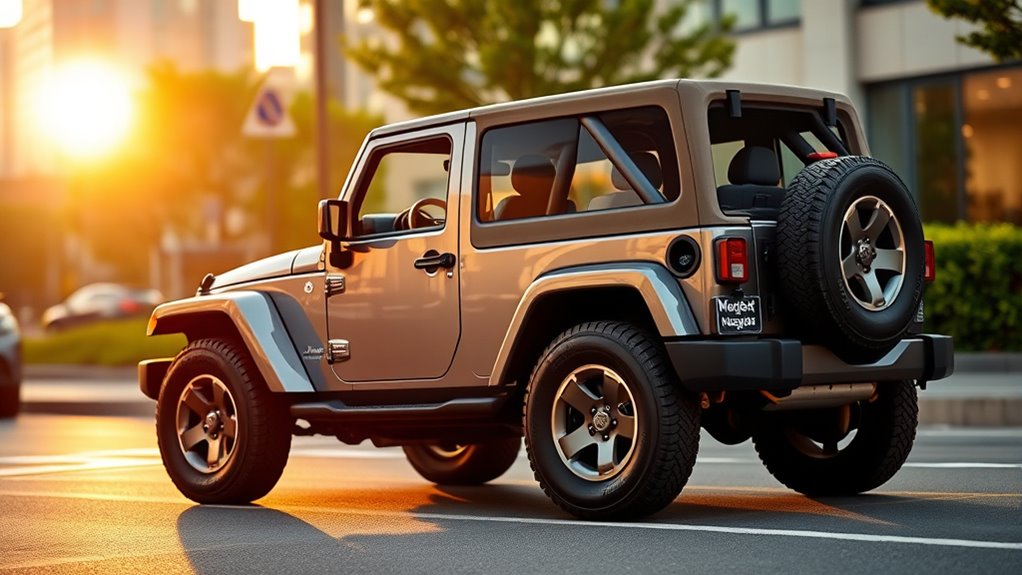
If you want a Wrangler that feels least like a compromise in everyday use, the four-door Jeep Wrangler Unlimited with the 3.6L V6 or the available 2.0L turbo is usually the best place to start. For daily driving, its longer wheelbase improves on-road comfort and makes highway tracking steadier than the two-door.
You still keep real off-road capability, so you don’t give up the Wrangler character.
| Trait | Best pick |
|---|---|
| Daily driving | Unlimited |
| On road comfort | 4-door |
| Fuel efficiency | 2.0L turbo |
The turbo can help with fuel efficiency, while the V6 feels familiar and smooth. Choose the suspension and tire setup carefully, because they affect ride quality more than trim badges do.
Best Jeep Wrangler Value for the Money
When you want the most Jeep Wrangler for your money, the sweet spot is usually a well-equipped Sport or Willys trim, because they give you the core Wrangler capability without the cost of the luxury-focused options. You get solid 4×4 hardware, removable doors, and open-air freedom while avoiding pricier leather, large screens, and extra driver aids that can push the price up fast.
If you want the best value, compare packages carefully, because some option bundles add useful gear without creating big cost tradeoffs. The Sport works well if you plan to build gradually, while the Willys often delivers stronger off-road equipment upfront. Either way, you’re paying for the Wrangler essentials, not extras you may never use.
Best Wrangler for Your Driving Style
The best Wrangler for your driving style depends on how you’ll use it day to day, not just how much capability you want on paper. If you spend most of your time commuting, you’ll appreciate lighter steering, a quieter hardtop, and turbocharged options that deliver stronger low-end torque without constant revving.
If you wheel on weekends, prioritize Rubicon hardware and locking differentials. Wrangler’s body-on-frame layout is built for durability; the unibody vs ladderframe debate matters less here than choosing the right suspension, axle, and tire package.
| Driving style | Best fit |
|---|---|
| Daily commuting | Sahara or Sport S |
| Mixed city/trail use | Willys |
| Serious off-road use | Rubicon |
You should match trim, gearing, and roof choice to your routine, not chase the most extreme badge.
Frequently Asked Questions
What Jeep Wrangler Years Are Most Reliable?
You’ll usually find reliability by year strongest in 2007-2011 and 2012-2018 Wranglers, especially with maintained 3.6L engines.
For engine longevity comparison, avoid neglected early 2007 models and check service history carefully.
Which Wrangler Engine Lasts the Longest?
Jeep’s 3.6L Pentastar usually lasts longest; it balances engine durability and proven reliability testing. Don’t you want fewer repairs?
You’ll often see 200,000-plus miles with regular oil changes, cooling-system care, and sensible driving.
Are Jeep Wrangler Soft Tops Worth It?
Yes, you’ll likely find a soft top worth it if you want quick open-air freedom, easier removal, and lower weight. Consider soft top pros against hard top cons like noise, security, and insulation tradeoffs.
How Much Does a Jeep Wrangler Cost to Insure?
You’ll usually pay about $1,500 to $2,500 yearly, depending on trim, location, and driving record.
You can lower costs with inexpensive insurance, rare repairs, strong off road usefulness, and balanced performance vs comfort.
Can a Jeep Wrangler Tow a Camper?
Yes, you can tow a camper with a Jeep Wrangler if you stay within its tow rating and use a proper tow hitch. Check your model’s limits, vehicle weight, and camping safety before you hook up.
Conclusion
You won’t find one Wrangler that’s best for everyone. If you drive mostly on pavement, the Sahara or Sport S gives you a comfortable, capable balance. If you want tougher trail use without Rubicon pricing, the Willys is a smart choice.
If you’re chasing serious off-road performance, the Rubicon earns its keep. Match the trim to your real needs, not the latest badge hype, and you’ll avoid a first-rate mistake.
Choosing the best Jeep Wrangler means considering your actual driving needs and terrain. That way, you get the right fit without overspending or underperforming.