What Transmission Is in a Jeep Cherokee Xj
As an Amazon Associate we earn from qualifying purchases.
If you’re trying to figure out what transmission is in your Jeep Cherokee XJ, you need to match the gearbox to the engine, year, and drivetrain first.
The XJ could use the AW4 automatic, the AX-15 or AX-5 manual, or earlier Chrysler and Peugeot units, depending on configuration.
The right ID isn’t always obvious from the shifter alone, and one quick check can save you from the wrong parts, so the details matter.
Understanding these details will help ensure you get the correct transmission for your Jeep Cherokee XJ.
Key Takeaways
- The most common XJ automatic transmission is the AW4, known for durability and smooth shifting.
- Many 4.0L Cherokee XJs came with an AW4 automatic or an AX-15 manual.
- 2.5L XJ models usually used an AX-5 or early BA-10/5 manual transmission.
- Earlier XJs may have a Chrysler 30RH three-speed automatic in some configurations.
- Check VIN, door-jamb tags, and transmission casting numbers to confirm the exact transmission.
What Transmission Does a Jeep Cherokee XJ Have?
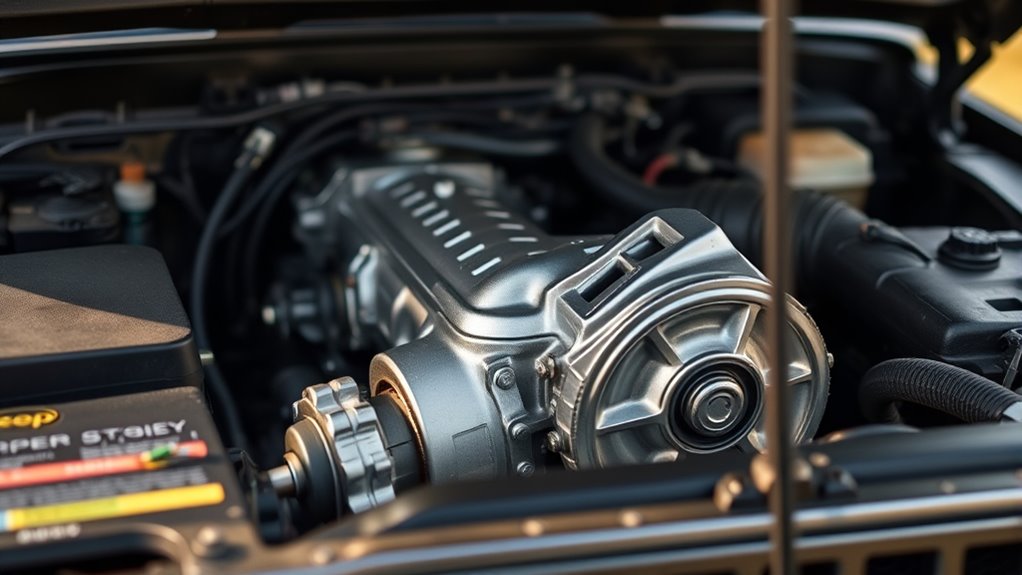
The Jeep Cherokee XJ came with a few different transmissions, depending on the year, engine, and drivetrain. You’ll usually see a 4-speed automatic, a 3-speed automatic, or a 5-speed manual.
The 4.0L six often pairs with the Aisin-Warner 4-speed automatic or the Peugeot AX15 manual, while 2.5L models may use other units.
The 4.0L six often pairs with the Aisin-Warner 4-speed automatic or Peugeot AX15 manual.
Your transmission affects acceleration, fuel efficiency, and towing capacity, so match it to how you drive. Automatics give smoother low-speed use and easier towing, while manuals can feel more direct and may return better fuel efficiency.
Gear ratios, transfer case type, and drivetrain also influence performance. If you want the right setup, verify the factory drivetrain specification before making changes.
How to Identify Your XJ Transmission
To identify your XJ transmission, start with the VIN, the door-jamb axle and build tags, and the transmission pan or case casting numbers. Cross-check the VIN against factory records, then read the tag data to confirm drivetrain codes.
On the transmission itself, look for stamped numbers, ID plates, and pan shape; these details quickly separate an AW4 from an AX-15 or Peugeot unit. If you’re under the Jeep, note connector count, shift linkage, and transfer case adapter style, because those affect transmission compatibility.
Match the codes before buying parts, ordering a rebuild kit, or planning manual to automatic swaps. If the tags are missing, clean the case and use casting marks plus application charts to verify the unit before you make any drivetrain changes.
XJ Manual Transmission Options
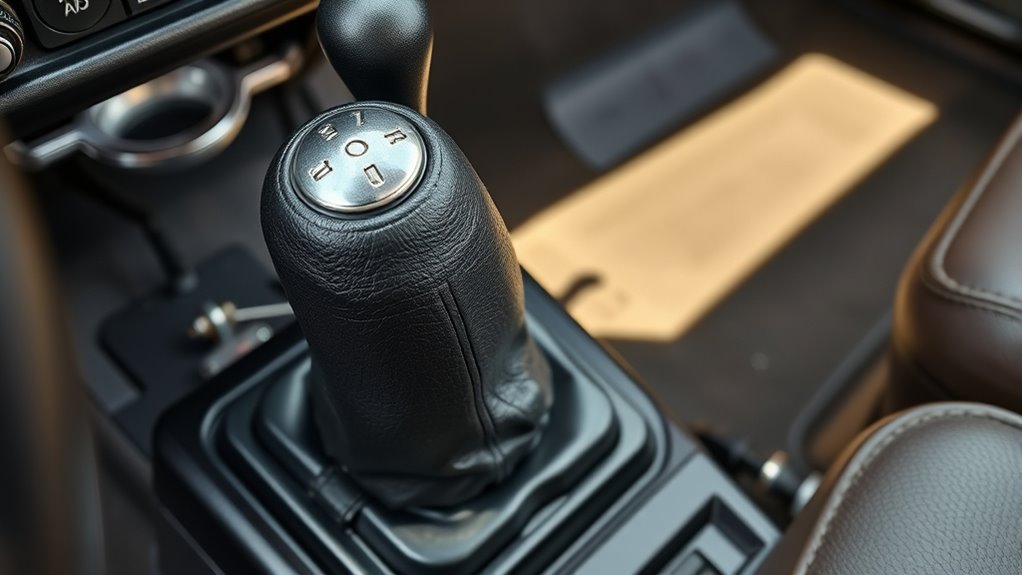
Your XJ’s factory manual gearboxes typically include the AX-15 or AX-5, depending on engine and model year. You’ll want to match the transmission’s input shaft, bellhousing, and gearing to your drivetrain before you swap anything.
Popular swap choices usually focus on stronger five-speeds that fit your power level and trail use.
Factory Manual Gearboxes
Under the hood, the Cherokee XJ’s factory manual gearboxes give you a simple, durable driveline with better control than the automatic options. You’ll usually find a Peugeot BA-10/5 in early trucks or an AX-15 in later models, both paired to the 4.0L six.
The AX-15 shifts cleaner, handles torque better, and uses stronger internal parts. You control clutch engagement, gear spacing, and engine braking, which helps on trails and in traffic.
Inside the interior cabin, the shifter sits close and the pedals are spaced for direct input, so driver fatigue stays manageable. These transmissions also reduce heat and complexity, supporting long service life and preserving paint durability by avoiding fluid leaks around the drivetrain.
Check clutch wear, linkage play, and case sealing regularly.
Popular Swap Choices
If you’re swapping a manual into a Jeep Cherokee XJ, the most common choices are the AX-15, NV3550, and AX-5, depending on engine and intended use. The AX-15 suits the 4.0L best, with strong torque handling and good highway gear ratios.
The NV3550 shifts cleaner and offers a deeper first gear for trail work. The AX-5 fits 2.5L rigs, but it won’t tolerate hard use. Match your bellhousing, clutch, and transfer case input spline before you buy. Check transmission cooling only if you tow or wheel slowly in heat.
- AX-15: durable, 4.0L friendly
- NV3550: better low-speed control
- AX-5: light-duty, 2.5L only
- Verify crossmember and linkage fit
XJ Automatic Transmission Options
The Jeep Cherokee XJ came with a few automatic transmission choices, and the most common is the Aisin-Warner AW4, a four-speed unit known for durability and smooth shifting. You’ll also see the Chrysler 30RH in earlier models, but the AW4 dominates most XJs on the road.
If you’re sorting transmission myths, don’t assume every automatic is weak; the AW4 handles mileage and trail use well when maintained. Pay attention to gear ratios, because the four speeds give you a useful overdrive for cruising and better control off-road.
Check fluid color, shift quality, and case leaks before you buy. The torque converter lockup helps reduce heat and improve highway efficiency, so keeping the transmission serviced matters.
Which Engines Matched Which Transmissions?
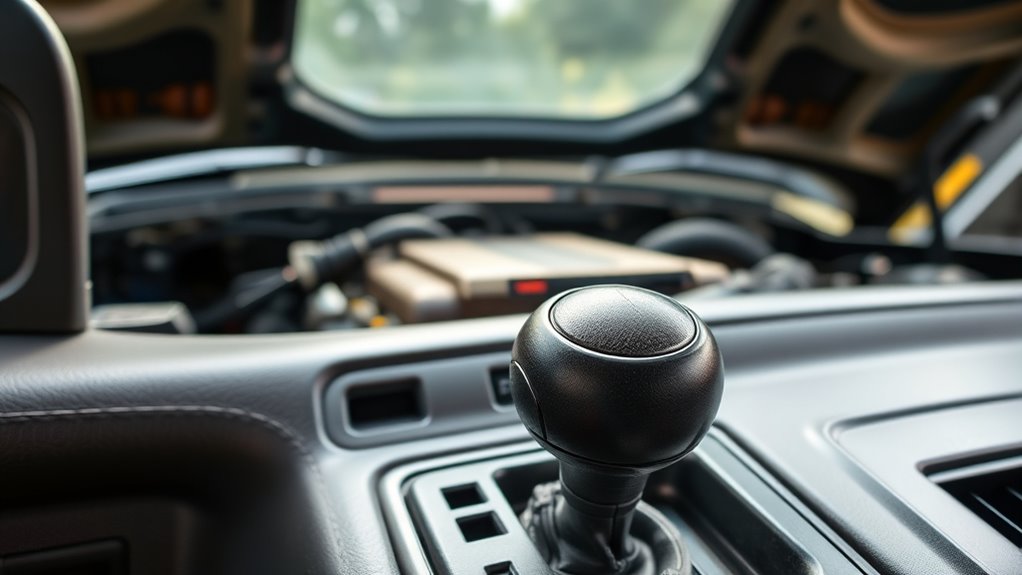
Engine choice in the XJ usually dictated the transmission, so you need to match them before you shop or swap parts. The 4.0L inline-six commonly paired with the AW4 automatic or the AX15 manual, and that’s your main reference point.
The 2.5L four-cylinder usually used the Peugeot BA10/5 early on, then the AX5 in many setups. The 4.0L gives you the widest swap compatibility because Jeep built more drivetrain support around it.
Don’t trust transmission myths that say any XJ gearbox bolts to any engine without checks.
- 4.0L: AW4, AX15
- 2.5L: BA10/5, AX5
- Check bellhousing pattern first
- Verify clutch, shifter, and output spline fit
How XJ Transmissions Changed by Year
When you compare XJ model years, you’ll see the earliest rigs used a simpler set of automatic and manual transmission choices matched to the 4.0L and other early engines. As Jeep updated the Cherokee XJ, it changed gear ratios, control hardware, and transmission availability to improve drivability and durability.
Early XJ Transmission Options
Early XJ transmission options changed several times over the Cherokee’s run, so you need to match the unit to the model year before ordering parts or planning a swap. Early 1984-1986 rigs often used manual gearboxes, while some trims got the three-speed automatic. You should verify bellhousing pattern, transfer case output, and shifter style before buying parts.
- Check the VIN tag and build date.
- Match input shaft length and spline count.
- Confirm drivetrain gear ratios.
- Consider aftermarket torque needs if you tow or run lift kits.
For early swap work, you’ll save time by identifying the exact transmission code first. That step helps you avoid incompatible linkage, mounts, and driveshaft lengths.
Later XJ Transmission Updates
As the XJ aged, Jeep updated transmission choices, electronic controls, and transfer case setups, so the exact year matters just as much as the trim. In later models, you’ll see the 4.0L paired with the AW4 automatic or the AX15 manual, but wiring, sensors, and output shafts changed enough to affect swap planning.
By 1991, Chrysler revised electronics; by 1994, the 231 transfer case often gained a better slip-yoke setup. If you’re shopping parts, check bellhousing pattern, input spline count, and 2WD or 4WD configuration before you buy.
These two word discussion ideas help frame the search: year changes, and transmission compatibility. Late XJs can share parts, but you still need to match the exact build date, not just the model year.
What Each XJ Transmission Feels Like
What does each XJ transmission feel like on the road? The AX-15 gives you a direct, mechanical shift and keeps engine speed in the useful range with close gear ratios.
The AW4 feels smoother and more automatic, with clean upshifts that suit commuting and mild trail use. The NP/NV3550 adds a firmer, more modern manual action, and its wider spread helps you manage low-speed crawling and highway cruising.
The 42RE feels relaxed, with soft shifts and simple throttle response, but it relies more on proper transmission cooling when you tow or climb.
- AX-15: crisp, connected
- AW4: smooth, predictable
- NV3550: firm, controlled
- 42RE: soft, easygoing
Common Jeep Cherokee XJ Transmission Problems
If your Jeep Cherokee XJ starts slipping gears, delaying shifts, or leaking fluid, you’re likely seeing early transmission trouble. You should check the fluid level and condition first, since low or dirty ATF can cause harsh or delayed operation.
If the symptoms keep coming back, you’ll need to inspect the linkage, seals, and internal wear points.
Slipping Gears
Slipping gears usually points to low or contaminated transmission fluid, worn clutches, or internal hydraulic pressure loss in your Jeep Cherokee XJ. You may feel engine flare, weak acceleration, or a brief loss of drive as the transmission hunts for load.
Check fluid level, color, and smell first; burnt fluid means heat damage. Use these maintenance tips to reduce slipping gears and catch wear early.
- Verify ATF at operating temperature
- Look for leaks at seals and pan
- Replace the filter and fluid on schedule
- Scan for codes after a road test
If slipping continues, inspect the throttle linkage, governor components, and solenoids if equipped. Don’t tow hard or keep driving, because extra heat can quickly damage clutches and bands.
Delayed Shifting
Delayed shifting in a Jeep Cherokee XJ usually means the transmission is taking too long to engage a gear after you move the selector or press the throttle. You may notice a pause before first gear, or a slow upshift during acceleration.
That delay often points to throttle linkage issues, a weak vacuum signal on older units, a worn governor, or poor shift timing in the valve body. Don’t assume every lag supports transmission myths about automatic failure; the problem can be calibration, sensor input, or low line pressure.
Check fluid condition, verify throttle position input, and scan for fault codes if your XJ uses electronic controls. If the delay gets worse when hot, you need prompt diagnosis before hard parts wear.
Fluid Leaks
Fluid leaks are one of the most common Jeep Cherokee XJ transmission problems, and they usually show up as red or brown spots under the vehicle, wet case seams, or a dropping fluid level. You should inspect the pan gasket, input and output seals, cooler lines, and dipstick tube for damage or loose fittings. These transmission quirks often start small but can quickly lead to low pressure, slipping, and heat buildup.
Check ATF level with the engine warm. Clean the case to trace the leak source. Replace hardened seals and cracked hoses. Use correct fluid leak remedies and torque specs.
If you ignore stains, you risk bigger repairs. Top off fluid only after you find the source, then road-test and recheck for seepage.
Jeep Cherokee XJ Transmission Fluid and Maintenance
Keeping the right transmission fluid in your Jeep Cherokee XJ matters because it directly affects shift quality, operating temperature, and long-term durability. You should verify engine compatibility before you choose ATF, because the 4.0L and 2.5L setups rely on specified fluids and fill levels.
Check the dipstick with the engine warm, idling, and in park, then correct any low level immediately. Inspect the pan gasket, cooler lines, and rear seal for seepage during each service.
Replace the filter and pan gasket at regular intervals, and clean the magnet to remove wear debris. If you run an aftermarket clutch in a manual XJ, use the exact gear oil grade the transmission requires.
Fresh fluid helps you preserve hydraulic pressure, reduce heat, and extend component life.
Best XJ Transmission Swap Options
If you’re planning an XJ transmission swap, the best option depends on your engine, axle gears, and how you use the Jeep. The AW4 is the safest swap if you want OEM fit, strong reliability, and smooth shifting with the 4.0L.
If you need manual control and lower parasitic loss, the AX-15 gives you distinct torque feel and good trail control. For V8 conversions, a 700R4 or 4L60E can work, but you’ll need adapter parts and careful tuning.
- AW4: best all-around automatic
- AX-15: strongest factory manual choice
- 4L60E: good for swaps with electronics
- 700R4: simple overdrive option
Check driveshaft length, crossmember location, and transfer case compatibility before you buy parts. Do durability testing after install.
Frequently Asked Questions
Can I Tow a Trailer With an XJ Transmission?
Yes, you can tow a trailer with your XJ transmission if you stay within tow compatibility limits, use proper gearing, and verify trailer electricals.
You’ll also need a hitch, cooling, and brake control.
What Transmission Cooler Does a Jeep Cherokee XJ Need?
You need a quality auxiliary plate-style cooler with a thermostat, especially if you tow, off-road, or run big tires.
Choose for transmission clarity, choose for cooler options, choose for capacity; your XJ’s stock unit usually isn’t enough.
How Much Does an XJ Transmission Rebuild Cost?
You’ll usually pay $1,500 to $3,500 for an XJ transmission rebuild, depending on parts, labor, and condition. Transmission reliability improves if you replace wear items, flush cooler lines, and use quality fluid during reassembly.
Are XJ Transmission Parts Still Easy to Find?
Yes, you can still find XJ transmission parts, though sourcing varies. Why wouldn’t you spot gears on a dusty shelf? You’ll rely on parts sourcing, repair shop availability, finding gears, and oil additives for worn units.
Will Bigger Tires Affect My XJ Transmission?
Yes, bigger tires can stress your XJ transmission by reducing effective gearing. You’ll need beyond gear ratios, transmission cooling upgrades vs stock limits, and maybe improved shifting firmness to control heat, slipping, and premature wear.
Conclusion
Now that you know what transmission is in a Jeep Cherokee XJ, you can verify yours with confidence and avoid swap mistakes. One useful stat: the AW4 automatic is widely regarded as one of the most durable Jeep transmissions, often lasting well beyond 150,000 miles with proper maintenance.
If you’re matching parts, check the engine, bellhousing, input shaft, and cooling setup before you buy. That quick inspection can save you time, money, and a lot of frustration.
Understanding what transmission is in a Jeep Cherokee XJ is key to maintaining your vehicle’s performance and ensuring compatibility when replacing or upgrading parts.