Where to Jack up a Jeep Wrangler Jl
As an Amazon Associate we earn from qualifying purchases.
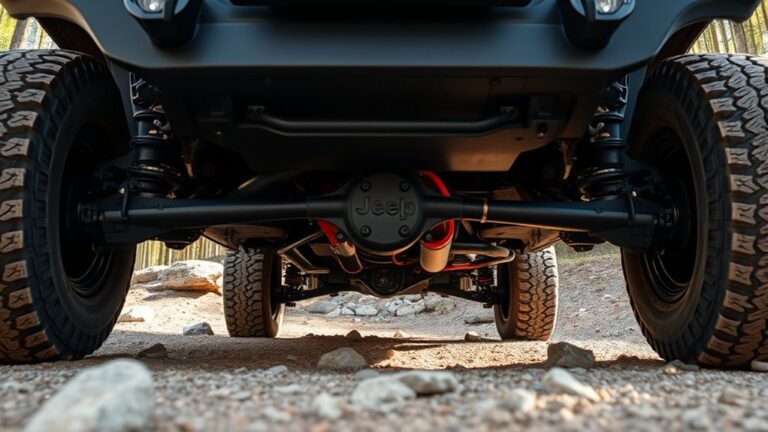
When you jack up a Jeep Wrangler JL, it’s essential to use the approved frame lift points. Avoid placing the jack on the sway bars or differential housings, as these are not designed to support the vehicle’s weight.
Set the jack on level ground and ensure the saddle is centered on a flat steel surface. Lift slowly with the jack head square to the pinch seam to maintain stability.
Once the Jeep is raised, position rated jack stands under solid frame rails for support. Keep in mind that the safest jack stand placement can vary depending on whether you are lifting the front or rear of the vehicle.
Key Takeaways
- Use manufacturer-approved frame jack points on the JL, centered on the flat steel surface for stable lifting.
- For the front axle, place the jack under the solid center section of the axle tube near the differential housing.
- For the rear axle, jack under the reinforced center section of the axle housing, not the differential cover.
- Avoid jacking on sway bars, skid plates, control arms, stamped sheet metal, or other unstable points.
- Lift on level ground, chock the wheels, and support the Jeep with rated jack stands before working underneath.
Jeep Wrangler JL Jacking Points
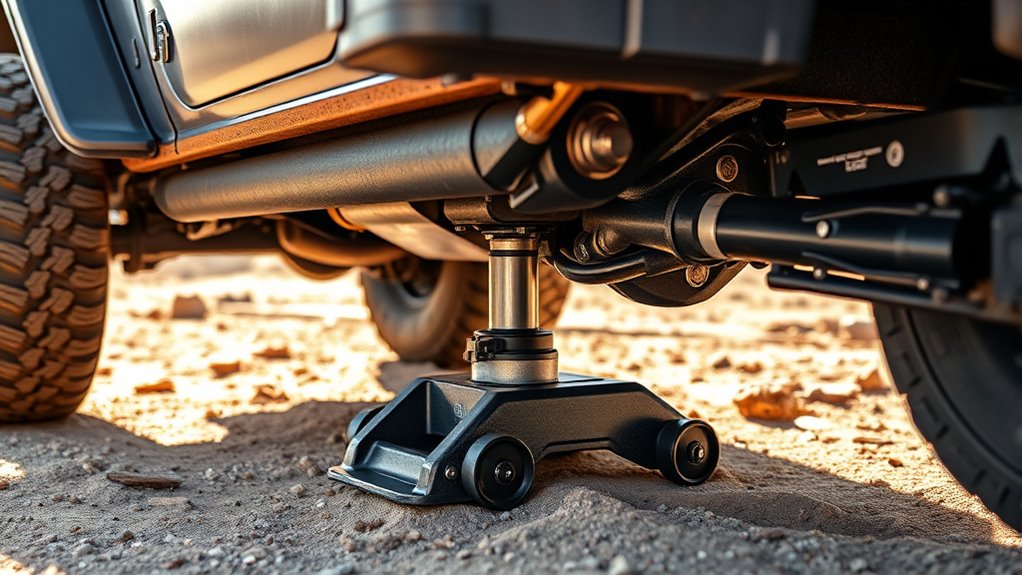
When you’re lifting a Jeep Wrangler JL, you need to place the jack only at the manufacturer-approved support points to avoid bending the frame, damaging the axles, or destabilizing the vehicle. You should verify the contact area before raising the vehicle, especially if you’re using aftermarket jacks with different saddle shapes or heights.
Position the jack squarely, lift slowly, and confirm stability before working underneath. For wheel service, keep the suspension loaded evenly so you don’t alter front end alignment components or create unnecessary stress on steering parts.
If you need access to one corner, support the Jeep with rated stands immediately after lifting. Never improvise with untested points, and always follow the owner’s manual for the exact jacking procedure and load limits.
Safe Frame Lift Points
For a safe frame lift on a Jeep Wrangler JL, place the jack on the reinforced frame rails at the factory-designated lift areas, just behind the front wheels or just ahead of the rear wheels, where the frame is designed to تحمل the load without deforming.
Place the jack on the reinforced frame rails at the factory lift points, just behind the front or ahead of the rear wheels.
You should center the saddle on the flat steel surface and confirm stable contact before raising the vehicle. Keep the jack vertical and lift slowly, watching for any shift in position.
After the Jeep is elevated, support it with appropriately rated jack stands under the frame rails, not the body. Before lowering, inspect the rail for damage or corrosion.
If you discuss tire pressure, do it after the lift, and if you explore wheel alignment, verify measurements only once the Jeep sits on level ground.
Safe Front Axle Lift Spots
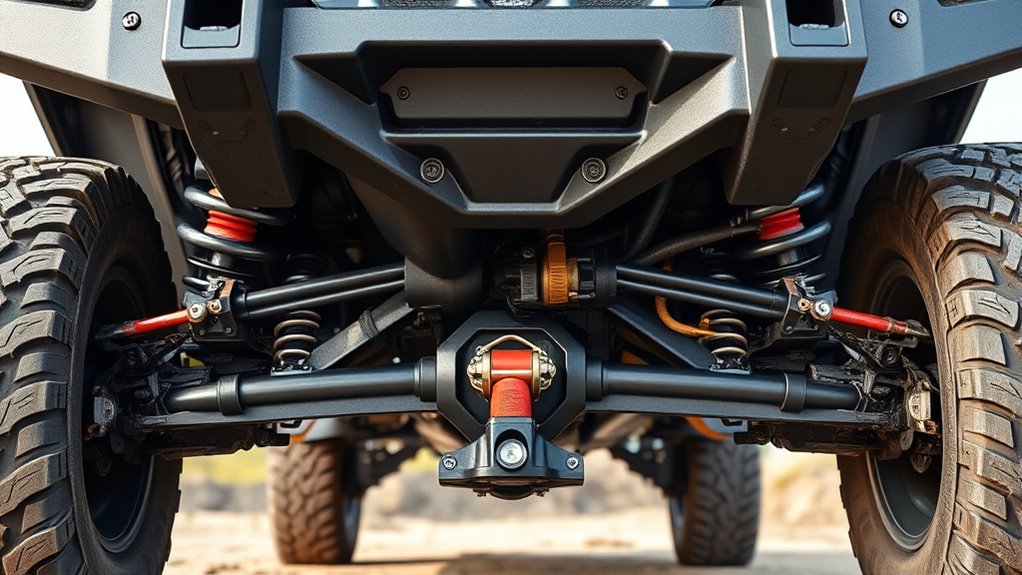
To lift the front of a Jeep Wrangler JL safely by the axle, position the jack under the solid center section of the front axle tube, close to the differential housing but not on the cover or drain plug. This location supports the vehicle evenly and protects the axle housing from distortion.
Keep the jack saddle centered so the load stays stable as the suspension compresses. Before you raise the Jeep, verify that the steering is straight and the parking brake is set.
Use level ground and chock the rear wheels to preserve jack stance. Raise the vehicle slowly, then place rated jack stands under the frame, not the axle, once you’ve reached the desired height. Never lift on brackets, hoses, or steering components.
Safe Rear Axle Lift Spots
When you lift the rear of your Jeep Wrangler JL, place the jack under the rear axle housing, where the structure can support the load evenly. Avoid positioning the jack on the differential cover, since it isn’t a safe lift point and can deform or slip.
Keep the jack centered and stable so you raise the axle without damaging components.
Rear Axle Housing
At the rear axle housing, place the jack under the flat, reinforced center section of the housing, not under the differential cover or the thin tube sections, to raise the Jeep safely and evenly. You’ll keep the load centered, protect the axle, and maintain stability during service.
Before lifting, verify the Jeep sits on level ground and chock the front wheels. Watch the front suspension for movement as the rear rises, and confirm the brake lines have slack so nothing stretches.
- Set the jack pad squarely on the housing.
- Raise slowly and stop if the Jeep shifts.
- Position stands under the axle tubes only after lifting.
Differential Cover Safety
Don’t place the jack under the differential cover, even if it seems centered, because that thin stamped cover isn’t designed to carry the Jeep’s weight and can bend, leak, or fail under load. For jack safety, position the floor jack under the rear axle housing or the axle tube, where the cast or welded structure can support the load.
Keep the saddle flat and stable so it doesn’t slip off the curved housing. If you need extra height, lift one side at a time and set the Jeep on rated jack stands before working underneath. Inspect the differential cover for dents, seepage, or loosened bolts after any accidental contact.
This approach protects the rear axle, preserves seal integrity, and keeps the lift controlled.
What to Avoid When Jacking Up a JL
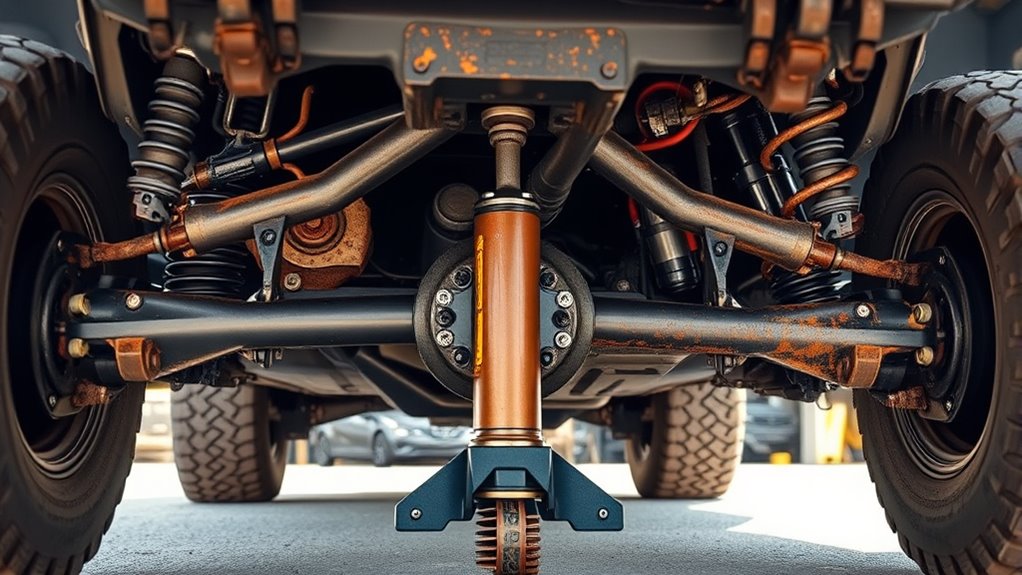
Avoid the factory sway bar, skid plates, differential housings, and control arms when positioning a jack under a Jeep Wrangler JL, since these components aren’t designed to carry the vehicle’s full weight. You should also avoid an unrelated topic or random discussion that distracts you from load points.
Inspect the frame rails and axle tubes instead, and confirm the surface is level before lifting.
- Don’t place the jack on stamped sheet metal.
- Don’t use bent, corroded, or unstable contact points.
- Don’t lift against steering or suspension links.
You need firm, centered contact and a controlled lift path. If the jack shifts, stop immediately and reassess.
Precision matters here, because incorrect placement can deform parts, destabilize the vehicle, and create a serious safety hazard.
How to Use a Floor Jack and Jack Stands
To lift a Jeep Wrangler JL safely, position a floor jack under the approved frame or axle lift point, raise the vehicle slowly, and keep the jack centered as the suspension unloads. Once the JL reaches the target height, slide jack stands under solid, load-bearing points and lower the vehicle until the weight rests fully on the stands.
Verify both stands share the load evenly and sit on level ground. Recheck stability before applying force anywhere on the chassis. If you’re lifting only one end, account for non-axle weights that can shift balance, including cargo and spare tire placement.
Use the floor jack only for lifting, not for support, and never exceed the rated capacity of the jack or stands.
Safe Tire Change Steps for a JL
Before you raise your JL, park it on level ground, set the parking brake, and loosen the lug nuts slightly while the tire is still bearing weight.
You should then position the jack at the designated jack point for that corner of the vehicle. Lift only until the tire clears the ground, then continue with the wheel removal.
Park on Level Ground
Where should you start a safe tire change on a Jeep Wrangler JL? Park on level ground before you touch the jack. A flat surface stabilizes the vehicle, reduces unwanted movement, and helps you judge the correct jack points with precision.
It also keeps the suspension settled, so wheel alignment stays neutral while you prepare the lift.
- Select pavement or compacted ground that won’t shift under load.
- Set the transmission in Park, or in gear for a manual.
- Verify the Jeep sits straight, with no slope front to rear or side to side.
If the surface is uneven, don’t proceed. A tilt changes load distribution and can compromise your setup before any lifting begins.
Loosen Lug Nuts
With the Jeep parked level and secured, loosen each lug nut slightly while the wheel is still on the ground. Use the correct socket and a breaker bar if needed, and turn counterclockwise just enough to break initial torque. Don’t remove the lug nuts yet; you only want to reduce resistance before lifting.
Work in a star pattern so the wheel unloads evenly, and keep your stance stable to avoid slipping. If a nut resists, apply steady pressure instead of jerking the tool.
This step prepares the wheel for safe removal after jack placement, but it doesn’t replace proper support or careful handling. Check that the socket seats fully on each lug nut to prevent rounding and maintain control throughout the process.
Lift Designated Jack Point
Now position the jack under the JL’s designated lift point and raise the vehicle slowly until the tire clears the ground. You should center the saddle on the frame-approved jack points, not the axle tubes, to keep the suspension stable during a wheel swap.
Keep the Jeep on level pavement and monitor for any shift as you lift. Once the tire is clear, confirm the vehicle sits securely before you continue.
- Check that the jack head stays square to the pinch seam.
- Raise only high enough to remove the wheel safely.
- Recheck stability before installing the spare.
If the Jeep moves, lower it and reset the jack. Use stands whenever you need extra working time.
Frequently Asked Questions
Can I Lift a Jeep Wrangler JL With a Bottle Jack?
Yes, you can, but only if you use proper lifting points and a stable bottle jack. Disclaimer: check your owner’s manual.
Safety concerns include instability, suspension travel, and jack pad slippage; use jack stands.
What Jack Capacity Is Best for a Jeep Wrangler JL?
You’ll want a 3-ton jack for your Jeep Wrangler JL; it gives adequate safety margin and control. For battery safety, keep two word discussion ideas like load rating and lift points in mind always.
Do I Need Wheel Chocks Before Lifting My JL?
Yes, before you lift, you should chock the wheels; they’re the anchors in your vehicle’s wheel stance. You’re doing safety planning, and that keeps the Jeep from rolling as you raise it.
How High Should I Raise the JL for Tire Removal?
Raise your JL until the tire just clears the ground, about 1 to 2 inches, for tires off and wheel removal. You’ll want enough suspension droop to remove it, but not so much that the Jeep shifts.
Can I Jack up a JL on Uneven Ground?
No you shouldn’t jack up a JL on uneven ground. You risk instability and collapse. Ignore irrelevant discussion and off topic ideas; use level, solid pavement, chock wheels, and support it with correctly rated jack stands.
Conclusion
Now you know where to jack up your Jeep Wrangler JL, but the critical part comes next: every lift point has to be true, flat, and load-bearing. Use the frame for support, the axle only where it’s approved, and never trust a sway bar or differential housing.
Lift slowly, verify stability, then set the Jeep on rated jack stands before you move underneath. One wrong placement can shift the whole vehicle—so double-check each contact point before you work.
Remember, knowing where to jack up a Jeep Wrangler JL is essential, but ensuring proper placement and safety measures is what keeps you secure during maintenance.