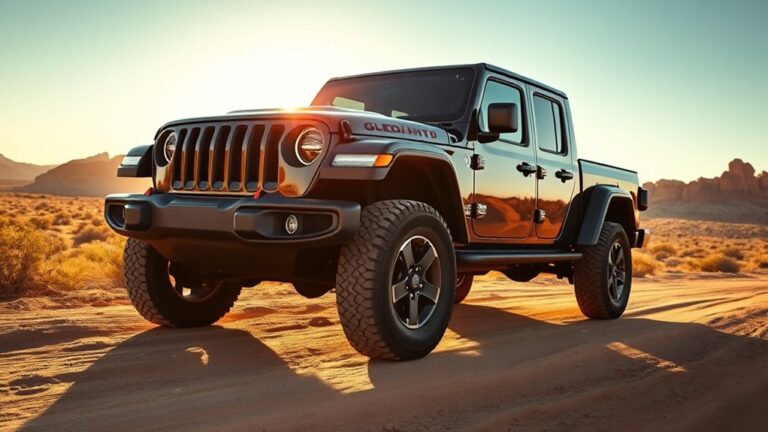
What Is the Jeep Wrangler Classified as
As an Amazon Associate we earn from qualifying purchases.
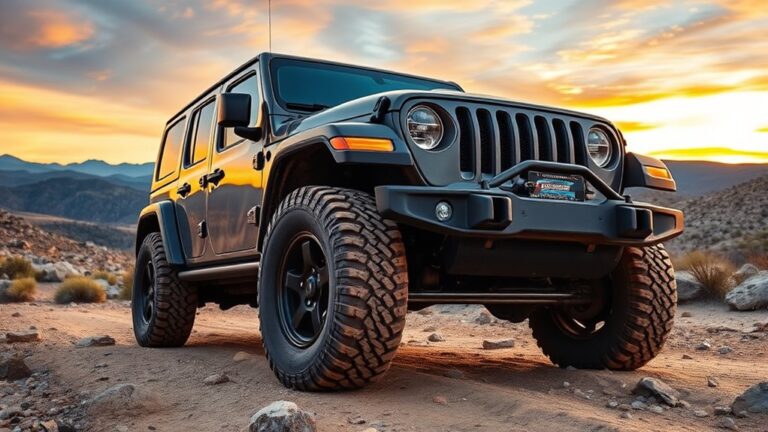
If you’re wondering what the Jeep Wrangler is classified as, the short answer is usually an SUV, not a car-based crossover. Its body-on-frame construction, high ground clearance, removable roof and doors, and off-road hardware set it apart.
But classification can shift depending on your state, registration rules, and even modifications like lift kits.
That’s where things get more complicated, and the details can affect insurance, paperwork, and how it’s labeled.
Key Takeaways
- Jeep Wrangler is generally classified as a compact SUV, specifically a body-on-frame off-road vehicle.
- It is grouped with rugged SUVs rather than car-based crossovers.
- Its high ground clearance, four-wheel drive, and off-road hardware support its SUV classification.
- Body style can affect classification, with two-door and four-door Wrangler models sometimes treated differently.
- State DMV rules and modifications can change how it is registered, titled, or insured.
What Is the Jeep Wrangler Classified as?
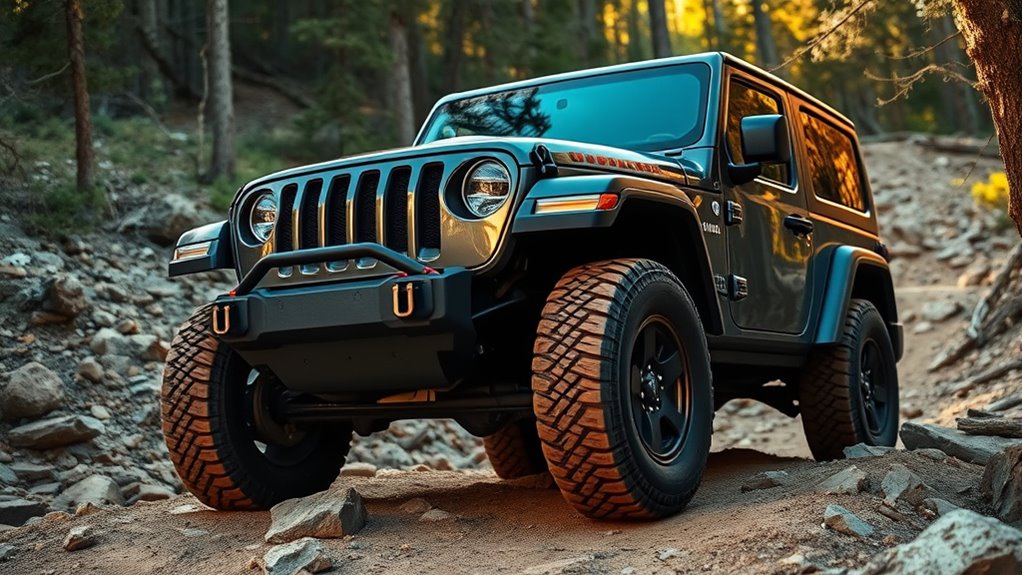
The Jeep Wrangler is classified as a compact SUV and, more specifically, a body-on-frame off-road vehicle. When you’re comparison shopping, you’ll see it grouped with rugged SUVs rather than car-based crossovers.
The Jeep Wrangler is a compact SUV, built as a body-on-frame off-road vehicle.
That classification reflects its trail-focused design, removable doors and roof, and available four-wheel drive. You can use it as a daily driver, but you should expect less fuel economy than many mainstream SUVs.
Jeep builds the Wrangler for capability first, so its size, ground clearance, and hardware set it apart from comfort-oriented models. If you want a vehicle that handles pavement and serious off-road conditions, the Wrangler fits that category clearly.
Its classification helps you judge whether its tradeoffs match your needs before you buy.
How the Wrangler’s Body-on-Frame Design Works
Unlike a car-based crossover, the Wrangler uses a body-on-frame setup, which means its body mounts onto a separate steel frame. You get a layout built for durability: the frame handles loads, while the body sits above it. That separation helps you understand why trail impacts don’t affect the shell the same way.
| Part | Role |
|---|---|
| Frame | Carries structural stress |
| Body | Houses passengers and cargo |
| Suspension | Connects wheels to frame |
| Mounts | Isolate vibration |
This design also keeps repair paths straightforward after hard use. For two-word discussion ideas, think frame strength and axle articulation. Classification myths often confuse this structure with a car platform, but it isn’t one. You’re looking at a truck-style foundation with clear mechanical purpose.
Why the Wrangler Is Considered an SUV
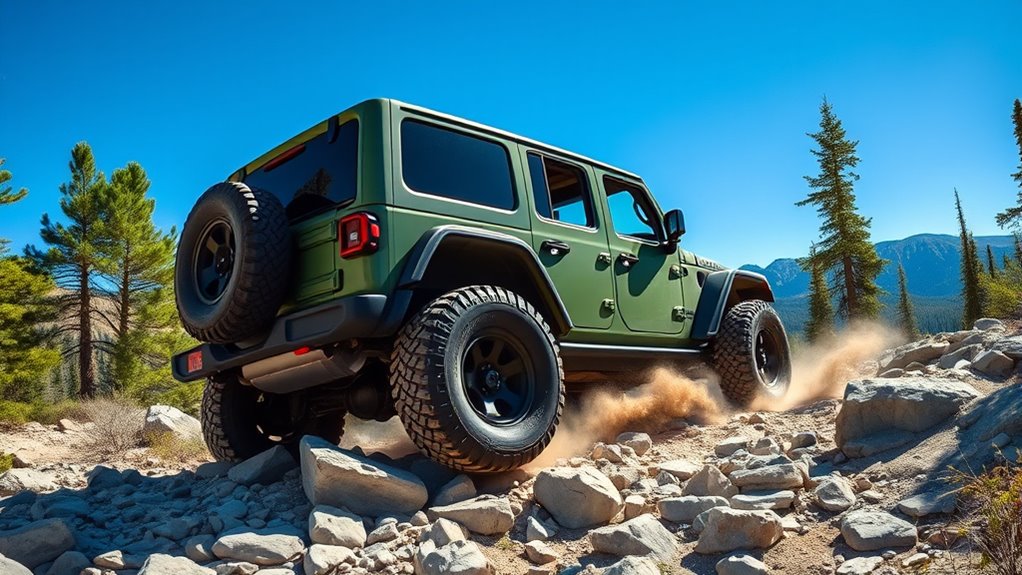
At its core, the Wrangler is classified as an SUV because it combines a high-riding passenger cabin, four-wheel drive capability, and off-road utility in a vehicle designed to carry people and gear. You get a practical mix of passenger space, cargo room, and elevated visibility that fits the SUV category.
It also meets expectations for daily transportation, so you can use it for commuting, errands, and travel without losing versatility. In disaster preparedness, that balance can matter when road conditions change quickly. In urban planning, vehicles like the Wrangler are often discussed as part of mixed-use transportation needs.
Its layout supports occupants and equipment, which keeps it aligned with what buyers and regulators usually define as a sport utility vehicle.
Wrangler Features That Support Off-Road Use
Beyond its SUV classification, the Wrangler stands out because its hardware is built for rough terrain. You get high ground clearance, solid axles, skid plates, and available four-wheel drive that help you navigate rocks, mud, and uneven trails.
Approach, breakover, and departure angles are generous, so you can clear obstacles with less risk of scraping. Removable doors and roof panels also let you adapt the cabin for open-air driving.
Heavy-duty suspension tuning and low-range gearing improve control at slow speeds. These features can affect insurance premiums and, in some places, state taxes, because vehicle equipment and trim levels may influence how it’s classified for cost purposes.
Why the Wrangler Differs From Crossovers
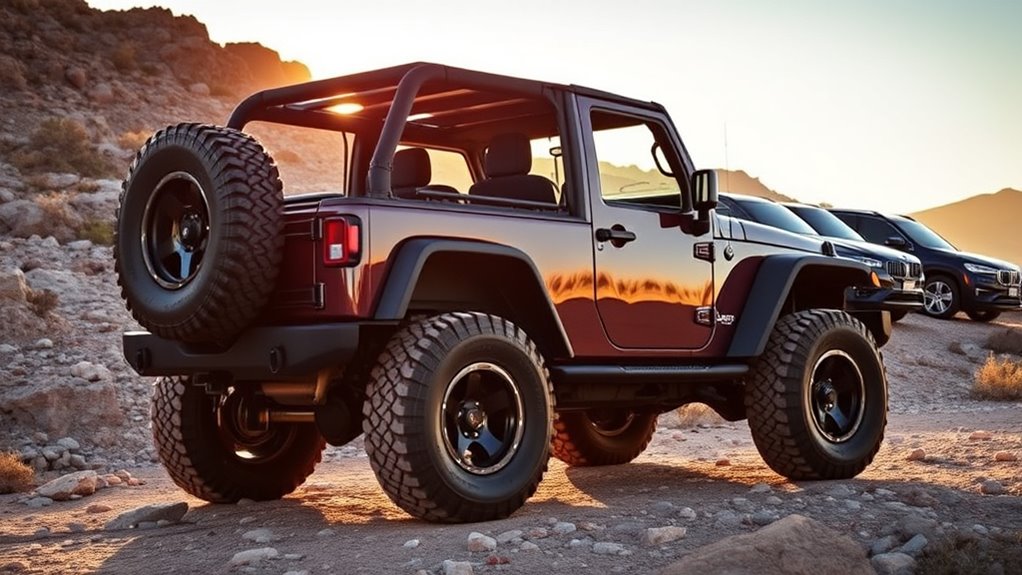
You can tell the Wrangler differs from most crossovers because it uses body-on-frame construction instead of a unibody layout. That design helps it handle tougher off-road conditions, along with features like solid axles.
Crossovers usually prioritize comfort and efficiency, while the Wrangler is built for trail performance.
Body-On-Frame Construction
The Jeep Wrangler uses body-on-frame construction, which is a major reason it differs from most crossovers. You get a separate steel frame under the body, so the vehicle can be built and serviced differently.
This layout also affects parts fitment and aftermarket pricing, especially when you compare an off-road kit with crossover accessories.
| Feature | Wrangler | Typical Crossover |
|---|---|---|
| Frame | Separate | Unified |
| Body mounting | Bolted on | Integrated |
| Repair approach | Frame-based | Body-based |
| Modification range | Broad | Limited |
| Parts market | Strong | Smaller |
You’ll notice this design usually means more rugged hardware and easier structural customization. It doesn’t make the Wrangler a crossover; it places it in a distinct SUV category with traditional construction.
Off-Road Capability
Off-road capability is one of the clearest reasons the Jeep Wrangler isn’t classified as a crossover. When you compare vehicle classifications, you’ll see the Wrangler is built for challenging terrain, not just paved roads.
It gives you high ground clearance, short overhangs, and hardware that supports crawling, water crossings, and steep climbs. In off-road terminology, that means more than traction; it means confidence where many crossovers can’t follow.
- You feel prepared when the trail turns rough.
- You trust the Wrangler when the route gets unpredictable.
- You notice the difference as soon as pavement ends.
Solid Axle Design
Another reason the Wrangler stands apart from crossovers is its solid axle design, which is built to handle rough terrain more effectively. You get stronger wheel articulation, better durability, and simpler repairs than many independent suspension setups. That matters when you’re crawling over rocks or carrying heavy load.
| Feature | Benefit |
|---|---|
| Solid axle | Better articulation |
| Durable components | Fewer weak points |
| Serviceability | Easier maintenance |
| Trail use | Improved traction |
Because of this layout, you’re choosing a vehicle engineered for off road legality in places that allow trail access, not just pavement comfort. It also helps explain consumer incentives for buyers who want capability over ride softness. Crossovers usually prioritize efficiency and comfort, but the Wrangler’s axle design supports harder use and more direct control.
How Jeep Wrangler Classification Affects Insurance
How your Jeep Wrangler gets classified can directly affect what you pay for insurance, because insurers use vehicle type, trim, body style, and risk profile to set rates. If yours is labeled as a standard SUV, your insurance premiums may stay lower than if it’s viewed as a specialty or modified vehicle.
You should also note that off road etiquette matters, since insurers may charge more when they see higher off-road use, larger tires, or lift kits. Your coverage can reflect theft risk, repair costs, and accident likelihood.
- Higher premiums can feel frustrating
- Modifications may limit policy options
- Careful use can help control costs
Jeep Wrangler Registration Rules
You’ll need to register your Jeep Wrangler according to your state’s vehicle rules, and the exact process can vary by location. In some states, you may also need a separate off-road vehicle permit if you plan to use it on trails or designated OHV areas.
Check your local DMV or motor vehicle agency so you know which registration category applies before you hit the road or trail.
State Registration Types
State registration rules for a Jeep Wrangler depend on how your state classifies the vehicle, and that classification can affect the plate type, fees, inspection requirements, and allowed use. You may register it as a standard passenger vehicle, truck, or specialty vehicle, depending on seating capacity and towing limits.
Check your title, VIN records, and factory specs before you apply, because officials use those details to assign the right category. In some states, a Wrangler with rear seats and lower towing limits fits passenger rules; in others, its body style pushes it into truck registration.
That can change what you pay each year, how quickly you can complete registration, and whether your paperwork feels straightforward or frustrating.
Ask your local DMV for the exact code so you don’t get delayed.
Off-Road Vehicle Rules
If your Jeep Wrangler is built or modified mainly for off-road use, some states may classify it differently than a standard road vehicle. You may need an off road classification if you remove street equipment, add farm-style lighting, or limit use to trails and private land.
In that case, you usually register it as an off-highway or recreational vehicle, not a standard passenger vehicle. You should check local rules for title, emissions, and inspection requirements, because they can affect where you can drive it.
Your insurance implications may also change, since some policies exclude trail-only vehicles or require special coverage. Always verify whether your Wrangler still meets street-legal standards before you register it, insure it, or drive it on public roads.
Which Wrangler Body Styles Affect Classification
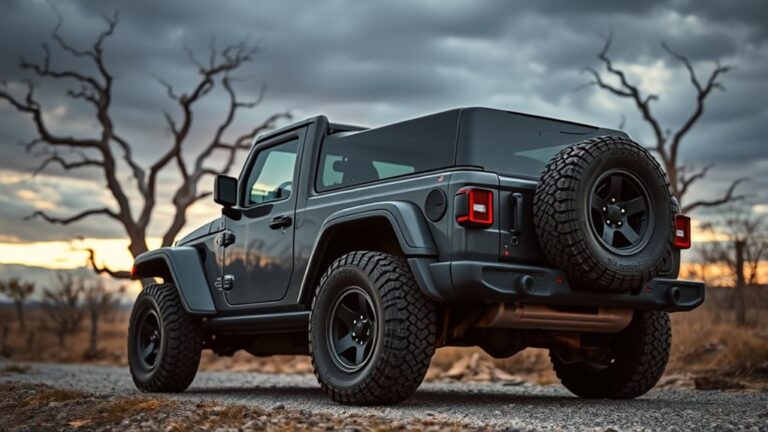
Which Wrangler body style you choose can affect how the vehicle is classified, especially when comparing two-door and four-door models. You’ll usually find that the shorter two-door Wrangler gets described differently from the longer four-door Unlimited, because body length changes how agencies and insurers group it.
Wrangler body style can shape classification, with two-door and four-door models often grouped differently.
That distinction can influence off road legality and insurance implications, since your documents may reference vehicle type, seating, or use. You should also note that removable tops and doors don’t usually change the core classification, but they can affect how the Jeep is perceived.
You may feel confident knowing the label is tied to body style. You might worry less when your paperwork matches the build. You can avoid surprises by checking model details before buying.
In practice, trim and configuration matter, but body style does most of the work.
Why State Rules Can Change the Classification
Beyond body style, local laws can still change how your Wrangler gets classified. You may own the same Jeep, but one state can label it as a passenger vehicle, while another treats it as a truck, SUV, or even an off-road utility vehicle.
That happens because lawmakers use different vehicle codes, weight limits, equipment rules, and registration categories. If your Wrangler has modifications, your state may also review lift kits, tire size, or removed doors when deciding how to classify it.
You should check your DMV rules before you register, insure, or title it. Small wording differences in the law can affect fees, inspections, and emissions requirements. Even two word ideas or unrelated topics can’t override state definitions, so your location matters.
Frequently Asked Questions
Does Wrangler Classification Affect Towing Capacity Limits?
Yes, Wrangler classification can affect towing capacity limits because classification categories influence how manufacturers rate payload and towing. It can also shape financing implications, but you should always check your exact trim’s tow rating and equipment.
Can a Wrangler Be Classified Differently by Trim Level?
Yes, you can see trim-level differences, but you’re not reclassifying the Wrangler itself. Trims change off road versatility and can affect emission categories, yet the model stays a Jeep Wrangler in official classifications.
Does Classification Change With Aftermarket Modifications?
Yes, your Wrangler’s classification can change with major aftermarket modifications, depending on local laws and inspection rules.
You’ll see classification nuances in lift kits, engine swaps, or body changes, and two word discussion ideas matter.
Is the Wrangler Considered a Light Truck Anywhere?
Yes, you can find the Wrangler classified as a light truck in some Jeep classifications, especially for regulatory or registration purposes. That can affect tow capacity implications, even though its primary market category varies by region.
Does Wrangler Classification Impact Financing Terms?
Yes, it can. Your Wrangler’s vehicle type designation, light truck status, and trim level classification can affect finance terminology, loan eligibility, tow rating impact, and aftermarket modification effects, so lenders may adjust terms.
Conclusion
So, what is the Jeep Wrangler classified as? You’ll usually find it listed as an SUV, not a car-based crossover, because its body-on-frame build, off-road hardware, and 4×4 capability set it apart.
But don’t assume every form says the same thing. Depending on your state, trim, or modifications, the classification can shift when you least expect it.
Before you buy, insure, or register it, check the exact rules—because that final label can change everything. Ultimately, understanding what the Jeep Wrangler is classified as is essential for making informed decisions.