What Is a Jeep Wave
As an Amazon Associate we earn from qualifying purchases.
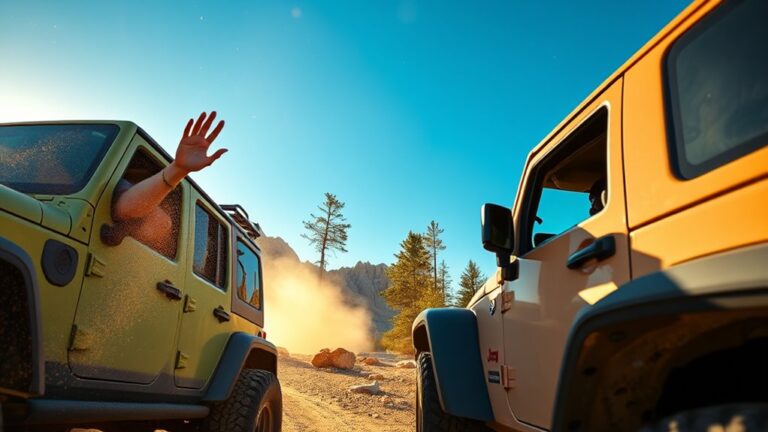
The Jeep Wave is a small handshake in motion, a quick signal that ties drivers together on the road. You lift a hand, nod, or flash two fingers as another Jeep passes, and the gesture says you recognize the brand’s shared culture.
It isn’t formal or complicated, but it does carry meaning. The details behind who waves, when, and why can be more specific than you might expect.
Key Takeaways
- The Jeep Wave is a friendly greeting between Jeep drivers, usually a quick hand lift, two-finger salute, or nod.
- It symbolizes recognition, mutual respect, and shared Jeep culture rather than a formal rule or club membership.
- Drivers usually exchange the wave when passing other Jeep vehicles on the road or trail.
- The gesture should be brief, visible, and safe, with the driver keeping full focus on driving.
- If a wave is missed or not returned, it is normal and not a sign of disrespect.
What Is a Jeep Wave?
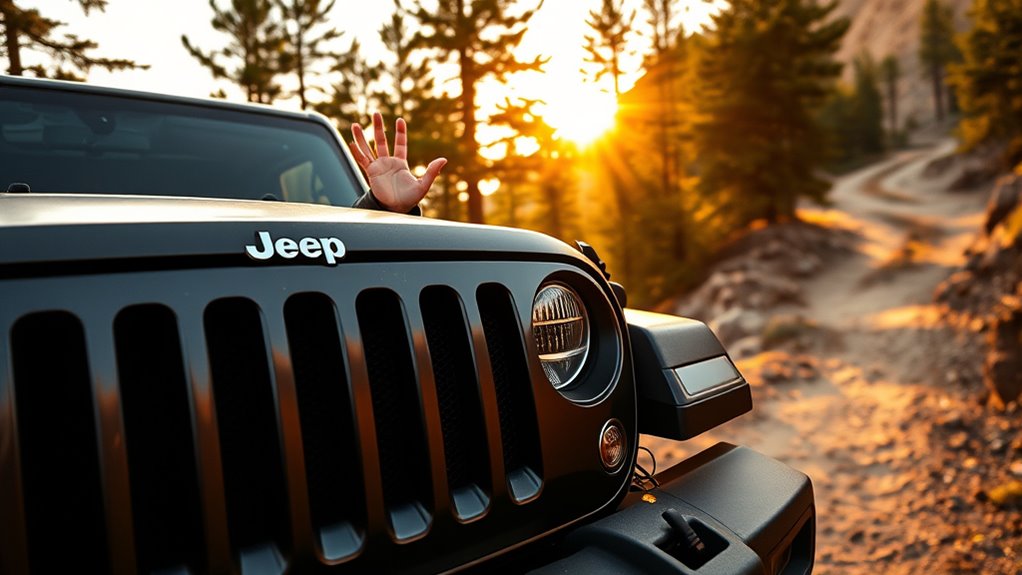
A Jeep wave is a friendly greeting exchanged between Jeep drivers, usually as a quick lift of the hand or fingers when two Jeeps pass on the road. You use it as a simple signal of recognition, not as a formal rule or a legal requirement.
It’s a small part of Jeep culture that appears in everyday driving, club events, and offbeat trends within automotive communities. You’ll see it in many model types, from older Wranglers to newer SUVs, and it often varies by region and driver preference.
Unrelated topics may surround Jeep ownership, but the wave stays focused on acknowledgment between drivers. In practice, it’s brief, visible, and easy to understand.
Why Jeep Drivers Wave
You wave because Jeep drivers often share a common culture that values connection and mutual respect. On the trail and on the road, that quick gesture can signal camaraderie and make another driver feel recognized.
It’s a simple habit that reinforces a sense of belonging among Jeep owners.
Shared Jeep Culture
Jeep drivers often wave because the gesture reflects a shared sense of identity, camaraderie, and mutual recognition among owners. When you drive a Jeep, you’re part of a culture shaped by rugged design, practical use, and a common appreciation for capability.
The wave serves as friendly etiquette, signaling that you recognize another driver who values the same platform. It also reflects awareness of off road challenges, since Jeep ownership often implies respect for vehicles built to handle difficult terrain.
You don’t need a long explanation to understand the code; the gesture is brief, direct, and widely accepted. By waving, you acknowledge a community built around function, resilience, and shared enthusiasm rather than status. That makes the exchange simple, consistent, and meaningful.
Trailside Camaraderie
Trailside camaraderie is one of the main reasons Jeep drivers wave, because the gesture reinforces a sense of mutual respect among people who share a vehicle known for off-road ability. You use the wave as a small, practical cue that fits trail etiquette and keeps interactions civil.
- It acknowledges shared terrain.
- It supports vehicle signaling without complexity.
- It signals awareness, not competition.
- It fits low-speed, outdoor driving contexts.
- It helps you communicate politely when passing.
On rough roads, a brief wave can function as a quick, readable courtesy. You don’t need words to show that you recognize another driver’s presence and the conditions you both face. The habit stays simple, consistent, and useful.
Recognition Among Drivers
Recognition among drivers is a simple part of the Jeep Wave: when you pass another Jeep, the wave tells that driver you see them and understand the shared identity that comes with owning and driving the vehicle. You’re not making a random gesture; you’re acknowledging another person in the same community.
That recognition helps turn ordinary traffic into a brief moment of connection. It also reinforces two word ideas like mutual respect and shared experience, which fit the culture around Jeep ownership.
In this context, the wave isn’t about status or unrelated discussion about brands; it’s about immediate identification between drivers. When you return the wave, you confirm that the signal still matters and that the tradition stays alive on the road.
The History of the Jeep Wave
Though it’s now a well-known part of Jeep culture, the Jeep Wave began as an informal gesture among drivers who noticed one another on the road and responded with a quick lift of the hand. You can trace its roots to the history of off roading, when Jeep vehicles built mutual respect through shared utility and rugged use.
Over time, that roadside acknowledgment became a symbol of belonging in modern Jeep culture.
- It reflected driver solidarity.
- It grew from practical vehicle use.
- It spread through enthusiast communities.
- It stayed simple and recognizable.
- It still signals shared identity today.
You’ll see that its history isn’t about ceremony; it’s about recognition, community, and a lasting tradition among Jeep owners.
How Jeep Waving Works
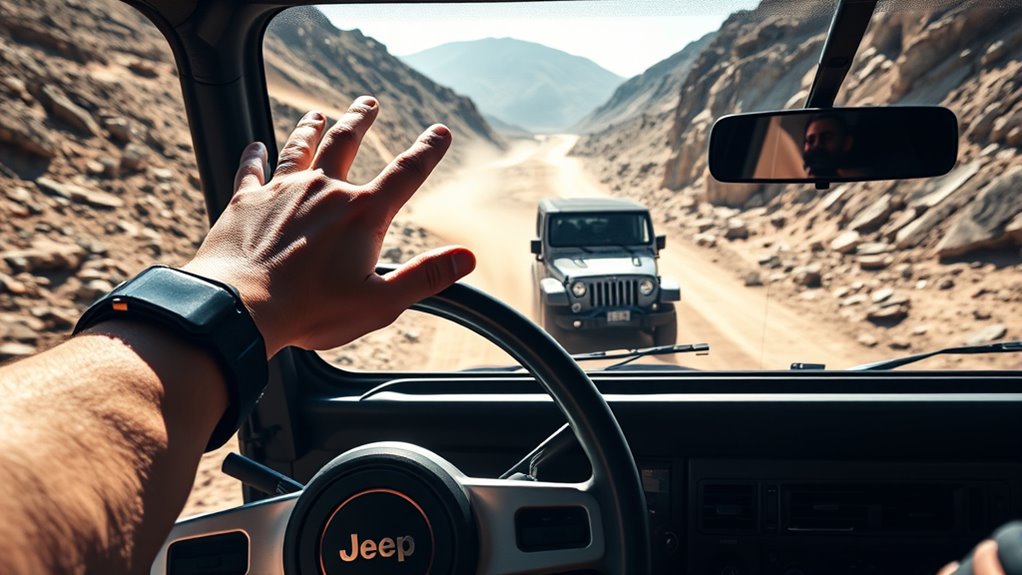
Jeep waving is simple: when you see another Jeep on the road, you give a quick hand lift, nod, or two-finger salute, and many drivers return the gesture. You don’t need a formal signal; the exchange happens fast and usually at normal driving speed.
The custom traces to Jeep wave origins, when shared vehicle identity mattered among owners and off-road users. Today, you’ll often see it as a brief acknowledgment rather than a strict rule.
Trail etiquette misconceptions can make it seem mandatory, but it isn’t enforced. If you miss a wave, nothing’s wrong. If you choose to wave, keep it brief, safe, and predictable so you stay focused on driving and maintain smooth traffic flow.
Which Jeeps Get the Wave?
The wave usually goes to other Jeep vehicles on the road, especially models that still carry the brand’s recognizable off-road identity. You’ll typically extend it to:
- Wrangler
- Gladiator
- Cherokee
- Grand Cherokee
- Renegade
These vehicles often signal shared ownership and mutual respect among drivers who value the brand’s history. You don’t need a strict checklist; the gesture reflects driver courtesy more than rules.
In practice, Jeeps with clear factory styling, trail-ready cues, or strong brand recognition are the most common recipients. If you’re unsure, you can still treat the interaction as a simple acknowledgment between drivers.
The wave isn’t about status or condition alone; it’s about recognizing another Jeep on the road and participating in a small, consistent tradition.
When to Give a Jeep Wave
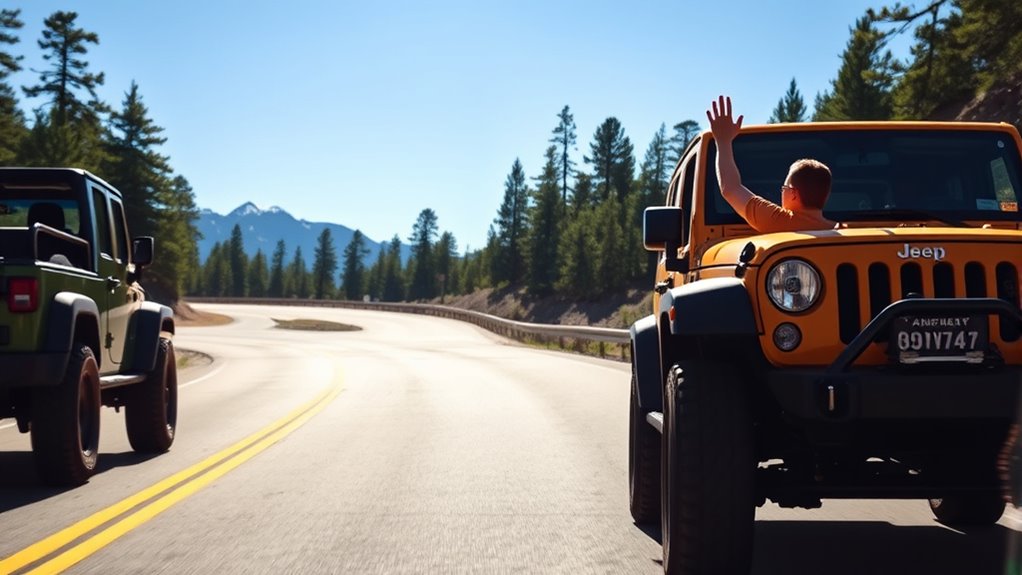
You should give a Jeep wave when you spot another Jeep and there’s a clear chance for a quick, safe acknowledgment. The best time is when both vehicles are moving steadily and you can lift a hand without losing focus on the road.
You can also wave at a parked Jeep if the driver can clearly see you. In practice, idea one is to wave when the other driver is likely to notice it, and idea two is to do it in situations where the gesture won’t distract you.
If traffic, weather, or road conditions make the motion awkward, skip it and stay attentive. The wave works best as a brief, natural signal of shared ownership, not a forced routine.
Jeep Wave Etiquette
Jeep wave etiquette starts with timing: you should wave clearly and safely without taking your attention off the road. On pavement, you can keep the gesture brief and courteous, since the wave signals mutual respect between drivers.
On the trail, you’ll also want to read the situation and follow trail respect rules, because safety and awareness matter as much as the wave itself.
Wave Timing Basics
Timing matters in Jeep Wave etiquette because a well-timed wave feels natural, while a delayed one can come across as awkward. You should read the moment, then respond quickly and calmly. On trails, trail etiquette and off road signaling help you decide when a wave fits the situation.
- Spot the other Jeep early
- Lift your hand before passing
- Keep the gesture brief
- Match pace without distraction
- Skip it if conditions demand focus
You don’t need a dramatic motion; a small wave usually works best. If your view is blocked or you’re navigating rough ground, prioritize control first. Good timing shows awareness, respects shared Jeep culture, and keeps the interaction smooth.
On-Road Courtesy
On paved roads, Jeep Wave etiquette still follows the same basic idea: acknowledge fellow drivers in a quick, respectful way without disrupting traffic or attention. You can give a brief hand raise, two-finger salute, or small nod when conditions allow.
Keep your eyes on the road first, since safety comes before recognition. If traffic is heavy, a wave may wait for a clear moment, and that’s fine. You don’t need to overthink it; the gesture should feel natural, not forced.
Good on-road courtesy also includes parking etiquette: avoid blocking another Jeep, respect tight spaces, and keep your vehicle’s curb appeal clean and orderly. The wave is a simple sign of shared ownership pride, and it works best when you stay calm, attentive, and considerate.
Trail Respect Rules
What should you keep in mind when the trail gets narrow? You should follow trail etiquette and use clear trail signaling to show courtesy. Yield to uphill traffic when needed, slow down near hikers, and keep your wheels on established tracks.
Your Jeep wave etiquette on trails also means respecting space and minimizing noise. You can protect the route and help others by staying disciplined.
Stop only where you won’t block traffic. Wave or signal before passing. Let larger obstacles pass safely.
Avoid spinning tires and eroding the trail. Pack out trash and leave no trace.
These habits make you a better trail user and support safe, predictable group travel.
What the Jeep Wave Means
The Jeep Wave is a simple sign of recognition between Jeep drivers, usually expressed with a hand wave or nod when two Jeeps pass each other on the road. When you give it, you acknowledge a shared vehicle culture and a basic level of mutual respect.
It doesn’t mean membership in a formal club, but it does signal awareness, courtesy, and a common interest in the Jeep experience. You can think of it as a small social cue that connects drivers without demanding anything in return.
It has nothing to do with an unrelated topic or an irrelevant trend; its meaning stays tied to Jeep identity, road camaraderie, and simple acknowledgment among owners. In practice, it reflects community more than status, and it remains informal, familiar, and widely understood.
Common Jeep Wave Mistakes
You might miss the wave if you’re focused on the road or not watching other Jeep drivers closely. Timing matters too, because a wave that’s too late or too early can feel awkward instead of friendly.
You also don’t need to overdo it; a simple, brief gesture usually fits best.
Missing The Wave
Missing a Jeep wave can happen easily when your attention slips, traffic moves quickly, or the other driver simply blends into the flow. You may feel a bit of on road confusion, but missing etiquette usually isn’t a serious offense.
To reduce misses, keep your eyes forward and scan nearby Jeeps.
- Watch for raised hands early.
- Notice drivers approaching from the opposite lane.
- Stay alert in busy traffic.
- Keep a relaxed grip so you can wave fast.
- Accept that some waves get lost.
If you don’t respond, that’s often just a brief lapse, not disrespect. Consistency matters more than perfection, and a quick, clear gesture keeps the exchange familiar.
Wrong Timing
Wrong timing can make a Jeep wave feel awkward, even when both drivers mean well. You can wave too early, too late, or when the other driver has already passed, and that breaks the natural rhythm.
Jeep waves work best when you spot the other vehicle, confirm the driver sees you, and respond quickly. If you hesitate, the gesture can look uncertain. If you react after the moment passes, the wave may feel disconnected.
Road conditions, traffic, and curves can also create misread signals, so you shouldn’t assume every delayed response means rudeness. Stay aware, keep your attention on the road, and let the wave happen at the right moment.
Timing matters because it keeps the exchange simple, safe, and clear for both drivers.
Overdoing It
Overdoing it can make a Jeep wave feel forced instead of friendly. You don’t need to treat every passing Jeep like a performance. A quick, natural gesture works best; repeated waving, exaggerated motions, or leaning too far into social signaling can distract from the point.
Keep your attention on traffic, terrain, and timing.
- Don’t wave at every vehicle that isn’t a Jeep.
- Avoid holding the wave too long.
- Skip dramatic arm motions.
- Don’t expect a response each time.
- Match the moment, not the crowd.
When you avoid overdoing it, you keep the gesture simple and genuine. That restraint helps the Jeep wave stay a small sign of recognition, not a public display.
How to Start Jeep Waving
To start Jeep waving, you simply acknowledge another Jeep driver with a quick, friendly gesture as you pass, most often a raised hand, a two-finger wave, or a nod. Keep your start signals simple and visible so the other driver can respond without confusion.
You don’t need to overthink it; the goal is a brief, respectful exchange. If your hand isn’t free, use wave alternatives such as a nod, a smile, or flashing your lights only when safe and appropriate.
Make eye contact when possible, then return your focus to the road. Consistency matters more than style, so choose one gesture and use it naturally. When another Jeep waves first, answer in kind to keep the tradition going.
Frequently Asked Questions
Does the Jeep Wave Happen Outside the United States?
Yes, you’ll see the Jeep wave outside the United States too, especially where international jeep culture is strong. Jeep wave etiquette varies by country, but drivers often return the gesture enthusiastically and informally.
Can Passengers Initiate a Jeep Wave Too?
Yes, you can encourage passenger participation too, though crossing etiquette usually starts with the driver. If you’re riding along, you may wave, but the vehicle’s driver typically controls the greeting and timing.
Is the Jeep Wave Used in Jeep Clubs or Events?
Yes, you’ll see it in Jeep clubs and events, where event etiquette often encourages it. Regional customs vary, non-owner participation happens, and passengers can follow passenger cues to join respectfully and appropriately.
Do Non-Jeep Owners Ever Participate in the Jeep Wave?
Yes, you’ll occasionally see non-Jeep owners join in; non-Jeep ownership and cross-brand participation can happen at events, yet you typically reserve it for Jeep drivers.
You’ll notice the wave thrives on shared enthusiasm, not exclusivity.
Are There Regional Differences in Jeep Wave Customs?
Yes, you’re likely to notice regional variation in Jeep Wave customs, since local regional etiquette can affect how often people wave, when they wave, and how warmly they respond in different areas and driving cultures.
Conclusion
So, what is a Jeep wave if not a simple sign that you’re part of a friendly, shared culture? When you drive a Jeep, you can return the wave with a quick lift, nod, or two-finger salute to show respect and recognition.
You don’t need perfect timing or special rules—just awareness and a little courtesy. If you see another Jeep, why not acknowledge it? That small gesture keeps the Jeep spirit alive.
In the end, the Jeep wave is more than just a greeting; it’s a symbol of community and camaraderie among Jeep owners everywhere.