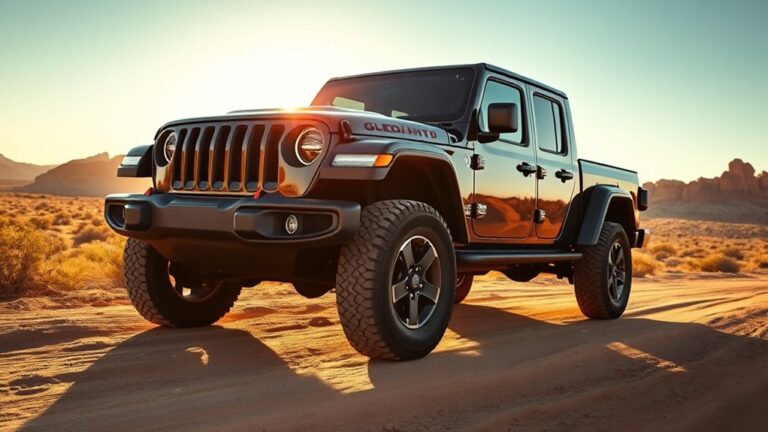
What Does Rubicon Mean Jeep
As an Amazon Associate we earn from qualifying purchases.
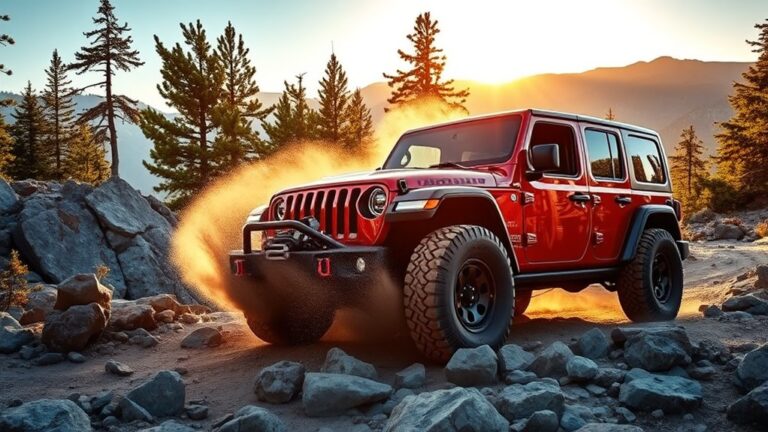
If you see a Jeep Wrangler Rubicon on the trail, you’re looking at more than just a trim name. The term “Rubicon” in Jeep signifies serious off-road capability and hardware designed to tackle tough terrain. This includes stronger axles, skid plates, low-range gearing, and sway-bar disconnects.
The Rubicon badge traces back to the famous Rubicon Trail in California, known for its challenging off-road routes. But what it means for capability, value, and model availability is worth a closer look. This name represents Jeep’s commitment to rugged performance and adventure readiness.
Key Takeaways
- On a Jeep, Rubicon means an off-road-focused trim built for tougher terrain and stronger trail performance.
- The Rubicon badge signals capability, not decoration, and usually includes more trail hardware than lower trims.
- Jeep named Rubicon after the Rubicon Trail, a demanding off-road route in the Sierra Nevada.
- Rubicon models often add locking differentials, skid plates, upgraded suspension, and low-range gearing.
- The trim is ideal for frequent off-roading, but it can ride firmer and cost more than standard versions.
What Does Rubicon Mean on a Jeep?
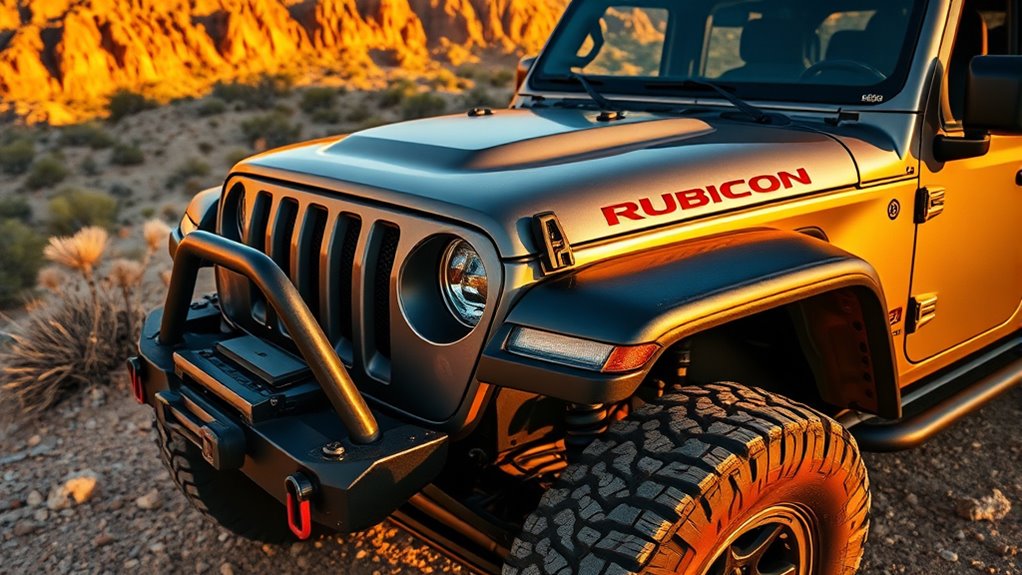
On a Jeep, Rubicon refers to a specific, off-road-focused trim level built for tougher terrain and stronger trail performance. You get equipment aimed at traction, articulation, and durability, so the badge signals capability rather than decoration.
Rubicon is Jeep’s off-road-focused trim, built for tougher terrain, stronger trail performance, and serious capability.
Jeep uses Rubicon as part of its off-road branding, helping you quickly identify models designed for demanding conditions. The name also connects to the brand’s trail heritage, which emphasizes serious use on rocks, mud, and uneven ground.
If you’re comparing trims, Rubicon usually means more standard trail hardware than lower versions. You can expect a setup intended for off-road confidence, not just everyday driving.
In short, Rubicon tells you the Jeep is built with rugged trail performance in mind.
Where Did the Rubicon Name Come From?
The Rubicon name comes from the Rubicon Trail in the Sierra Nevada mountains, a legendary off-road route known for its steep climbs, rocks, and technical obstacles. When you trace the name back, you find a real place, not just a marketing invention.
Jeep drew on that trail’s reputation to signal toughness and capability. Some origin myths try to connect the word to Julius Caesar’s crossing of the Rubicon, but the Jeep meaning points first to the trail itself.
That association helped shape a clear branding strategy: you see the badge and think serious off-road performance. The name works because it’s simple, memorable, and tied to a demanding trail that matches the vehicle’s image.
Why Did Jeep Use the Rubicon Badge?
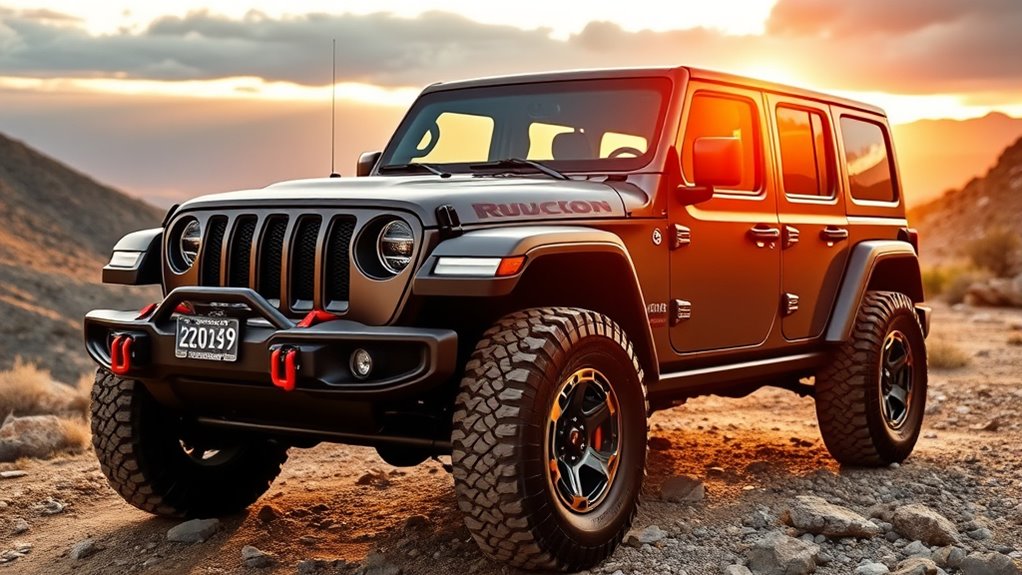
Jeep used the Rubicon badge to signal its off-road heritage and connect the model directly to the famous Rubicon Trail. You can see it as a marker that the vehicle’s hardware is built for serious trail use.
The badge also helps Jeep present the trim as trail-ready from the start.
Off-Road Heritage
Why did Jeep choose the Rubicon badge? You can trace it to Jeep’s off-road heritage, where durability, traction, and confidence matter most. The name signals a vehicle built for challenging terrain, not just street driving.
When you see Rubicon, you’re seeing a nod to Jeep’s long role among off-road legends, vehicles that earned trust through real-world testing and rugged use. That history also connects to desert expeditions, where dependable four-wheel drive and strong suspension proved essential.
The badge helps you identify a model with stronger hardware and a more capable setup than standard versions. It tells you Jeep wanted a name that reflects proven performance, adventure, and credibility in demanding conditions without needing extra explanation.
Rubicon Trail Connection
The Rubicon badge points directly to the famous Rubicon Trail in California, a route known for steep climbs, rock gardens, and demanding off-road obstacles. When you see this jeep badge, you’re seeing Jeep’s link to one of North America’s most demanding routes.
The Rubicon Trail tests traction, ground clearance, and driver control, so Jeep uses the name to signal a specific level of off-road capability. The badge identifies models designed to handle tougher terrain than standard versions.
It also helps you recognize that the vehicle has been associated with that trail’s reputation for difficulty. In short, Jeep chose the Rubicon badge to connect a model with a real, well-known trail that represents serious off-road use and clear performance expectations.
Trail-Ready Branding
In branding the Rubicon name, Jeep signaled that this model was built for serious off-road use, not just styling. You can read the Rubicon meaning as a promise of capability, tied to Jeep’s off-road history and its toughest trail reputation.
Trail branding helps you identify which Jeep trims emphasize lockers, skid plates, and higher articulation.
| Signal | What you see | What it means |
|---|---|---|
| Rubicon badge | Trail name | Proven obstacle focus |
| Jeep features | Off-road hardware | Real capability |
| Which Jeep | Trim choice | Purpose-built selection |
When you compare models, you’ll notice the badge isn’t decorative. It tells you Jeep wants you to expect stronger trail performance and a direct connection to the Rubicon Trail.
What Makes a Jeep Rubicon Different?
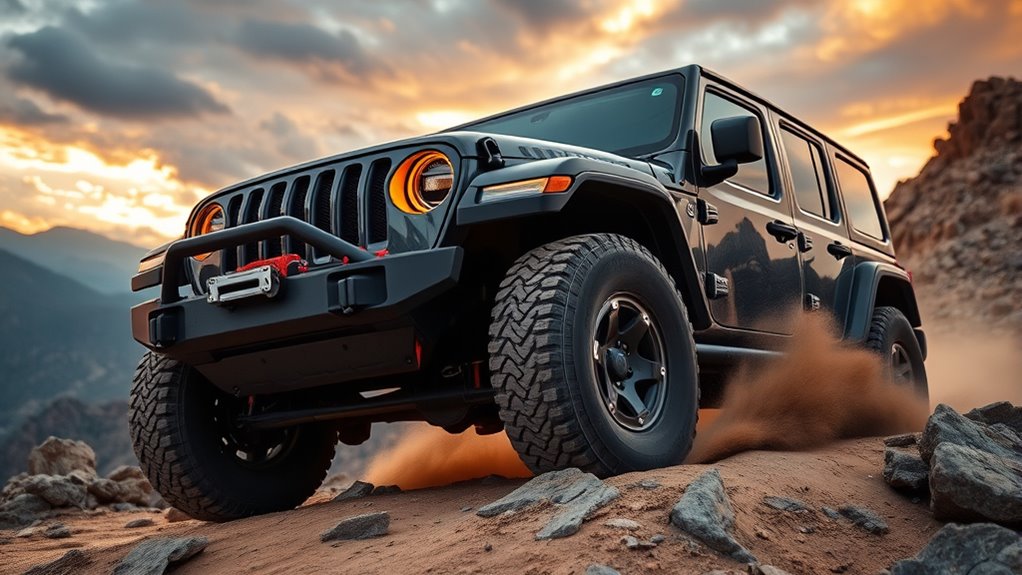
A Jeep Rubicon stands out because you get factory-built off-road features designed for rough terrain. You also get upgraded axles and suspension parts that improve durability and articulation.
Together, these changes give you stronger trail-ready capability than a standard Jeep model.
Rubicon Off-Road Features
Rubicon trims Jeep’s off-road setup with hardware built for tougher trails, so you get more capability right from the factory. You’ll notice a rugged design that favors protection and off road durability, helping you tackle rocks, mud, and uneven terrain with more confidence.
Standard trail-focused items improve traction, clearance management, and driver control without requiring major aftermarket changes.
| Feature | Benefit |
|---|---|
| Trail-ready tires | Better grip on loose surfaces |
| Protective skid plates | Help shield vital components |
| Locking traction aids | Improve forward progress off-road |
These features work together to make your Jeep feel more purposeful when pavement ends. If you want a factory model that’s ready for demanding routes, Rubicon gives you a practical head start.
Axle And Suspension Upgrades
Those trail-focused features are only part of the story, because a Jeep Rubicon also stands apart with axle and suspension upgrades built to handle rough terrain more effectively. You get stronger axles that can better support stress from uneven ground, helping the vehicle stay composed when traction changes.
The axle upgrade pairs with a suspension upgrade tuned for more controlled wheel movement, so each tire can react more independently. That setup can improve articulation, which lets your Jeep maintain contact with the surface more consistently.
You’ll also notice the components are selected to withstand repeated off-road loading better than standard parts. In practice, these changes don’t just add durability; they help you keep the Jeep stable, predictable, and capable when the trail becomes demanding.
Trail-Ready Capability
Trail-ready capability is what most clearly sets a Jeep Rubicon apart from other Jeep trims. You get features built for difficult terrain, including stronger axles, locking differentials, a disconnecting sway bar, and available all-terrain tires. These parts help you maintain traction, articulation, and control when the trail gets rough.
Jeep pairs this hardware with off road branding that signals serious intent, not just style. The Rubicon badge also reflects Rubicon heritage, linking the model to one of the most demanding off-road routes in the United States.
When you choose a Rubicon, you’re choosing a trim designed to handle obstacles that would challenge a standard SUV. That’s the practical difference behind the name: capability matched to purpose, from factory to trail.
Which Rubicon Features Help Off-Road?
What makes a Jeep Rubicon stand out off-road is its focus on traction, articulation, and control. You get locking differentials that help both wheels turn together when one loses grip, plus a sway bar disconnect that lets the suspension flex over rocks and ruts.
Heavy-duty axles and low-range 4×4 gearing give you more torque at slow speeds, so you can crawl instead of spin. Skid plates protect key components from impacts, while all-terrain tires improve bite on loose surfaces.
These features are the reason Rubicon legends persist, even as off road myths exaggerate what any vehicle can do. You still need skill and good judgment, but the hardware gives you a clear advantage on demanding trails and uneven terrain.
Which Jeep Models Come in Rubicon Trim?
Jeep offers Rubicon trim on several models, with the Wrangler being the best-known example and the one most closely associated with serious off-road use. You’ll also find Rubicon versions of the Gladiator pickup and, in some model years, the Grand Cherokee and Grand Cherokee L.
These trims usually add trail-focused hardware, but the exact equipment can vary by year and body style. If you’re comparing models, focus on the platform first, then the Rubicon package second. That helps you separate standard features from off-road upgrades.
For discussion ideas, note how each Rubicon model targets a different use case. Keep unrelated topics out of the comparison so you can evaluate only the trim lineup, available drivetrains, and trail-oriented equipment that matter to you.
Is a Jeep Rubicon Worth It?
Whether a Rubicon is worth it depends on how you plan to use your Jeep. If you off-road often, you’ll appreciate the factory locker, sway bar disconnect, rock rails, and stronger axles. Those parts can save you money versus adding them later.
If you mostly drive pavement, you may pay for capability you won’t use, plus a firmer ride and higher fuel costs. That’s the core value question.
Some rubicon trivia: the name points to the famous Roman crossing, which fits the model’s trail-focused image. Jeep branding uses Rubicon trim to signal maximum factory off-road ability.
You should compare your needs, budget, and comfort level before choosing. For serious trail use, it’s a smart buy; for light commuting, a lower trim may be better.
Frequently Asked Questions
How Much Does a Jeep Rubicon Cost Compared to Other Trims?
You’ll usually pay more for a Jeep Rubicon than for Sport, Latitude, or Sahara trims, since it adds off-road gear. Expect several thousand dollars extra, depending on model year. two word discussion idea1, two word discussion idea2.
Does Rubicon Trim Affect Jeep Fuel Economy?
Yes, the Rubicon trim can lower your Jeep’s fuel economy because you get heavier off road performance parts, aggressive tires, and gearing.
You’ll usually trade efficiency for capability, especially in city driving and highway cruising.
Can a Rubicon Be Used Comfortably for Daily Driving?
Like a sturdy hiking boot, you can daily drive a Rubicon comfortably if you value capability. You’ll notice firmer ride quality and more road noise than softer trims, but daily comfort remains acceptable for most drivers.
Is the Rubicon Badge Available on Used Jeep Models?
Yes, you can find the Rubicon badge on used Jeep models, and used availability varies by year and market.
You’ll want a price comparison and trim differences, since Rubicon trims often cost more.
What Maintenance Does a Jeep Rubicon Require?
You’ll follow Jeep’s maintenance schedule, changing oil, filters, fluids, and inspecting brakes, tires, suspension, and drivetrain regularly.
You’ll also keep off road readiness high by checking lockers, skid plates, and underbody components after trails.
Conclusion
In the end, Rubicon means you’re getting more than a Jeep badge—you’re getting trail-ready hardware. It’s the difference between looking rugged and being built for rough terrain. If you want stronger axles, better traction, and features that help you tackle serious off-road routes, Rubicon makes sense.
If you mostly drive pavement, it may be more capability than you need. Either way, you know exactly what the name stands for: proven, purposeful performance. Understanding what Rubicon means Jeep helps you choose a vehicle designed to conquer tough trails with confidence.