What Bolt Pattern Is a Jeep Wrangler
As an Amazon Associate we earn from qualifying purchases.
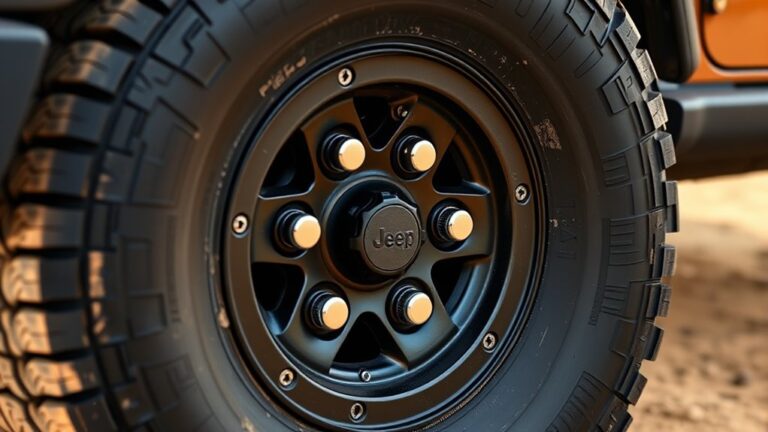
If you think all Jeep Wrangler wheels share the same fit, you don’t. You need to check the bolt pattern, which is the lug count and circle diameter, because it changes by year and model. Many older Wranglers use 5×4.5, while JK, JL, and newer models use 5×5.
Get the wrong pattern, and the wheel won’t mount correctly, but that’s only part of the fitment story. Always verify the bolt pattern to ensure proper installation and safety when changing wheels on your Jeep Wrangler.
Key Takeaways
- Jeep Wrangler bolt pattern varies by year and model, so always verify your exact Wrangler before buying wheels.
- CJ, YJ, and most TJ Wranglers typically use a 5×4.5 bolt pattern.
- JK and JL Wranglers commonly use a 5×5 bolt pattern.
- Bolt pattern means the lug count and circle diameter, which must match for proper wheel fitment.
- Also check center bore, lug seat, offset, and brake clearance for safe compatibility.
What Is the Jeep Wrangler Bolt Pattern?
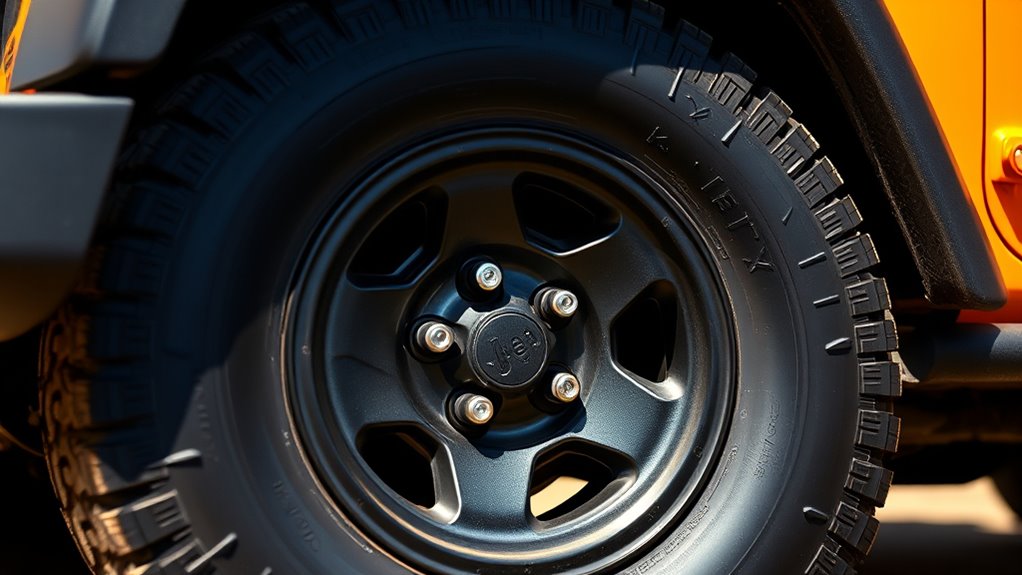
If you’re wondering what the Jeep Wrangler bolt pattern is, it’s the wheel lug arrangement that determines which wheels fit your Jeep. You measure it by counting the lugs and the diameter of the imaginary circle they form.
For many Wranglers, that pattern controls fitment more than offset or tire size. You should check the exact pattern before buying wheels, because bolt misconceptions can lead you to mismatched parts and unsafe installation.
The correct pattern also affects wheel aesthetics, since it lets you choose styles that sit properly in the wheel well. Use the factory specifications for your model year, and verify the hub bore, lug seat, and thread size. That way, you’ll match the wheel to your Wrangler accurately.
Which Jeep Wrangler Years Use 5×4.5 vs. 5×5?
Jeep Wrangler bolt patterns changed over time: older models commonly use 5×4.5, while newer Wranglers switched to 5×5. If you drive a CJ or early TJ, you’re usually in the 5×4.5 group. From the JK and JL generations, you’ll typically see 5×5, which improves wheel selection and wheel aesthetics.
Keep these year ranges in mind:
- CJ and YJ: 5×4.5
- TJ: 5×4.5
- JK: 5×5
- JL: 5×5
You shouldn’t assume all trims match, so check your exact year before buying wheels. Tire pressure doesn’t change the bolt pattern, but it does affect fitment checks after installation.
Matching the right pattern keeps your wheels secure, your stance correct, and your upgrade path simple.
How Do You Measure a Jeep Wrangler Bolt Pattern?
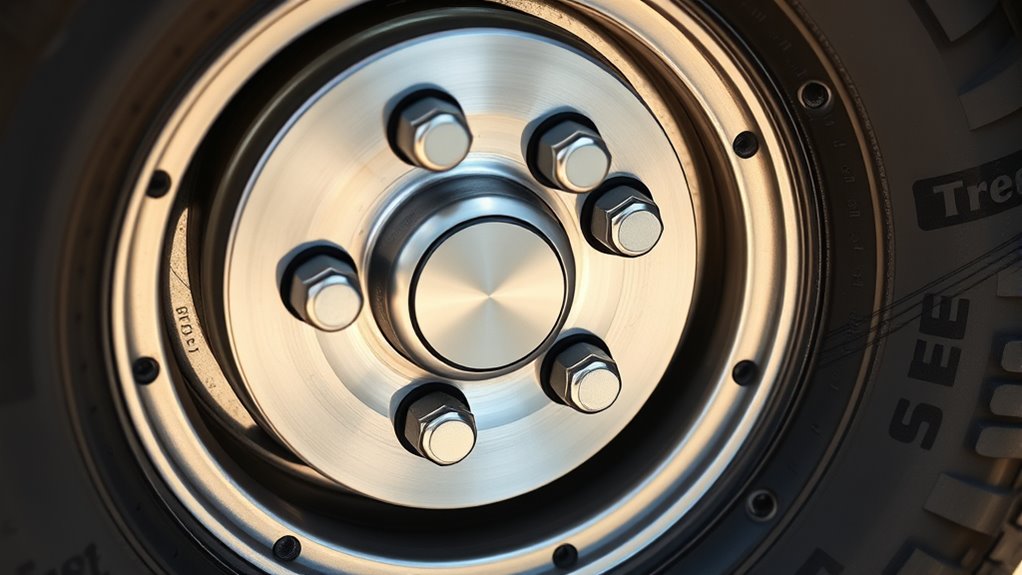
To measure a Jeep Wrangler bolt pattern, count the number of lug holes and measure the circle they form from center to center. For a 5-lug Jeep, measure from the center of one lug hole to the farthest center across the hub.
That dimension gives you the bolt pattern, such as 5×4.5 or 5×5. Use a ruler, caliper, or bolt-pattern gauge for accuracy. If you’re working with an even number of lugs, measure across directly opposite holes.
Record both the lug count and diameter, since both define wheel fit. Check the hub face with the wheel removed, and keep the tool square to avoid errors. A precise measurement helps you match replacement wheels correctly and prevents guesswork when comparing aftermarket options.
How Does Bolt Pattern Affect Wheel Fit and Safety?
A correct bolt pattern lets the wheel seat properly against the hub, which directly affects fit and safety. If you choose the wrong pattern, you can’t tighten the wheel evenly, and the studs may carry uneven load. That raises vibration, loosens fasteners, and can damage the hub or wheel.
Use this quick check:
- Match all lug holes exactly.
- Confirm the wheel centers on the hub.
- Torque the lugs in a star pattern.
- Recheck after the first drive.
When the pattern matches, your Jeep tracks straighter and the wheel stays secure. An unrelated topic like tire brand won’t fix a bad pattern, and an off topic comparison to styling can’t change safety. Keep the fit precise, and you’ll protect both performance and hardware.
What Are Backspacing and Offset?
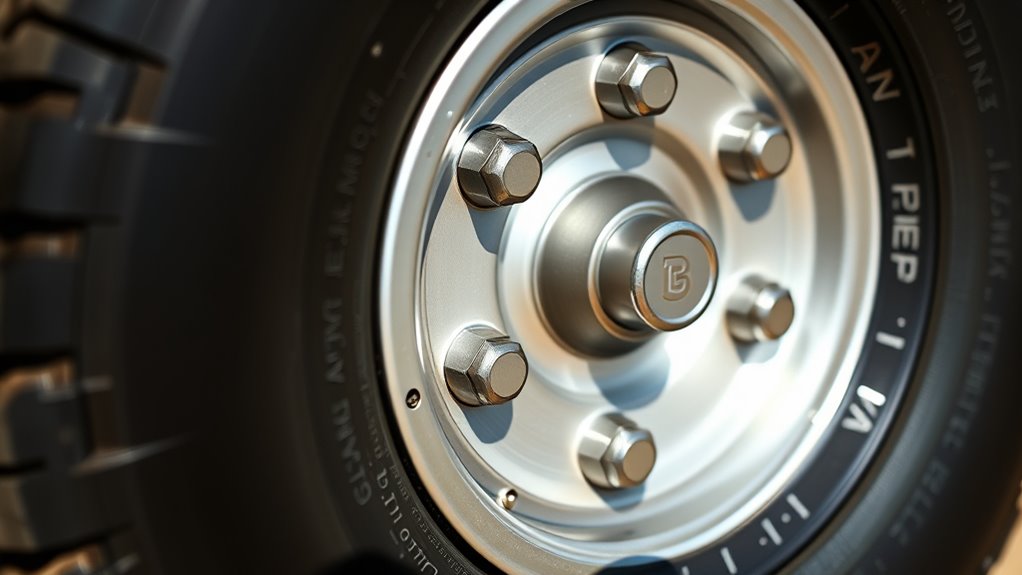
Backspacing and offset describe where the wheel sits relative to the hub and fender, and they directly affect clearance on your Wrangler. Backspacing measures the distance from the wheel’s mounting surface to its inner lip.
Backspacing and offset determine wheel clearance on your Wrangler, affecting fitment, suspension, and fender space.
Offset measures the mounting surface position relative to the wheel centerline. Positive offset pulls the wheel inward; negative offset pushes it outward. You need the right values to avoid rubbing on suspension parts, brake components, and fenders.
They also change steering feel and load on bearings. Check these specs before you buy wheels, and match them to your tire size and lift. During wheel maintenance, inspect for uneven wear and damage.
When you perform tire rotation, confirm the wheels still sit properly and don’t contact the body under compression.
Can You Use Wheels From Other Jeep Models?
You can sometimes use wheels from other Jeep models if their bolt pattern matches your Wrangler, such as common Jeep patterns like 5×4.5 or 5×5. But you also need to check center bore, backspacing, offset, load rating, and brake clearance before you fit them.
Even with a matching pattern, these fitment factors can change whether the wheel actually works safely on your Jeep.
Compatible Jeep Wheel Patterns
- JK and JL Wrangler wheels often interchange within the same bolt pattern.
- Cherokee, Liberty, and Commander wheels may fit some older Jeeps.
- Gladiator wheels usually match JL Wrangler patterns.
- CJ and TJ-era wheels need closer verification.
Even when the pattern matches, you still need to confirm proper fit before mounting.
Fitment Factors To Check
Even when a Jeep wheel shares the right bolt pattern, fitment still depends on more than lug spacing. You need to check offset, backspacing, center bore, and brake clearance before you swap wheels from another Jeep model.
A wheel with the wrong offset can push the tire too far in or out, affecting steering, suspension, and fender contact. Make sure the center bore fits your hub or that you use proper hub-centric rings.
You should also verify lug nut patterns and seat type, since conical and ball-seat nuts don’t interchange. If you change wheel width or diameter, confirm tire rotation clearance at full lock and under compression.
Matching bolt patterns helps, but proper fitment keeps your Wrangler safe and predictable.
How Do You Check Your Wrangler’s Factory Specs?
Start by checking the Jeep’s factory information sources to confirm the exact bolt pattern and related wheel specs. Use your owner’s manual, the door jamb label, and the build sheet to verify lug count, bolt circle, center bore, offset, and wheel width.
These records help you avoid bolt pattern myths and tire sizing misconceptions that often lead to bad assumptions.
- Read the VIN-based build data.
- Match the trim and model year.
- Confirm the wheel specification label.
- Compare it with Mopar parts listings.
You can also inspect the current wheels, but don’t rely on aftermarket changes. Factory documents give you the baseline, so you know what Jeep originally engineered for your Wrangler.
How Do You Choose Wheels That Fit Your Wrangler?
To choose wheels that fit your Wrangler, match the bolt pattern first, then confirm center bore, offset, backspacing, lug nut seat type, and wheel width so the wheel clears the brakes and suspension without rubbing. You should verify load rating and tire size too, because aggressive fitment can stress steering and reduce articulation.
Check offset carefully: too much positive offset tucks the wheel inward, while too much negative offset can cause fender contact. Compare wheel materials as well; steel adds strength, while alloy cuts weight. If you’re comparing options, review bolt pattern history to understand why your model uses a specific pattern.
When in doubt, test-fit one wheel before buying a full set, and measure clearance at full lock and full compression.
Frequently Asked Questions
What Lug Nut Size Does a Jeep Wrangler Use?
You usually use 1/2″-20 lug nuts on a Jeep Wrangler, but you should verify your wheel lug compatibility and lug pattern. Trim, year, and aftermarket wheels can change the required size and seat style.
Are Jeep Wrangler Bolt Patterns the Same on All Trims?
No, you don’t always get the same bolt pattern across Wrangler trims; different axles can change it. Like keys in a lockbox, you should verify before tire rotation and wheel torque, since specs can vary by year.
Can I Use Wheel Spacers With My Wrangler?
Yes, you can use wheel spacers with your Wrangler if you verify spacer compatibility and torque specs. Beware bolt pattern misconceptions; match hub bore, stud length, and offset.
Also, inspect clearance for safe fitment.
Do Aftermarket Wheels Need Special Lug Nuts?
Yes, you might need special lug nuts; you should verify aftermarket wheel compatibility and lug nut standards. Some wheels use conical seats, others need shank-style lugs, so you’ll match hardware to the wheel design.
Will Bigger Brakes Change My Wrangler’s Wheel Fit?
Yes, big brakes can change your wheel fit. You may need larger-diameter wheels, more barrel clearance, or different offset to clear calipers; otherwise, they’ll rub. Measure carefully and test-fit before you buy.
Conclusion
So, when you’re sizing up your Jeep Wrangler, don’t guess—match the bolt pattern exactly. Most older Wranglers use 5×4.5, while newer JK, JL, and beyond usually run 5×5. That tiny difference can make wheels refuse to fit like a stubborn puzzle piece.
You should verify the year, hub bore, lug seat, and thread size before you buy. That way, you’ll keep your Wrangler rolling safely, precisely, and without wheel-mounting drama.
Understanding the correct bolt pattern is key to maintaining your Jeep Wrangler’s performance and safety. Always check these details to ensure the perfect fit for your vehicle’s wheels.