What Are Different Jeep Wrangler Models
As an Amazon Associate we earn from qualifying purchases.
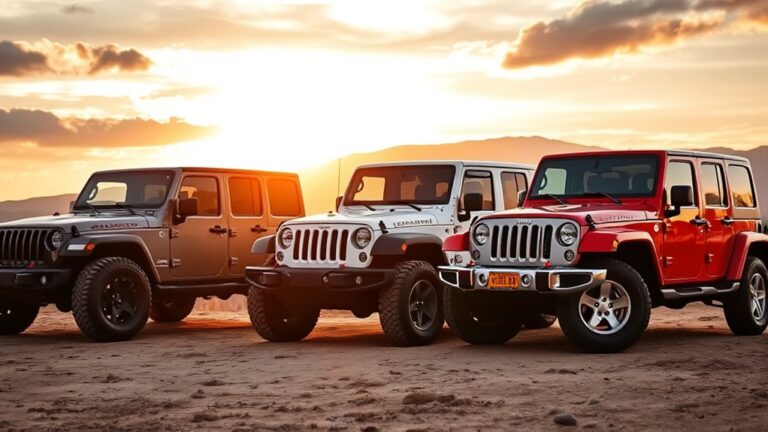
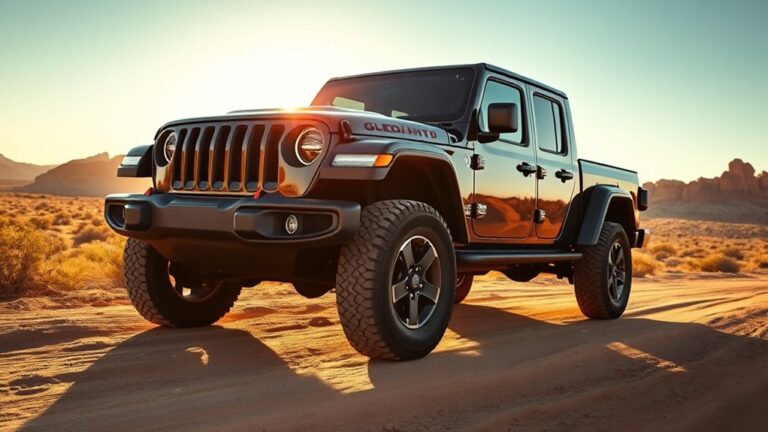
If you’ve ever stood beside a row of Jeep Wrangler models, it can feel like choosing boots for different terrain: one pair for pavement, one for mud, one for long days. You’ll find two-door and Unlimited body styles, plus trims like Sport, Willys, Sahara, Rubicon, and Mojave.
Each one changes comfort, capability, and price in a different way, and the differences matter more than you might expect.
Key Takeaways
- Jeep Wrangler models are organized by trims, body styles, and special editions, each changing features, capability, and price.
- Common body styles are two-door and four-door Unlimited; the two-door is more compact, while the Unlimited adds space and practicality.
- Sport is the basic, affordable trim, while Rubicon is the most trail-ready with stronger off-road hardware.
- Sahara focuses on comfort and road manners, while Willys and Mojave target trail heritage and desert performance.
- Modern Wranglers balance rugged off-road ability with added comfort, safety, and technology for daily driving.
Jeep Wrangler Trims, Body Styles, and Editions
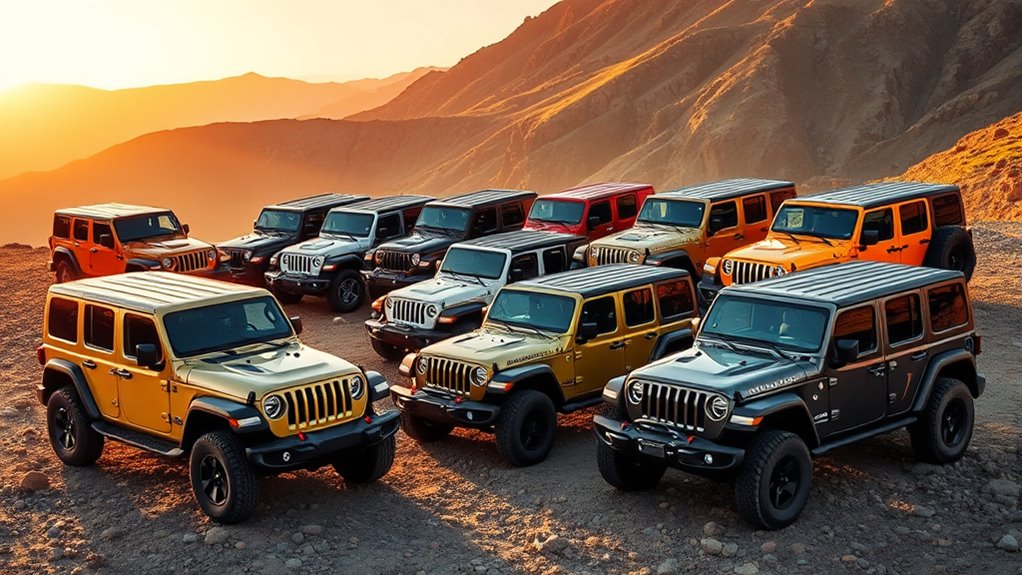
When you’re comparing Jeep Wrangler models, it helps to know that the lineup is organized around three main categories: trims, body styles, and special editions. You can start with trims, which range from basic, trail-ready setups to better-equipped versions with added comfort and technology.
Then you’ll notice body styles, usually two-door or four-door layouts, which affect passenger space and cargo room. Special editions add unique styling, paint, or equipment packages for specific buyers.
If you’re a new owner, focus on ownership costs and maintenance costs before choosing a model. You should also consider aftermarket upgrades if you want to customize later. Each category changes how you’ll use the Wrangler, so compare features carefully before you decide.
How Jeep Wrangler Models Have Changed
You can see Jeep Wrangler models evolve from the early generations, which focused on simple utility, to later versions with stronger performance, better safety, and more refined comfort. Over time, Jeep has updated the exterior, interior, and technology while keeping the Wrangler’s recognizable off-road character.
These changes show how the model has balanced its rugged roots with modern design expectations.
Early Wrangler Generations
The early Wrangler generations show how Jeep refined its formula while keeping the rugged character that defined the nameplate. When you compare the first models, you’ll notice a simple body-on-frame layout, removable roof panels, and a focus on trail use over comfort.
The YJ added square headlights and broader appeal, while still preserving its off road heritage. The TJ brought back round headlights and improved suspension, which helped you get better ride quality without losing capability.
The vintage popularity of these early Wranglers came from their mechanical simplicity, easy customization, and strong aftermarket support. Each generation kept the same basic purpose: give you a compact 4×4 that could handle dirt, mud, and rocks while staying true to Jeep’s original utility-first identity.
Modern Design Updates
Modern Jeep Wrangler models have evolved far beyond the bare-bones trail rigs of earlier generations, adding more comfort, safety, and technology without giving up their off-road roots. You’ll notice cleaner body lines, improved aerodynamics, LED lighting, and a tougher-looking grille that still honors classic Jeep cues.
Inside, modern design focuses on interior ergonomics, with better seat support, easier-to-reach controls, and larger infotainment screens. Jeep also adds available driver-assist features, upgraded materials, and stronger sound insulation, so you get a more refined daily drive.
At the same time, removable doors, fold-down windshields, and solid axle capability keep the Wrangler’s trail-ready identity intact. These updates make each new model more versatile without changing what you expect from a Jeep off-road.
Wrangler Body Styles Explained
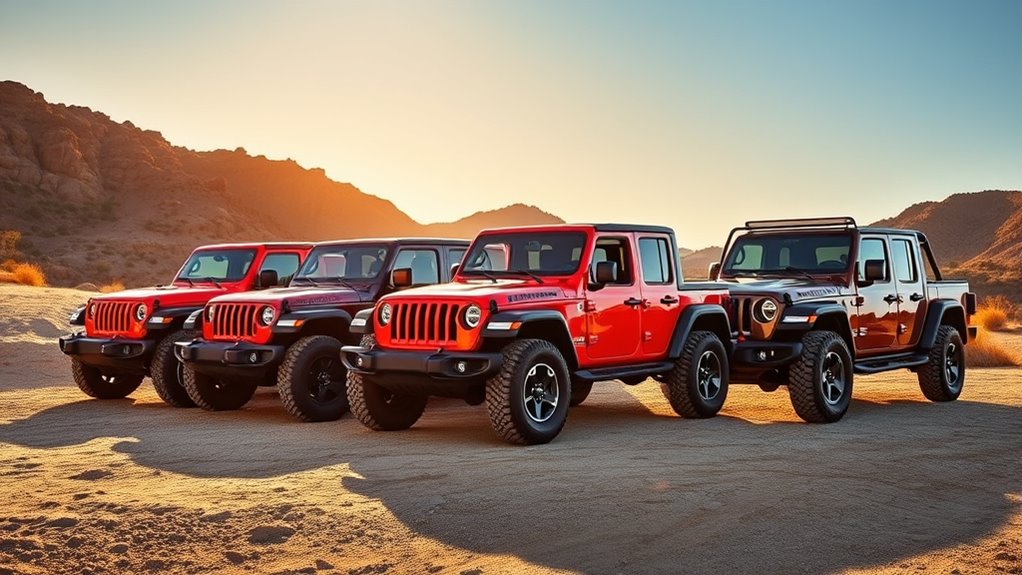
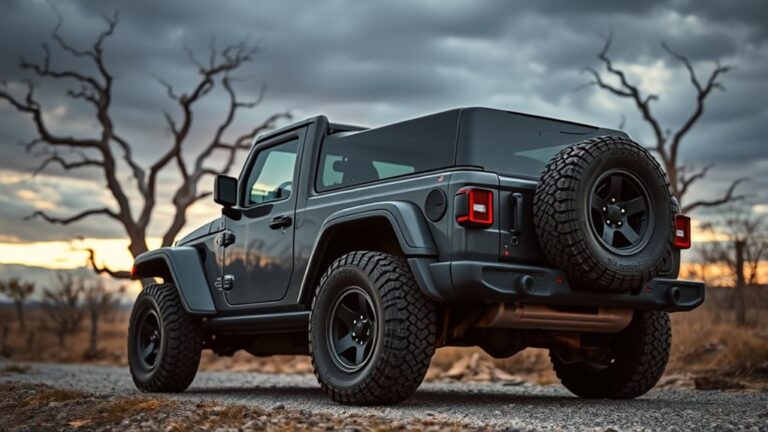
When you compare Wrangler body styles, you’ll usually choose between the Two-Door Wrangler and the Four-Door Unlimited. The two-door model gives you a shorter wheelbase and a more compact footprint, while the four-door Unlimited adds extra rear-seat space and cargo room.
Your choice depends on whether you prioritize maneuverability or passenger and storage capacity.
Two-Door Wrangler
If you want a Wrangler that feels the most compact and maneuverable, the two-door body style is the one to know. You get a shorter wheelbase, tighter turning radius, and a more agile feel on narrow trails and in crowded parking areas.
This layout also keeps the Jeep’s classic proportions, which many buyers value. In two door reliability discussions, you’ll usually find that the body style itself isn’t the main factor; maintenance, engine choice, and use matter more.
You may also notice a niche aftermarket that caters to lift kits, armor, and trail accessories sized for the shorter platform. Compared with larger versions, you’ll sacrifice rear-seat and cargo space, but you’ll gain easier trail control and a more traditional Wrangler experience.
Four-Door Unlimited
The four-door Wrangler Unlimited gives you the same open-air Jeep character as the two-door, but with a longer wheelbase, more rear-seat room, and noticeably better cargo capacity. You’ll notice the difference most when you carry passengers, gear, or both on daily drives and weekend trips.
In a two door vs four door comparison, the Unlimited usually rides with a bit more stability and makes rear access easier. It still keeps solid off-road ability, though the added length can affect breakover clearance on steep terrain.
When you weigh aftermarket upgrades vs stock features, the Unlimited often starts as the more practical choice because it gives you space without sacrificing core Wrangler capability.
Wrangler Trims and Features
Jeep Wrangler trims give you a wide range of choices, from trail-ready basics to more refined, feature-rich setups. You can start with a simple trim that emphasizes durability, then move up to versions with upgraded wheels, skid plates, and advanced traction systems.
Inside, the Jeep interior changes too, with available touchscreen displays, better materials, and added convenience features that improve daily use. Higher trims often add enhanced Trail capabilities, including locking differentials, sway bar disconnect systems, and off-road tuned suspension.
You’ll also find options like LED lighting, navigation, and heated seats on select models. Each trim balances comfort, technology, and rugged performance differently, so you can match your Wrangler to how you drive and where you want to take it.
Which Wrangler Model Is Best?
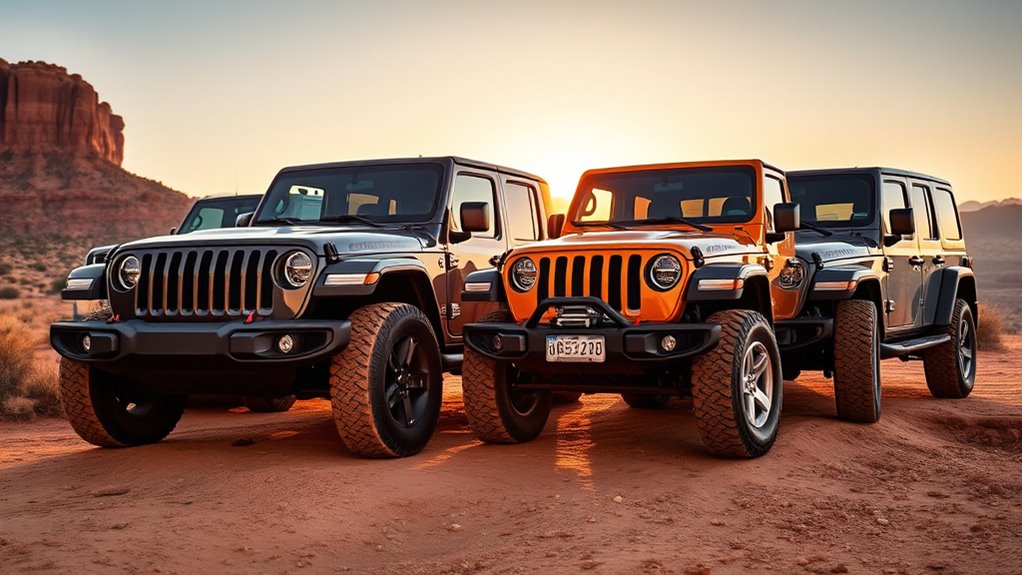
Which Wrangler model is best depends on how you plan to use it, because each trim serves a different kind of driver. You should match your needs to your budget, comfort goals, and trail use.
| Need | Best fit |
|---|---|
| Daily driving | Base trim |
| Value features | Mid-level trim |
| Advanced off-road gear | Trail-focused trim |
| Customization | High-option trim |
If you want simple car compatibility with common accessories, a lower trim can work well. If you plan frequent aftermarket upgrades, choose a model with stronger factory equipment and more available options.
You’ll save time by checking engine choices, axle ratings, and interior tech before you buy. For most buyers, the best Wrangler is the one that fits your routine without adding features you won’t use.
Sport vs. Rubicon
Sport and Rubicon trims serve very different buyers, so the better choice depends on how much capability you need right out of the factory. In a sport vs. rubicon comparison, you’ll notice the Sport focuses on affordability and everyday use, while the Rubicon adds hardware for tougher trails.
If you spend more time on road, the Sport gives you a simpler setup with fewer features to manage. If you’re comparing off road vs. on road priorities, the Rubicon stands out with stronger traction aids, upgraded axles, and more aggressive components that help on rough terrain.
You can still drive either model daily, but you should choose the Sport for value and the Rubicon when factory trail readiness matters most.
Willys, Sahara, and Mojave
The Willys, Sahara, and Mojave trims each target a different kind of Wrangler driver, so the best fit comes down to where and how you plan to use the vehicle. You get distinct setups:
| Trim | Focus | Notable trait |
|---|---|---|
| Willys | Trail style | willys nostalgia with practical hardware |
| Sahara | Daily comfort | refined ride and upscale touches |
| Mojave | Desert running | mojave capability and high-speed control |
| All | Wrangler identity | removable top, strong 4×4 character |
You’ll notice the Willys adds heritage cues and useful off-road gear, while the Sahara emphasizes road manners and convenience. The Mojave stands apart with suspension tuning, cooling, and chassis support for sand and rough terrain.
Each trim keeps Wrangler personality intact, but each one changes how you’ll experience it.
How to Choose the Right Wrangler for Your Needs
To choose the right Wrangler, start by matching the model’s strengths to how you’ll actually drive it. If you spend most miles on pavement, prioritize comfort, cabin features, and easier steering.
If trails matter more, look for stronger axles, aggressive tires, and higher ground clearance. Compare Wrangler trade offs carefully: a more capable off-road setup can ride louder and use more fuel, while a daily-friendly trim may give up some trail performance.
Think about roof style, door removal, towing needs, and available driver aids. For off road versus daily use, rank your needs honestly, then test-drive at least two trims back to back. That lets you feel the differences in visibility, suspension, and noise before you decide.
Frequently Asked Questions
What Engine Options Are Available for Jeep Wrangler Models?
You’ll find an engine options overview including a 2.0L turbo four, 3.6L V6, 6.4L V8 in the Rubicon 392, and 4xe hybrid. These choices change power, efficiency, and off road capability nuances.
How Much Can a Jeep Wrangler Tow?
You can tow up to 5,000 pounds in a Jeep Wrangler, depending on setup. That’s enough for many small trailers.
Your ride comfort and fuel economy may vary, especially when towing heavy loads or off-road.
What Are the Best Wrangler Colors for Resale Value?
You’ll usually get the best resale with white, black, gray, and silver Wranglers. These color trends for off roaders stay broad, while resale value by trim can still favor popular Sport and Rubicon setups.
How Reliable Is a Jeep Wrangler Over Time?
You’ll find Wrangler reliability varies; regular maintenance helps it age well. Reliability trends show solid engines, but drivetrain and electronics need attention.
For two word discussion ideas, design focused comparisons, and off road capabilities matter too.
What Safety Features Come Standard on Newer Wranglers?
You’ll usually get standard safety features like airbags, stability control, traction control, rearview cameras, and blind-spot monitoring.
You can also add off road upgrades that preserve protection while improving visibility, braking, and driver confidence.
Conclusion
When you compare Jeep Wrangler models, you’ll see that each body style and trim serves a different purpose. If you want simple capability, the Sport keeps things affordable; if you need serious trail performance, the Rubicon delivers.
The Unlimited gives you more room, while the Willys, Sahara, and Mojave add their own strengths. As the saying goes, “different strokes for different folks,” so pick the Wrangler that matches how you drive every day.
Ultimately, understanding the differences will help you choose the Jeep Wrangler model that fits your lifestyle and driving needs perfectly.