Is Jeep Renegade 4 Wheel Drive
As an Amazon Associate we earn from qualifying purchases.
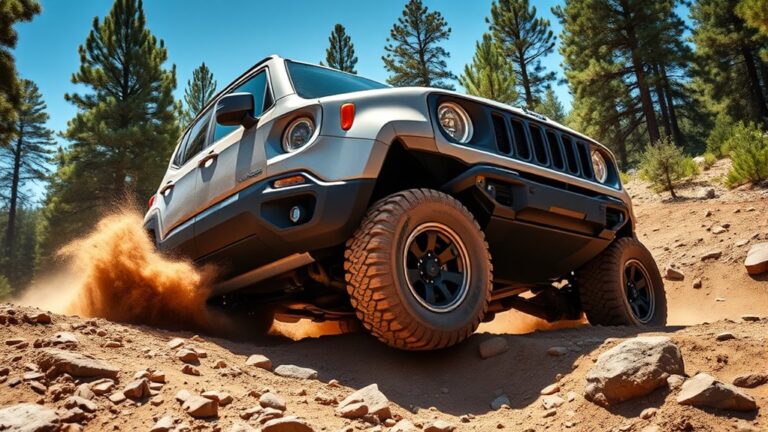
Is the Jeep Renegade 4 Wheel Drive, or is it only 4WD when you pick the right trim? You’ll find that some Renegade models come with four-wheel drive, while others stay front-wheel drive. The exact setup can change by model year and package.
4WD can improve traction on slippery or loose surfaces, but it also adds cost and complexity. The key is knowing which version you’re looking at.
Key Takeaways
- Some Jeep Renegade trims are 4WD, but others are front-wheel drive only.
- Check the specific trim, model year, or window sticker to confirm drivetrain.
- 4WD Renegades can send power to the rear wheels when front traction is lost.
- 4WD improves traction in snow, rain, gravel, and light off-road conditions.
- 4WD adds cost, weight, and complexity compared with front-wheel-drive models.
Is the Jeep Renegade 4WD?
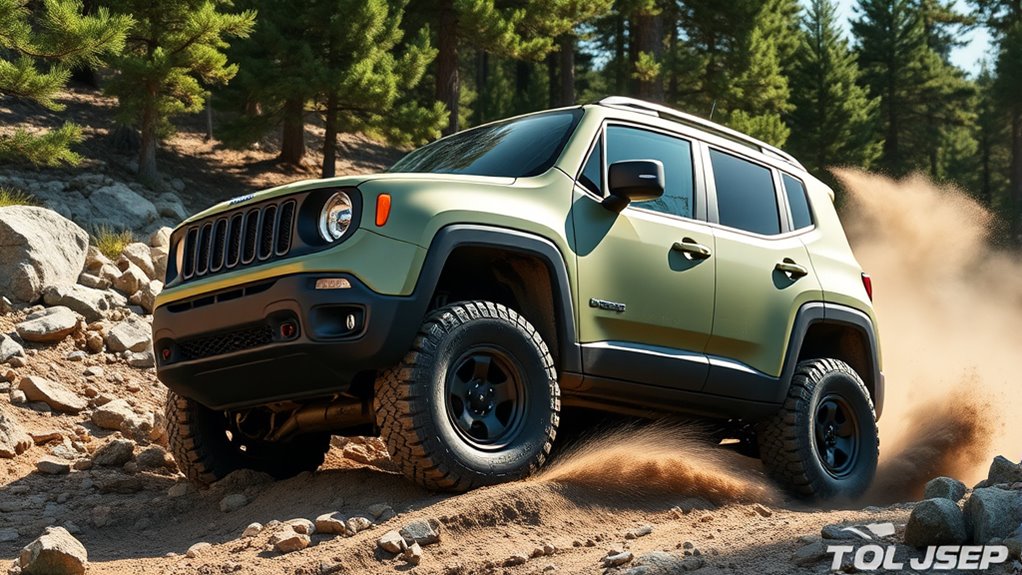
Yes. The Jeep Renegade can be 4WD, but not every trim is equipped that way. You should verify the specific vehicle’s drivetrain before assuming off-road capability.
Jeep pairs its 4WD system with a rear-drive module that can send torque when front-wheel slip occurs, which improves traction on wet or loose surfaces. That setup can affect drivetrain reliability because added components increase mechanical complexity, so regular fluid service matters.
You may also notice some impact on fuel efficiency, since 4WD hardware adds weight and drivetrain losses. If you want confidence in year-round traction, check the window sticker, build sheet, or owner’s manual for the exact drivetrain code. This lets you confirm capability without relying on trim name alone.
Which Jeep Renegade Trims Have 4WD?
Which Jeep Renegade trims have 4WD depends on model year and package selection, but the drivetrain is typically available on higher or off-road-focused trims such as the Trailhawk and, in many years, select Latitude, Limited, or Altitude configurations. You should verify the exact window sticker or build sheet, because availability changes by year and market.
Base trims often prioritize front-wheel drive, while 4WD models usually cost more and can affect fuel economy. If you need traction for snow, gravel, or uneven roads, compare trim listings carefully before buying.
For drivetrain maintenance, check service intervals, fluids, and tire matching requirements, since 4WD systems can be more sensitive to uneven wear. Always confirm the specific Renegade configuration before assuming standard equipment.
How Does the Jeep Renegade 4×4 Work?
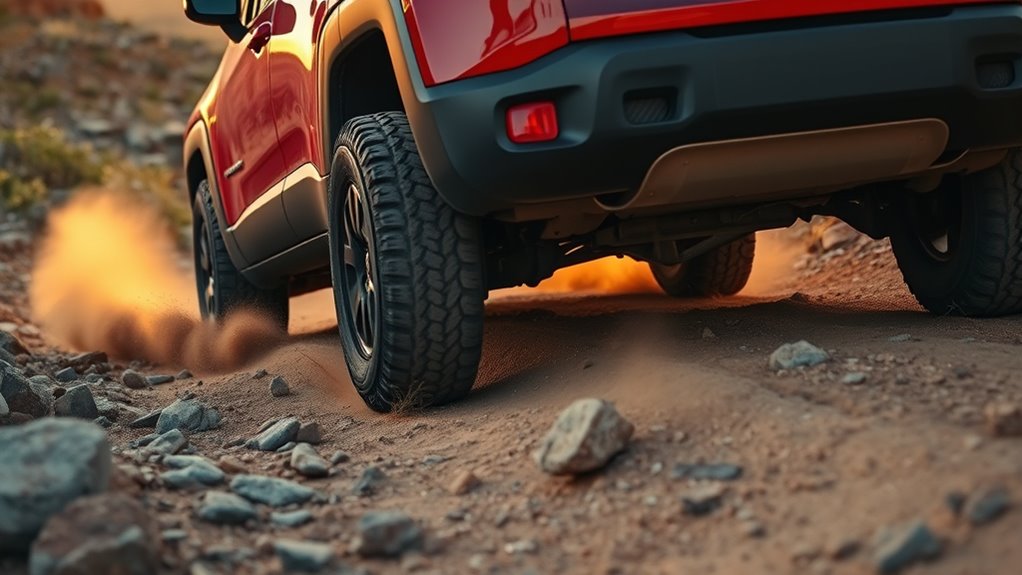
The Jeep Renegade’s 4×4 system sends power to the front wheels in normal driving and can automatically route torque to the rear wheels when traction drops. You get electronic management that monitors wheel slip, throttle input, and steering angle, then adjusts torque distribution in real time.
The Jeep Renegade’s 4×4 system automatically shifts torque rearward when traction drops, helping maintain control in changing conditions.
This setup helps you maintain off road capability on loose gravel, mud, or snow without requiring constant driver input.
Sensors detect loss of grip quickly. The rear axle engages only as needed. The system supports fuel economy by reducing unnecessary rear-drive operation.
In steady cruising, you usually won’t notice it working. When conditions change, the system reacts to improve stability and traction, giving you predictable control on mixed surfaces.
Jeep Renegade 4WD vs Front-Wheel Drive
When you compare the Jeep Renegade’s 4WD system options with front-wheel drive, you’re looking at two layouts built for different traction and use cases. Front-wheel drive sends power to the front wheels only, while 4WD can route torque to all four wheels for added grip in low-traction conditions.
That difference affects launch stability, off-road capability, and how the vehicle handles snow, mud, and uneven surfaces.
4WD System Options
Jeep Renegade offers two drivetrain layouts depending on trim and configuration: front-wheel drive for basic on-road use and four-wheel drive for improved traction in low-grip conditions. You can compare them by examining torque delivery, axle engagement, and traction management. In a triple sport comparison, the 4WD setup usually adds complexity but also expands capability.
- FWD sends power to the front axle only.
- 4WD can route power to both axles when conditions demand it.
- Your drivetrain maintenance schedule may differ because 4WD components add service points.
You’ll usually see 4WD on trims tuned for off-pavement use, while FWD serves drivers prioritizing efficiency and simpler hardware. When you evaluate these systems, focus on how your driving environment affects traction needs and long-term ownership requirements.
Front-Wheel Drive Basics
Front-wheel drive sends engine power to the front wheels only, which keeps the Renegade’s drivetrain simpler and lighter than a 4WD setup. You’ll see the front wheel pair handle both steering and propulsion, so the layout uses fewer drivetrain components than all wheel systems.
That design can reduce mechanical complexity and usually frees up more space around the rear axle. In a front-wheel-drive Renegade, the transmission, differential, and half-shafts all work together to move the vehicle from the front.
You won’t find a transfer case or rear drive connection in this configuration. For you, that means a straightforward powertrain layout, with power routed through the front wheel assembly rather than distributed to both axles.
Capability Differences
By comparison, 4WD Renegade models give you more traction and control on loose, wet, or uneven surfaces because they can send power to both axles instead of only the front wheels. You’ll notice the difference most during hill climbs, snow travel, and off-pavement driving, where wheel slip can reduce a FWD model’s effectiveness.
4WD improves forward motion when one axle loses grip. FWD usually offers lower weight and slightly better fuel efficiency. Gear ratio nuances affect crawl ability, acceleration, and highway behavior.
You should also factor in drivetrain maintenance, since 4WD adds transfer case and rear differential service needs. In normal commuting, FWD can still meet your needs, but 4WD gives you a broader operating margin when conditions get demanding.
What Can the Jeep Renegade Handle Off-Road?
On dirt roads, gravel, light snow, and moderate trails, the Jeep Renegade can handle more than a typical compact crossover, especially when equipped with its available 4×4 system, Selec-Terrain modes, and higher ground clearance. You can expect controlled traction on uneven surfaces, modest articulation over ruts, and better wheel slip management when surfaces change.
The Renegade’s short wheelbase also helps you clear breakover points and tight trail turns. It isn’t built for deep mud, rock crawling, or severe off-road abuse, so you should match the route to its suspension and tire setup.
Routine drivetrain maintenance matters if you use it off pavement often. If you’re planning upgrades or trail use, off road finance should account for tires, recovery gear, and service costs.
When Does 4WD Help in Everyday Driving?
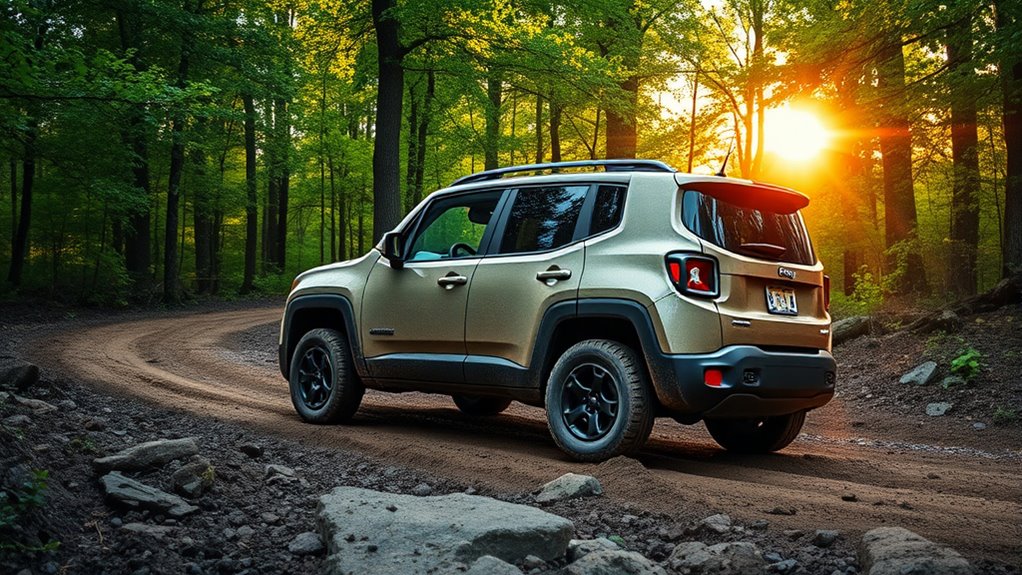
You’ll notice 4WD helps most when road traction drops, such as on wet pavement, packed snow, or ice, because it can improve wheel grip and reduce slip during acceleration. It also helps on steep driveways by distributing torque more effectively, which can make starts and low-speed climbs more controlled.
In these conditions, 4WD won’t replace careful driving, but it can add useful traction and stability.
Slippery Road Traction
When roads turn slick, a Jeep Renegade’s 4WD system can improve traction by sending power to the wheels with the most grip. This helps when accelerating from a stop, climbing a wet hill, or crossing light snow and slush.
You’ll notice steadier drive quality because the system reduces wheel spin before it builds. Traction control works with 4WD to monitor slip and brake individual wheels when needed, helping the vehicle stay composed on damp pavement.
- Wet asphalt with patchy grip
- Packed snow on city streets
- Slushy intersections after a storm
On slippery surfaces, you get better launch control and more predictable steering response. It doesn’t replace careful driving, but it can make low-traction conditions easier to manage.
Steep Driveway Control
Steep driveways are another everyday situation where a Jeep Renegade’s 4WD can help, especially when the surface is wet, icy, or loose gravel. You get better traction because the system can send power to all four wheels instead of relying only on the front tires. That reduces wheelspin and helps you maintain a steady climb or controlled descent.
If you stop on an incline, 4WD can make restarting easier and more predictable. It can also improve low-speed stability when turning onto a slope. However, you’ll usually see slightly lower fuel economy than in 2WD mode, since the drivetrain works harder.
For this use, 4WD supports practical daily driving, not just off road handling, by adding control where traction is limited.
How Can You Check a Renegade’s Drivetrain?
To check a Renegade’s drivetrain, start by confirming the exact trim and model year, since Jeep offers both front-wheel-drive and four-wheel-drive versions. You can verify this on the window sticker, VIN build sheet, or doorjamb label. Look for 4×4 badges, a rear driveshaft, and a rear differential under the vehicle.
In the cabin, check the selector mode for drive settings; some trims show terrain controls that indicate an AWD system. Test on a loose surface if permitted: the rear wheels should engage under traction loss.
Inspect the transfer case and rear axle housing. Compare drivetrain codes in the owner’s manual. Check for Off road braking and Cargo capacity ratings in the spec sheet.
Is a Jeep Renegade 4×4 Worth It for You?
A Jeep Renegade 4×4 is worth it if you need extra traction for snow, rain, gravel, or light off-road use, but the value depends on how you actually drive. If you stay on paved roads, a front-wheel-drive model may meet your needs with lower purchase cost, better fuel economy, and simpler drivetrain maintenance.
If you face steep driveways, unplowed streets, or loose surfaces, 4×4 can improve stability and launch performance. You should also consider tire choice, because proper tires often matter as much as the system itself.
For occasional trail use, the factory setup is usually enough. If you plan harder use, you may need aftermarket upgrades, which add cost and complexity.
Frequently Asked Questions
Does the Jeep Renegade Have a Manual Transmission?
Yes, you can get a manual transmission in some Jeep Renegade models, depending on year and trim. In your transmission discussion, check the specific drivetrain discussion, since availability varies by market and powertrain options.
What Is the Jeep Renegade’s Towing Capacity?
You can tow up to 2,000 pounds with the Jeep Renegade when properly equipped. If you’ve got the manual transmission, towing capacity stays the same on most trims, though package options can affect it.
How Much Cargo Space Does the Jeep Renegade Offer?
You get 18.5 cubic feet of cargo space behind the rear seats, expanding to about 50.8 cubic feet with them folded.
If you choose a manual transmission model, packaging stays similar, with slight variations.
Is the Jeep Renegade Good on Gas?
Yes, you’ll get decent fuel efficiency with the Jeep Renegade, especially in front-wheel-drive models.
You’ll trade some economy for interior comfort and capability, but its mileage stays competitive for a small SUV overall.
What Safety Features Come Standard on the Jeep Renegade?
Standard safety systems include you’ll find airbags, electronic stability control, traction control, and rear visibility aids.
You get a rearview camera, hill-start assist, and tire-pressure monitoring, helping you drive confidently and securely.
Conclusion
So, if you’re choosing a Jeep Renegade, think of its drivetrain like a trail map: some paths are paved, others wind into snow and mud. You can get 4WD on certain trims and model years, but not every Renegade has it. If you need extra traction for slippery commutes or light off-road use, 4WD can help.
Just verify the exact setup on the sticker, build sheet, or owner’s manual before you buy. Knowing whether the Jeep Renegade is 4 wheel drive is key to matching the vehicle to your driving needs.