Is a Jeep Wrangler Safe
As an Amazon Associate we earn from qualifying purchases.
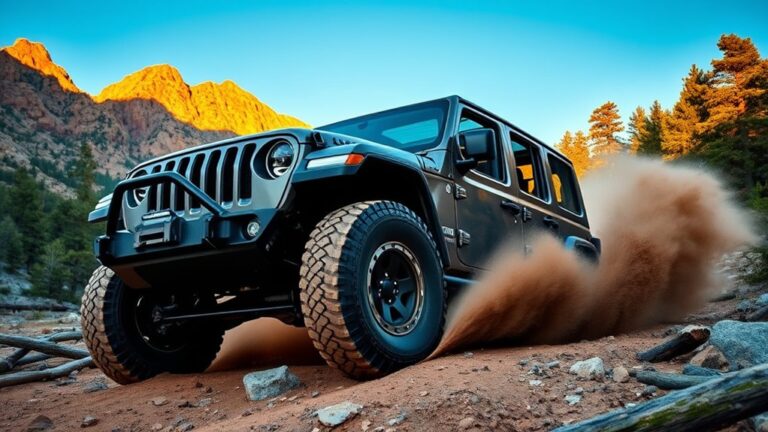
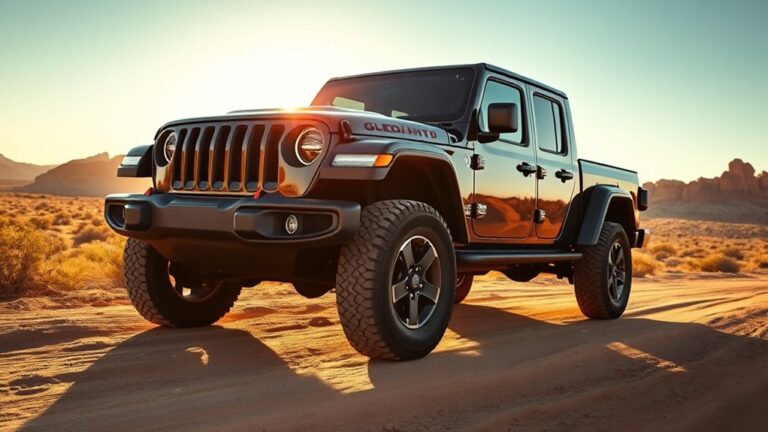
If you’re asking whether a Jeep Wrangler is safe, the answer depends on how you use it and which model year you choose. You get strong off-road durability, but you also accept trade-offs like a taller center of gravity and more rollover exposure.
Standard safety tech helps, yet trim level, load, maintenance, and driving conditions can change the picture fast. The details matter more than the badge, and they don’t all point in the same direction.
Key Takeaways
- The Jeep Wrangler’s safety is context-dependent: it offers strong visibility and capability, but has a higher rollover risk than many SUVs.
- Crash-test results vary by model year and organization, so check the exact year’s frontal, side, and small-overlap ratings.
- Standard safety features usually include airbags, stability control, ABS, traction control, and a rearview camera.
- Off-road design, lift kits, larger tires, and roof racks can increase rollover risk and affect handling.
- For family use, safety depends on trim, maintenance, loading, and careful driving more than on infotainment features.
Is a Jeep Wrangler Safe Overall?
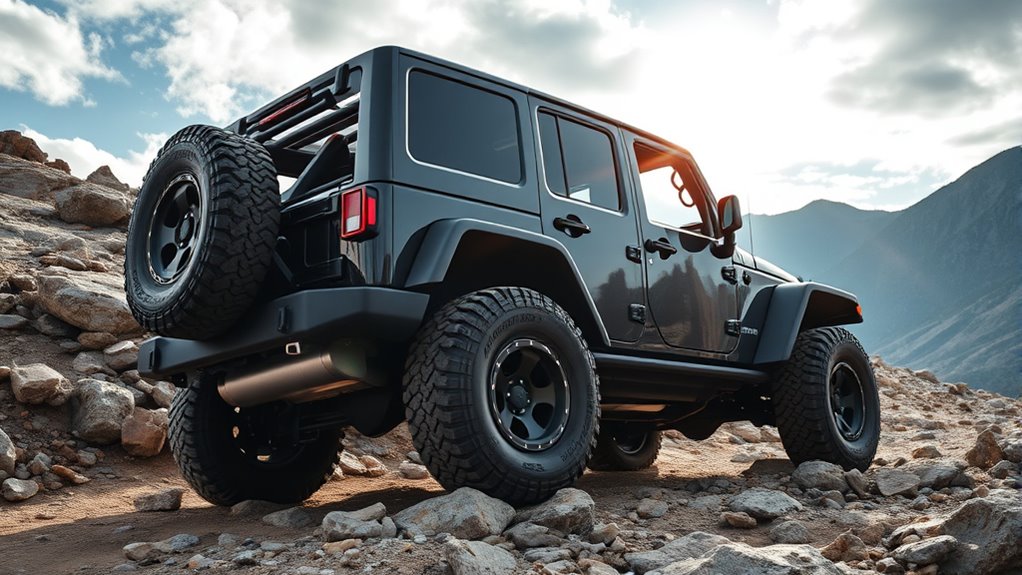
A Jeep Wrangler can be safe in many everyday driving situations, but its overall safety depends on how you define safety and how you use the vehicle. You should evaluate its tall ride height, strong visibility, and capable chassis against its higher center of gravity and short wheelbase.
Those traits can improve control on rough roads, yet they can also increase rollover risk in abrupt maneuvers. You’ll also want to consider how you drive, load the vehicle, and maintain tire pressure, brakes, and suspension.
For a technical assessment, avoid unrelated analysis or off topic comparison with vehicles that serve different purposes. Instead, judge whether the Wrangler’s design matches your operating environment, expected speed range, and tolerance for compromise in stability, protection, and handling precision.
How Does the Jeep Wrangler Perform in Crash Tests?
Crash-test performance for the Jeep Wrangler depends on the specific model year and test organization, but the results generally reflect the vehicle’s body-on-frame design, tall stance, and removable-top structure. You’ll usually see mixed outcomes across frontal, side, and small-overlap evaluations because each crash test methodology measures different injury risks and structural responses.
In some assessments, you may notice acceptable occupant protection in certain impacts, while others reveal weaker performance in areas tied to cabin stability. Rollover statistics also matter, since the Wrangler’s high center of gravity raises the probability of a tip-over in emergency maneuvers. When you compare results, you should focus on the specific year tested, because updates can change ratings substantially.
What Safety Features Come Standard on the Wrangler?
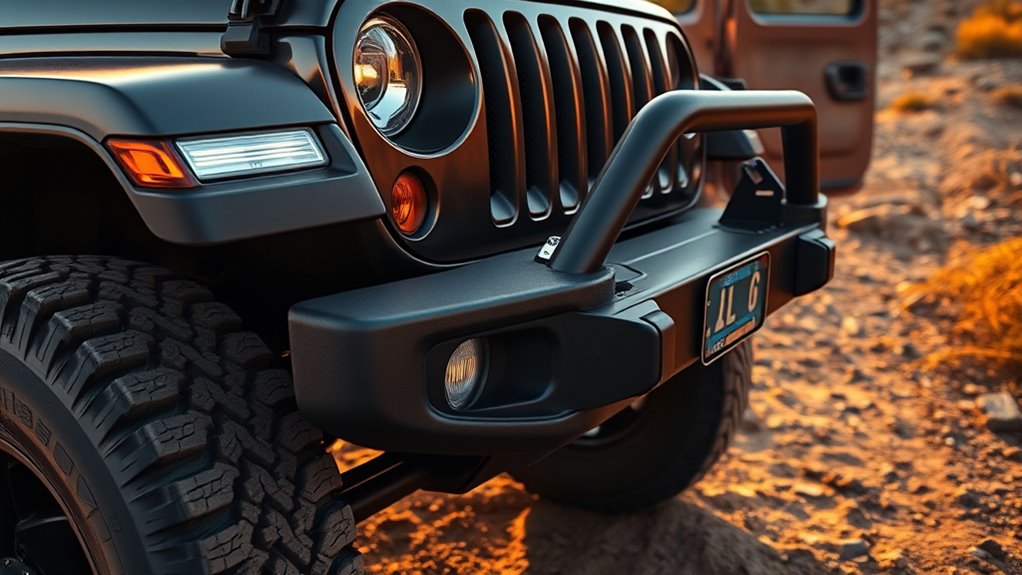
Standard Wrangler trims come with a basic but useful set of safety features, including airbags, electronic stability control, traction control, anti-lock brakes, and a rearview camera. You also get hill start assist and trailer sway control on many configurations, which help you manage steep grades and towing loads with less driver error.
These systems support control on pavement and when you encounter off road dangers, where wheel slip and uneven surfaces can quickly reduce stability. You should note that available driver aids vary by trim, but the standard package covers core crash-avoidance functions.
That said, safety equipment is only one factor, and an unrelated topic like infotainment won’t change how these systems perform in emergency maneuvers or low-traction conditions.
How Does the Wrangler Handle Rollover Risk?
Rollover risk is one of the Wrangler’s most important safety considerations because its tall body, high ground clearance, and off-road-focused suspension can raise the center of gravity. You reduce that risk through stability control, electronic roll mitigation, and careful speed management on curves, hills, and uneven terrain.
The Wrangler’s braking and steering systems help you maintain control, but they can’t eliminate rollover potential if you drive aggressively or make abrupt inputs. You should also watch for unintended acceleration events, since sudden throttle response can destabilize the vehicle in low-traction conditions.
Aftermarket modifications such as larger tires, lift kits, and roof racks can further increase rollover likelihood by changing weight distribution and suspension geometry. Proper loading and disciplined driving remain essential.
What Wrangler Design Trade-Offs Affect Safety?
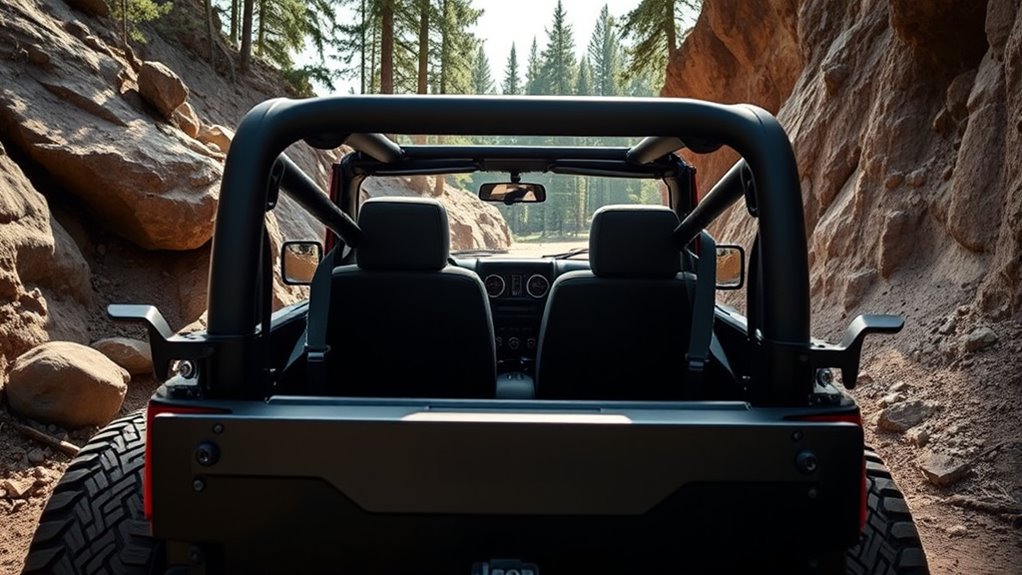
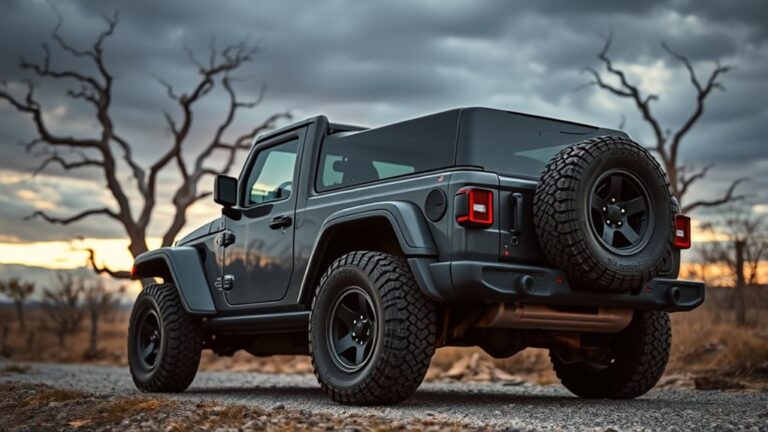
The Wrangler’s safety profile reflects clear design trade-offs: its body-on-frame construction, removable doors and roof, upright windshield, and off-road suspension improve durability and trail capability, but they also affect crash energy management, cabin rigidity, and noise, vibration, and harshness. You should understand that these choices prioritize material durability and repairability over the optimized crash structures you’ll find in many unibody SUVs.
The tall, boxy profile can also raise aerodynamic drag and increase exposure to side loads in evasive maneuvers. At the same time, reinforced components and skid plates help protect critical systems during off-road impacts. In practice, you’re evaluating design trade offs between ruggedness, modularity, and on-road refinement, with safety shaped by how well the vehicle balances structural robustness with controlled energy absorption.
Is the Jeep Wrangler Safe for Families?
For families, a Jeep Wrangler can be safe in the sense that it offers modern airbags, stability control, and available driver-assistance features. However, you should judge it against your actual use case rather than its off-road reputation alone.
You’ll need to evaluate family seating, rear access, and cargo layout, because these factors affect daily usability. The Wrangler’s upright cabin can simplify child seating installation, but tight rear quarters and limited door openings may reduce convenience compared with crossover SUVs.
If you routinely transport multiple passengers, test seat-belt reach, booster placement, and latch access before you decide. You should also verify trim-specific safety equipment, since features vary.
In practice, it can work for a family, but its packaging is functional rather than optimized for maximum comfort.
How Can You Drive a Wrangler More Safely?
To drive a Wrangler more safely, you should reduce speed, increase following distance, and account for its higher center of gravity and longer stopping behavior compared with many crossovers. You should smooth steering inputs, brake early, and avoid abrupt lane changes on wet or uneven pavement.
Proper tire pressure and tread depth matter because they affect grip and braking distance.
| Action | Effect | Priority |
|---|---|---|
| Slow down | Reduces rollover risk | High |
| Extend gap | Improves reaction time | High |
| Check tires | Preserves traction | Medium |
| Brake early | Lowers stop distance | High |
Treat cargo loads carefully, since excess weight changes handling. An unrelated topic or irrelevant pairing can distract you from these controls, so keep attention on road conditions, speed, and vehicle response.
Which Wrangler Trims Add the Most Safety?
Higher Wrangler trims usually add the most safety through driver-assistance equipment, better lighting, and available cameras rather than major structural changes. You’ll see the biggest gains on Sahara, Rubicon, and High Altitude models, where blind-spot monitoring, rear cross-path detection, adaptive cruise control, and parking sensors often appear.
These systems can reduce low-speed and lane-change risk, but they don’t replace careful driving.
- Check trim-level option packages
- Verify camera and sensor availability
- Compare standard vs. optional assists
- Review headlight and fog-light upgrades
- Factor auto maintenance and fuel economy impacts
If you want the safest configuration, prioritize trims with the most electronic aids and the best night-visibility equipment. Always confirm features by model year, because Jeep changes content frequently.
Frequently Asked Questions
Does the Jeep Wrangler Have Adaptive Cruise Control?
Yes, you can get adaptive cruise on some Jeep Wrangler trims, but not all. You’ll need to verify the specific model year and options, especially if you want door removal, since equipment varies by configuration.
Can You Remove the Wrangler’s Doors Safely?
Yes, you can remove the Wrangler’s doors safely if you follow removal precautions: support the door, disconnect wiring, and store hardware.
Door removal risks include dropped panels, damaged connectors, and improper reinstallation.
How Much Does a Jeep Wrangler Weigh?
You’re looking at roughly 4,000 to 4,500 pounds, depending on trim and options. You’ll find weight classifications vary by model, and safety tradeoffs follow.
You can verify exact curb weight on the door jamb sticker.
Is the Wrangler Good in Winter Conditions?
Yes, you’ll get solid winter traction from a Wrangler with proper tires and 4WD engaged. Its cold weather durability is generally strong, but you’ll want to manage road glare, braking distance, and maintenance carefully.
What Towing Capacity Does the Wrangler Offer?
Like a workhorse, you’ll find Wrangler towing capacity ranges roughly 2,000 to 3,500 pounds, depending on trim and equipment.
You should check safety ratings and your model’s tow package, because ratings vary by configuration.
Conclusion
So, is a Jeep Wrangler safe? You can say yes, but only with limits. You’ll get a strong cabin, useful safety tech, and capable crash protection. Yet, the Wrangler’s high center of gravity and boxy profile still make rollover dynamics a real concern.
Think of it like a mountain tool: powerful and dependable when you use it correctly, but not optimized for every road. Your safety depends on trim, maintenance, load, and how carefully you drive.
In conclusion, a Jeep Wrangler can be safe, but its unique design and handling characteristics mean that safety varies based on how it is used and maintained.