Is a Jeep a Truck
As an Amazon Associate we earn from qualifying purchases.
You might call a Jeep a truck, but that depends on how you define truck.
Most Jeep models are SUVs or off-road utility vehicles, not pickup trucks with open beds.
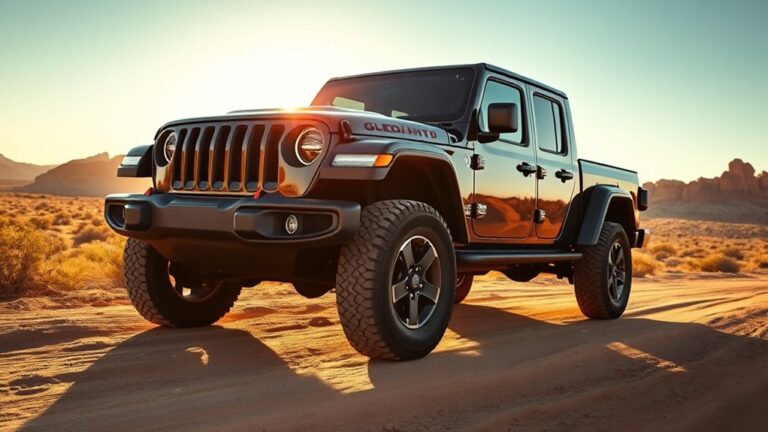
Still, some Jeeps, like the Gladiator, share truck-like features and capabilities.
If you’re trying to classify one, you’ll need to look at body style, cargo use, and how it’s registered.
The answer isn’t as simple as it first seems.
Key Takeaways
- Most Jeeps are SUVs or off-road utility vehicles, not pickup trucks.
- A truck usually has an open cargo bed and higher cargo-hauling capacity.
- Jeeps generally focus on passenger transport, four-wheel drive, and off-road performance.
- Legal classification can vary by state or country, so some paperwork may label a Jeep differently.
- The Jeep Gladiator is the clearest Jeep model that is pickup-truck-like.
Is a Jeep a Truck?
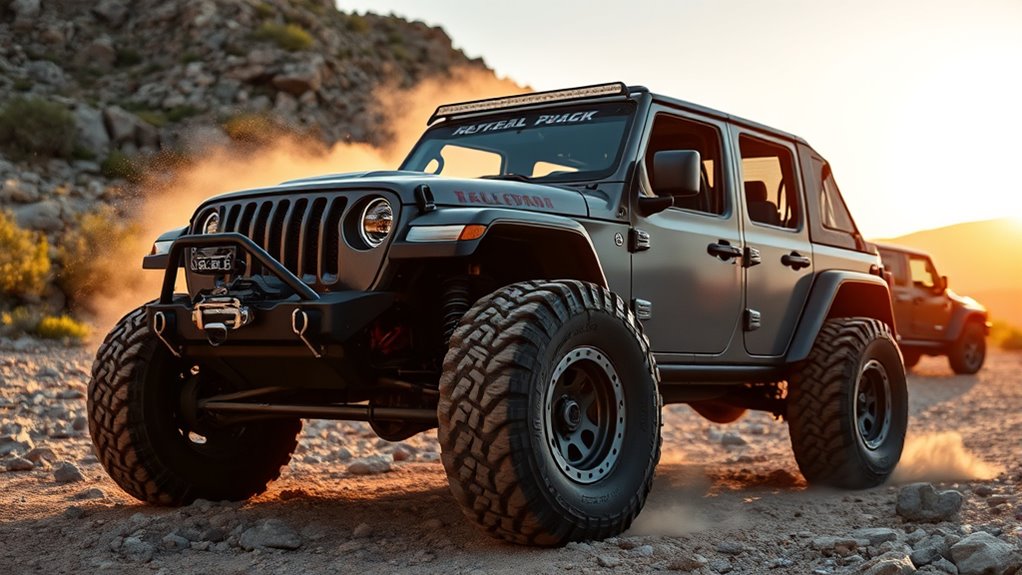
Whether a Jeep counts as a truck depends on how you define “truck.” In everyday use, most Jeeps are classified as SUVs or off-road utility vehicles, not pickup trucks, because they don’t have an open cargo bed.
If you ask is jeep a truck, the usual answer is no. You’ll usually see Jeep models designed for passenger transport, four-wheel drive, and off road performance rather than hauling large loads.
Some people call a Jeep truck-like because it can handle rugged terrain and utility tasks, but that’s different from meeting the common pickup definition. So, when you compare categories, a Jeep fits better as an SUV or off-road vehicle than as a standard truck.
What Makes a Vehicle a Truck?
A vehicle is usually called a truck when it’s built to carry cargo or tow heavy loads, often with a separate cargo area, a body-on-frame design, and higher payload capacity than a passenger car. You can spot truck traits by looking at function, not just size.
- It hauls gear or materials.
- It tows trailers or equipment.
- It uses a frame suited for load-bearing work.
- It offers payload and towing ratings above typical cars.
You should also consider suspension tuning, bed or open cargo space, and drivetrain strength. These features help off-road use, but they don’t replace the basic truck definition.
If you care about fuel efficiency, note that trucks often trade economy for capability. On trails, trail etiquette matters because larger vehicles can affect surfaces more.
Are Jeeps Legally Classified as Trucks?
Legally, a Jeep isn’t automatically classified as a truck just because it looks rugged or can handle off-road use. You’ll find that classification depends on how your state and federal agencies define the vehicle.
In many cases, Jeeps are registered as SUVs or passenger vehicles, not trucks. Regulators may look at factors like body style, cargo capacity, and curb weight when deciding how to label it.
If you’re checking insurance, taxes, or registration rules, you should review your local definitions rather than assume the badge tells you everything. Some owners also consider practical features such as towing, portable charging, and payload, but those don’t usually determine legal class on their own.
The exact category can vary by jurisdiction and paperwork.
Which Jeep Models Are Truck-Like?
When you look at Jeep models that feel most truck-like, the Gladiator stands out first because it uses a pickup-style bed, body-on-frame design cues, and strong towing and hauling capability. You’ll usually see that same rugged character in a few other models:
- Gladiator: the clearest truck-like Jeep.
- Wrangler: its removable body and solid-axle setup suggest utility.
- Grand Cherokee: it feels more SUV-like, but its size and torque give it a capable stance.
- Wagoneer: it leans toward full-size utility with a tall, square profile.
For two word discussion ideas, think “truck features” and “Jeep utility.” An unrelated subtopic might cover styling or interior comfort.
How Do Jeeps Compare to Pickup Trucks?
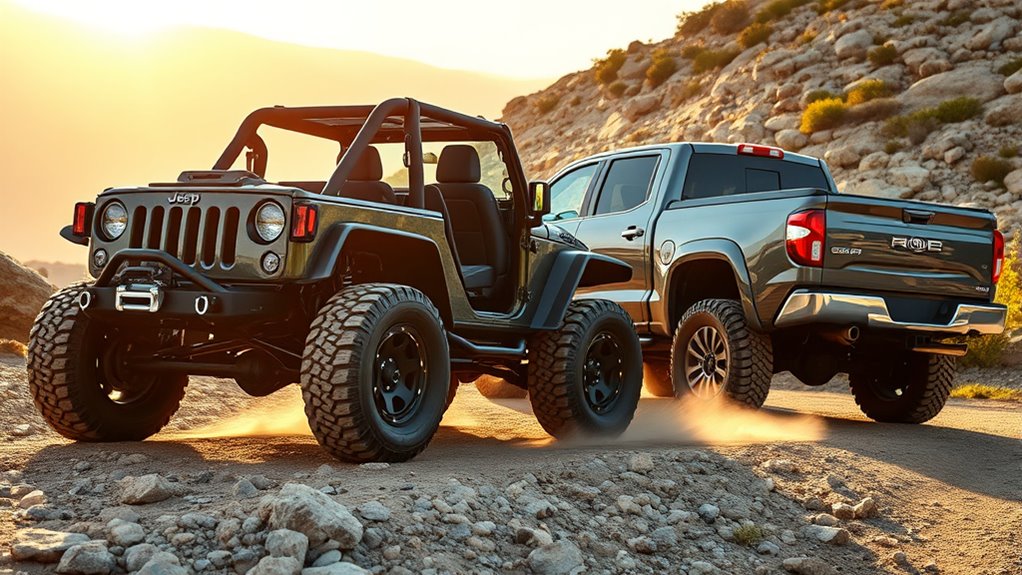
Jeeps and pickup trucks share a rugged, utility-focused image, but they’re built for different jobs. If you ask is jeep vs truck, you’ll usually compare maneuverability, cabin size, and cargo format.
Jeeps often feel smaller and more agile on trails, while pickups usually offer larger beds and higher payload ratings. For off road vs on road use, you’ll notice Jeeps tend to prioritize approach angles and articulation, while trucks often balance hauling with daily driving comfort.
| Feature | Jeep | Pickup Truck |
|---|---|---|
| Cargo | Cabin space | Open bed |
| Size | Compact | Larger |
| Terrain | Tight trails | Mixed use |
| Ride | Agile | Stable |
| Use | Recreation | Work and transport |
When Does a Jeep Work Like a Truck?
A Jeep works like a truck when you need utility from the cabin, roof, and available cargo area rather than from a separate bed. In this concept comparison, you can use it for jobs that need enclosed hauling, towing, or weekend gear storage.
You may find it practical when your route mixes pavement and rough ground, and fuel efficiency matters more than maximum payload.
- You carry tools inside, not loose in a bed.
- You secure cargo with folding seats and tie-downs.
- You tow light to moderate loads.
- You want off-road traction and weather protection.
In these cases, a Jeep can function like a truck, even if its layout differs.
How Should You Classify Each Jeep Model?
You can classify Jeep models by looking at their body style and intended use. Most Jeep vehicles are SUVs built for passenger transport and off-road driving, while a few pickup-based Jeeps, like the Gladiator, fit truck categories more closely.
Off-road body types often blur the line, so each model needs to be judged on its structure, not just its brand.
Jeep SUV Models
When you look at Jeep’s lineup, most models are best classified as SUVs rather than trucks. You’ll usually see body-on-frame or unibody utility vehicles built for passengers, cargo, and off-road use, not open beds.
Jeep design philosophy emphasizes capability, comfort, and versatility, while Jeep sustainability increasingly shapes newer powertrains and materials.
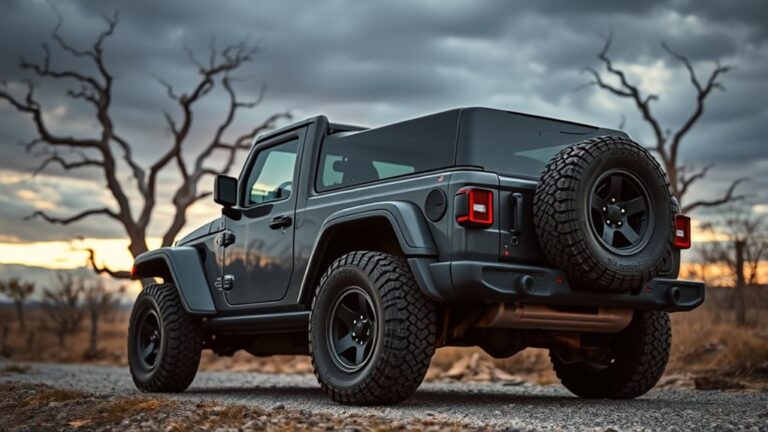
- Wrangler: SUV, with removable body panels and strong trail focus.
- Grand Cherokee: SUV, aimed at family comfort and towing.
- Compass: compact SUV, tuned for commuting and light trails.
- Cherokee: midsize SUV, offering balanced road and off-road manners.
You should classify these models by body style and intended use. If it has an enclosed cabin and rear cargo area, it’s generally an SUV. That’s the clearest way to answer the truck question.
Pickup-Based Jeeps
Not every Jeep wears the same body style, so pickup-based models need their own classification. When you look at a Gladiator or older Jeep pickup variants, you’re seeing vehicles that sit closer to pickup trucks than standard SUVs.
You should classify them by body structure and cargo design, not by brand name alone. If a Jeep has an open bed, separate cargo area, and truck-like frame layout, it fits the pickup category more than the utility vehicles category used for most Jeep SUVs.
That doesn’t make every Jeep a truck, but it does mean some Jeep models are built and marketed as trucks. For your comparison, separate Jeep SUVs, pickup-based Jeeps, and specialty utility vehicles so you can judge each model accurately and consistently.
Off-Road Body Types
Off-road Jeeps come in several body types, and each one should be classified by structure rather than by badge alone. You should compare chassis design, cargo capacity, and suspension types to decide whether a model fits a truck or SUV market segment.
- Wrangler: body-on-frame, short wheelbase, strong off road focus.
- Gladiator: pickup layout, higher towing ability, clear truck classification.
- Cherokee: unibody, more urban design, better fuel economy.
- Renegade: compact body, modest safety features, limited aftermarket mods.
You can also judge how the roof, bed, and cabin affect cargo capacity. In practice, structure matters more than style, because it shapes towing ability, ride quality, and off road use.
Frequently Asked Questions
Can a Jeep Tow a Trailer Safely?
Yes, you can tow a trailer safely with a Jeep if you stay within its tow rating, use proper hitch safety, distribute weight correctly, and check brakes, tires, and lights before driving.
Are Jeeps Good for Off-Road Camping Trips?
Yes, you’ll find Jeeps well suited for off-road camping trips; like a trusty trail steed, they handle rough terrain well. You can combine off road camping with vehicle camping, though comfort and cargo space vary by model.
Do Jeep Owners Need Special Truck Insurance?
You usually don’t need special truck insurance for your Jeep, but you should check Jeep insurance options. Specialty coverage can help if you’ve modified it, off-road often, or need protection beyond standard auto insurance.
Can You Modify a Jeep for Hauling Cargo?
Yes, you can modify a Jeep for hauling cargo by adding racks, trailers, and storage solutions. You might also consider modifying horsepower and enhancing suspension to haul heavier loads safely and effectively.
Which Jeep Has the Best Fuel Economy?
You’ll usually get the best fuel economy from a Jeep Wrangler 4xe; coincidentally, it blends efficiency with a rugged design. The Grand Cherokee 4xe may suit you if you want more best horsepower overall.
Conclusion
So, is a Jeep a truck? Usually, no—you’d classify most Jeeps as SUVs or off-road utility vehicles, not true trucks. If you’re looking at the Gladiator, though, you’ll see pickup-like features that can make the line feel blurry as a lightning bolt in a clear sky.
You should check body style, cargo setup, and legal classification to decide. In the end, Jeep and truck aren’t the same, even if they sometimes work alike. When it comes down to classification, Jeep is generally not considered a truck.