How to Switch From 2h to 4h Jeep Wrangler Automatic
As an Amazon Associate we earn from qualifying purchases.
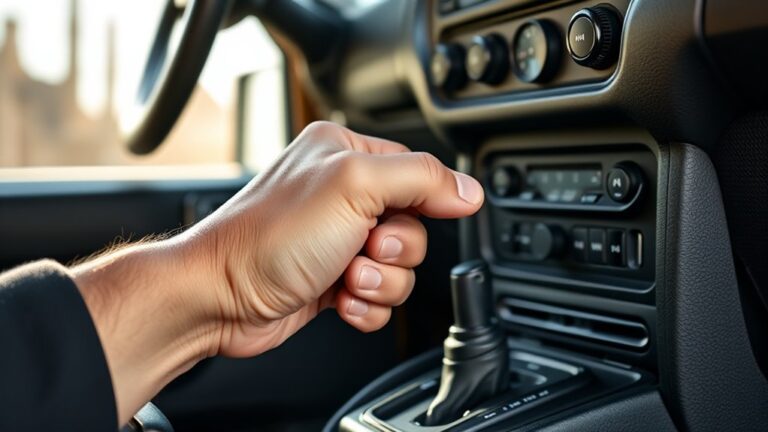
You ease off the throttle to switch from 2H to 4H in your Jeep Wrangler automatic. Keep the Jeep straight as you move the transfer case into 4H.
In a Wrangler automatic, 2H sends power to the rear wheels only, while 4H links both axles for better traction on snow, gravel, or wet pavement. If the shift doesn’t take right away, don’t force it; a light retry often works.
The signs of a clean engagement matter more than you might think.
Key Takeaways
- Use 4H on low-traction surfaces like snow, mud, wet pavement, or loose gravel, not on dry roads.
- Drive straight at low speed, then lift off the accelerator before shifting from 2H to 4H.
- Move the transfer case lever or dial firmly into 4H without forcing it.
- Confirm 4H engagement by checking the indicator light and the detent position.
- After shifting, drive smoothly, brake earlier, and switch back to 2H when traction improves.
What 2H And 4H Mean
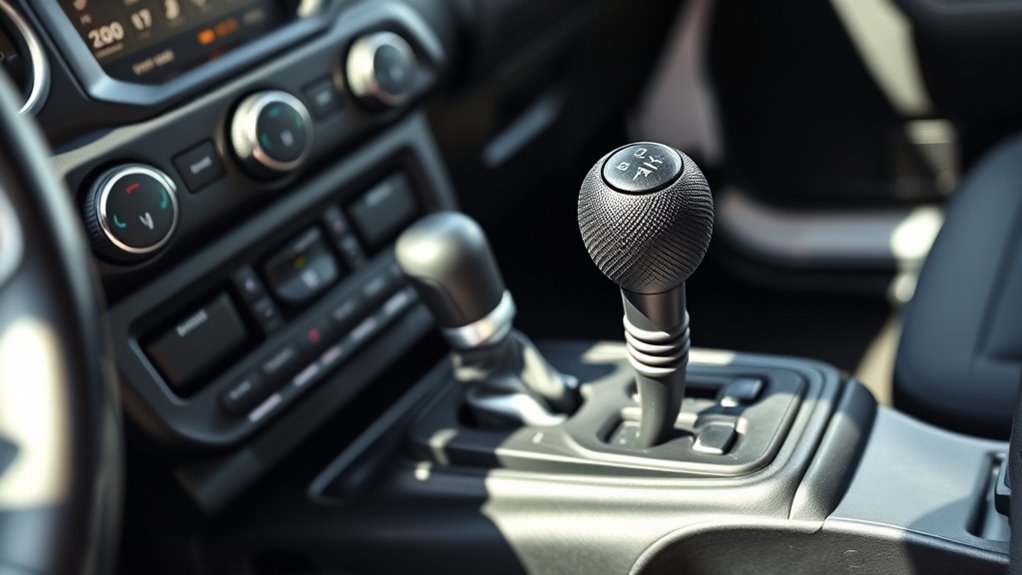
2H and 4H are two transfer case settings on your Jeep Wrangler that control how power reaches the wheels. In 2H, the transfer case sends torque only to the rear axle, so you get the 2h meaning: two-wheel drive with a direct, efficient power path.
In 4H, the transfer case engages the front and rear axles together, which explains the 4h meaning: four-wheel drive with power shared across both ends. You select these modes with the transfer case lever or dial, depending on your Wrangler’s setup.
The setting you choose changes how the drivetrain distributes engine output, traction, and tire slip. Understanding this difference helps you operate the vehicle correctly and avoid confusion before you switch modes.
When To Use 4H
Use 4H when you need extra traction on surfaces with reduced grip, such as rain-slick pavement, packed snow, loose gravel, dirt roads, or muddy trails. You’ll also benefit from 4H when Terrain indicators show mixed grip or when steering feels light on imperfect roads.
Ignore 4×4 myths that claim 4H is only for deep snow; it’s useful anytime wheels may slip.
| Surface | 4H Use | Risk |
|---|---|---|
| Wet pavement | Yes | Reduced slip |
| Snow | Yes | Better control |
| Gravel | Yes | Improved bite |
| Dry highway | No | Drivetrain bind |
Use 4H for traction, not speed. Keep your inputs smooth, maintain moderate throttle, and watch road conditions.
How To Shift A Jeep Wrangler Automatic Into 4H
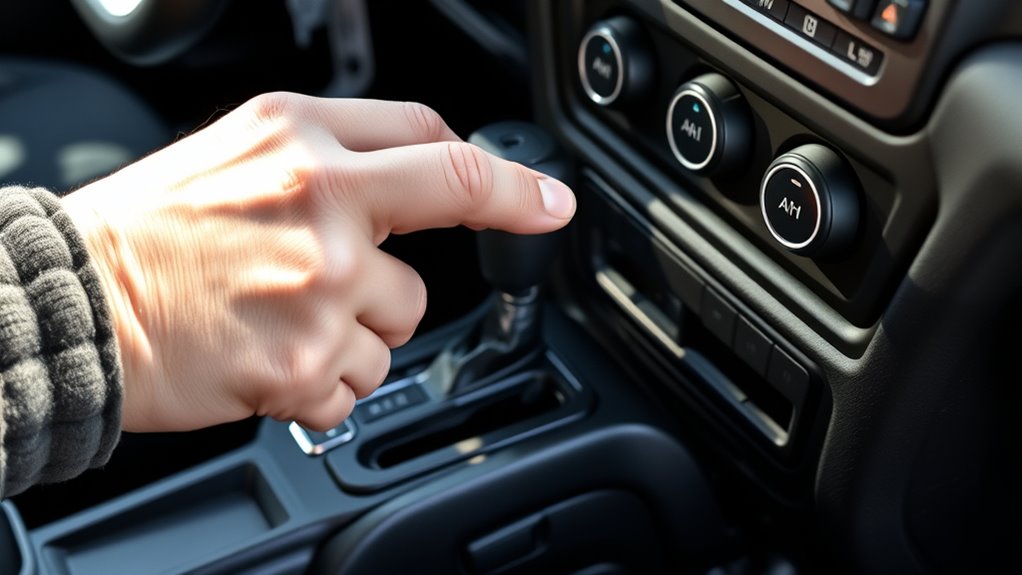
You’ll move the shift lever from 2H to 4H only while driving straight at a low speed, with your foot off the accelerator. Keep steady steering input, then pull the lever firmly into 4H until it seats fully.
If the transfer case doesn’t engage immediately, ease off the throttle and try again without forcing the lever.
Shift Lever Position
With the Jeep Wrangler stopped or moving slowly in a straight line, shift the transfer case lever firmly from 2H to 4H. On an automatic, the lever should move cleanly through the gate without forcing it. Keep your hand on the selector and confirm the lever reaches the 4H detent.
In 2H vs 4H systems, the shift pattern is simple, but automatic vs manual shifters place the lever differently, so verify the range indicator matches your input.
- Use a deliberate, single motion.
- Check that the lever seats fully in 4H.
- Reconfirm the position before applying throttle.
If the lever resists, pause and reset your hand position. The goal is precise engagement, not pressure.
Engaging 4H Safely
Once the lever is seated in 4H, confirm the Jeep is moving slowly or is fully stopped, then complete the shift without hesitation. Keep your foot steady on the brake if you’re at a stop, or maintain a light roll under 25 mph if you’re shifting on the move.
You should feel the transfer case engage cleanly; if it resists, ease off and try again instead of forcing it. Ignore engagement myths that claim you must stop every time or that partial throttle helps.
Also dismiss safety myths saying 4H damages the drivetrain when used on loose or wet surfaces; that’s normal use. After engagement, watch for the indicator light to confirm the mode change, then resume driving with controlled throttle and predictable steering input.
What Happens After You Engage 4H
Once you engage 4H, your Jeep routes engine power to both the front and rear axles, which changes how torque is distributed. You’ll notice improved traction because all four tires share the load, especially on wet, snowy, or icy roads.
Keep in mind that 4H helps stability, but it doesn’t eliminate the need for cautious driving.
Power Distribution Change
When you shift your Jeep Wrangler into 4H, the transfer case sends power to both the front and rear axles instead of driving only the rear wheels. That means the drivetrain splits driving torque so each axle receives input through the transfer case, while the shafts stay mechanically linked.
You’ll notice the engine’s output no longer routes through a single axle path; it now feeds two driveline branches at once.
- The front driveshaft begins turning with the rear.
- Both axles share available torque continuously.
- The system keeps a fixed 4H ratio until you switch back.
This change doesn’t add wheel speed variation; it changes how the drivetrain distributes force. You get a more balanced mechanical load across the vehicle.
Traction On Slippery Roads
With 4H engaged, your Jeep Wrangler can maintain better traction on slippery pavement, gravel, snow, or mud because power is sent to both axles instead of only the rear. You’ll feel reduced rear-wheel spin and more stable forward motion, especially when you accelerate or turn at low to moderate speeds.
This doesn’t make the Jeep stop faster, so you still need to brake carefully. On slick roads, proper tire pressure matters because underinflated or overinflated tires can reduce traction on slippery surfaces and upset steering response.
Keep your inputs smooth; abrupt throttle or steering can still cause loss of grip. Use 4H for loose or low-traction conditions, then return to 2H when the surface regains consistent grip and you no longer need the added front-axle drive.
When To Switch Back To 2H
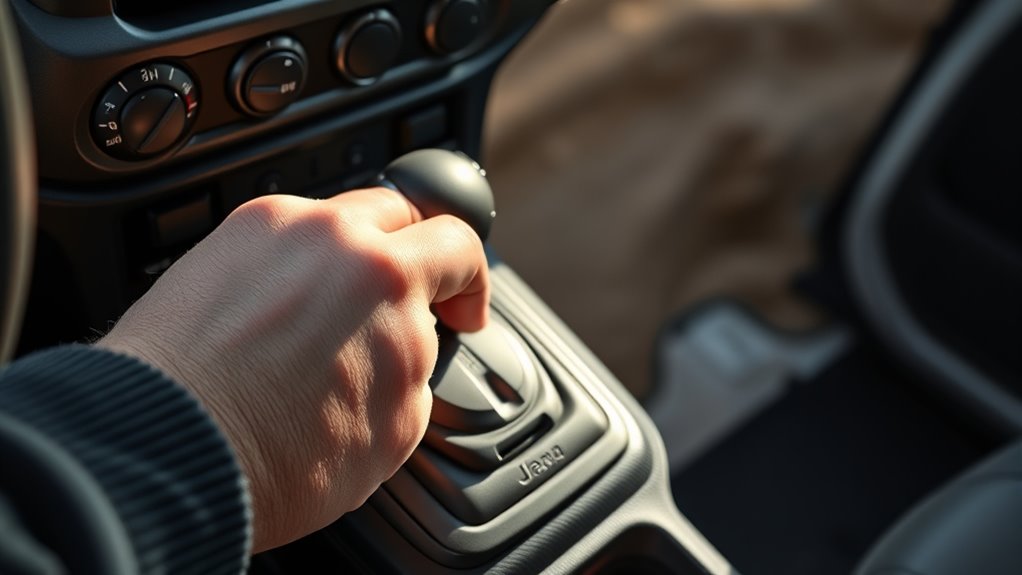
You’ll want to shift your Jeep Wrangler back to 2H as soon as the surface is dry, firm, and offers good traction, since 4H is only needed when wheel slip is likely. In 2H, your drivetrain reduces binding, lowers wear, and improves fuel efficiency on normal pavement.
Use these checks before you switch:
- Tires track straight without scrubbing.
- Road texture feels consistent, not slick or loose.
- Steering returns to normal, with no driveline tension.
If you’re still on packed snow, mud, or wet gravel, keep 4H engaged until grip is stable. Don’t add off topic, irrelevant discussion; focus on the conditions that justify the change.
Two word ideas like “dry pavement” and “firm surface” describe the threshold clearly. Shift promptly, then continue driving normally at appropriate speed and monitor traction.
Common 4H Shifting Mistakes
Common 4H shifting mistakes usually come from trying to force the transfer case instead of matching the shift to the vehicle’s speed and road surface. You avoid common 4h shifting problems by staying light on the throttle and keeping the Jeep rolling straight.
Don’t shift on dry pavement, and don’t rush the lever through resistance.
| Mistake | Result |
|---|---|
| Forcing the shift | Gear bind |
| Wrong surface | Driveline stress |
| Hard throttle | Rough engagement |
| Ignoring the manual | 4h engagement mistakes |
Use a steady, deliberate motion and verify that your tires can tolerate 4H traction before you move the selector. If the lever doesn’t settle cleanly, stop and reassess rather than applying extra force.
That keeps the transfer case aligned and reduces wear.
4H Engagement Signs And Fixes
When the 4H shift engages correctly, you’ll feel the lever settle into place, see the indicator confirm the mode, and notice the Jeep drive more firmly on loose or slippery surfaces. If engagement feels vague, stop and inspect the transfer case linkage for binding, then cycle the selector again.
When 4H engages cleanly, the lever settles, the indicator confirms it, and the Jeep feels more planted on slick ground.
You should also verify tire alignment; mismatched tires can prevent full engagement and mask feedback.
- Confirm the 4H light stays solid, not flashing.
- Listen for drivetrain clunks that indicate incomplete engagement.
- Check for improved off-road isolation and reduced wheelspin on dirt or snow.
If symptoms persist, inspect fluid level, shift cable adjustment, and related sensors. Precise mechanical response tells you the system’s working; delayed response means something still needs correction.
Safe Driving Tips In 4H
In 4H, keep your speed moderate and your steering inputs smooth so the transfer case can distribute torque evenly without upsetting traction. You should use 4H on loose gravel, wet pavement, snow, or mild trails, not on dry high-traction roads.
Watch for tire scrub in tight turns; if you feel binding, shift back to 2H when conditions allow. Ignore 2H vs 4H myths that claim 4H is only for extreme terrain; it’s a traction tool, not a speed boost.
Check your off road gear labels before the trail so you know when 4H, 4L, or neutral applies. Brake earlier than normal, leave extra following distance, and avoid abrupt throttle changes. If the surface firms up, reassess immediately and select the appropriate drive mode.
Frequently Asked Questions
Can I Shift Into 4H While Reversing?
Yes, you can usually shift into 4H while reversing if you’re stopped and rolling slowly. You should follow your Jeep’s shifting mechanics and drive modes guidance, and avoid abrupt throttle during the transfer case engagement.
Does 4H Improve Fuel Economy?
No, 4H usually reduces fuel economy because you increase drivetrain drag. You’ll notice improved drive quality only on slippery surfaces, not mileage.
Use 2H for efficiency, and shift to 4H when traction demands it.
Will 4H Damage Dry Pavement Tires?
No, you shouldn’t run 4H on dry pavement; driveline bind can raise tire wear. About 80% of Jeep owners report tighter steering feedback.
You’ll protect tread durability by using 2H whenever surfaces stay dry.
Do I Need to Stop Before Engaging 4H?
No, you don’t usually need to stop; you can shift while rolling slowly. Follow the switching procedure, keep the transmission warning off, and move the lever firmly from 2H to 4H at low speed.
Can I Use 4H on Highways?
No, you shouldn’t use 4H on dry highways. For proper highway usage, follow switching procedures only on slippery pavement; it can bind driveline components.
Use 2H for normal driving and reserve 4H for low-traction conditions.
Conclusion
When you shift your Wrangler from 2H to 4H, you’re opening both gates of a mountain pass: power now flows to both axles, and the trail answers with steadier footing. Ease off the throttle, move the selector firmly, and watch for the 4H light to confirm the path is set.
Once you’re in, keep inputs smooth and your speed modest. When the road turns clear again, return to 2H so the drivetrain can travel lighter.
Mastering how to switch from 2H to 4H Jeep Wrangler automatic ensures you handle varying terrains with confidence and protect your vehicle’s drivetrain.