How to Start Jeep Cherokee With Key
As an Amazon Associate we earn from qualifying purchases.
If you want to know how to start a Jeep Cherokee with a key, you’re not alone if your key feels like it controls a small metal vault.
First, check the key, battery, and shifter. Then, insert the key fully and turn it clockwise from ACC to START with steady pressure.
If it won’t move or the engine won’t catch, the cause could be simple or more involved.
A dead battery, a worn key, or a hidden lockout can stop you cold.
Key Takeaways
- Insert the correct key fully, confirm the Jeep is in Park, and keep your foot on the brake if required.
- Turn the key clockwise to START until the engine fires, then release it back to ON.
- Let the engine idle briefly so oil pressure and drivetrain systems stabilize.
- If the key won’t turn, gently turn the steering wheel while trying again to release the lock.
- If it still won’t start, check the battery, key condition, dashboard lights, and starter-related fuses.
How Do You Start a Jeep Cherokee With a Key?
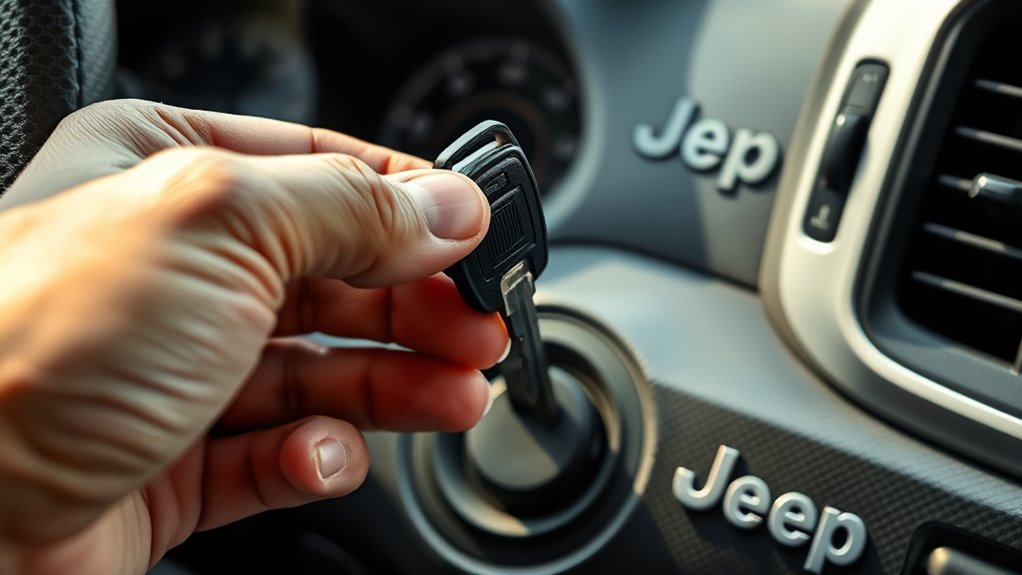
To start a Jeep Cherokee with a key, insert the key into the ignition, make sure the transmission is in Park, then turn the key to the Start position until the engine fires. Release it as soon as the engine runs.
Let the engine idle briefly so oil pressure stabilizes and the drivetrain settles. Keep your foot on the brake if the vehicle’s controls require it. You can then confirm the dashboard lights behave normally and the engine design is operating as intended.
If the engine doesn’t catch, don’t force the key. Use a steady, deliberate turn instead. After startup, you can move off only when conditions are safe. Regular tire maintenance also helps you drive smoothly once the Cherokee is running.
Check the Key, Battery, and Gear Shift
Before you turn the key, check that it’s the correct one for your Jeep Cherokee and that the battery has enough charge to crank the engine. Inspect the key for wear, bending, or a damaged transponder chip, because poor key safety can block starting.
If your Cherokee has a start button option, make sure you’re using the proper fob and not a dead remote battery. Then verify the vehicle is in Park or Neutral; the gear shift must fully engage the safety interlock. Press the brake pedal and confirm the shifter indicator matches the selected range.
A weak battery may light the dash but still fail to crank, so watch for slow accessories or dim lights. Fix these issues first, then try again.
Insert the Key and Turn the Ignition
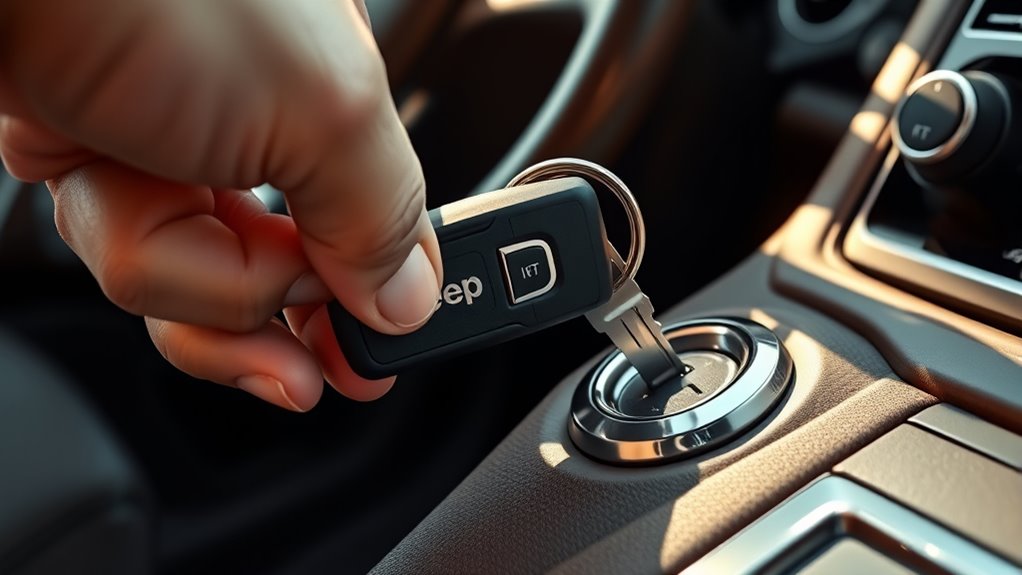
Insert the key into the ignition cylinder and push it in fully until it seats cleanly. Hold the steering wheel steady, then turn the key clockwise with firm, even pressure.
Stop at ACC if you only need accessories, or continue to START to command the starter motor. You’ll feel the ignition switch engage, then the engine should rotate as engine torque builds through the crankshaft.
Keep the key at START only until the engine fires, then release it so it springs back to ON. At ON, the fuel system activates, the gauges wake up, and the Cherokee should idle normally.
Don’t force the key past its stops. A smooth turn helps protect the cylinder, switch contacts, and starter components during every start.
What If the Key Won’t Turn?
If your key won’t turn, check whether the steering wheel is locked and apply gentle pressure while you turn the key. Inspect the key and ignition for wear, dirt, or damage that could block rotation.
If it still sticks, try your spare key or lightly jiggle the key while turning to see if the lock cylinder engages.
Check Steering Wheel Lock
Is the key refusing to turn? Check the steering wheel lock first. A Jeep Cherokee often locks the wheel when it’s parked on a slope or after you turn the wheel after shutting off.
Hold the key in the ignition and apply slight turning pressure toward START. At the same time, move the steering wheel left and right until the lock releases. Don’t force the key; excessive torque can damage the ignition cylinder.
If the wheel is tight against the lock, shift the wheel a few degrees in the direction of least resistance. This quick check supports engine maintenance and off road prep because it confirms the steering system isn’t binding before you continue.
Once the wheel frees, the key should turn smoothly and the engine can start.
Inspect Key And Ignition
Now inspect the key and ignition for wear, dirt, or damage. Check the key blade for bends, rounded edges, or heavy wear. Look into the ignition cylinder for debris, broken parts, or sticky movement.
Use the table below to compare symptoms and actions.
| Symptom | Likely Cause | Action |
|---|---|---|
| Key inserts hard | Dirt in cylinder | Clean gently |
| Key feels loose | Worn key | Inspect closely |
| Key won’t rotate | Ignition wear | Pause and assess |
| Key sticks halfway | Debris or damage | Avoid force |
| No change | Internal fault | Call roadside assistance |
Keep the key straight and apply firm, even pressure. Don’t force it, because that can worsen damage.
Regular car maintenance helps you catch wear early and avoid a larger repair later.
Try Spare Or Jiggled Key
Try your spare key first, because a worn original key may not turn the ignition even when the cylinder is fine. Insert the spare key fully, then rotate it gently to check for normal engagement. If it works, your original key is likely rounded or damaged and needs replacement.
If neither key turns, use a jiggled key technique. Put slight inward pressure on the key while moving the wheel a little left and right, since steering lock tension can bind the cylinder. Keep the motion small; don’t force it.
If the key moves but sticks, remove debris with compressed air and inspect for bending. A badly worn key or a failing ignition cylinder can mimic the same symptom, so note which key and position work before moving on.
Why Won’t the Jeep Cherokee Start?
If your Jeep Cherokee won’t start, check the battery first because a dead battery can block cranking and disable key functions.
You should also test the key fob, since a weak fob battery or signal issue can prevent the vehicle from recognizing your key.
If both checks fail, inspect the starting circuit and related fuses next.
Dead Battery Issues
A dead battery is one of the most common reasons your Jeep Cherokee won’t start with the key. You may hear only a click, weak cranking, or nothing at all. Check the dash lights first; if they’re dim or off, the battery likely can’t supply enough voltage.
Inspect the terminals for corrosion and make sure the cables are tight. A jump start can confirm the problem, but if the battery dies again, test the charging system. Clean power matters for starting systems, and it’s separate from tire maintenance, which won’t affect ignition.
A frozen dashboard with no glow
Corroded battery posts under the hood
A slow engine turning over once
Key Fob Problems
When your Jeep Cherokee won’t start with the key, the key fob or transponder may be the issue, especially on push-button or immobilizer-equipped models. If the fob battery is weak, the vehicle may not recognize the chip, so replace it first.
Check for damage to the fob shell, internal contacts, or water intrusion. Try your spare key; if it works, you’ve narrowed the fault. On some models, you can hold the fob near the start button or steering column sensor to bypass weak signal problems.
If the security light stays on, the immobilizer may block cranking. A faulty ignition switch, blown fuse, or related fuel system relay can also mimic a key fob failure. Reprogramming may be needed.
What If the Battery Is Dead?
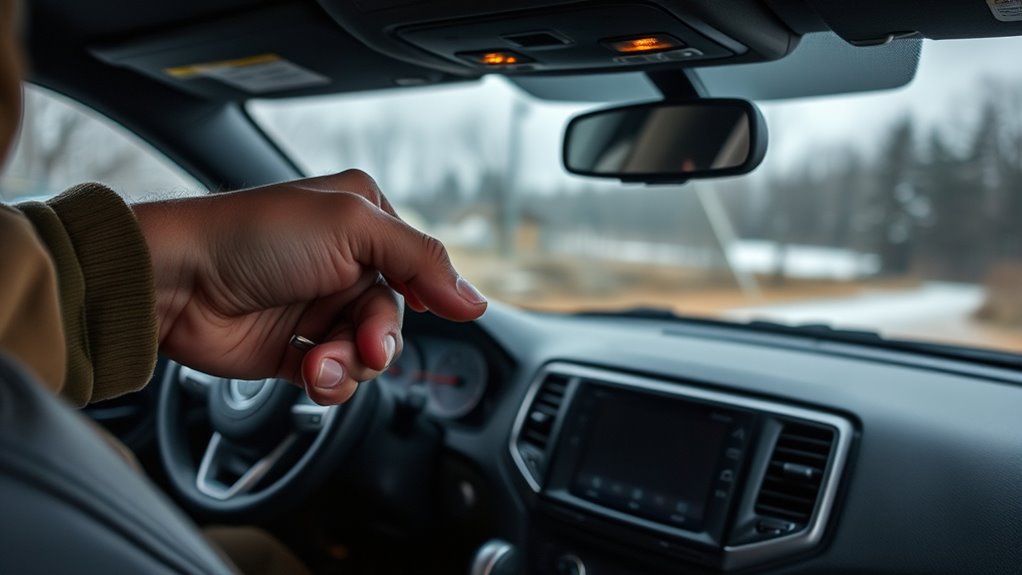
What if your Jeep Cherokee’s battery is dead? You can’t crank the engine, so check the battery terminals, then verify the key turns the ignition cylinder cleanly. If the dash stays dark, use engine maintenance habits to inspect corrosion, loose cables, or a failed battery.
During road trip planning, assume a weak battery and test it before you leave.
A silent cabin with no warning lights
Dull headlamps reflecting off the hood
A key that turns but won’t wake the starter
If the battery is completely flat, you’ll need external power before the starter can engage. Keep your focus on voltage loss, not the key itself. Once power returns, start the Cherokee normally and monitor for repeated no-start symptoms.
Use a Spare Key
If your Jeep Cherokee still won’t start, try your spare key before you assume the ignition system has failed. A worn primary key can weaken transponder communication or prevent clean blade engagement in the cylinder.
Insert the spare key fully, turn it to ACC, then to START, and note whether the dash lights and starter respond normally. If the spare works, your original key may need replacement or reprogramming.
Keep the spare key in a dry, separate location so you can test it quickly during ignition troubleshooting. Avoid forcing either key, because extra pressure can damage the lock cylinder.
If both keys behave the same way, you’ve ruled out a simple key issue and can continue diagnosing power, security, or starter faults with more confidence.
When the Jeep Cherokee Still Won’t Start?
At that point, treat the problem as a no-start fault outside the key itself. Check the battery first; weak voltage can mimic immobilizer failure. Verify the brake pedal switch, gear selector position, and fuses tied to ignition, PCM, and starter circuits.
Watch the dash for security or key warning lights. If the starter clicks, inspect cables, grounds, and relay operation. If it’s silent, test for power at the starter command wire.
Hood open over a corroded battery post
Dash glowing with a security icon
Multimeter probes on a starter relay socket
If those checks pass, you may need a scan tool to read codes from the anti-theft or body module. Don’t chase an unrelated topic or random idea; follow the fault path methodically.
Frequently Asked Questions
Can a Worn Key Still Start a Jeep Cherokee?
Yes, a worn key can still start your Jeep Cherokee if its cut matches the ignition well enough. Fact checking myths matters; starter motor basics won’t help if the key can’t turn the cylinder cleanly.
Does the Steering Wheel Lock Affect Ignition?
Yes, the steering lock can affect ignition if it binds the key cylinder. You’ll need to relieve pressure on the wheel while turning the key; otherwise, ignition timing won’t matter because the switch can’t engage.
How Long Should the Starter Crank Before Stopping?
You should stop after 3-5 seconds; any longer, and you’re roasting the starter like a tiny engine torch. If it doesn’t fire, release the key, check fuel, battery, and starter engagement, then retry.
Will Remote Keyless Entry Work With a Dead Battery?
No, your remote keyless entry usually won’t work with a dead vehicle battery. You’ll need a working remote battery, proper key programming, and enough system power.
Replace the battery or use the mechanical key entry.
Can Cold Weather Prevent a Jeep Cherokee From Starting?
Yes, cold weather can prevent your Jeep Cherokee from starting; why risk a weak start? You’ll get slower starter crank, reduced battery output, and thickened oil.
Check battery health, connections, and block heater use.
Conclusion
When you start your Jeep Cherokee with a key, you’re really opening the gate to a well-tuned machine. Check the key, battery, and gear shift first, then insert the key fully and turn it with steady pressure. If it resists, don’t force it—something in the chain needs attention.
Like a ship won’t sail without wind and fuel, your Jeep won’t wake without power, alignment, and the right key. Always ensure these elements are in place for a smooth start.
Following these steps will help you successfully start your Jeep Cherokee with key every time.