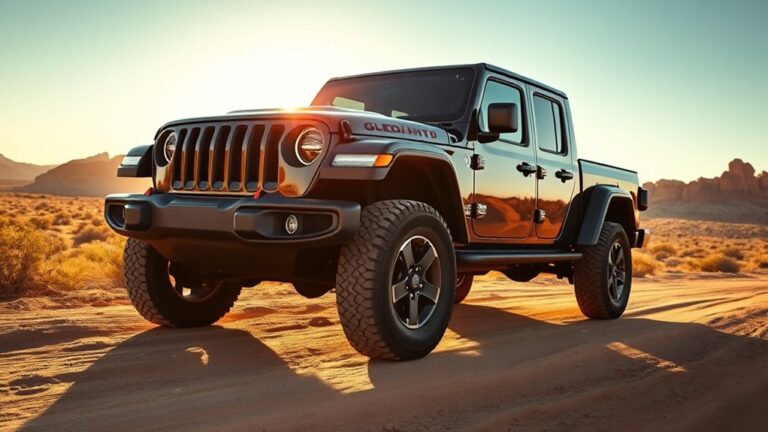
How to Flat Tow a Jeep Wrangler
As an Amazon Associate we earn from qualifying purchases.
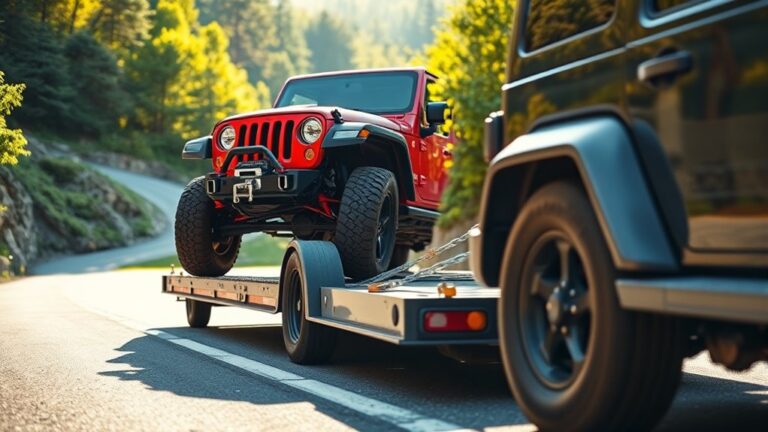
Like a road map before a long crossing, flat towing a Jeep Wrangler starts with the right gear: a rated tow bar, base plate, safety cables, wiring, and a supplemental brake system matched to your model year.
You’ll need to confirm the transfer case and transmission can tow in Neutral, then set Tow Mode correctly, connect and test everything, and follow strict towing practices—because one missed step can change the whole setup.
Key Takeaways
- Use a rated tow bar, base plate, safety cables, wiring, and supplemental braking system that match the Wrangler and coach capacity.
- Confirm the Wrangler’s year, trim, transmission, and transfer case are approved for flat towing before setup.
- Prepare on level ground, place the transfer case in Neutral, and activate Tow Mode exactly as specified for your model.
- Attach the tow bar and safety cables securely, keeping the tow bar level, centered, and cables crossed beneath the hitch.
- Test all lights and the supplemental brakes, then tow conservatively while monitoring the rig and components.
What Do You Need to Flat Tow a Jeep Wrangler?
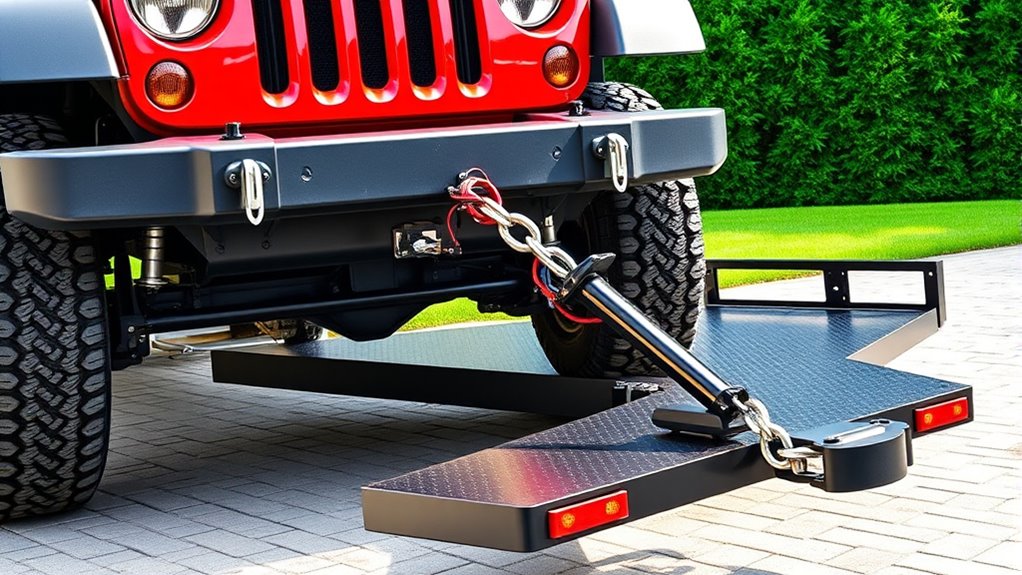
To flat tow a Jeep Wrangler, you need the right tow equipment, a compatible Wrangler drivetrain, and the correct setup procedure. You should use a rated tow bar, base plate, safety cables, wiring, and a supplemental braking system that meets your state’s requirements.
Check that your hitch receiver and coach have sufficient towing capacity for the Wrangler’s curb weight. You also need a transfer case and transmission combination approved for flat towing, because not every configuration works.
Verify tire condition, pressure, and torque on all mounting hardware before departure. Proper weight distribution across the tow setup helps maintain tracking and reduces stress on components.
Confirm that all lights function and that your towing components match the Jeep’s model year and trim specifications.
Put the Jeep Wrangler in Tow Mode
Before you tow, shift the Wrangler into Tow Mode so the driveline can turn freely without damaging the transmission or transfer case. You should follow the exact sequence for your model year, since the process can vary slightly.
Shift the Wrangler into Tow Mode before towing to let the driveline turn freely and protect the transmission.
Start with the vehicle on level ground, engine running, and transmission in Park or Neutral as specified in the owner’s manual. Then set the transfer case to Neutral and confirm the tow mode indicator appears on the cluster.
After that, move the transmission to the required position, usually Park for automatic models. Shut the engine off only after the system confirms tow mode.
This step prepares the Jeep for flat towing and helps prevent internal component wear. Always verify the settings before moving the vehicle behind your tow rig.
Attach the Tow Bar and Safety Cables
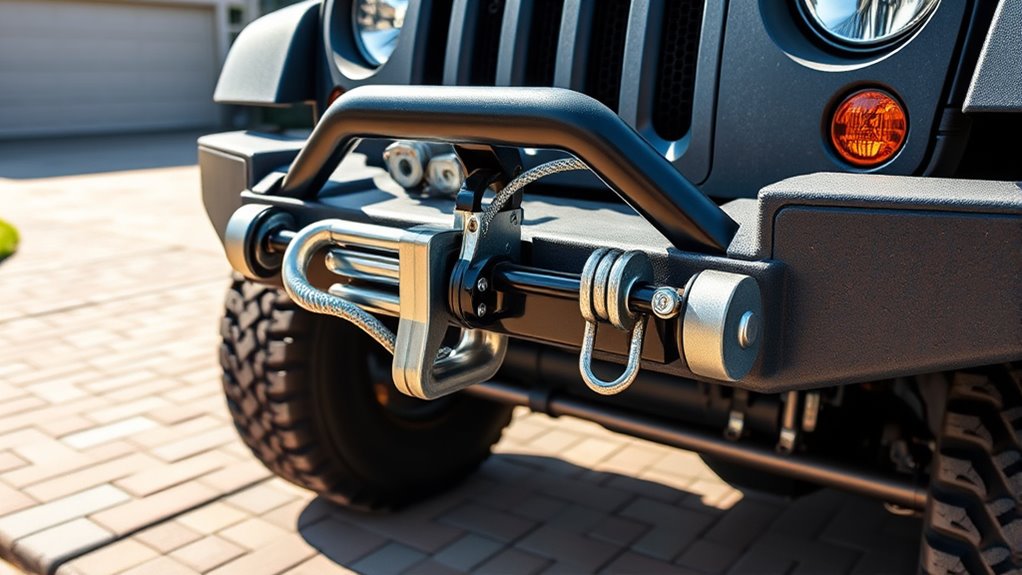
With the Wrangler in tow mode, align the tow bar with the base plate and secure it with the manufacturer-specified pins or latches. Next, attach towbar arms evenly so the assembly sits level and centered behind the vehicle. Verify that each connection locks fully and that the bar can pivot without binding.
Route the safety cables in a crossed pattern beneath the hitch, then connect them to approved frame or base plate attachment points. Keep enough slack for turning, but don’t let the cables drag on the ground. Use cable retainers if needed to prevent contact with sharp edges or moving parts.
Check that the coupler, pins, and cable hooks are seated correctly before you move the Jeep. A properly installed system reduces separation risk during towing.
Test the Lights and Brakes
Once the tow bar, safety cables, and hitch points are secure, test the Jeep’s lighting and brake functions before you hit the road. Turn on the tow vehicle’s headlights, turn signals, and brake lights, then confirm the Jeep’s corresponding lights respond correctly.
If your towing setup uses a wiring harness, inspect each circuit for delayed or dim operation. Next, check brakes by applying the tow vehicle’s brake pedal and verifying that the Jeep’s supplemental braking system engages as designed. Make sure the system releases fully when you let off the pedal.
Watch the instrument panel for fault indicators if your equipment includes monitoring features. If any light or brake function fails, stop and diagnose the connection before towing. Repeat the test after every hitching to confirm reliable operation.
Follow Safe Flat Towing Practices
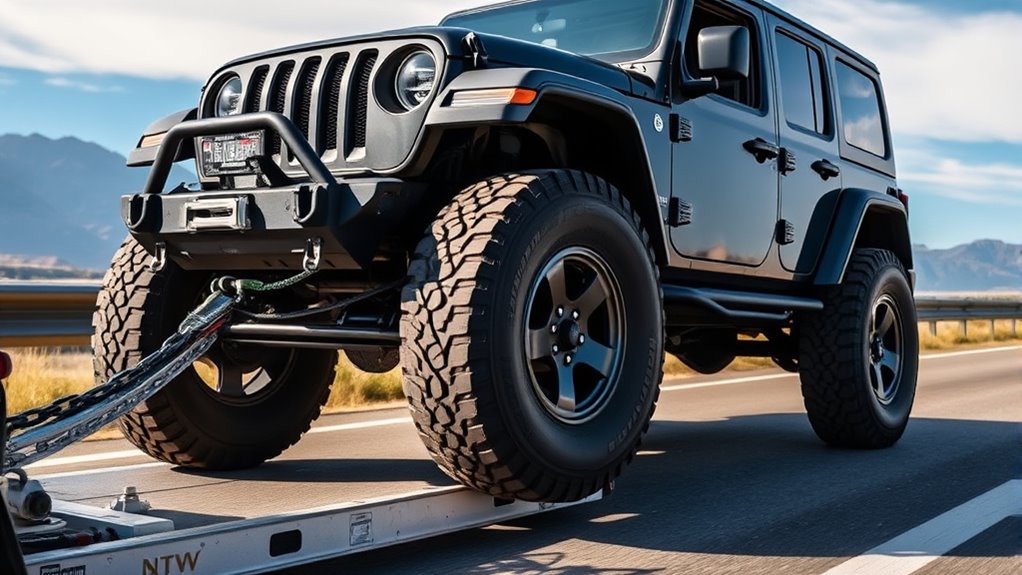
Safe flat towing starts with conservative driving and constant attention to the rig. You should accelerate smoothly, keep speeds within the Jeep and tow vehicle limits, and leave extra following distance for longer stopping times.
Monitor the tow bar, safety cables, and electrical connection at every fuel stop. Use turn signals early and brake gradually to avoid jerking the Wrangler. Confirm brake alignment before departure and recheck it if the Jeep tracks unevenly or the steering wheel shifts.
On grades, downshift early and maintain steady engine braking. In crosswinds or heavy traffic, reduce speed and increase spacing. Safe towing depends on frequent mirror checks, predictable lane changes, and immediate correction of any sway, binding, or lighting fault.
Frequently Asked Questions
Can I Flat Tow Every Jeep Wrangler Model?
No, you can’t flat tow every Jeep Wrangler model. You’ll need to verify flat towing compatibility for your specific Jeep Wrangler models, since transfer case, transmission, and trim differences can make some models unsuitable.
Does Flat Towing Void the Jeep Warranty?
Not necessarily; you’ve gotta follow Jeep’s approved procedures, or flat towing warranty coverage could be denied.
Check your owner’s manual and dealer guidance for Jeep warranty implications, because improper setup can void claims.
How Fast Can a Jeep Wrangler Be Flat Towed?
You can flat tow your Wrangler at highway speeds, typically up to 65 mph, if your setup meets Jeep’s specs.
Don’t ignore unrelated safety checks or off road adjustments, since they affect stability, wear, and control.
Can I Back up While Flat Towing a Jeep?
No, you shouldn’t back up while flat towing a Jeep; nearly 70% of towing damage claims involve maneuvering errors. You’ll hit towing limitations fast, because backing up can damage the transfer case, steering, and driveline.
What Accessories Make Flat Towing Easier?
You’ll make flat towing easier with a base plate, tow bar, wiring harness, supplemental braking system, and steering lock bypass.
Check towing safety and accessory compatibility before you buy any setup.
Conclusion
Flat towing a Jeep Wrangler is straightforward when you use the right equipment and follow the correct setup steps. In fact, the RV Industry Association says nearly 1 in 5 motorhome owners tow a vehicle behind them, which underscores how common and important proper towing procedures are.
Before you travel, verify tow compatibility, secure the tow bar and safety cables, confirm lights and brakes work, and monitor the Wrangler throughout the tow to help protect your vehicle and coach.
By following these guidelines, you can ensure a safe and efficient flat towing a Jeep Wrangler experience every time.