How Many Miles per Gallon Does a Jeep Wrangler Get
As an Amazon Associate we earn from qualifying purchases.
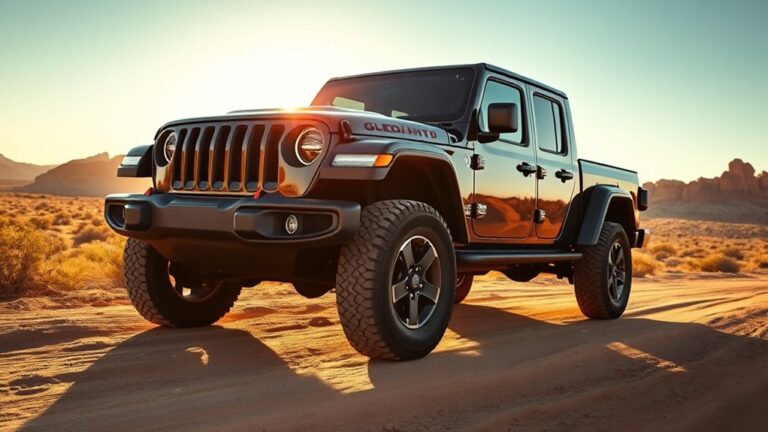
A Jeep Wrangler’s miles per gallon can feel like a compass stuck between adventure and compromise. You’ll usually see about 17 to 25 mpg, depending on engine, transmission, drivetrain, body style, and how you drive.
City use, highway speed, tire pressure, and off-road load all shift the numbers.
Two-door models often do a little better than four-door versions, but the real gap shows up once terrain and trim enter the picture.
Key Takeaways
- A Jeep Wrangler typically gets about 17 to 25 MPG, depending on engine, drivetrain, transmission, and body style.
- City driving usually returns 15 to 18 MPG, while highway driving can reach 20 to 25 MPG.
- The 2.0-liter turbo mild-hybrid is usually the most efficient, while the 6.4-liter V8 gets the lowest MPG.
- Real-world mileage varies with tire size, gearing, driving style, and whether the Wrangler is 2-door or 4-door.
- Off-road driving can cut MPG by 20% to 40%, and towing often drops it to about 12 to 15 MPG.
How Many Miles per Gallon Does a Jeep Wrangler Get?
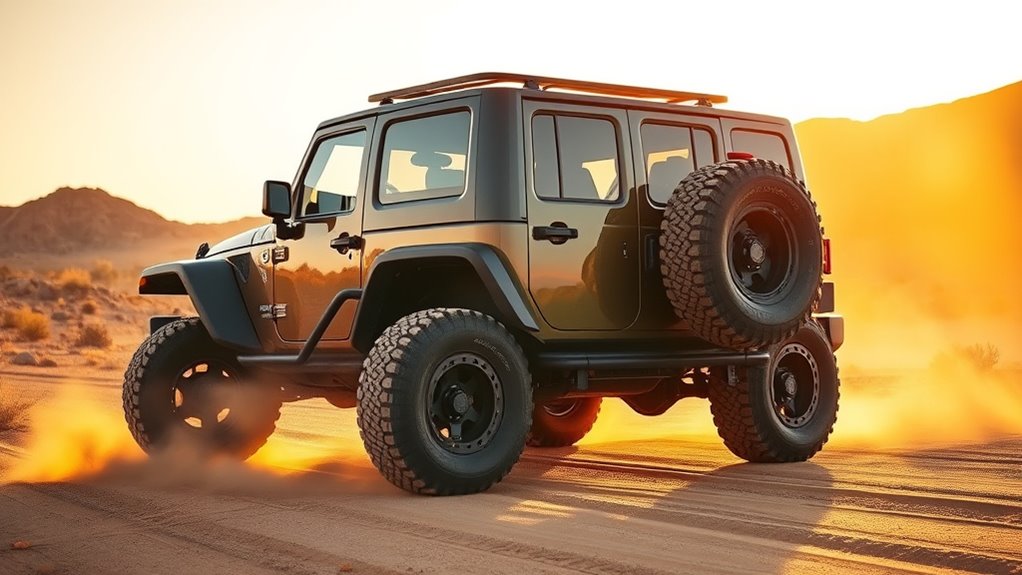
A Jeep Wrangler typically gets around 17 to 25 miles per gallon, depending on the engine, drivetrain, transmission, and body style. You’ll usually see lower numbers in city driving and higher numbers on steady highways, where speed and throttle inputs stay consistent.
You shouldn’t expect identical results from every trim, because tire size, gear ratios, roof configuration, and added weight all affect consumption. Many fuel economy myths overstate what normal driving can deliver, so verify estimates with EPA ratings and real-world testing.
If you compare diesel vs gasoline setups, you’ll notice different efficiency profiles, but the final mpg still depends on usage conditions and calibration. For accurate planning, track your own mileage over several tanks.
Jeep Wrangler MPG by Engine
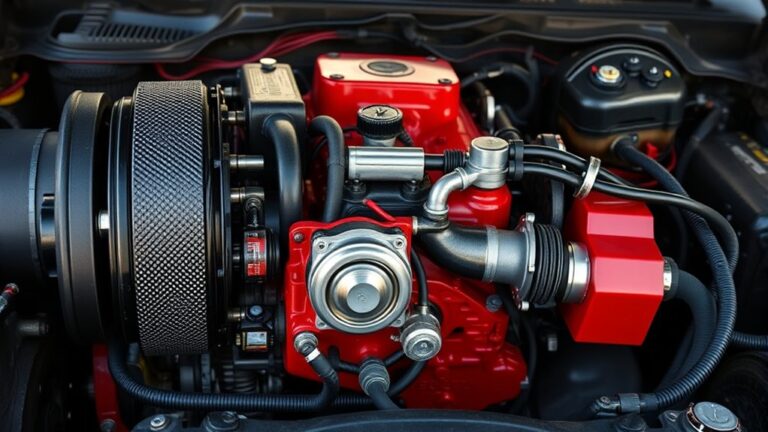
Engine choice has a major impact on Jeep Wrangler mpg because output, torque curve, and fuel type all shape efficiency. You’ll usually see the turbocharged 2.0-liter four-cylinder return the strongest fuel economy, while the 3.6-liter V6 trades some efficiency for broader power delivery.
If you choose the 2.0-liter with mild-hybrid assist, you can trim consumption further under light load. The 3.0-liter EcoDiesel, when available, often posts the best range per gallon thanks to high low-end torque and lower rpm cruising.
The 6.4-liter V8 in special models prioritizes performance, so mpg drops sharply. Your fuel price, towing demands, and highway maintenance costs should guide selection. Real-world results still depend on gearing, tire size, and drivetrain configuration.
How Does City vs. Highway MPG Compare?
When you drive a Jeep Wrangler in the city, stop-and-go traffic usually lowers MPG because frequent acceleration and idling raise fuel use. On the highway, steady speeds let the engine run more efficiently, so you’ll typically see better mileage than in urban driving.
In real-world use, your results often fall between the EPA city and highway ratings because terrain, speed, load, and tire choice all affect consumption.
City Driving MPG
In city driving, a Jeep Wrangler typically returns lower MPG than it does on the highway because stop-and-go traffic, frequent braking, and repeated acceleration increase fuel use. You’ll usually see this drop most in heavier trims, larger tires, and models with four-wheel-drive hardware engaged.
Aerodynamic drag matters less at low speeds, but engine load, idle time, and transmission shifting still reduce efficiency. If you choose a Wrangler for off road capability, you’re accepting a tradeoff in urban fuel economy.
Your fuel capacity helps offset that limitation by extending range between fill-ups, but it doesn’t improve consumption itself. Driving smoothly, limiting idle time, and maintaining tire pressure can help you preserve city MPG without changing the vehicle’s core design.
Highway MPG Differences
On the highway, a Jeep Wrangler usually delivers better MPG than it does in city driving because steady speeds reduce braking losses, idle time, and repeated acceleration. You’ll typically see the gap widen at moderate cruising speeds, where the engine can hold a more efficient load. The Wrangler’s boxy shape still creates aerodynamic drag, so MPG drops as speed climbs.
- At 55–65 mph, you usually get the best highway efficiency.
- Taller gearing helps keep off road rpm lower during cruise.
- Diesel vs gas matters: diesel models often return stronger highway MPG.
If you drive into headwinds, carry roof gear, or push past the efficient range, your highway numbers can fall quickly. Compared with city use, highway driving gives the Wrangler its most predictable fuel economy.
Real-World Fuel Use
Real-world Wrangler fuel use usually shows a clear split between city and highway driving, with city MPG typically lagging because stop-and-go traffic increases idle time, throttle demand, and braking losses. You’ll often see higher efficiency on open roads, where steady speeds reduce fuel burn and the Wrangler’s tall gearing helps.
| Condition | MPG | Notes |
|---|---|---|
| City | 15-18 | Frequent stops |
| Suburban | 17-20 | Mixed loads |
| Highway | 20-25 | Steady cruise |
| Towing | 12-15 | Extra drag |
| Off-road | 10-14 | High resistance |
Your actual result depends on tire size, axle ratio, and payload. A quiet ride can’t mask the extra cabin noise from wind and tread on rough pavement, and those conditions often coincide with lower MPG.
How Do 2-Door and 4-Door Wranglers Differ?
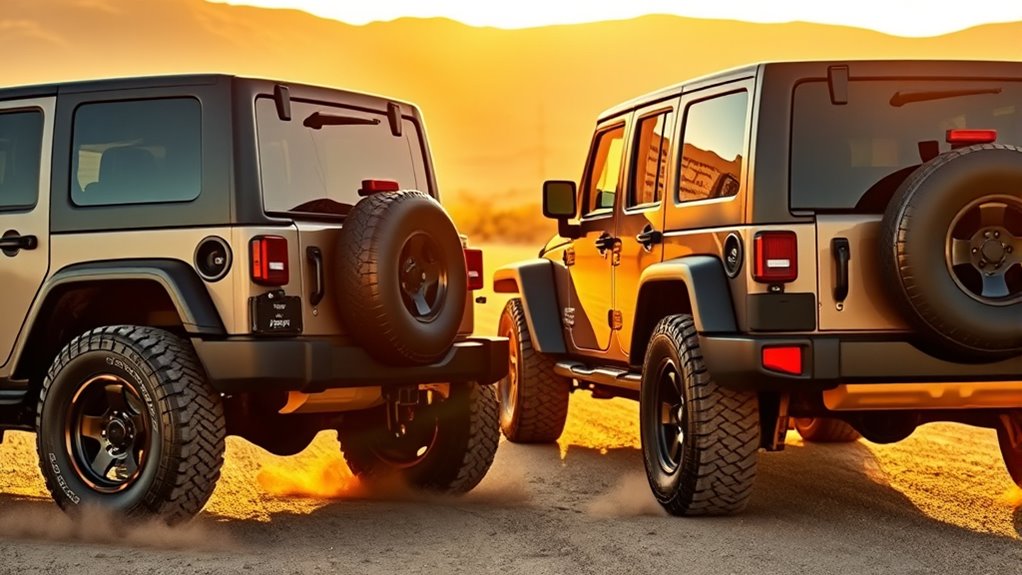
You’ll notice that 2-door and 4-door Wranglers differ mainly in wheelbase and curb weight, with the 4-door model using a longer chassis and more mass. Those changes usually affect fuel economy, since the heavier, longer-wheelbase version can require more energy to move and may return slightly lower MPG.
You’ll also get different cargo and seating layouts, so your choice affects both passenger capacity and how efficiently the vehicle uses fuel.
Wheelbase And Weight
Wheelbase and curb weight play a direct role in how a Jeep Wrangler uses fuel, and the difference between the 2-door and 4-door models is substantial. You’ll notice the 4-door’s longer wheelbase adds stability and cabin space, while the 2-door stays shorter and lighter for tighter maneuvering.
In off-road mudding, the extra length can help you track straighter, but it can also increase mass and drag through soft terrain. For towing capacity, the heavier four-door platform generally supports more load, though equipment and axle ratings matter too.
- 2-door: shorter wheelbase, lower curb weight
- 4-door: longer wheelbase, higher curb weight
- Your use case: trail agility, passenger room, or load handling
Fuel Economy Differences
Fuel economy differs between 2-door and 4-door Wranglers mainly because of weight, aerodynamics, and drivetrain choices. You’ll usually see the 2-door return slightly better mpg because it carries less mass and presents a smaller frontal area.
The 4-door’s extra length and curb weight increase rolling resistance and demand more engine load during acceleration and cruising.
| Variant | Typical MPG Trend |
|---|---|
| 2-door | Slightly higher |
| 4-door | Slightly lower |
These differences are modest, but they’re consistent across trim levels and engine setups. For two word discussion ideas, think “mass effect” and “drag penalty”; they describe the core efficiency gap without referring to other H2 topics.
Real-world driving, tire choice, and gearing can narrow or widen the spread, but the 2-door usually keeps the efficiency edge.
Cargo And Seating
Cargo and seating capacity differ noticeably between 2-door and 4-door Wranglers, and that difference affects everyday usability more than it does mpg. You’ll get tighter rear access and less cargo volume in the 2-door, while the 4-door adds wheelbase length, easier entry, and a larger load area.
For cargo implications, the 4-door usually handles luggage, gear, and grocery runs more efficiently. For seating comfort, you’ll notice the 4-door gives rear passengers more legroom and a less cramped posture.
- Choose 2-door if you prioritize maneuverability.
- Choose 4-door if you carry passengers often.
- Compare fold-flat rear seats for storage flexibility.
Either layout keeps Wrangler utility intact, but your daily needs should guide the configuration.
What Lowers Jeep Wrangler MPG?
Jeep Wrangler MPG drops when engine load increases, especially under conditions that force the powertrain to work harder than normal. You’ll see lower efficiency from larger tires, added lift kits, roof racks, skid plates, and heavy cargo, because each increases rolling resistance or aerodynamic drag.
Four-wheel drive components also add mechanical losses, and aggressive all-terrain tread patterns can raise friction on pavement. Cold temperatures can reduce fuel economy by delaying optimal engine and transmission operation, while low tire pressure increases drag and tire deformation.
Maintenance matters too: dirty air filters, worn spark plugs, dragging brakes, and low-grade fuel can all reduce combustion efficiency. For related topics, compare axle ratios and gearing; ignore unrelated trends that don’t change mechanical or thermal load.
How Does Driving Style Affect MPG?
Your driving style directly affects Jeep Wrangler MPG because rapid throttle input raises engine load and fuel use, while gentle acceleration helps keep consumption lower.
You can improve efficiency by holding a steady highway speed, since constant speed reduces repeated load changes and drivetrain losses.
You should also use braking and coasting strategically, because minimizing unnecessary braking preserves momentum and cuts wasted fuel.
Gentle Acceleration
Gentle acceleration can make a noticeable difference in a Jeep Wrangler’s mpg because hard throttle inputs force the engine to burn more fuel to overcome inertia and aerodynamic drag. You’ll usually see better results when you roll into the pedal smoothly, letting the transmission and torque curve work efficiently.
That matters in stop-and-go traffic and during off roading fuel management, where abrupt inputs waste energy in wheel spin and unnecessary revs. A diesel conversion can improve low-end torque, but your throttle behavior still strongly affects consumption.
1. Apply progressive throttle. 2. Shift early when conditions allow. 3. Avoid repeated jackrabbit starts. Each habit reduces transient enrichment, lowers engine load spikes, and helps you extract more miles per gallon from the Wrangler’s powertrain without changing hardware.
Steady Highway Speed
At highway speeds, holding a steady pace usually helps a Wrangler return better mpg because the engine isn’t constantly reacting to throttle changes, gear hunting, or repeated acceleration events. You reduce transient fuel demand when you keep a steady speed, so the powertrain can stay closer to its most efficient operating point.
In an automatic, this also limits unnecessary torque-converter slip and downshifts. In a manual, you can maintain a higher gear without frequent throttle corrections. Aerodynamic drag still rises quickly with speed, so even a small increase above the traffic flow can lower economy.
If you keep cruise control set appropriately on level roads, you’ll often extend highway range and improve fuel use consistency. That stability matters most over long distances.
Braking And Coasting
Braking wastes energy as heat, so every unnecessary slowdown raises fuel consumption and lowers overall mpg. When you anticipate traffic, you can lift off the throttle early and let the Jeep coast, which reduces injector demand and improves efficiency.
This fuel economy impact grows with heavy off-road tires, because their rotational mass and rolling resistance make repeated acceleration more costly. To limit losses:
- Keep a larger following distance so you brake less often.
- Ease off the accelerator before stops and use engine drag to slow gradually.
- Avoid late, hard braking on hills or in stop-and-go driving.
Smooth coasting doesn’t eliminate fuel use on all grades, but it cuts wasted kinetic energy and helps you extract more miles from every gallon.
How Much MPG Do You Lose Off-Road?
Off-road driving can cut a Jeep Wrangler’s fuel economy substantially because tires sink into soft ground, the engine works harder at low speeds, and frequent throttle changes increase fuel use. You’ll often lose 20% to 40% mpg on dirt, mud, sand, or rock compared with pavement, and deep sand or steep climbs can drop efficiency even more.
Higher rolling resistance, wheel slip, and low-gear operation all reduce off road efficiency. You also spend more time in lower gears, where engine speed rises while vehicle speed stays low. That extra load can increase engine wear over time, especially if you keep the revs high or let the drivetrain bind.
To limit losses, you should maintain momentum, avoid unnecessary spinning, and keep tire pressure matched to terrain conditions.
Which Wrangler Trim Gets the Best MPG?
If you want the best fuel economy in a Wrangler, the 2.0L turbocharged four-cylinder models usually lead the lineup. You’ll typically see the strongest EPA ratings in Sport and Sahara trims with this engine, especially when paired with the automatic transmission and 4×2 layout. Your actual result still depends on driving routes, speed, and cargo load, but these trims generally outperform V6 and 392 versions.
For best Wrangler fuel economy, the 2.0L turbo four-cylinder Sport and Sahara trims usually lead the pack.
- Sport 2.0L: usually the lightest, so it often posts the best combined MPG.
- Sahara 2.0L: similar engine efficiency, with more equipment that can slightly reduce MPG.
- Rubicon 2.0L: capability-focused gearing and tires can lower mileage versus non Jeep efficiency benchmarks.
If you compare EPA numbers, look for four-cylinder, rear-drive configurations first.
How Can You Improve Jeep Wrangler Fuel Economy?
You can usually improve Jeep Wrangler fuel economy by matching your setup and driving habits to the engine’s efficiency window. Keep tire pressure at the placard value, remove unnecessary cargo, and service filters on schedule. Smooth throttle inputs and early upshifts also help.
| Action | Effect | Priority |
|---|---|---|
| Set tire pressure | Lowers rolling resistance | High |
| Reduce weight | Cuts load demand | High |
| Maintain alignment | Limits drag | Medium |
| Use steady speeds | Reduces fuel use | High |
| Avoid aggressive starts | Improves fuel economy | High |
Aerodynamic drag rises quickly above highway speeds, so moderate cruising helps. Use the correct octane and oil viscosity specified in the manual. If you change wheel size or gear ratios, you can alter engine load and fuel economy, so verify the impact before buying parts.
Is a Jeep Wrangler Good on Gas?
Not really: a Jeep Wrangler is generally considered average to below average on gas, especially compared with crossover SUVs and smaller trucks. You’ll usually see higher fuel use because of its boxy shape, body-on-frame design, and off-road-oriented tires.
Engine choice, axle gearing, and four-wheel drive all affect your mpg, so your results can vary by trim and driving conditions.
- City driving often reduces efficiency the most.
- Highway cruising usually improves mileage modestly.
- Heavy accessories and lift kits can lower mpg further.
If you’re prioritizing efficiency, a Wrangler isn’t the best fit, though its capability may outweigh that tradeoff. Fuel economy is the main factor here; an unrelated topic like infotainment or a tangential concept such as cargo space won’t change consumption.
Frequently Asked Questions
Does Jeep Wrangler MPG Change With Roof and Door Removal?
Yes, it does; you’ll usually see slightly better mpg with the roof and doors off, but ride quality worsens and interior noise rises. Aerodynamic drag drops only a bit while comfort and efficiency tradeoffs change.
Does Tire Size Affect Jeep Wrangler Fuel Economy?
Yes, larger tire size usually lowers your fuel economy because you increase rolling resistance, weight, and gearing strain. You’ll often see worse highway mpg, while smaller, lighter tires can improve efficiency and throttle response.
Is Premium Fuel Required for Any Jeep Wrangler Engine?
Yes, some Jeep Wrangler engines need premium fuel: the 2.0L turbo recommends it, and the 392 V8 requires it. You’ll get about 20% more knock resistance, supporting engine efficiency, though regular often still runs.
How Accurate Is the Jeep Wrangler’s MPG Estimate?
You’ll usually see the Jeep Wrangler’s mpg estimate come close, but factoring mpg, you should expect real world variance from terrain, tires, wind, loads, and driving style. Actual mileage often drops 5 to 20% versus the rating.
Does Towing Significantly Reduce Jeep Wrangler Gas Mileage?
Yes, towing considerably reduces your Jeep Wrangler’s gas mileage; even light loads increase drag and strain. You should factor in towing impact during economy forecasting, because real-world mpg often drops noticeably under load.
Conclusion
In the end, your Jeep Wrangler will usually return about 17 to 25 mpg, depending on the engine, drivetrain, body style, and how you drive. You’ll see better results on the highway and with smooth acceleration, while cold weather, low tire pressure, and off-road use can cut efficiency fast.
If you want the best mpg, you’ll want a lighter 2-door setup. Even so, the Wrangler’s fuel use can feel like a small fire breathing through a straw.
When considering how many miles per gallon a Jeep Wrangler gets, keep in mind that its fuel economy varies widely based on these factors.