How Many Gallons Are in a Jeep Wrangler
As an Amazon Associate we earn from qualifying purchases.
A Jeep Wrangler’s fuel tank capacity usually holds about 17.5 to 21.5 gallons, depending on the model year and trim. This range can affect your real-world driving distance more than you might expect.
Factors like driving a 4xe model or having aftermarket modifications can also influence fuel capacity and efficiency. Because of these variations, you can’t rely on a single number for every Wrangler.
The best approach is to check the exact setup on your specific Jeep Wrangler to know its precise fuel tank capacity.
Key Takeaways
- A Jeep Wrangler typically has a fuel tank between 17 and 21.5 gallons.
- Exact capacity depends on model year, trim, wheelbase, and powertrain.
- Common tank sizes include 17.5, 18.3, and 21.5 gallons.
- Four-door Wranglers often have larger tanks than two-door versions.
- Check the owner’s manual, fuel-filler door label, or VIN build sheet for the exact number.
How Many Gallons Does a Jeep Wrangler Hold?
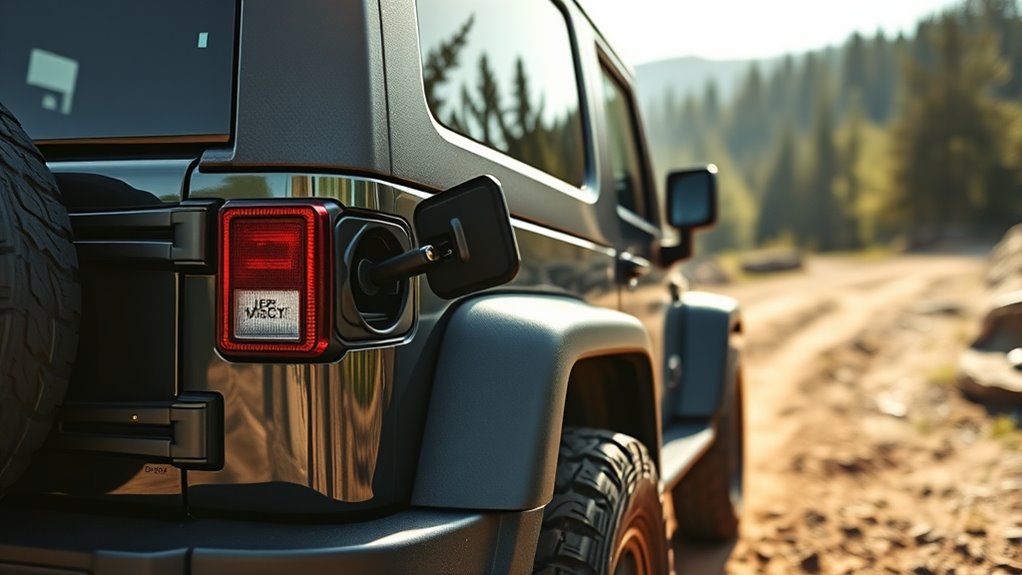
A Jeep Wrangler’s fuel tank typically holds between 17 and 21.5 gallons, depending on the model year, trim, and wheelbase. You can use that capacity to estimate range, refueling intervals, and driving efficiency more accurately.
A Jeep Wrangler’s fuel tank holds 17 to 21.5 gallons, depending on year, trim, and wheelbase.
A larger tank lets you travel farther between stops, but your actual distance depends on engine choice, terrain, load, and driving habits. If you tow, drive off-road, or idle often, you’ll burn fuel faster.
For fuel cost planning, multiply tank capacity by your local fuel price and expected fill level to forecast each refill. Check your owner’s manual for the exact specification, since Jeep changes capacity across generations.
Knowing the tank size helps you plan trips, manage expenses, and avoid running low on fuel.
What Are Jeep Wrangler Fuel Tank Sizes by Trim?
Jeep Wrangler fuel tank sizes vary by trim and wheelbase, so the exact capacity depends on which model you drive. You’ll usually see 17.5-gallon, 18.3-gallon, or 21.5-gallon tanks, with some four-door trims carrying more fuel than two-door versions. Check your trim to match range estimates with your driving needs and fuel economy targets.
- Sport and Sport S: typically smaller tanks
- Willys and Sahara: often mid-size tanks
- Rubicon: commonly larger-capacity setups
- 4xe: hybrid packaging changes tank sizing
If you compare trims, tank size can affect trip planning, Wrangler resale, and how often you stop for fuel. Always verify your exact configuration with the window sticker or owner’s manual before assuming a capacity.
How Does Wrangler Tank Size Vary by Model Year?
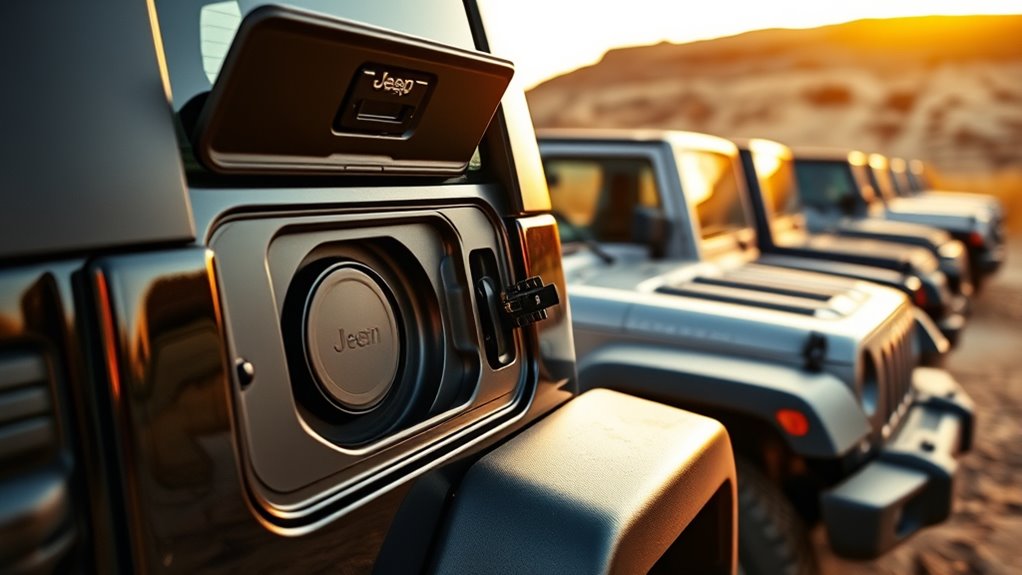
Model year can change Wrangler tank capacity because Jeep has revised body styles, powertrains, and packaging over time. You’ll see differences between generations, especially when Jeep adds new emissions hardware, axle layouts, or hybrid components.
Older Wranglers often carry simpler tank designs, while newer models may use slightly different shapes to fit frame changes and safety updates. That means you shouldn’t assume every Wrangler year shares the same gallon rating, even within the same trim family.
Always check the specific year and configuration before you compare specs. Those changes can also affect fuel efficiency expectations and tire wear indirectly, since vehicle mass and setup vary by model year.
For accuracy, use the VIN, build sheet, or Jeep’s official specifications for the exact Wrangler you’re evaluating.
How Far Can a Jeep Wrangler Go on a Tank?
You can estimate a Jeep Wrangler’s range by multiplying its fuel tank capacity by its average fuel economy. Your actual miles per tank will vary with engine type, axle ratio, terrain, tire size, payload, and driving speed.
In practice, many Wranglers can travel roughly 300 to 400 miles on a full tank, depending on configuration and conditions.
Fuel Tank Capacity
Fuel tank capacity plays a major role in how far a Jeep Wrangler can travel on a full tank, since range depends on both tank size and fuel economy. You’ll usually see capacities around 17 to 21.5 gallons, depending on trim and configuration.
A larger tank lets you cover more miles between fill-ups, which can improve fuel efficiency planning and reduce maintenance costs from frequent stops. Consider these points:
- Standard tanks hold less fuel.
- Optional tanks increase driving range.
- Hybrid models may use different capacities.
- Check your owner’s manual for exact specs.
With the right tank size, you can estimate trip length more accurately and manage fuel use with better precision.
Driving Range Factors
Tank size gives you the starting point, but a Jeep Wrangler’s driving range depends just as much on fuel economy, drivetrain, engine choice, tires, terrain, and driving habits. If you run larger tires, heavy loads, or aggressive all-wheel-drive use, you’ll reduce fuel efficiency and shorten the driving range.
Higher speeds, stop-and-go traffic, wind resistance, and steep grades also increase fuel use. A four-door model with a heavier curb weight typically needs more energy to move than a lighter setup.
Engine tuning and transmission gearing matter too, because they affect how often you stay in efficient operating ranges. If you want to maximize distance between fill-ups, keep tire pressure correct, minimize extra weight, and drive smoothly.
Estimated Miles Per Tank
How far can a Jeep Wrangler go on a tank? You’ll usually see about 250 to 370 miles, depending on trim, drivetrain, and fuel capacity. With a 17 to 21.5-gallon tank and EPA ratings near 17 to 25 mpg, your range changes fast.
- Highway driving boosts miles per tank.
- City traffic lowers efficiency.
- Off road mods add weight and drag.
- Eco friendly tuning can improve range.
If you tow, carry roof gear, or use oversized tires, expect fewer miles. Keep tire pressure correct and limit idle time to maximize distance. Your exact range depends on how you drive and maintain the Jeep.
Which Wrangler Features Affect Fuel Capacity?
Your Wrangler’s fuel capacity depends first on tank size, which can vary by model configuration and option package. Trim level and engine choice can also influence the tank fitted to your vehicle, since different setups may use different packaging and range requirements.
When you compare Wranglers, check both the tank specification and the powertrain details to see what you’re actually getting.
Fuel Tank Size Variations
Wrangler fuel capacity varies by trim, wheelbase, and powertrain, with most models carrying between 17 and 22 gallons. You should verify your exact tank size before car maintenance, road trip planning, or fuel-range calculations. A larger tank extends driving distance, but packaging constraints can change capacity across body styles.
- Wheelbase: Longer versions usually allow more fuel volume.
- Trim package: Equipment differences can affect underbody space.
- Body configuration: Two-door and four-door models often differ.
- Factory options: Specific setups may alter the tank fitment.
Check your owner’s manual or the fuel door label to confirm capacity. Accurate tank data helps you estimate stops, compare mileage, and plan refueling with fewer surprises on the trail or highway.
Trim And Engine Differences
Beyond wheelbase and body style, trim and engine choices can also affect Jeep Wrangler fuel capacity. You’ll usually see the same basic tank size across many trims, but equipment packages, axle ratios, and powertrain calibration can shift curb weight and usable range.
Common misconceptions say higher trims always hold more fuel; they don’t. Instead, suspension, skid plates, and tire size can change efficiency, which affects how far you travel on each gallon.
Engine differences matter too: the turbo four-cylinder, V6, and V8 all burn fuel differently under load. Hybrid considerations apply to the 4xe, where battery-assisted driving reduces gasoline use without increasing tank volume.
How Does Fuel Economy Change Wrangler Range?
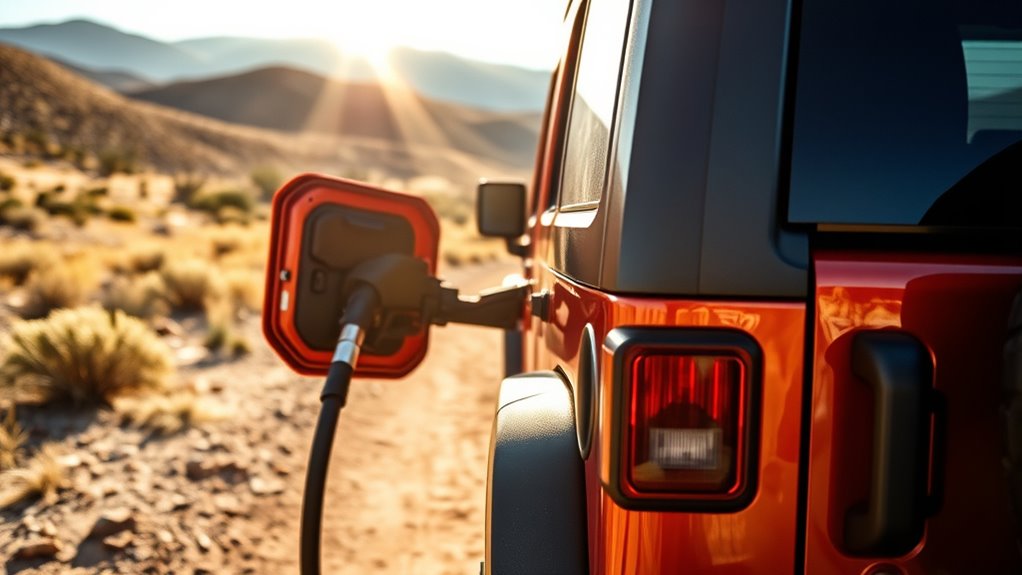
Fuel economy directly determines how far a Jeep Wrangler can travel on a tank, since range equals usable fuel capacity multiplied by miles per gallon. If your Wrangler averages better fuel economy, your driving range increases proportionally; if mpg drops, range shrinks fast.
You can estimate the change with simple math:
- Higher mpg extends range.
- Lower mpg reduces range.
- City driving usually shortens range.
- Highway cruising usually improves range.
For example, a 21-gallon tank at 20 mpg delivers about 420 miles, while 17 mpg cuts that to 357 miles. Tire size, gear ratios, speed, and load all affect fuel economy, so your actual range can vary. Track mpg over time to compare trims and conditions accurately.
How Can You Check Your Wrangler’s Tank Size?
To check your Wrangler’s tank size, start with the owner’s manual or the fuel-filler door label, which often lists the official capacity. You can also verify it through your VIN-based build sheet, dealer records, or Jeep’s spec database for your model year and trim.
Compare that figure with your dashboard range estimate to sanity-check fuel efficiency calculations. If you’ve added aftermarket mods, confirm they haven’t changed usable space or sender readings.
During inspection, look for the tank shape, skid plates, and filler neck routing, since these can affect identification. Keep tire pressure in spec before testing range, because low pressure can skew your interpretation.
Knowing the exact capacity also helps you estimate maintenance costs and plan fuel stops accurately.
Why Does Wrangler Tank Size Matter on Road Trips?
Wrangler tank size matters on road trips because it directly affects how far you can drive between fill-ups, how often you need to stop, and how much route flexibility you have. A larger tank lets you cover more miles, which helps in remote areas with limited stations.
A smaller tank may require tighter fuel planning, especially if you’ve added weight, larger tires, or a different exhaust that changes efficiency.
- Extend driving range.
- Reduce refuel stops.
- Improve route choice.
- Support special editions with unique packaging.
You should compare your trim’s tank capacity with your expected MPG and terrain. That lets you estimate real-world range, avoid fuel anxiety, and plan crossings, trails, and highway legs more accurately without surprises.
Frequently Asked Questions
Does a Jeep Wrangler Have a Reserve Fuel Tank?
No, you don’t get a separate reserve fuel tank in a Jeep Wrangler. You’ve got one tank and a low-fuel warning instead; think of it as reserve fuel management, not a dedicated two word idea1 or two word idea2.
Can I Upgrade My Wrangler’s Fuel Tank Size?
Yes, you can upgrade your Wrangler’s fuel tank size, but only with aftermarket tanks designed for your model. You’ll need to verify tank capacity, emissions compatibility, and fitment before upgrading fuel system components.
Do Diesel Wranglers Hold More Fuel Than Gas Models?
Usually, no. Your diesel Wrangler doesn’t hold more fuel than gas models. In a diesel vs fuel capacity comparison, you’ll often see similar tank sizes, though trim and market can change exact capacities.
Where Is the Fuel Tank Located on a Wrangler?
Right under you, by coincidence, the Wrangler’s fuel tank sits beneath the rear cargo area, centered between the frame rails.
You’ll find this location placement protected within the fuel system, improving clearance and off-road durability.
Does Towing Reduce a Wrangler’s Driving Range?
Yes, towing does reduce your Wrangler’s driving range because it increases engine load and lowers fuel economy. You’ll burn more fuel per mile, so plan for shorter towing range and more frequent refueling stops.
Conclusion
So, how many gallons are in your Jeep Wrangler? It depends on your trim, model year, and setup, but you’ll usually see about 17.5 to 21.5 gallons.
Check your owner’s manual, fuel door label, or VIN build sheet to confirm the exact number. Like a trail map before a climb, that detail helps you plan range, fuel stops, and road trips with confidence.
When you know your tank size, you drive smarter. Understanding how many gallons are in a Jeep Wrangler is key to making the most of every journey.