How Many Gallons Are in a Jeep Wrangler
As an Amazon Associate we earn from qualifying purchases.
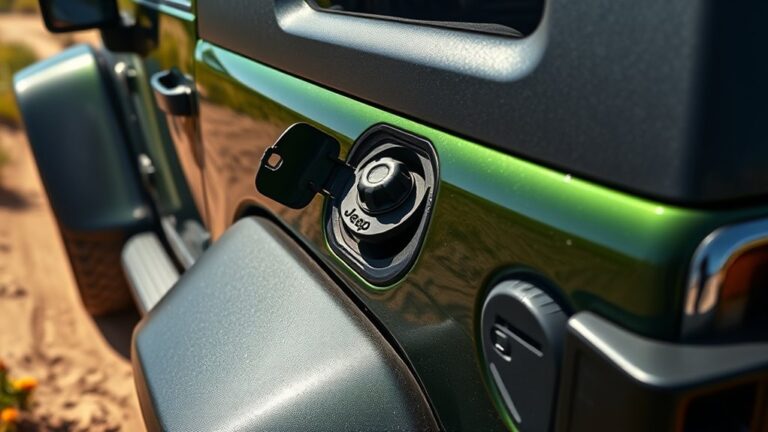
If you’re trying to figure out how many gallons a Jeep Wrangler holds, the answer depends on your exact trim, body style, and powertrain. Most Wranglers fall between 17 and 21 gallons, but the number shifts with two-door, four-door Unlimited, and 4xe models.
That difference also changes how far you can go on a tank, and the details aren’t always obvious until you check your specific build.
Key Takeaways
- Jeep Wrangler fuel tank capacity typically ranges from 17.5 to 21.5 gallons, depending on model year and configuration.
- Two-door Wranglers usually have smaller tanks than four-door Unlimited models.
- Trim, engine, and package options can change the exact fuel tank size.
- The Jeep Wrangler 4xe has a 17.0-gallon fuel tank because of hybrid components.
- Check the owner’s manual or build sheet to confirm the exact gallons for your specific Wrangler.
How Many Gallons Does a Jeep Wrangler Hold?
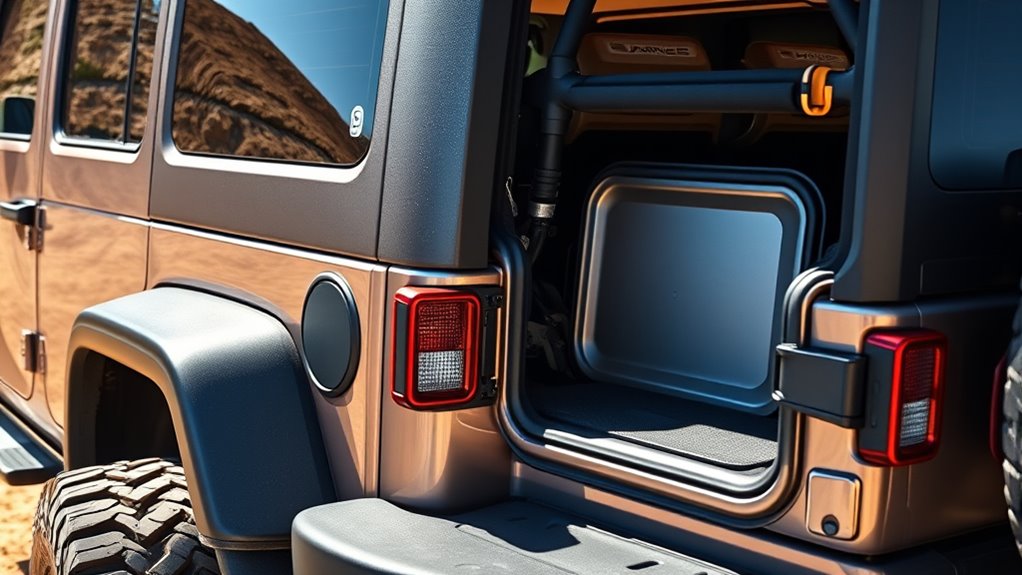
A Jeep Wrangler typically holds between 17.5 and 21.5 gallons of fuel, depending on the model year, trim, and engine. You can use that capacity to estimate range and plan refueling more accurately.
A Jeep Wrangler typically holds 17.5 to 21.5 gallons of fuel, depending on trim and engine.
When you compare fuel efficiency, remember that a larger tank doesn’t change consumption; it only extends distance between stops. You should also monitor tank maintenance, since leaks, contamination, or damaged filler components can affect usable fuel volume and vehicle reliability.
Check your owner’s manual for exact capacity, then verify the specification against your specific Wrangler configuration. If you tow, drive off-road, or idle often, your practical range may drop quickly.
Keeping the tank clean and the cap sealed helps preserve system performance and fuel delivery consistency.
Jeep Wrangler Gas Tank Size by Trim
Gas tank size varies by Jeep Wrangler trim, so you need to check the exact configuration before relying on a single number. Your model’s tank capacity can differ with two-door or four-door layouts, engine choice, and package options.
You’ll often see the same trim name paired with different capacities across model years, so verify the spec sheet, not just marketing buzzwords.
- Base trims may use a smaller tank
- Higher trims can include different fuel-system specs
- Body style can affect usable capacity
- Non technical considerations, like accessories, matter too
For accuracy, read the owner’s manual, window sticker, or build sheet. That gives you the trim-specific gallons figure and helps you avoid confusion when comparing Wrangler variants.
Which Jeep Wrangler Models Hold the Most Fuel?
If you’re comparing Wrangler fuel capacity, the larger four-door models usually hold the most fuel. In most model years, you’ll see the Unlimited versions carry the biggest tanks, while two-door Wranglers use smaller setups.
That means trims like the four-door Sahara, Rubicon, and Sport typically give you the highest factory capacity, depending on engine and package. You can confirm the exact spec by checking the trim sheet, since Jeep sometimes changes tank size with powertrain options.
If you want fewer stops, focus on the longer wheelbase body style first. Even if you add eco friendly upgrades, tank capacity stays fixed. For trail use, off road efficiency still matters, but the model with the larger tank usually gives you the most fuel onboard.
How Tank Size Affects Range
Your Jeep Wrangler’s fuel tank capacity sets the upper limit for how far you can travel before refueling. A larger tank can extend driving range, but your actual distance still depends on fuel economy, terrain, speed, and load.
That means tank size matters, but it’s only one part of the range equation.
Fuel Tank Capacity
A Jeep Wrangler’s fuel tank capacity directly affects how far you can drive between fill-ups, with most models carrying roughly 17 to 21.5 gallons depending on trim and model year. You should verify your exact tank size in the owner’s manual or on the door placard, because tank calibration can differ slightly. Don’t trust fuel myths that claim every Wrangler uses the same reservoir.
- 17 gallons: common on some two-door trims
- 18.3 gallons: seen on many standard configurations
- 21.5 gallons: available on select four-door models
- Calibration marks: help you read usable fuel more accurately
Knowing capacity lets you compare trims and estimate refueling needs more precisely.
Driving Range Impact
Tank size has a direct effect on how far you can drive between fuel stops, because a larger Jeep Wrangler tank holds more gasoline and usually extends your range. You’ll generally get more miles per fill-up, but your actual distance depends on engine choice, gearing, tire size, terrain, and driving habits.
Off-road use, headwinds, and higher speeds reduce efficiency quickly, so range can drop well below highway estimates. If you’re planning trips, calculate usable range from your average mpg, not just tank capacity. That gives you a more accurate fuel-stop schedule.
For two word discussion ideas, compare stock and modified setups. An irrelevant subtopic is paint color, since it doesn’t affect range. Use this data to plan fuel stops and avoid running low unexpectedly.
Wrangler Fuel Economy and Range
Wrangler fuel economy varies by trim, engine, drivetrain, and tire setup, so the usable range can differ quite a bit from one model to another. You’ll usually see lower MPG with larger tires, higher ride height, and heavier off-road hardware, which also affects off road payload. To extend range, you can choose eco friendly upgrades like low-rolling-resistance tires, synthetic fluids, and efficient driving habits.
City driving often reduces range more than highway cruising. Four-wheel drive and deep tread increase fuel use. Wind resistance rises with roof racks and open accessories. Fuel economy improves when you reduce idle time and unnecessary weight.
Plan your trips around terrain, cargo, and throttle use, because those factors change how far each gallon carries you.
How to Find Your Wrangler’s Exact Tank Size
Your Wrangler’s range depends on more than MPG, so the next step is confirming the exact fuel tank size for your specific trim and model year. Check the owner’s manual, the fuel filler label, or the build sheet from Jeep using your VIN.
Compare factory specs with your axle and engine package, since tank capacity can vary.
| Source | What you get | Reliability |
|---|---|---|
| Owner’s manual | Factory tank size | High |
| VIN build sheet | Trim-specific data | High |
| Fuel door label | Quick reference | Medium |
| Dealer record | Verified configuration | High |
| Jeep spec page | Model-year overview | Medium |
Use the number for engine maintenance planning and cargo optimization, because weight and storage choices affect usable range.
Jeep Wrangler 4xe Fuel Capacity
For the Jeep Wrangler 4xe, the gas tank holds 17.0 gallons, which is smaller than the non-hybrid Wrangler’s available fuel capacities because the hybrid battery and electric drivetrain take up space. You still get usable range from the Jeep Wrangler’s plug-in setup, and the fuel capacity supports combined gas and electric driving.
- 17.0-gallon tank size
- Hybrid packaging reduces space
- Electric assist lowers fuel use
- Capacity stays fixed by trim
You should check your trim label or owner’s manual for exact specifications. The 4xe’s fuel capacity matters most when you compare it with standard Wrangler models since it affects range planning and refueling frequency.
How Much to Fill a Jeep Wrangler
To estimate how much it costs to fill a Jeep Wrangler, multiply the tank size by the current price per gallon of regular gasoline. If your Wrangler has a 17.5-gallon tank and fuel costs $3.50 per gallon, a full fill-up runs about $61.25.
Multiply the tank size by the gas price to estimate a Jeep Wrangler fill-up cost.
Models with larger tanks, such as 21.5 gallons, cost about $75.25 at the same price. Your final total changes with local taxes, station pricing, and whether you drive a 4xe or gas-only trim.
Always check your owner’s manual for exact capacity. Fuel efficiency affects how often you refill, but not the tank’s maximum cost.
For accurate budgeting, use your typical fuel price and track fill-ups consistently. Following routine maintenance tips, like correct tire pressure, helps keep fueling costs predictable.
How to Get More Miles Per Tank
You can extend your Jeep Wrangler’s range by smoothing out acceleration, reducing hard braking, and keeping your speed steady. You should also check tire pressure regularly, because underinflated tires increase rolling resistance and lower fuel economy.
These two habits can help you get more miles from each tank without changing the vehicle’s fuel capacity.
Improve Driving Habits
Smooth, consistent driving can stretch every gallon in a Jeep Wrangler, especially since frequent hard acceleration, rapid braking, and high-speed cruising all increase fuel use. You improve driving efficiency by easing into throttle inputs and anticipating traffic flow so you don’t waste momentum.
Use cruise control on open roads when conditions stay steady, and keep speeds moderate because aerodynamic drag rises quickly. For fuel budgeting, track your average mpg after each fill-up and adjust habits based on actual results.
Accelerate gradually from stops
Brake early and smoothly
Maintain steady highway speeds
Plan routes to avoid stop-and-go traffic
These habits reduce fuel demand without changing the Wrangler’s tank size or capability, helping you get more miles per tank.
Maintain Tire Pressure
Proper tire pressure can make a noticeable difference in how far a Jeep Wrangler travels on each tank. You should check pressure at least monthly and before long trips, because underinflated tires increase rolling resistance and reduce fuel efficiency.
Use the door placard or owner’s manual for the correct cold PSI, then adjust all four tires evenly. If you run larger aftermarket tires, verify the load rating and recommended pressure separately.
Tire maintenance also includes inspecting for uneven wear, slow leaks, and damage that can lower performance. Keep a quality gauge in the vehicle, and don’t rely on visual checks alone.
When you maintain proper inflation, you help the engine work less, improve handling, and get more miles per tank without changing your driving route or habits.
Frequently Asked Questions
Does the Jeep Wrangler Have a Removable Gas Tank?
No, you can’t remove the Jeep Wrangler’s fuel tank like a quick-release part; its fuel tank design is integrated underbody-mounted. You’d need tools to service it, but the removable fuel concept doesn’t apply here.
Can I Use Regular Gas in a Jeep Wrangler?
Yes, you can usually use regular gas in your Jeep Wrangler; check your owner’s manual for the required octane.
Better gasoline quality can support fuel efficiency, smooth operation, and engine protection under heavy loads.
How Long Does It Take to Fill a Wrangler Tank?
You’ll usually spend 3–6 minutes filling a Wrangler tank, depending on pump speed and tank size. Faster pumps, slower flow, and fuel efficiency all affect time.
You’ll finish quicker at high-flow stations and with partial fills.
Does Towing Reduce Jeep Wrangler Fuel Range?
Yes, towing does reduce your Jeep Wrangler’s fuel range because it increases engine load and drag. You’ll burn more fuel per mile, so expect shorter intervals between refueling, especially on hills, highways, or in crosswinds.
Are Wrangler Fuel Tanks Different Between Two-Door and Four-Door Models?
Yes, you’ll usually find two door differences and four door capacity differences in Wrangler fuel tanks; two-door models often carry less fuel, while four-door versions typically use larger tanks for greater range and utility.
Conclusion
So, when you ask how many gallons your Jeep Wrangler holds, you’re really looking at a moving target shaped by trim, body style, and powertrain. Most Wranglers carry about 17 to 21 gallons, while the 4xe usually holds about 17.
Check your build sheet or owner’s manual for the exact number. Once you know it, you can gauge range like reading a fuel map, not guessing in the dark.
Understanding how many gallons are in a Jeep Wrangler helps you plan your trips better and avoid unexpected stops.