How Long Is a Jeep Cherokee
As an Amazon Associate we earn from qualifying purchases.
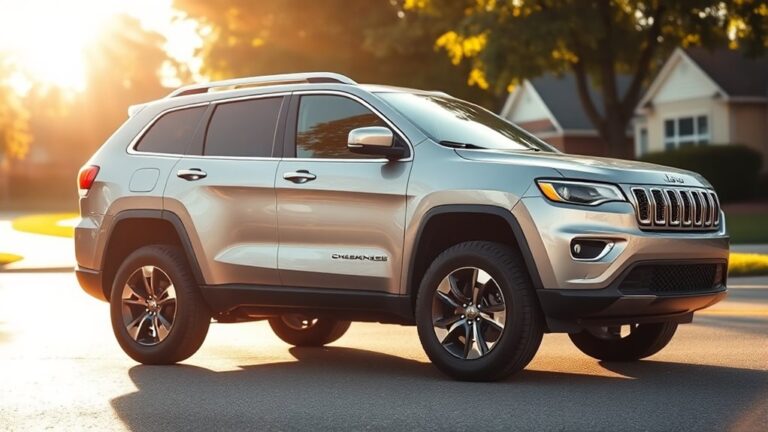
At about 182 inches long, a Jeep Cherokee can feel like a tight fit in one driveway and a comfortable compromise in another. The length of a Jeep Cherokee is an important factor to consider for parking and daily use.
You’ll find that exact length shifts by model year, with older versions shorter and newer ones stretched for more space. That difference affects parking, cargo room, and daily maneuvering.
The details get more useful once you compare trims and generations, helping you understand how size impacts your experience.
Key Takeaways
- A Jeep Cherokee is about 182 inches long overall, though exact length varies slightly by model year and trim.
- That length is roughly 15 feet, making it a compact-to-midsize SUV with manageable parking and maneuverability.
- First-generation Cherokee models were shorter, ranging from about 169.5 to 170.5 inches depending on the year.
- Cherokee length has gradually increased across generations to add more cabin and cargo space.
- Official Jeep specifications are the best source for exact length by model year.
How Long Is a Jeep Cherokee?
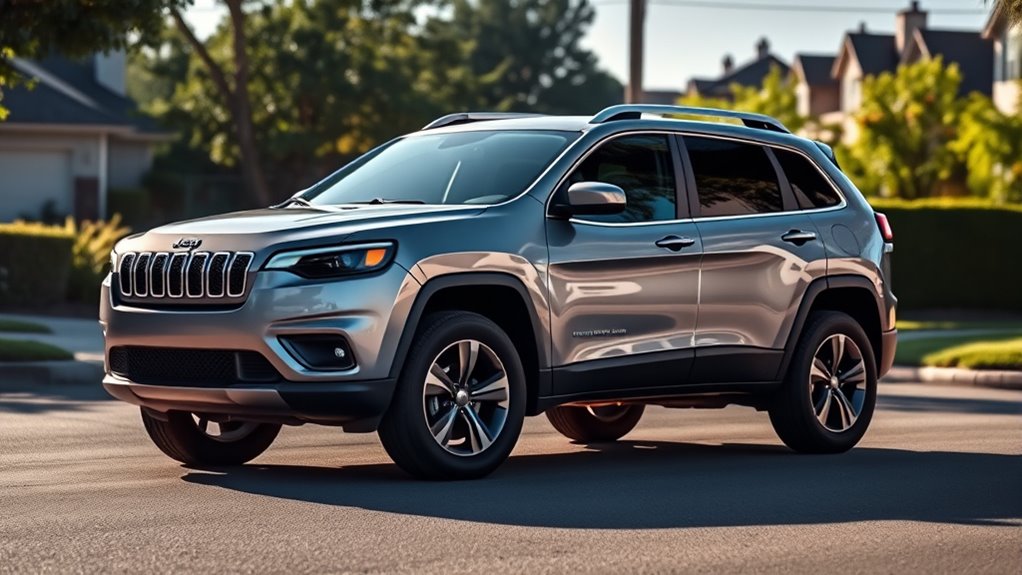
The Jeep Cherokee is about 182 inches long, though the exact length can vary slightly by model year and trim. When you check a specific Cherokee, you’ll usually find a compact SUV that’s long enough for everyday use but still easy to park.
You shouldn’t rely on an unreliable rumor or marketing hype to judge its size; the best source is the vehicle’s official specifications. In practical terms, you can expect a length near 15 feet, which gives you a useful balance of cabin space and maneuverability.
If you’re comparing it with other SUVs, focus on the listed overall length rather than estimates. That number tells you how much room the Cherokee takes in a driveway, garage, or tight street space.
How Has Cherokee Length Changed by Year?
You can see the Jeep Cherokee’s length change noticeably across generations, starting with the shorter first-gen models and moving to larger modern versions. Each redesign has added or adjusted overall length, so year-by-year comparisons show clear growth over time.
These changes help you understand how the Cherokee has evolved in size and packaging.
First-Gen Cherokee Size
How long was the first-generation Jeep Cherokee, and did its size change by year? In the first gen, you’ll find a compact body with modest size evolution across its run.
Jeep kept the Cherokee’s overall length fairly steady, with only minor differences tied to trims and body styles. The table below shows the general pattern.
| Year range | Approx. length |
|---|---|
| 1984–1986 | 169.5 in |
| 1987–1990 | 170.3 in |
| 1991–1996 | 170.5 in |
| 1997 | 170.5 in |
| Notes | Small year-to-year shifts |
You can see that the first-gen Cherokee didn’t grow dramatically. Jeep focused on consistency, so the size stayed close to the original footprint throughout production.
Modern Cherokee Growth
After the first-generation Cherokee, Jeep stretched the model’s length as it moved into newer generations, adding more cabin and cargo space while keeping the SUV compact enough for everyday use. You can see the modern Cherokee growth trends in its gradual size increases, which helped improve passenger comfort and utility without turning it into a full-size SUV.
Jeep has generally adjusted length to match market demands, so you get a better balance of maneuverability and interior room.
- Newer models usually ride longer than earlier ones
- Growth trends focus on space, not bulk
- The modern Cherokee stays practical for city and highway driving
This steady growth supports everyday versatility.
Yearly Length Comparisons
Cherokee length has changed gradually from year to year, with Jeep making small adjustments rather than dramatic jumps. You can see a clear length evolution across generations, especially when you compare earlier compact models with later, larger versions.
In the naming history, Jeep kept the Cherokee name while redesigning the body, so the badge often stayed the same even as dimensions grew. You’ll notice that some model years add only a few inches, while others reflect major platform changes.
Those shifts usually respond to cabin space, safety requirements, and styling updates. If you’re comparing years, focus on wheelbase and overall length together, because both affect how the Cherokee fits in garages, parking spaces, and daily driving.
How Easy Is the Cherokee to Park?
Even in tighter parking lots, the Jeep Cherokee is generally easy to place thanks to its compact footprint and manageable turning radius. You can steer into standard spaces without much effort, and the elevated seating position helps you judge boundaries better.
In urban parking, that visibility can reduce hesitation and make maneuvering feel more controlled. Use these parking tricks to stay accurate:
- Align the Jeep before you turn in.
- Check mirrors and camera views as you back up.
- Make small steering corrections instead of overcorrecting.
You’ll still want to account for curb heights and painted lines, but the Cherokee’s size works in your favor. Overall, it’s practical for daily parking, especially when streets are crowded and spaces are tight.
How Much Cargo Space Does It Offer?
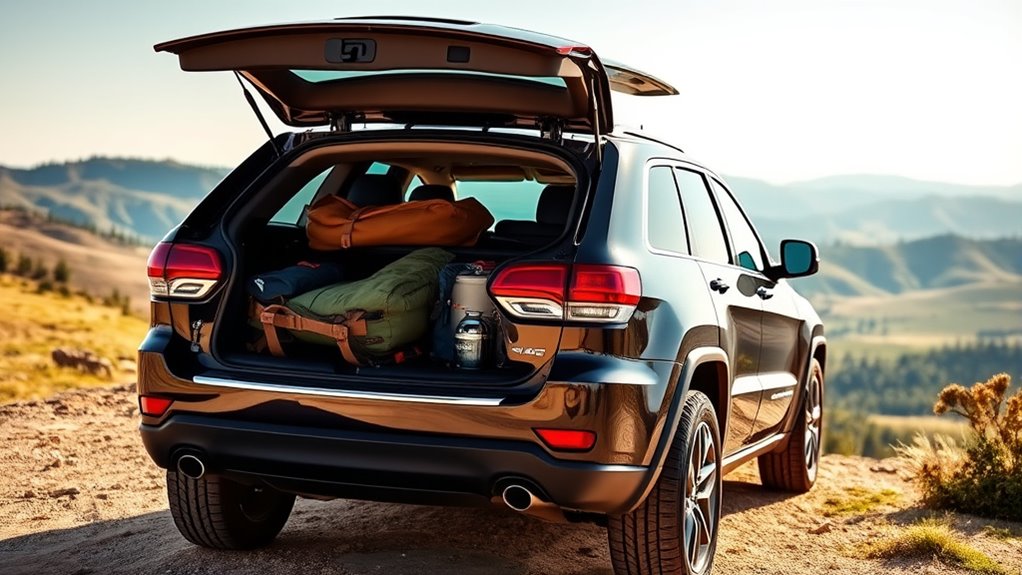
Cargo room is another place where the Jeep Cherokee’s size makes sense for everyday use. You get a practical rear area that works well for groceries, luggage, and weekend gear, and the split-folding rear seats let you extend that space when you need more room.
The load floor stays manageable, so you don’t have to lift items too high. That matters if you often load bulky bags or boxes. Inside, the cabin layout supports good driving ergonomics, so you can reach controls without stretching and still keep the cargo area useful.
Because the Cherokee isn’t oversized, you also avoid carrying extra weight you don’t need, which can help fuel efficiency. Overall, the space feels balanced for daily errands, commuting, and light travel.
How Does the Jeep Cherokee Compare to Rivals?
Compared with rivals like the Honda CR-V, Toyota RAV4, and Ford Escape, the Jeep Cherokee usually stands out for its off-road capability and available traction systems rather than for having the most interior space. If you compare it to those models, you’ll notice the Cherokee leans more toward rugged performance than everyday practicality.
It also can feel more upscale than some mainstream crossovers, though it still trails luxury rivals in materials and refinement.
- You get stronger off road capability than many compact SUVs.
- You may give up a bit of rear-seat and cargo room.
- You’ll find a balance of comfort, control, and trail-ready hardware.
Is the Jeep Cherokee Right for Your Needs?
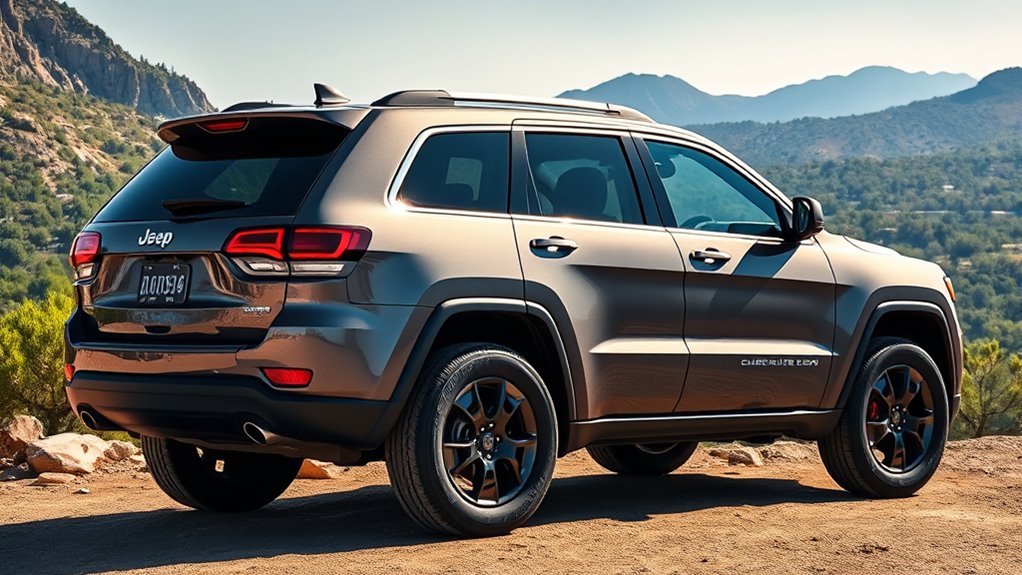
To decide whether the Jeep Cherokee fits your needs, consider its cargo and passenger space for daily use. You should also think about parking and maneuverability if you often drive in tight areas.
If the Cherokee’s size and capabilities match your driving needs, it could be a practical choice.
Cargo And Passenger Space
When you’re deciding whether the Jeep Cherokee fits your daily routine, its cabin space matters as much as its overall length. You get seating for five, with enough room for commuting, school runs, and weekend errands.
The rear seat offers usable legroom for adults, though taller passengers may want more stretch on long drives. Cargo space gives you flexibility for groceries, luggage, or sports gear, and folding the back seats expands that area when you need more room.
If your priorities stay focused on real-world storage and passenger comfort, you can skip side quests and unrelated topics.
- Five-passenger seating
- Practical rear-seat space
- Fold-flat cargo flexibility
Parking And Maneuverability
Parking a Jeep Cherokee is generally manageable for an SUV of its size, and its compact footprint helps it fit more easily into city spaces, garages, and crowded lots. You’ll still want to judge its turning radius and rear visibility when squeezing into tighter spaces.
Its size can make parallel parking more demanding than in a sedan, but it remains approachable for many drivers. Use mirrors and cameras carefully, and follow parking etiquette to avoid blocking adjacent spaces or curbs.
Ground height can also affect curb clearance, so watch steep driveway entries and tall curbs. Overall, you get a balance of SUV presence and everyday maneuverability, which makes the Cherokee practical if you need usable space without moving to a larger vehicle.
Driving Needs Match
The Jeep Cherokee suits drivers who want a compact SUV that’s easy to live with but still offers useful cargo space, a comfortable ride, and available all-weather or light off-road capability. You should consider it if your driving needs include daily commuting, family errands, and occasional weekend trips, because its size balances comfort with control.
Its vehicle versatility makes it a practical pick when you want one SUV for varied routes and changing conditions.
- Good for urban driving and parking
- Useful for moderate cargo and passengers
- Capable for rain, snow, and mild trails
If you need maximum towing, three-row seating, or a larger cabin, you may want a bigger SUV. Otherwise, the Cherokee can fit well.
Frequently Asked Questions
What Is the Jeep Cherokee’s Wheelbase?
You’ll find the Jeep Cherokee’s wheelbase is 106.5 inches. Skip unrelated topic, unneeded context, off topic discussion, and irrelevant comparison; they don’t help you here. This measurement varies slightly by model year.
How Much Does a Jeep Cherokee Weigh?
You’ll find a Jeep Cherokee usually weighs 3,500–4,200 pounds, depending on trim. For example, you’d notice a loaded Trailhawk feels heavier.
Stick to two word discussion ideas, not irrelevant topics, when comparing specs.
Does the Jeep Cherokee Fit in a Standard Garage?
Usually, yes, you can fit a Jeep Cherokee in a standard garage, but you should check your garage sizing first. If space is tight, consider long term parking alternatives, especially with added storage or larger accessories.
What Trim Levels Are Available for the Jeep Cherokee?
You’ll find Cherokee trim levels vary by model year, but they’ve commonly included Latitude, Altitude, Latitude Lux, Limited, Trailhawk, and Overland.
You can expect different equipment and off road capability across trims.
How Fuel-Efficient Is the Jeep Cherokee?
You’ll get decent fuel economy from a Jeep Cherokee, though exact numbers depend on trim and engine. Better efficiency lowers your environmental impact, and you can expect competitive mileage for a midsize SUV overall.
Conclusion
If you’re sizing up a Jeep Cherokee, you’re looking at a compact SUV that’s typically about 182 inches long, or roughly 15 feet. That makes it easier to park and maneuver than larger SUVs, while still giving you useful cargo and passenger space.
Think of it like a backpack that’s roomy but not bulky: it fits daily life without getting in your way. Check your exact model year, and you’ll know how well it fits your needs.
Knowing how long a Jeep Cherokee is can help you decide if it’s the right vehicle for your lifestyle and parking situation.