How Fast Can a Jeep Wrangler Go
As an Amazon Associate we earn from qualifying purchases.
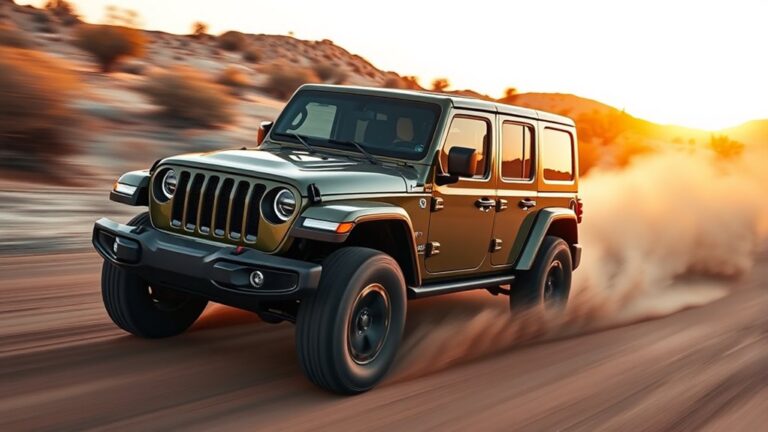
If you want to know how fast a Jeep Wrangler can go, a stock model on a long, flat stretch might reach about 110 mph before factors like drag, gearing, and tire size start to play a significant role.
You’ll typically cruise comfortably at speeds between 65 and 75 mph. However, trims, engine output, and lift kits can quickly change those numbers.
What really sets the speed limit isn’t just horsepower, and that’s where the details start to matter.
Key Takeaways
- Most modern Jeep Wranglers top out around 110–120 mph in ideal conditions.
- Real-world top speed is usually lower because of drag, wind, tire choice, and added cargo.
- Wrangler gearing, engine power, tire size, and shift logic strongly affect how quickly it reaches top speed.
- Larger tires and lift kits can reduce acceleration, stability, and effective highway speed.
- Wrangler highway cruising is typically most comfortable around 65–75 mph, with higher speeds feeling less stable.
How Fast Can a Jeep Wrangler Go?
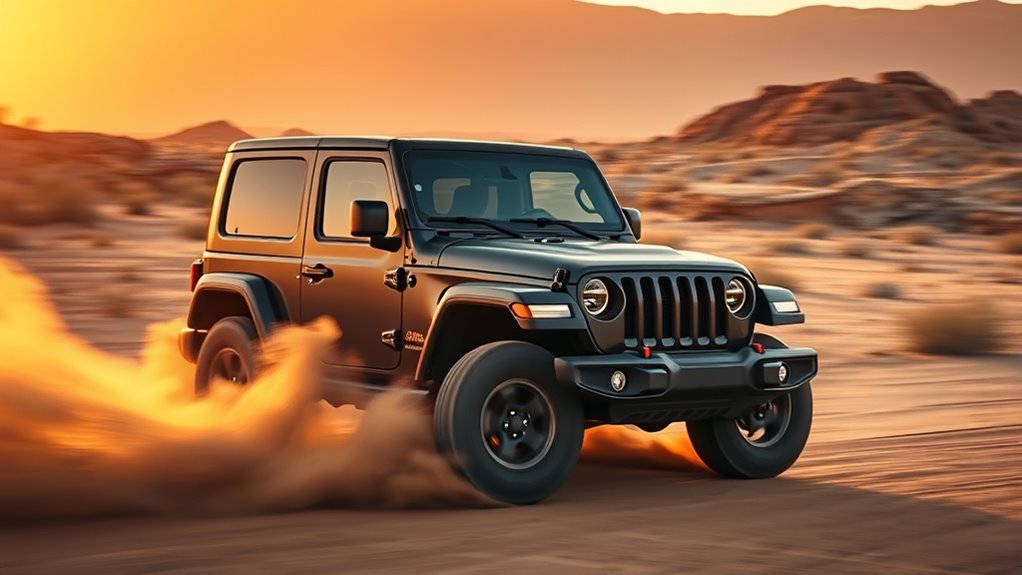
A Jeep Wrangler’s top speed depends on the engine, transmission, axle ratio, tire size, and trim, but most modern versions typically reach about 110 to 120 mph under ideal conditions. You shouldn’t treat that figure as a practical cruising target, because aerodynamics, ride height, and all-terrain tires increase drag and reduce stability at high speed.
You’ll usually see lower real-world results on rough pavement, in wind, or with added cargo. If you compare diesel vs gasoline models, you may notice different throttle response and gearing behavior, but both remain speed-limited by calibration and safety margins.
When you drive off road etiquette, speed matters less than control, traction, and predictable inputs. On-road, the Wrangler performs best within moderate highway speeds, where braking, steering, and suspension remain more composed.
How Fast Is a Jeep Wrangler by Engine?
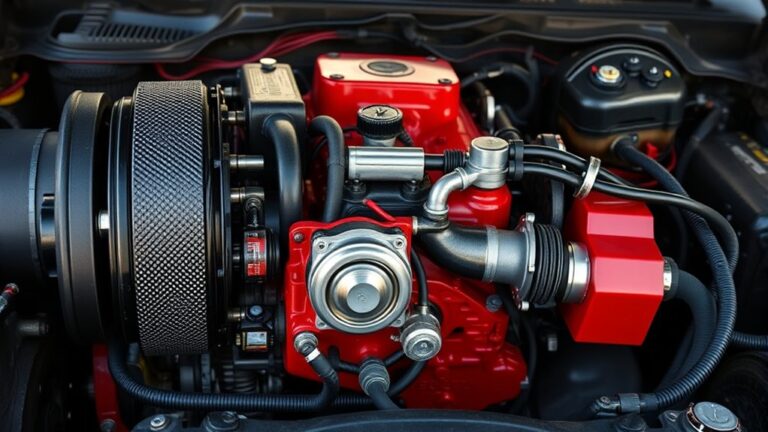
Engine choice plays a major role in how quickly a Jeep Wrangler reaches its top speed and how strongly it accelerates at highway speeds. You’ll see noticeable differences across the lineup, because output, torque, and gearing all change vehicle response.
The base V6 delivers steady, predictable acceleration, while turbocharging options can improve low-rpm pull and midrange response. Diesel performance stands out for strong torque delivery, helping you maintain momentum with less throttle in passing situations.
- V6: balanced power and smooth delivery
- Turbo four-cylinder: quicker low-end response
- Diesel: stronger torque, efficient cruising
- 4xe: instant electric assist off the line
- High-output variants: fastest factory acceleration
You’ll get the quickest feel from engines with more torque, especially in real-world driving and climbing grades.
What Limits Jeep Wrangler Top Speed?
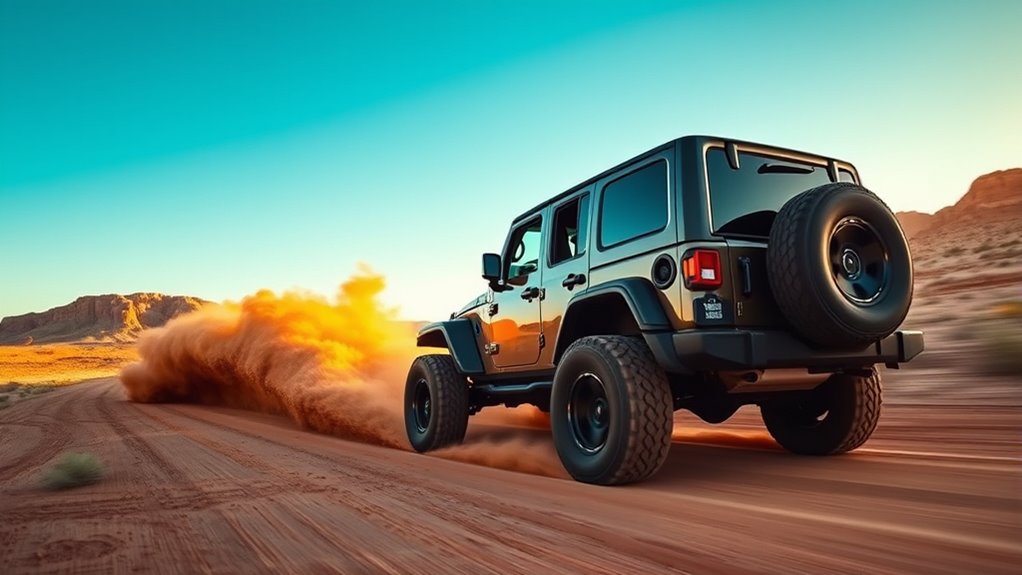
Your Jeep Wrangler’s top speed is mostly capped by aerodynamics, since its boxy shape creates substantial drag at higher road speeds.
You’ll also see engine power and gearing limit how quickly it can overcome that drag and keep accelerating. As speed rises, the available power must fight increasing air resistance, so the drivetrain’s final ratio and engine output become decisive constraints.
Aerodynamics And Drag
At higher speeds, the Jeep Wrangler’s boxy body shape becomes a major limiter because aerodynamic drag rises quickly as velocity increases. You can see why aerodynamic shaping matters: the upright windshield, exposed mirrors, and flat panels create drag coefficients far above sleeker SUVs.
As speed builds, air pressure on the front and turbulent wake behind the vehicle demand more force to maintain pace.
- Tall ride height increases frontal area
- Open wheel wells disturb airflow
- Soft tops add surface turbulence
- Roof racks raise drag further
- Wide tires increase rolling resistance and tire friction
These effects don’t just slow acceleration; they cap top speed by converting more engine output into heat and noise instead of forward motion.
Engine Power And Gearing
Beyond drag, the Wrangler’s top speed also depends on how much power the engine can produce and how effectively the drivetrain turns that power into road speed. You’re limited by engine torque, horsepower, and the engine’s usable rpm range, because aerodynamic load rises faster than output at higher speeds.
If the engine can’t sustain enough power at the top end, acceleration fades before the vehicle reaches its theoretical maximum. Transmission ratios also matter: short gearing multiplies torque off the line, but it can force the engine to run at higher rpm sooner, while tall gearing reduces engine speed and can improve top speed potential.
Final drive ratio, tire diameter, and shift logic all influence where the Wrangler settles under full throttle.
How Do Tires and Lift Kits Affect Speed?
Larger tires increase effective rolling diameter, which changes final drive ratio and usually reduces acceleration, so you’ll often see lower top speed under the same engine load.
A lift kit can add aerodynamic drag by raising the vehicle’s frontal area and disrupting airflow, and that extra resistance can trim speed at highway pace. Together, tire size and lift height can make your Wrangler feel slower even when engine output hasn’t changed.
Tire Size Impact
Tire size and lift kits can change a Wrangler’s top speed indirectly by altering effective gearing, aerodynamic drag, and rolling resistance. When you fit a larger tire size, you increase the distance traveled per wheel revolution, which lowers engine rpm at any given road speed.
That can make you think the Jeep runs taller gearing, but it also demands more torque to accelerate and maintain top speed on level pavement. The speedometer and odometer usually read low unless you recalibrate them.
Larger tires raise effective gear ratio
Smaller tires increase rpm at cruise
Wider tread can add rolling resistance
Recalibration restores accurate speed readings
Gear changes may recover lost performance
Lift Kit Drag
A lift kit can also affect a Wrangler’s top speed by increasing aerodynamic drag, especially once the body sits higher in cleaner airflow. You raise the vehicle’s frontal area, so air hits more surface and the drag coefficient usually rises. That extra resistance makes the engine work harder at highway speeds, and you may notice slower acceleration above 50 mph.
Larger tires compound the effect because they add rotational mass and can disrupt the factory airflow pattern around the wheel wells. Even a modest lift kit can reduce aerodynamics enough to trim a few mph from top speed, depending on tire width, suspension height, and gear ratios. If you want to preserve speed, keep the lift modest and match the tires carefully.
How Fast Is a Wrangler on the Highway?
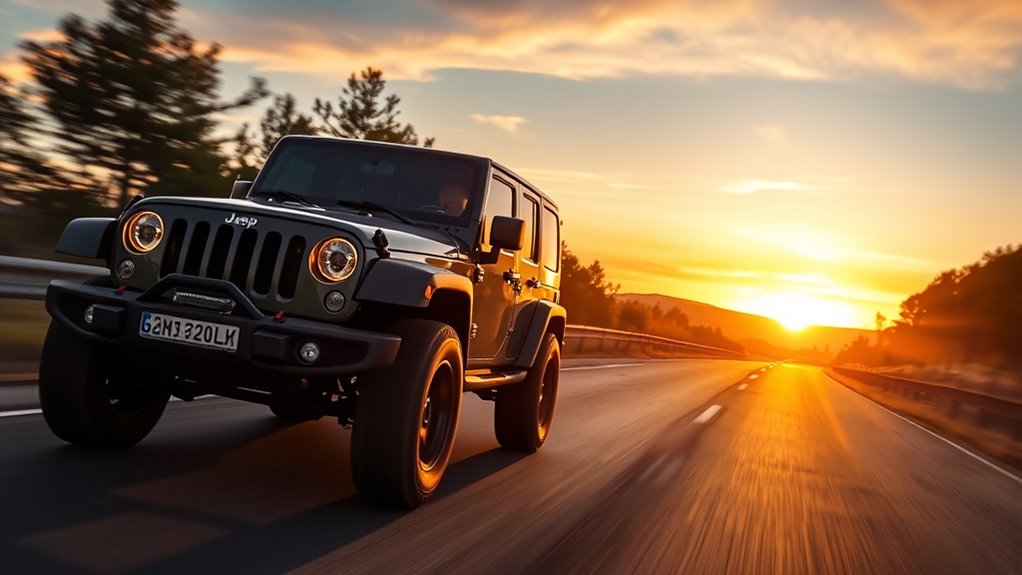
On the highway, a Jeep Wrangler typically cruises most comfortably between 65 and 75 mph, though higher speeds are possible depending on trim, gearing, tire size, and engine choice. You’ll usually match posted speed limits without strain, but your fuel efficiency will decline as speed rises and aerodynamic drag increases.
Short wheelbase stability varies with pavement quality. Larger tires raise rolling resistance. Deep axle gears can hold engine revs higher. Soft tops generate more wind noise. Automatic transmissions can keep shifts smoother.
At these speeds, the Wrangler remains mechanically capable, yet its body shape and off-road hardware make it less efficient than a crossover. You should expect steady tracking, not sports-car precision, and plan highway travel around the vehicle’s upright design and drivetrain calibration.
Can a Jeep Wrangler Safely Cruise at 70 MPH?
Yes, at 70 mph, a Jeep Wrangler can generally cruise safely when it’s properly maintained, correctly loaded, and driven on dry, well-marked highways. You should still monitor steering feel, brake response, and tire pressure because speed raises aerodynamic drag and heat.
Keep cargo capacity within spec; excess weight lengthens stopping distances and can reduce stability during lane changes or off-road towing.
| Factor | Safe Practice | Effect |
|---|---|---|
| Tires | Match pressure to load | Improves contact and control |
| Cargo | Stay within rating | Preserves braking margin |
| Driving | Smooth inputs | Reduces sway |
If you tow, verify hitch setup and trailer balance before merging. At this speed, consistent maintenance matters more than aggressive acceleration.
How Does the Rubicon Differ From Other Trims?
At highway speeds, trim choice matters because a Jeep Wrangler’s suspension, tires, gearing, and available off-road hardware change how it feels and performs. In the Rubicon, you get a heavier-duty off-road suspension, locking differentials, an electronic sway-bar disconnect, and lower axle ratios than most trims. That hardware improves trail control, but it also adds weight and rolling resistance.
Compared with Sport or Sahara models, the Rubicon usually rides on more aggressive tires and often taller gearing, which can alter engine rpm and refinement. If you compare powertrains, diesel options can supply more low-end torque, but trim equipment still shapes overall response.
- Rock rails
- Higher ground clearance
- Stronger axle components
- Trail-focused tires
- More aggressive crawl setup
What Does Wrangler Speed Feel Like?
A Wrangler’s speed doesn’t feel especially quick in the way a sports SUV does; instead, you notice a steady, mechanical build in acceleration, more body movement, and a lot of cabin feedback from the tires and suspension. You sit high, so road speed can seem lower than the numbers suggest.
Steering stays deliberate, not sharp, and the tall profile lets wind noise rise as velocity increases. At highway pace, you’ll feel the chassis settle, then transmit small vertical motions over pavement joints. Wheel choice changes the amount of vibration and road texture you perceive, while color psychology can alter how fast the vehicle seems visually, though not mechanically.
How Can You Make a Jeep Wrangler Feel Faster?
To make a Jeep Wrangler feel faster, you’d focus on reducing the sensations that make it seem slow rather than changing the engine alone. You can improve throttle response with ECU tuning, freer-flowing intake plumbing, and turbo upgrades on compatible setups.
Improve throttle response with ECU tuning, freer-flowing intake plumbing, and turbo upgrades for a quicker-feeling Wrangler.
Shorter axle gearing also helps you access torque sooner, especially if you’ve fitted heavy off-road tires.
- Reduce tire mass and rotational inertia
- Lower unsprung weight with lighter wheels
- Keep tire pressures optimized for pavement
- Tighten steering response with suspension refreshes
- Shift to higher-performance brake pads for sharper control
These changes won’t always raise top speed, but they’ll improve acceleration feel, reduce lag, and make the Wrangler respond more immediately to pedal inputs, which creates a noticeably quicker driving impression.
Frequently Asked Questions
What Is the Jeep Wrangler’s Official Top Speed Rating?
You’ll find Jeep doesn’t publish a single official top speed rating for the Wrangler; it’s limited by tire, axle, and electronic calibration specifications. Top speed limitations vary by trim and equipment rather than one official rating.
How Does Cargo Weight Affect Wrangler Acceleration?
Extra cargo weight slows your Wrangler’s acceleration because you’re increasing mass, so the engine works harder and shift points change.
You’ll notice weaker acceleration effects, longer passing times, and more sluggish throttle response, especially uphill.
Does Wind Noise Increase at Higher Wrangler Speeds?
Yes, you’ll hear wind noise swell like a rising whistle as you speed up, because airflow separates more aggressively and drag increase grows.
You’ll notice buffeting around mirrors, doors, and the hardtop at higher speeds.
Can a Jeep Wrangler Tow While Maintaining Highway Speed?
Yes, you can tow at highway speed if you stay within tow ratings and keep weight balanced. Your aftermarket tires and gearing affect overlanding efficiency, cooling, and stability, so monitor temperatures, braking, and trailer load carefully.
How Do Weather Conditions Impact Wrangler Driving Speed?
You’ll need to slow down in wet weather and during night driving because traction, visibility, and stopping distance drop.
You should reduce speed, increase following distance, and use lights, wipers, and proper tires carefully.
Conclusion
In the end, you’ll find a Wrangler is built for capability, not outright speed. You can expect about 110–120 mph in ideal conditions, but tires, lift height, gearing, and aerodynamics usually lower that number.
On the highway, 65–75 mph is the practical zone, and 70 mph is generally sustainable if your vehicle’s in good condition. Don’t judge it by sports-car standards; a Wrangler’s strength lies in torque, control, and rugged versatility.
When considering how fast a Jeep Wrangler can go, remember it’s designed more for off-road performance and durability than top-end velocity.