Does Fiat Own Jeep
As an Amazon Associate we earn from qualifying purchases.
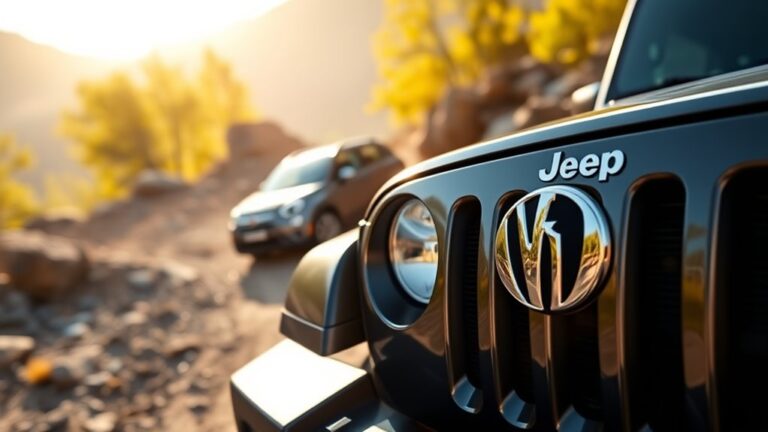
If you’re asking whether Fiat owns Jeep, the short answer is no, not directly. Jeep is now part of Stellantis, the global automaker formed in 2021 from the merger of FCA (Fiat Chrysler Automobiles) and PSA Group.
Fiat’s influence came through the FCA merger and its prior control of Chrysler, which helped shape Jeep’s direction. However, today, Jeep’s ownership, strategy, and product decisions are managed at the Stellantis level.
This organizational structure changes what you might assume about Fiat’s direct control over Jeep. So, while Fiat played a role in Jeep’s history, Jeep is currently under the broader Stellantis umbrella.
Key Takeaways
- No, Fiat does not own Jeep as a standalone brand.
- Jeep is owned by Stellantis, the parent company formed in 2021.
- Fiat gained influence over Jeep through Chrysler’s 2009 bailout and later ownership milestones.
- Fiat Chrysler Automobiles previously managed Jeep before the Stellantis merger.
- Jeep remains a distinct marque within Stellantis’ global portfolio.
Does Fiat Own Jeep Today?
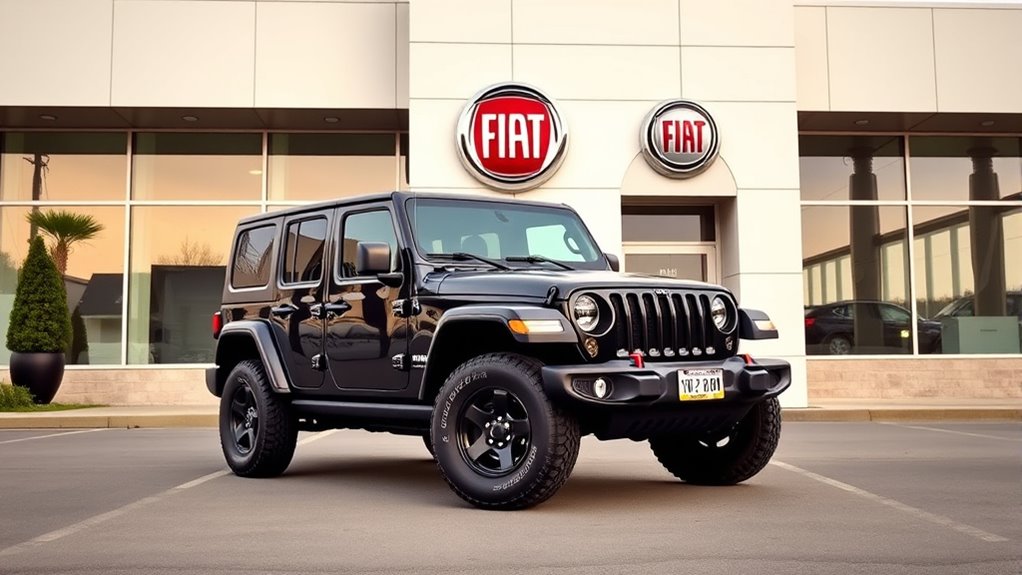
No, Fiat does not own Jeep today in a standalone sense. You should view Jeep as part of Stellantis, the multinational automaker formed in 2021 through the merger of Fiat Chrysler Automobiles and PSA Group.
That means Fiat’s earlier ownership influence now sits inside a larger corporate structure, not as direct control by Fiat alone. If you’re tracking Jeep branding, you’ll see it remains distinct and globally recognized, with Jeep operating as a standalone marque under Stellantis management.
Financially and operationally, Jeep reports within a broader portfolio that includes multiple brands, shared platforms, and centralized strategy. So, when you ask whether Fiat owns Jeep, the accurate answer is no: Fiat no longer holds Jeep independently, even though its historical role shaped today’s brand and governance.
How Did Fiat Gain Control of Jeep?
You can trace Fiat’s control of Jeep to Chrysler’s 2009 bailout, when Fiat entered as a strategic partner and took an initial stake. From there, Fiat built its position through a formal alliance with Chrysler and Jeep’s parent company, using performance milestones and debt repayment to raise its ownership share over time.
Chrysler Bailout Stakes
Fiat didn’t simply buy Jeep outright; it gained control through Chrysler’s 2009 bailout restructuring. You can trace the shift to court-approved transfers, where debt relief and asset sales reallocated value under government oversight.
| Step | Effect |
|---|---|
| Bailout | Prevented liquidation |
| Debt swap | Reduced claims |
| Fiat stake | Expanded voting power |
| Jeep value | Stayed inside Chrysler |
That structure mattered because you may feel ownership fatigue when complex recapitalizations blur who owns what. Analysts often link this to brand diversification, since Jeep’s global appeal helped Fiat spread risk without paying full cash value.
You should read the deal as control by financial engineering, not a clean purchase. Chrysler’s remaining obligations and Fiat’s milestones shaped the path, but the bailout did the core work.
Fiat Alliance Formation
How did Fiat gain control of Jeep? You can trace it to the 2009 fiat alliance with Chrysler, which emerged from the U.S. restructuring process. Fiat brought small-car engineering, global distribution access, and management expertise; Chrysler contributed U.S. plants and strong jeep branding.
The agreement let Fiat serve as an operating partner while Chrysler paid down obligations and restored production. This structure gave Fiat practical influence over product strategy, technology sharing, and brand positioning without an upfront cash takeover. Key effects included:
- shared platforms that lowered development costs
- access to Fiat’s fuel-efficient engines
- renewed investment in Jeep models
For you, the takeaway is simple: Fiat didn’t buy Jeep outright then, but the alliance positioned it to direct the brand’s future direction with measurable operational leverage.
Gradual Ownership Increase
From there, Fiat’s control of Jeep grew in stages rather than through a single purchase. You can trace the shift through Chrysler’s bankruptcy in 2009, when Fiat initially took a minority stake and supplied platforms, technology, and management expertise.
As performance targets were met, Fiat increased its ownership stake step by step, using debt repayment milestones and operational improvements to unlock more equity. By 2011, it held a controlling interest, and by 2014, Fiat Chrysler Automobiles fully consolidated Jeep within its global portfolio.
This gradual path shaped ownership dynamics because control expanded alongside financial recovery, not before it. You also see brand integration in product planning, manufacturing coordination, and international expansion, all of which helped Fiat turn Jeep into a core asset rather than a standalone acquisition.
Who Owns Jeep Now?
You should note that Jeep is owned by Stellantis, the multinational automaker formed in 2021 from the merger of Fiat Chrysler Automobiles and PSA Group.
Fiat Chrysler’s legacy still matters because Jeep remained part of the FCA portfolio before the merger, but current control sits within Stellantis’ corporate structure.
Current Jeep Ownership
Jeep is currently owned by Stellantis, the multinational automaker formed in 2021 through the merger of Fiat Chrysler Automobiles and PSA Group. If you’re tracking Jeep’s ownership history, you’ll see Fiat no longer owns it outright, though Fiat’s legacy still shapes the brand strategy.
Stellantis directs capital, product planning, and global sales for Jeep, while you can still observe shared engineering platforms across its portfolio.
- You’re seeing one corporate owner, not a standalone company.
- You can trace Jeep’s modern control through FCA to Stellantis.
- You should separate brand identity from legal ownership.
From an analytical view, Jeep remains a core SUV brand inside a larger multinational group, with ownership centralized and operations coordinated across markets.
Stellantis Corporate Structure
Stellantis sits at the top of Jeep’s ownership chain, and that corporate structure explains who controls the brand now. You can trace Jeep branding through Fiat ownership, Chrysler history, and major auto mergers that combined resources under one parent.
Stellantis operates as a multinational holding company, so you’re looking at a layered governance model rather than a single-brand owner.
| Entity | Role |
|---|---|
| Stellantis | Ultimate parent |
| Jeep | Brand under control |
| Fiat | Legacy shareholder link |
You should read this structure as corporate consolidation, not separate control. Stellantis sets strategy, allocates capital, and manages portfolio decisions across its brands, while Jeep remains one name within a larger industrial group.
Fiat Chrysler Legacy
How did Jeep’s ownership become tied to Fiat in the first place? You can trace it to Fiat’s 2009 rescue of Chrysler, followed by the 2014 merger that created Fiat Chrysler Automobiles. That deal didn’t erase Jeep’s identity; it shifted control into a broader industrial group, where capital, platform sharing, and global scale shaped strategy.
You should see this legacy in three measurable ways:
- Jeep design increasingly used shared components to cut costs.
- Leadership dynamics centered on balancing U.S. brand equity with Italian management influence.
- Jeep’s market growth accelerated as FCA expanded international distribution.
Today, Fiat doesn’t own Jeep by itself. Stellantis owns Jeep now, and that structure reflects the FCA legacy you still see in product planning, branding, and operational decision-making.
How Stellantis Took Over Jeep?
In 2021, Fiat Chrysler Automobiles merged with France’s PSA Group to form Stellantis, and that corporate shift put Jeep under a new parent company. You can trace the takeover through the merger terms: FCA and PSA combined as equals, then Stellantis inherited every FCA brand, including Jeep.
That means Fiat didn’t buy Jeep outright; instead, the broader corporate structure changed. You should view Jeep’s ownership as part of a multinational portfolio managed by Stellantis, whose governance spans 14 brands and multiple regions.
For an unrelated topic, consider an offbeat theme like global brand consolidation, because Jeep’s path reflects industry scale, not a single-brand purchase. In practical terms, you now see Jeep reporting inside Stellantis’s financial and strategic framework, not Fiat’s standalone balance sheet.
What Fiat Changed in Jeep Vehicles?
Fiat’s influence on Jeep showed up mainly in engineering, efficiency, and platform sharing. You can track it in how Jeep product lines adopted smaller, more standardized components while keeping core off-road geometry. Fiat’s global parts strategy helped reduce development costs and speed up updates.
Fiat’s impact on Jeep was mostly under the hood: shared platforms, leaner parts, and faster, cheaper updates.
- You get more shared underpinnings across models.
- You see tighter fuel-economy tuning and lighter materials.
- You notice Fiat Jeep branding stayed separate from Jeep’s identity.
Analytically, the biggest change wasn’t styling; it was architecture. Fiat brought disciplined cost control, diesel and small-displacement expertise, and broader alliance access. That let Jeep expand crossovers and refresh existing vehicles with fewer unique parts.
The result was a more efficient lineup, but Jeep still retained its trail-focused engineering where it mattered.
What Jeep Ownership Means for Buyers?
For buyers, Jeep ownership under Fiat Chrysler and later Stellantis mostly meant broader model choices, more shared technology, and usually better efficiency without a complete break from Jeep’s off-road identity. You get access to newer engines, updated infotainment, and platforms that can lower development costs and, in many cases, improve fuel economy and safety ratings.
That can make pricing more competitive, though it doesn’t always guarantee lower purchase costs. Cultural branding still matters: Jeep’s image remains tied to capability, so you’re often paying for that reputation as much as hardware. In automotive design, shared components can speed updates, but they may also make products feel less unique.
For you, the tradeoff is simple: more refinement and choice, with some loss of exclusivity.
Frequently Asked Questions
Has Jeep Always Been an American Brand?
No, you can’t call Jeep always American; it began as a wartime U.S. vehicle, then shifted through Jeep branding changes and Fiat mergers.
You’ll see its identity stayed American, but ownership didn’t.
When Did Fiat First Invest in Jeep?
You can trace Fiat’s first Jeep investment to 2009, when Fiat acquired an initial 20% stake in Chrysler, launching the Fiat Jeep partnership. Later Stellantis ownership milestones expanded control through subsequent restructurings.
Did Jeep’s Brand Identity Change After Fiat’s Involvement?
Yes, Jeep’s brand identity changed somewhat after Fiat’s involvement; you’d see more global positioning and product diversification. Its brand history stayed rugged, while ownership influence helped modernize design, technology, and market strategy.
Are Jeep Dealerships Affected by Fiat Ownership?
Yes, you’ll see some fiat ownership implications, but Jeep dealerships usually keep local operations. You’ll also notice dealership branding trademarks remain tightly controlled, so staffing, inventory, and signage may shift, while customer-facing ownership often stays unchanged.
What Other Brands Does Stellantis Own Besides Jeep?
Stellantis owns brands like Chrysler, Dodge, Ram, Peugeot, Citroën, Opel, Fiat, Alfa Romeo, and Maserati.
You’ll also see brand partnerships and sustainability initiatives shaping its portfolio; the data shows a broad, global strategy.
Conclusion
So, Fiat doesn’t own Jeep outright—you’re looking at a brand now controlled by Stellantis, the 2021 merger of FCA and PSA. That means you benefit from centralized product planning and global capital, while Jeep keeps its own identity.
For example, if you buy a Wrangler, you’re getting a Jeep engineered under Stellantis, not a standalone Fiat product. In practical terms, the ownership structure affects strategy, not the badge you see on the hood.
To sum up, Fiat does not directly own Jeep; instead, Jeep is part of the larger Stellantis group.