Are Jeep Wranglers Safe
As an Amazon Associate we earn from qualifying purchases.
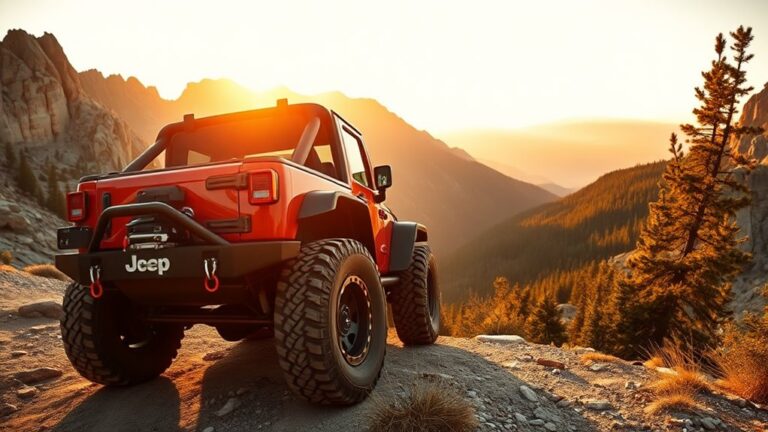
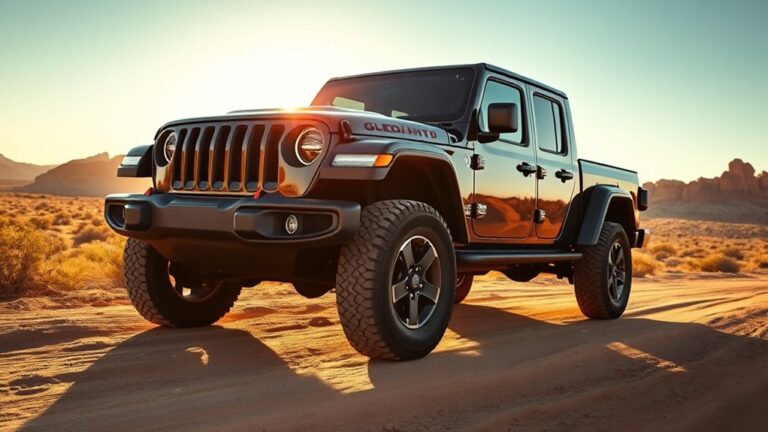
Roughly 1 in 3 SUV fatalities involve rollover, and if you’re asking, “Are Jeep Wranglers safe?” it’s important to understand the risks. The Jeep Wrangler sits in that rollover risk zone due to its design.
You get strong off-road traction, high ground clearance, and modern safety tech, but you also accept a tall, body-on-frame structure that influences crash behavior.
If you’re weighing daily commuting against trail use, the real question isn’t just whether it’s safe, but where its safety strengths end and its compromises begin.
Key Takeaways
- Jeep Wranglers are reasonably safe in many situations, but they are not class-leading for crash protection.
- Their tall body-on-frame design increases rollover risk and can make on-road handling less stable.
- Standard safety tech includes airbags, stability control, traction control, and a rearview camera.
- Safety improves with careful driving, moderate speeds, proper tire and brake maintenance, and secure cargo loading.
- They are safer for off-road capability than for everyday pavement comfort, so fit matters to your driving needs.
Are Jeep Wranglers Safe?
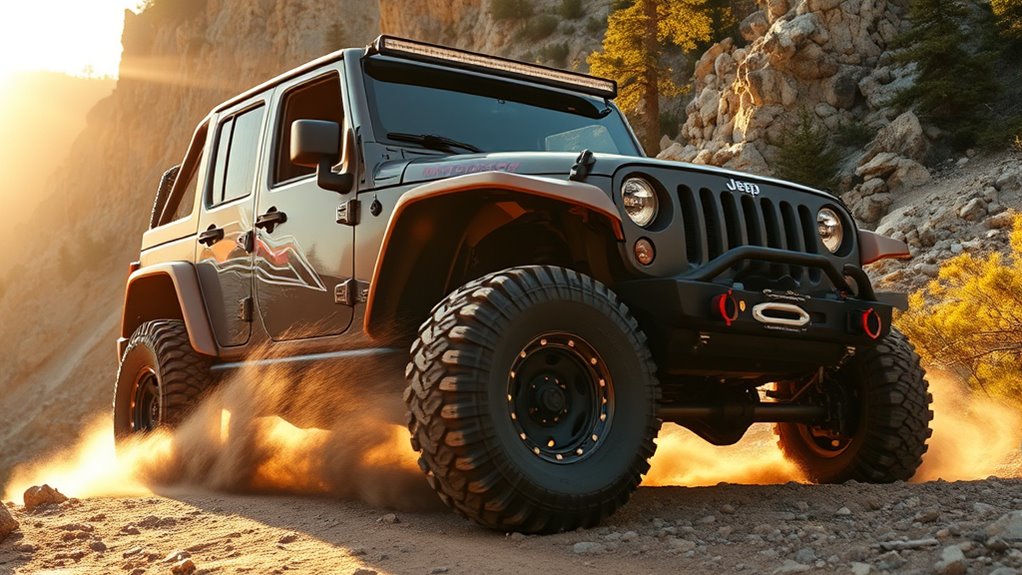
Jeep Wranglers can be safe, but their safety depends heavily on how and where you drive them. You get solid traction, high ground clearance, and strong off road performance, which help when you’re on uneven terrain.
Yet that same design raises the center of gravity, so you need to manage speed, cornering, and load placement carefully. You should also expect modest fuel economy, because the drivetrain and aerodynamic profile prioritize capability over efficiency.
If you use proper tires, maintain brakes and suspension, and avoid aggressive maneuvers, you’ll improve everyday safety. In city driving, you must stay alert to wider blind spots and longer stopping distances.
How Safe Is the Jeep Wrangler in Crash Tests?
How well does the Wrangler hold up in a crash? You should expect mixed results. In federal and insurer testing, the Jeep Wrangler often posts acceptable occupant scores in some moderate-impact scenarios, but its tall, body-on-frame design can increase rollover risk and transfer more energy in severe impacts.
You’re also dealing with a structure optimized for off-road articulation, not maximum crash absorption, so lateral and offset crashes can expose isolation hazards from cabin intrusion and secondary motion. Compared with crossovers, you may see lower crash-test consistency.
The Wrangler’s fuel economy doesn’t affect crash performance, but its weight and stance do influence dynamics. Overall, you get competent protection in some tests, yet the Wrangler isn’t a class leader for crash safety.
Which Safety Features Come Standard?
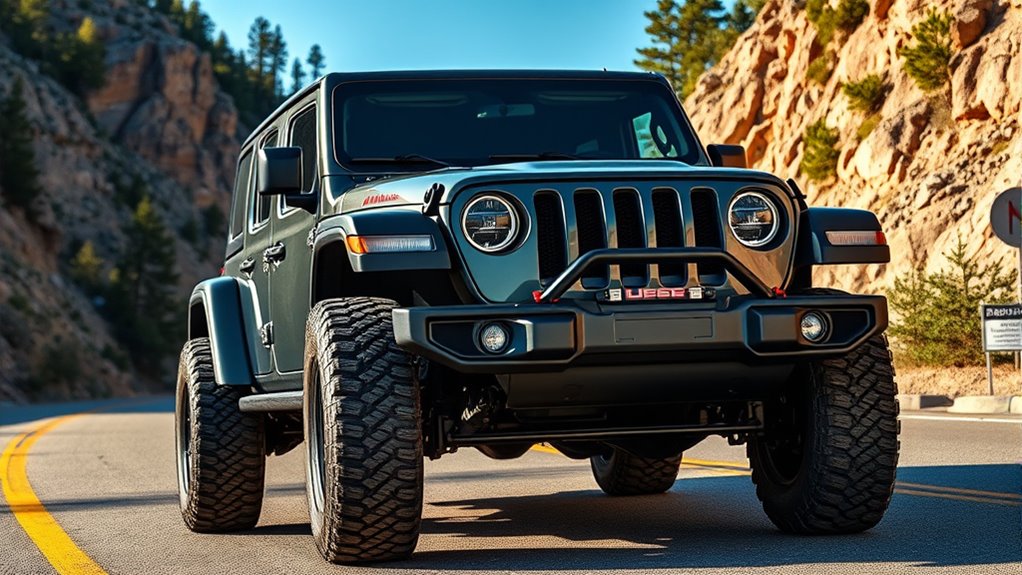
You’ll find that the Jeep Wrangler includes standard airbag protection to help reduce occupant injury in a collision. It also comes with stability control, which helps you maintain directional control during loss-of-traction events.
A rearview camera is standard too, giving you a clearer view when backing up and improving low-speed maneuvering.
Airbag Protection
Standard Jeep Wrangler models include front airbags for the driver and front passenger, with seat-mounted side-impact airbags available on many trims to improve thorax protection in a crash. You should treat these restraints as primary occupant protection, but their airbag effectiveness depends on impact angle, occupant position, and belt use.
If you’re properly belted, the frontal bags can reduce head and chest injury in moderate crashes. The side bags add localized protection when a lateral strike occurs. Because rollover risk is higher in a Wrangler than in many SUVs, airbags alone can’t fully mitigate injury potential in a severe rollover.
You still need correct seating posture and consistent seatbelt use to let the system deploy and function as designed.
Stability Control
Beyond airbags, the Wrangler also includes electronic stability control, traction control, and roll mitigation features that help manage loss of grip and body roll in everyday driving. You’ll notice these systems intervene early, trimming wheelspin and correcting yaw before instability grows.
That improves on road stability, especially when you brake hard or change lanes on uneven pavement. The tuning still preserves the Jeep’s direct steering feel, so you get feedback without excessive correction.
- Electronic stability control monitors direction and path.
- Traction control limits rear wheel slip on acceleration.
- Roll mitigation reduces body lean during abrupt maneuvers.
- Integrated calibration balances control with off-road capability.
Together, these features don’t make the Wrangler carlike, but they do narrow the safety gap in routine driving and make its behavior more predictable.
Rearview Camera
A rearview camera is one of the most useful standard safety features on the Wrangler, especially given its tall body, upright seating position, and limited rearward visibility. You rely on it when backing into tight spaces, aligning with trailers, or checking for low obstacles that mirrors can miss.
The system improves situational awareness, but it doesn’t replace careful scanning or shoulder checks.
| Feature | Effect |
|---|---|
| Rearview camera | Expands rearward visibility |
| Dynamic guidelines | Helps with parking alignment |
| Low-speed backing | Reduces collision risk |
| Roof safety | Helps you avoid overhead or rearward contact |
You should treat the display as a supplement to your driving judgment, not a substitute. In daily use, it meaningfully improves control and reduces blind-spot exposure.
How the Wrangler Handles on Roads
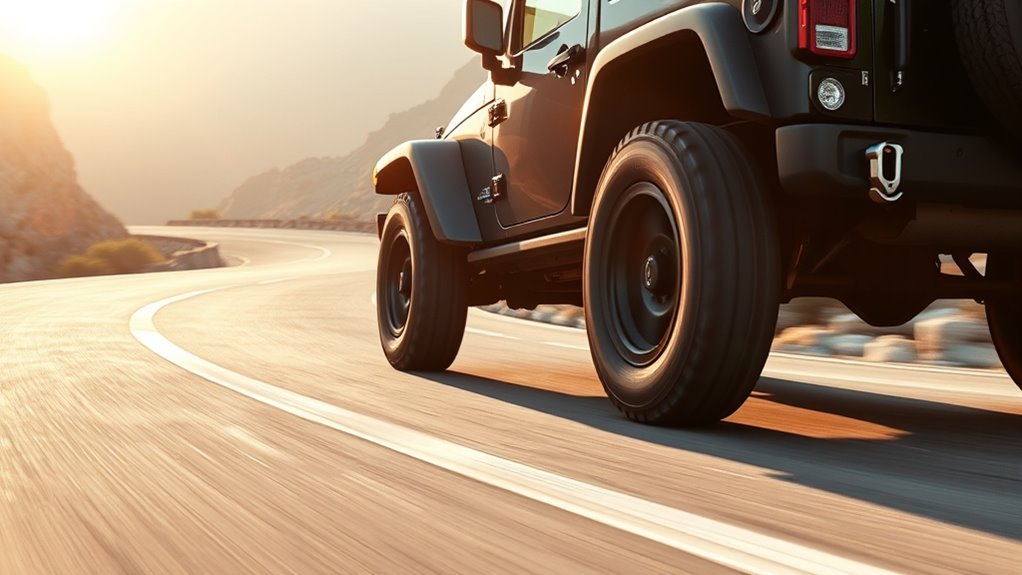
You’ll notice the Wrangler’s on-road stability depends on its tall stance, short wheelbase, and suspension tuning, which can make it feel less planted than a typical SUV.
You’ll also feel more steering play and slower response than in a crossover, so lane changes and highway tracking need more input. Ride comfort is firm, and road impacts can be more noticeable, especially on rough pavement.
On-Road Stability
On pavement, the Jeep Wrangler feels less planted than most SUVs because its body-on-frame design, solid axles, and tall ride height prioritize off-road articulation over road-holding precision. You’ll notice more body motion in quick lane changes, crosswinds, and abrupt highway inputs, especially when the suspension compresses and rebounds.
Its off road durability supports rugged use, but that same hardware raises the center of gravity and slightly reduces fuel efficiency.
- Cornering loads build faster than in car-based SUVs.
- Tire sidewalls flex to absorb impacts.
- Braking remains stable, yet weight transfer is pronounced.
- High-speed composure improves with careful loading and proper tire pressure.
Steering Feel
The Wrangler’s steering feels deliberate rather than quick, with noticeable play around center and more effort required to keep it tracking straight on patched pavement or in crosswinds. You’ll notice this steering feel most when you make small corrections, because the wheel responds with a slight delay before the chassis settles.
The truck-like front end can make lane changes feel measured, not crisp, and you may need to input more angle than in a crossover. Its grip balance is predictable, though, so the front tires don’t suddenly bite or wash out without warning. That makes the Wrangler easy to read, even if it isn’t especially precise.
At highway speeds, you’ll want to stay attentive and make steady inputs to maintain line control.
Ride Comfort
Ride comfort in a Wrangler is firmer and busier than in most crossovers, with short-wheelbase models transmitting more road texture, impact harshness, and vibration through the cabin. You’ll feel axle movement, body roll, and seat jounce on patched pavement, especially with all terrain tires.
- On city streets, the suspension prioritizes articulation over isolation.
- On highways, wind and tire noise rise at speed.
- On rough roads, the chassis stays controlled, but not plush.
- Fuel efficiency usually drops when larger tires and lift kits add mass and drag.
If you want a vehicle that tracks uneven surfaces confidently, the Wrangler delivers. If you expect sedan-like refinement, you’ll notice its compromises quickly.
How the Wrangler’s Roof and Doors Affect Safety
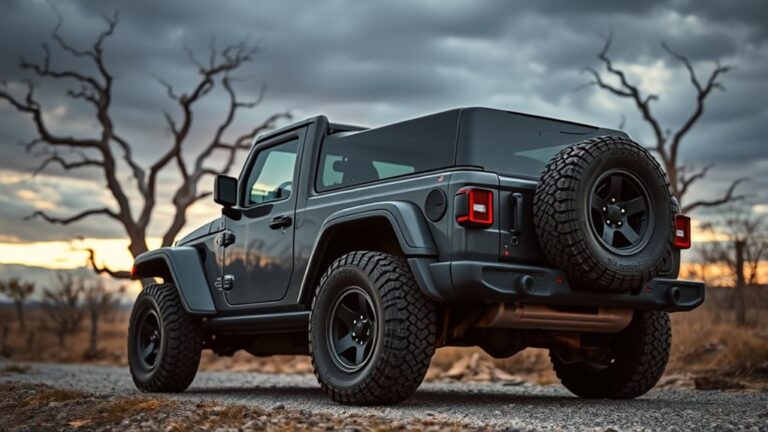
When you look at a Wrangler’s safety profile, the removable roof and doors matter because they reduce structural enclosure and side-impact protection compared with a fixed-body SUV. Roof removal changes the cabin’s load path, so you rely more on the frame and rollover structure, not the panel above you.
Door removal also removes a barrier that helps manage intrusion energy in a lateral impact.
| Feature | Safety effect | Practical note |
|---|---|---|
| Roof removal | Less enclosure | Check latches carefully |
| Door removal | Less side shielding | Install mirrors if required |
| Reinstalled panels | Restores protection | Inspect seals and hinges |
You should treat open-air configuration as a tradeoff: it improves access and visibility, but it doesn’t equal the protection you get with the hardtop and full doors installed.
Is the Jeep Wrangler Safe for Families?
For families, a Jeep Wrangler can be safe in the sense that it includes modern airbags, stability control, and strong crash-avoidance tech, but its design still creates tradeoffs you should weigh carefully. You can improve family safety by choosing the right trim, installing child seats correctly, and using available driver aids.
- Check rear-seat LATCH anchors before you buy.
- Test visibility and cabin access for children.
- Evaluate cargo protection with secured, closed storage.
- Confirm advanced braking and lane alerts work as expected.
If you prioritize on-road stability and predictable behavior, you’ll likely want to compare it with other SUVs. Still, if you value versatility and can manage its layout, a Wrangler can meet your family’s basic safety needs.
What Safety Trade-Offs Come With a Wrangler?
A Wrangler gives you solid off-road capability, but that strength comes with clear safety trade-offs on pavement. You get a tall ride height, solid axles, and removable body panels, yet those features usually reduce crash-energy management compared with lower, more rigid crossovers.
You’ll also notice more body motion in emergency maneuvers, longer stopping distances from heavier off-road capability hardware, and less precise steering feel. The boxier shape can create more wind noise and affect stability in crosswinds.
Safety tech helps, but you’re still balancing rugged design against everyday protection and fuel efficiency. That trade-off matters if you drive mostly on highways, where comfort, efficiency, and predictable handling often matter more than articulation, clearance, and durability.
How to Drive a Wrangler More Safely
To drive a Wrangler more safely, you need to compensate for its high center of gravity, longer braking distances, and less predictable on-road handling. Keep speeds moderate, because abrupt inputs amplify body roll and reduce tire contact.
- Increase following distance so you can brake earlier and avoid emergency stops.
- Steer smoothly; sharp corrections can destabilize the chassis on pavement and loose surfaces.
- Check tire pressure and tread depth, since proper inflation improves off-road grip and wet-road control.
- Use 4WD only when traction demands it, especially when clearing mud or climbing slick grades.
You should also load cargo low and secure it tightly, because weight shift changes balance. Scan ahead, anticipate surface changes, and adjust throttle before traction drops.
Is a Jeep Wrangler Safe for You?
Whether a Jeep Wrangler is safe for you depends on how you drive, where you drive, and what risks you’ll accept. If you spend most miles on pavement, its high center of gravity and short wheelbase can raise rollover exposure.
If you value off road durability, you may accept that tradeoff for better approach angles and chassis robustness.
| Use case | Benefit | Risk |
|---|---|---|
| City driving | Good visibility | Roll stability is limited |
| Trail use | Strong off road durability | Lower crash efficiency |
| Daily commute | Practical utility | More noise and body roll |
| Aftermarket mods | Custom safety tuning | Poor installs can worsen dynamics |
You should also evaluate tire size, lift height, and braking performance. Choose a Wrangler if its capability matches your actual operating profile.
Frequently Asked Questions
How Often Does the Jeep Wrangler Tip in Rollovers?
Jeep Wranglers don’t tip often, but Jeep rollover statistics show a higher rollover risk than many SUVs because of their tall center of gravity.
You’ll see crashworthiness comparisons consistently rate them lower in rollover resistance.
Does Wrangler Safety Vary by Trim Level?
Yes, Wrangler safety can vary by trim. You’ll see drivetrain distinctions, tire choices, and equipment changes that affect rollover outcomes.
As they say, the devil’s in the details, so you should compare each configuration carefully.
Can You Add Extra Airbags to a Wrangler?
You generally can’t safely add extra airbags to a Wrangler; its crash sensors, deployment logic, and wiring aren’t designed for aftermarket systems.
You can reinforce occupant protection with a roll cage and certified restraints.
How Safe Is a Wrangler in Winter Weather?
In a winter storm, your Wrangler can feel like a mountain goat on ice, capable but not invincible. You’ll get decent winter traction with proper tires, yet wind chill, short wheelbase, and high center of gravity still demand caution.
Do Wrangler Safety Ratings Change With the Top Removed?
Yes, you can see safety ratings drop with the top removed because structural rigidity changes. Top safety and top visibility improve, but crash protection measurements may differ. You’ll want to check configuration-specific test data carefully.
Conclusion
When you choose a Jeep Wrangler, you’re balancing the image of a rugged shield with the reality of a tall, narrow frame. It gives you strong traction, modern airbags, and off-road control, but its higher center of gravity and shorter wheelbase can weaken crash stability and rollover resistance.
If you drive it carefully, buckle up, secure cargo, and respect its limits, you’ll turn that compass on the dash into a safer direction for everyday use. Ultimately, understanding these factors will help you decide if a Jeep Wrangler is safe for your driving needs.