Are Jeep Wranglers Good for Snow
As an Amazon Associate we earn from qualifying purchases.
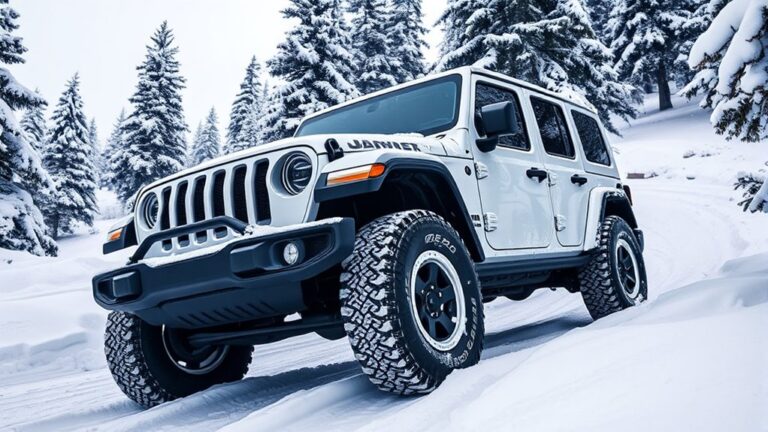
If you’re wondering whether a Jeep Wrangler is good for snow, the answer is yes, but with limits. You get useful ground clearance, available four-wheel drive, and a short wheelbase that can help in deep snow. However, tire choice and driving input matter just as much.
On icy roads, a Wrangler can still lose traction fast if you’re careless, which is where the details start to matter. Proper tires and cautious driving are essential to maximize performance in winter conditions.
Key Takeaways
- Jeep Wranglers can be good in snow when fitted with proper winter tires and driven smoothly.
- Their high ground clearance and short wheelbase help in light snow, drifts, and tight slippery areas.
- Four-wheel drive helps with starting and moving, but it does not improve stopping or cornering on ice.
- Winter or severe-snow-rated tires provide much better traction and control than standard all-terrain tires.
- Clean visibility, correct tire pressure, and careful throttle and braking are essential for safe winter driving.
Are Jeep Wranglers Good in Snow?
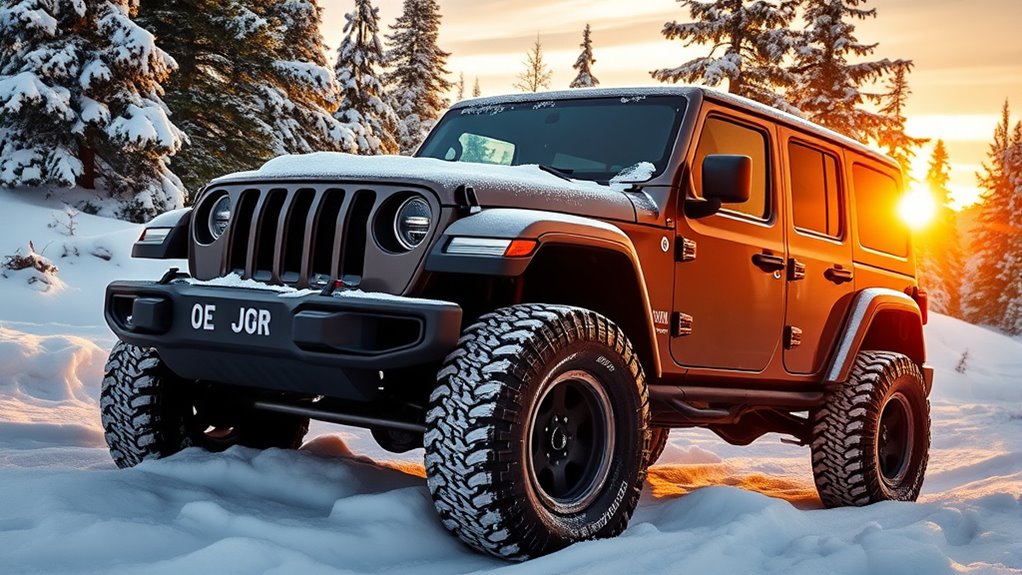
Yes, Jeep Wranglers can be good in snow, especially when they’re equipped with the right tires and driven with care. You can rely on their high ground clearance to move through uneven powder and light snow drifts without dragging the underbody.
Their short wheelbase can help you navigate tight, slippery spaces, but it can also make the ride feel less settled on slick pavement. You should remember that traction depends on road conditions, tire choice, and how smoothly you steer, brake, and accelerate.
In very cold weather, engine warmth can help the cabin feel more comfortable, but it doesn’t improve grip. If you want predictable winter performance, you need to drive cautiously and adjust to visibility, surface ice, and changing snow depth.
What Helps a Wrangler Handle Winter Roads?
A Wrangler handles winter roads best when you match its hardware to the conditions and drive smoothly. You’ll get better winter traction with proper tire selection, especially quality winter or severe-snow-rated tires that stay flexible in low temperatures.
Their tread design helps channel slush and packed snow, improving grip and steering feel. You should also keep tire pressures at the recommended level, since underinflated tires can reduce stability.
Four-wheel drive can help you move off from a stop, but you still need controlled throttle, longer following distances, and early braking. A clean windshield, strong wipers, and functioning defrosters also matter because visibility affects your ability to stay in control.
Four-wheel drive helps you get moving, but smooth throttle, extra space, and early braking keep winter driving controlled.
If you equip the Jeep correctly and drive deliberately, you’ll make it far more capable on winter roads.
How Does a Wrangler Perform on Ice?
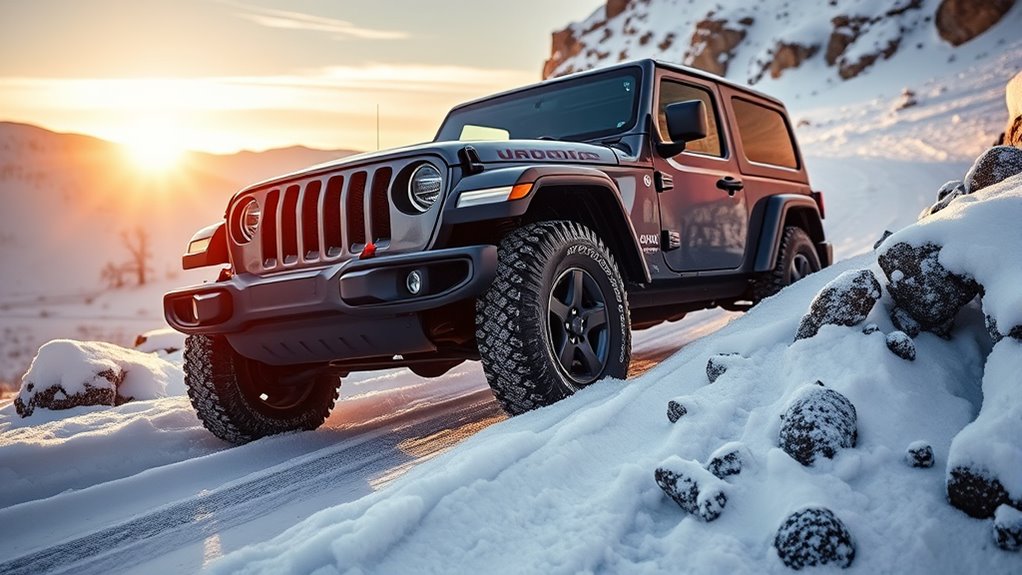
On ice, a Wrangler can feel stable compared with many trucks and SUVs, but it still won’t have much natural grip. You’ll notice that its weight, high ride height, and solid chassis help it track straight, yet those traits don’t create ice grip by themselves.
Winter traction depends mostly on tire compound, tread, and how carefully you apply throttle and braking. If you drive a Wrangler with winter tires, you’ll get far better control than with all-terrain rubber.
Four-wheel drive can help you start moving, but it doesn’t improve stopping distance or cornering on glare ice. You should keep speeds low, leave extra space, and avoid abrupt steering inputs.
In short, the Wrangler can manage icy roads, but your inputs and tires matter most.
How Does a Wrangler Handle Deep Snow?
In deep snow, a Wrangler usually performs better than many everyday SUVs because its ground clearance, short wheelbase, and available 4WD help it keep moving where lower vehicles may bog down. You can still lose momentum if you enter a packed snow drift too fast or stop on an incline, so steady throttle control matters.
The Wrangler’s traction systems can help you track forward, but you’ll want to avoid abrupt steering or braking that can dig the tires in. In cold starts, the engine may run a little rough at first, yet it typically settles quickly enough for winter driving.
What Are the Best Winter Tires for Wranglers?
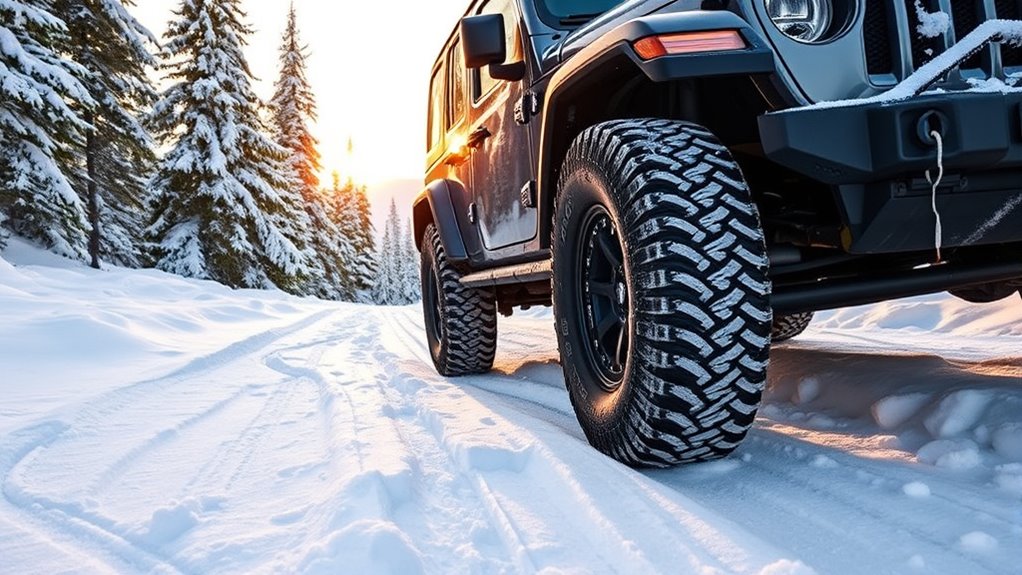
For winter driving, the best tires for a Wrangler are usually dedicated snow tires or severe-snow-rated all-terrain tires with the Three-Peak Mountain Snowflake symbol. You’ll get better grip on packed snow, slush, and ice because these tires use softer rubber and deeper siping than standard all-season options.
If you drive mostly in cold, urban conditions, a true winter tire often outperforms an aggressive all-terrain. If you also need off-road traction, choose a winter-rated all-terrain that balances snow performance with durability.
Check the load rating so it matches your Wrangler’s weight, and monitor tire pressure closely, since cold weather lowers it. A proper winter casco setup means matching tire choice, size, and inflation to your driving conditions.
What Are the Best Jeep Wrangler Snow Driving Tips?
What are the smartest ways to drive a Jeep Wrangler in snow? Start by using 4WD before conditions get bad, then keep your speed steady and inputs smooth.
You’ll improve snow traction by accelerating gently, braking early, and steering with small corrections. Leave extra following distance because stopping takes longer on packed snow and ice.
Use the correct tire pressure for your setup, and make sure your tires are rated for winter use. If your Wrangler has winter modifications like all-weather mats, quality wipers, and a battery in top shape, you’ll handle cold starts better.
Clear every window, light, and mirror before driving. Finally, avoid sharp turns and sudden throttle changes, since control matters more than power in winter.
When Do Wranglers Struggle in Winter?
Wranglers struggle most in winter when the road surface gives them little to work with, especially on glare ice, deep slush, or packed snow with ruts and hidden patches of black ice. You’ll notice reduced traction when your tires can’t bite into the surface, and the Wrangler’s higher center of gravity can make abrupt maneuvers feel less stable.
Heavy crosswinds, steep grades, and unplowed roads can also challenge control, especially if you’re carrying cargo or towing. Winter driving gets harder when visibility drops and braking distances grow.
For snow safety, you should slow down early, leave extra space, and avoid sudden steering inputs. If the temperature swings around freezing, wet snow can refreeze fast, turning an ordinary commute into a slick, unpredictable drive.
Is a Jeep Wrangler Worth It for Snow?
A Jeep Wrangler can be worth it for snow if you drive in areas that get regular winter weather, especially where unplowed roads, packed snow, and steep driveways are part of daily life. You get strong ground clearance, available 4WD, and solid traction control, which help you stay moving when conditions worsen.
Winter tires matter more than the badge, though, because they improve grip, braking, and steering on cold pavement and ice. You may also want engine block heaters in very cold climates to reduce hard starts and protect the engine.
If you mostly drive on plowed city streets, the Wrangler’s higher ride, rougher highway manners, and fuel use may not justify the cost. For serious winter utility, it’s a capable choice.
Frequently Asked Questions
How Much Ground Clearance Does a Jeep Wrangler Have?
You’ll usually get about 9.7 to 10.8 inches of ground clearance in a Jeep Wrangler, depending on trim and tires. With winter tires, you can improve traction, but clearance stays the same.
Can You Use Snow Chains on a Jeep Wrangler?
Yes, you can use snow chains on a Jeep Wrangler if your tire size, wheel wells, and local laws allow it. Winter tires often work better, while chains bite into icy roads like claws.
Does the Wrangler’s Soft Top Affect Winter Comfort?
Yes, your Wrangler’s soft top can reduce winter comfort because soft top drawbacks include more noise, drafts, and heat loss. You’ll get less winter insulation, so adding seat heaters, floor mats, and a hardtop helps a lot.
How Much Does a Wrangler Weigh Compared to Other SUVS?
You’ll notice a Wrangler tipping the scales around 4,000-4,500 pounds, like a compact tank. In weight comparisons, it’s often heavier than crossovers but lighter than full-size SUVs, which can shape snow season priorities.
Which Wrangler Trim Is Best for Cold-Weather Features?
You’ll usually want the Sahara or Rubicon. In a trim comparison, they offer the best cold weather features, while durability vs efficiency and off road capability vs comfort matter less than heated seats, wheel and wheel steering and remote start.
Conclusion
So, are Jeep Wranglers good for snow? Yes—if you equip them right and drive them right. You get the tall stance, 4WD, and short wheelbase that can make winter roads feel less like a trap and more like a trail.
But on ice, the Wrangler still slides like a shopping cart on a tilted rink unless you use proper winter tires and smooth inputs. In snow, your prep matters more than your badge.
Ultimately, Jeep Wranglers are good for snow when properly prepared and handled with care.