Are Jeep Wranglers Good Cars
As an Amazon Associate we earn from qualifying purchases.
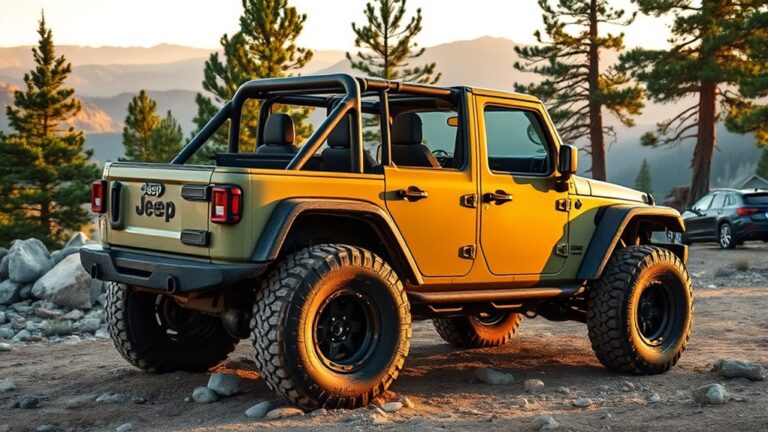
If you want a vehicle that can handle rough trails, bad weather, and weekend adventures, a Jeep Wrangler can be a strong fit. Jeep Wranglers offer real off-road ability, a rugged design, and plenty of customization options.
However, if you care more about quiet cabins, smooth rides, and easy highway manners, it may frustrate you. The trade-offs are real, and the details matter more than you might expect.
Key Takeaways
- Jeep Wranglers are good if you want strong off-road ability, removable doors and roof, and a rugged adventure-focused design.
- They are not the most comfortable daily drivers because the ride is firm, noisy, and less refined than many crossovers.
- Wrangler off-road performance is excellent, with solid axles, low-range four-wheel drive, and good ground clearance.
- They can work for commuting, but fuel economy, steering precision, and cabin quietness are usually weaker than rivals.
- Reliability and safety are acceptable, but ownership costs can be higher due to fuel, tires, insurance, and maintenance.
Is a Jeep Wrangler Right for You?
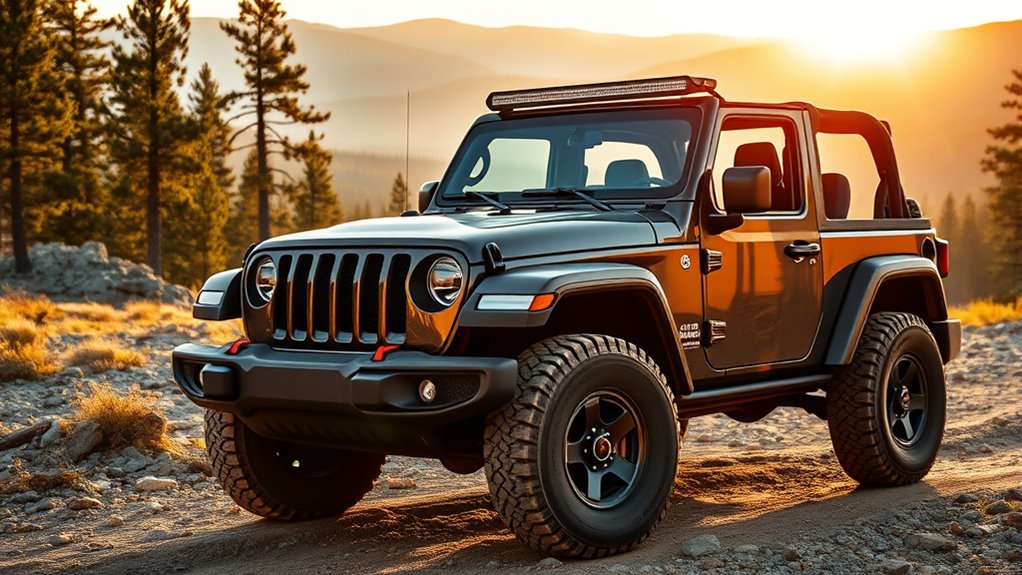
If you’re deciding whether a Jeep Wrangler is right for you, the key question is how you plan to use it. You’ll like it if you want strong off-road capability, removable doors and roof, and a rugged design that stands apart.
You should weigh the pros and cons carefully, because its strengths come with trade-offs in comfort, noise, and efficiency. If you value versatility for trails, camping, or weekend adventure, it can fit your needs well.
If you expect a quiet, refined ride, you may prefer something else. Cost considerations also matter, since purchase price, fuel use, and maintenance can be higher than average.
You’re best served by matching the Wrangler’s capabilities to your priorities before you buy.
Are Jeep Wranglers Good for Daily Driving?
For daily driving, a Jeep Wrangler can work well, but it usually isn’t the most comfortable or efficient choice. You’ll get solid daily performance if you value a tall driving position, easy visibility, and a vehicle that feels rugged and simple.
However, the ride can feel firm, steering may seem less precise than in many crossovers, and wind noise is common at highway speeds. Your experience also depends on engine options, since some deliver better low-end response while others prioritize fuel economy or towing.
If you commute in mixed traffic, a Wrangler can handle it, but it asks you to accept more noise, less refinement, and lower efficiency than many rivals.
What Jeep Wranglers Do Best Off-Road
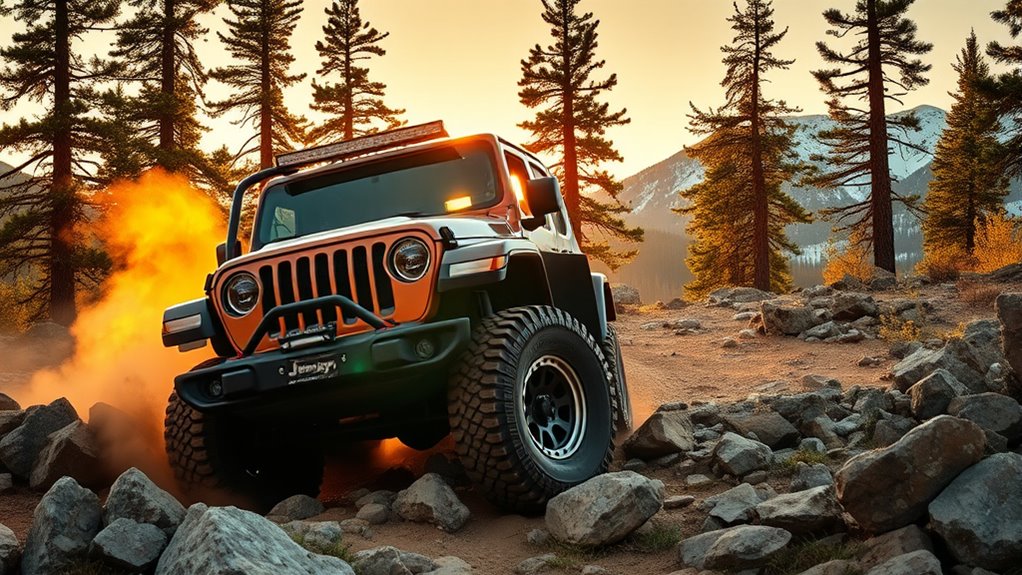
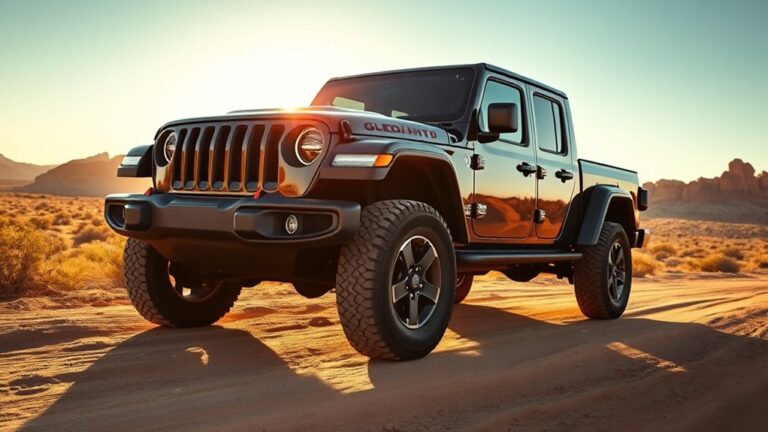
When the pavement ends, a Jeep Wrangler really shows its strengths. You get strong off road capability from solid axle articulation, short overhangs, and available low-range four-wheel drive. That setup helps you crawl over rocks, climb steep grades, and keep traction on uneven trails.
The Wrangler also lets you disconnect the sway bar on some trims, which improves wheel travel on rough terrain. Ground clearance and skid plates protect key components when you meet obstacles. Engine performance varies by trim, but each option gives you enough low-end torque for controlled climbing and slow-speed maneuvering.
If you want a vehicle that prioritizes trail use over pavement polish, the Wrangler delivers exactly that. Its design focuses on approach, breakover, and departure angles, which matter most off-road.
Jeep Wrangler Comfort, Noise, and Ride Quality
The Wrangler’s off-road strengths come with tradeoffs in everyday comfort. You’ll feel a firm ride, and shorter wheelbase models can hop over bumps more than a typical SUV.
Cabin noise rises at highway speeds, especially with all-terrain tires or a removable roof, so conversations and music need more volume. Front seats usually support you well enough, but rear-seat space and storage feel limited.
If you want a daily driver that prioritizes refinement, you may notice these comfort tradeoffs quickly.
| Trait | Effect |
|---|---|
| Ride quality | Firm, unsettled on rough pavement |
| Cabin noise | Higher at speed and around doors |
| Seating | Adequate up front, tighter in back |
You should expect capability first, comfort second.
Jeep Wrangler Reliability, Safety, and Ownership Costs
Reliability can be solid on a Wrangler, but it isn’t usually class-leading, and ownership tends to cost more than on a mainstream crossover. You should expect some reliability challenges, especially if you use it hard off-road or keep it for many years.
Safety equipment has improved, and you can get modern driver aids, but the Wrangler’s tall shape and removable-top design still limit crash performance compared with many SUVs. Fuel economy is another weakness, so you’ll spend more at the pump than you would in a lighter crossover.
Insurance, tires, and maintenance can also add up. If you value trail ability and a rugged image, you may accept those trade-offs, but you should budget carefully before you buy.
Frequently Asked Questions
How Much Cargo Space Does a Jeep Wrangler Have?
You get about 12.9 cubic feet behind the rear seats in a two-door Wrangler, or roughly 31.7 in the four-door. Those Wrangler rumors aside, your cargo space stays modest but usable.
Can You Remove the Wrangler’s Doors and Roof Easily?
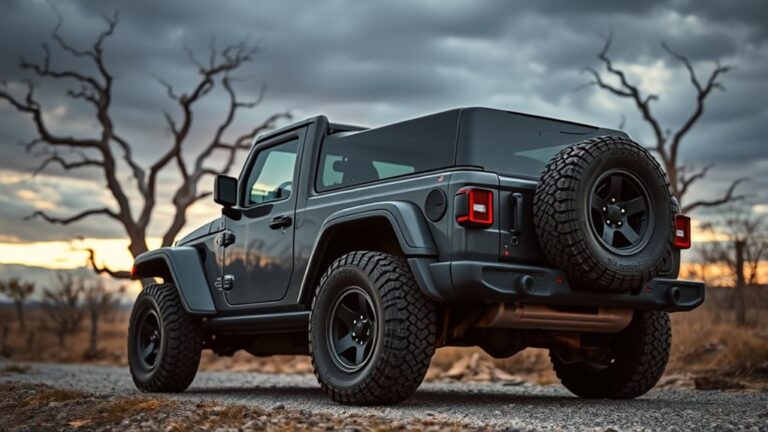
Yes, you can remove the Wrangler’s removable doors and soft top roof fairly easily. You’ll need a few tools, but the process is straightforward.
It takes time and careful handling to avoid damage.
What Engine Options Are Available in a Jeep Wrangler?
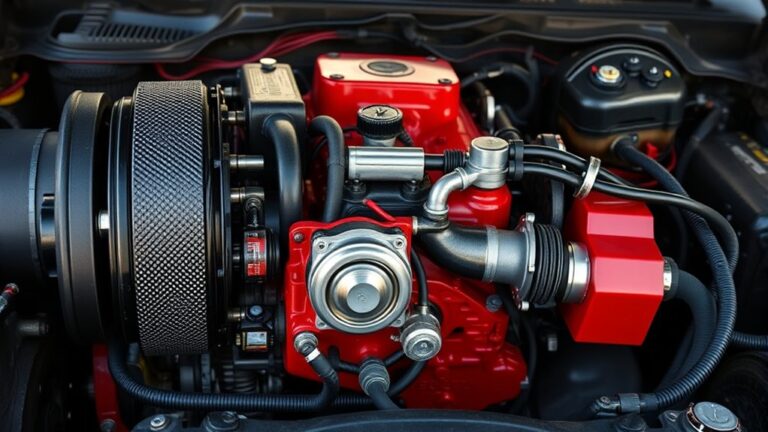
You’ve got several engine options in a Jeep Wrangler, including a 2.0L turbo four, 3.6L V6, 4xe plug-in hybrid, and, in some trims, a 6.4L V8. These choices balance efficiency and off road performance.
Does the Jeep Wrangler Have Advanced Infotainment Features?
Yes, you’ll find advanced infotainment in many Jeep Wranglers, including touchscreen integration, smartphone connectivity, and navigation options.
You still get a rugged interior design, so you’ll balance modern tech with off-road-focused practicality.
How Well Does a Wrangler Tow a Small Trailer?
You can tow a small trailer reasonably well; tow strength is decent for light loads, especially with the proper engine and tow package.
Just keep speeds modest, and roof durability won’t affect towing, but payload does.
Conclusion
If you want a vehicle that shines on trails and gives you open-air freedom, a Jeep Wrangler can be a great fit. If you need quiet comfort, smooth highway manners, and low running costs, you may want to look elsewhere. You get what you pay for, and the Wrangler pays you back in capability and character.
For the right buyer, it’s hard to beat; for everyone else, it’s probably not the best match. Overall, Jeep Wranglers are good cars for those who prioritize off-road performance and a unique driving experience.