Where Is the Solenoid Located on a 1995 Ford f150
As an Amazon Associate we earn from qualifying purchases.
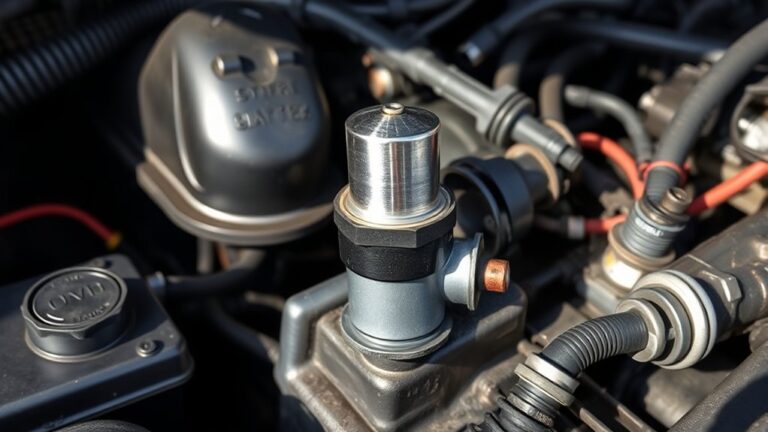
On a 1995 Ford F-150, the starter solenoid is typically located on the passenger-side inner fender, near the battery. This is the main area where you’ll find the solenoid mounted.
You can identify it by looking for heavy battery and starter cables attached to large posts, along with a smaller trigger wire that comes from the ignition switch. The solenoid is usually secured to a bracket in this area.
Keep in mind that the exact position of the solenoid bracket may vary depending on engine type and wiring configurations. It’s a good idea to inspect the harness routing carefully before attempting any replacements or repairs.
Key Takeaways
- On a 1995 Ford F-150, the starter solenoid is usually mounted on the passenger-side inner fender near the battery.
- It is not on the starter itself; Ford uses a remote solenoid design in this truck.
- The battery positive cable connects to one large terminal, and a heavy cable runs from the other terminal to the starter.
- You can spot it by the small cylindrical or box-shaped unit with large cables and smaller trigger wires attached.
- If your truck has engine swaps or special wiring, verify the harness route because the solenoid location can vary.
Where Is the Solenoid on a 1995 Ford F-150?
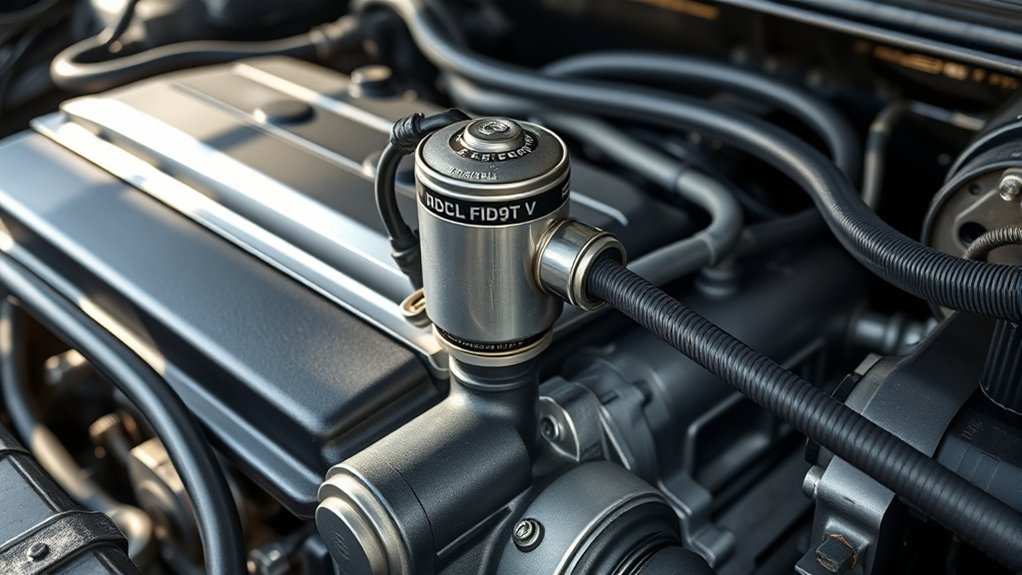
On a 1995 Ford F-150, you’ll usually find the starter solenoid mounted on the passenger-side inner fender, close to the battery, rather than on the starter itself. This solenoid mounting keeps the heavy current path short and lets you service the relay without crawling under the truck.
You’ll see it as part of the starting circuit, where the ignition system sends a low-current signal to trigger high-current flow to the starter motor. Ford used this remote design on many trucks, so don’t expect the solenoid to sit on the starter housing.
When you trace the battery cable from the positive terminal, it typically runs straight to the solenoid, then onward to the starter.
How to Spot the Solenoid
To spot the starter solenoid on your 1995 Ford F-150, look for a small cylindrical or box-shaped electrical component mounted on the passenger-side inner fender near the battery. You’ll see heavy-gauge battery cables attached to large terminals and one or more smaller trigger wires.
The housing usually has a metal bracket and may show heat discoloration, corrosion, or loose fasteners. Check that the wiring isn’t rubbing on the fuel system or exhaust noise sources nearby.
- Inspect the battery-side posts
- Find the starter cable connection
- Trace the ignition wire
- Look for melted insulation
- Verify the ground path
Solenoid Locations by Engine
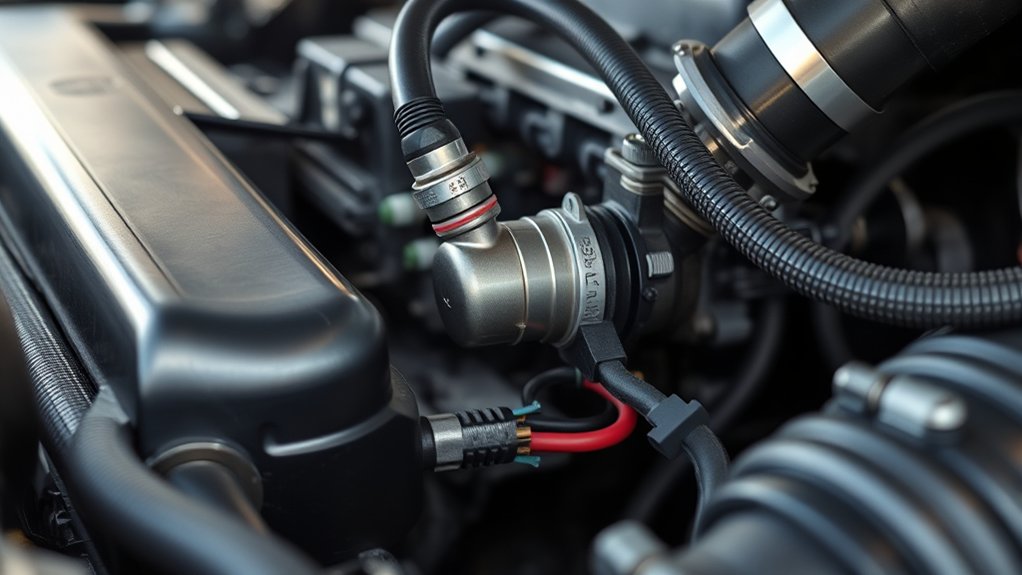
Which engine does your 1995 F-150 have? On the 4.9L inline-six, you’ll usually find the starter solenoid on the right fender apron near the battery.
On 5.0L and 5.8L V8 trucks, Ford often mounts it in the same fender area, though bracket position can shift slightly with factory wiring.
If you have a 4.0L V6 swap or specialty setup, verify the harness route, because relocation kits can move the solenoid near the battery tray or inner fender.
For engine troubleshooting, trace the positive cable from the battery and follow the starter lead; that’s the quickest way to confirm location. Use two word discussion ideas like “battery side” and “fender apron” when comparing layouts, so you can identify the correct part fast.
Bad Solenoid Signs to Watch For
How do you know the solenoid is failing? You’ll notice click symptoms when you turn the key, but the starter doesn’t engage. You may also hear a rapid chatter or a single heavy clunk from the relay area.
Click symptoms with no starter engagement, plus rapid chatter or a heavy clunk, can signal a failing solenoid.
Electrical output can drop, so the starter spins weakly or not at all. Heat buildup around the housing can indicate internal resistance. Corrosion, loose terminals, or bad wiring at the connections can mimic failure, but persistent symptoms point to the solenoid itself.
- Repeated clicking without cranking
- Intermittent start operation
- Burned or pitted terminals
- Starter engagement delay
- No voltage transfer to the starter
Quick Checks Before Replacing It
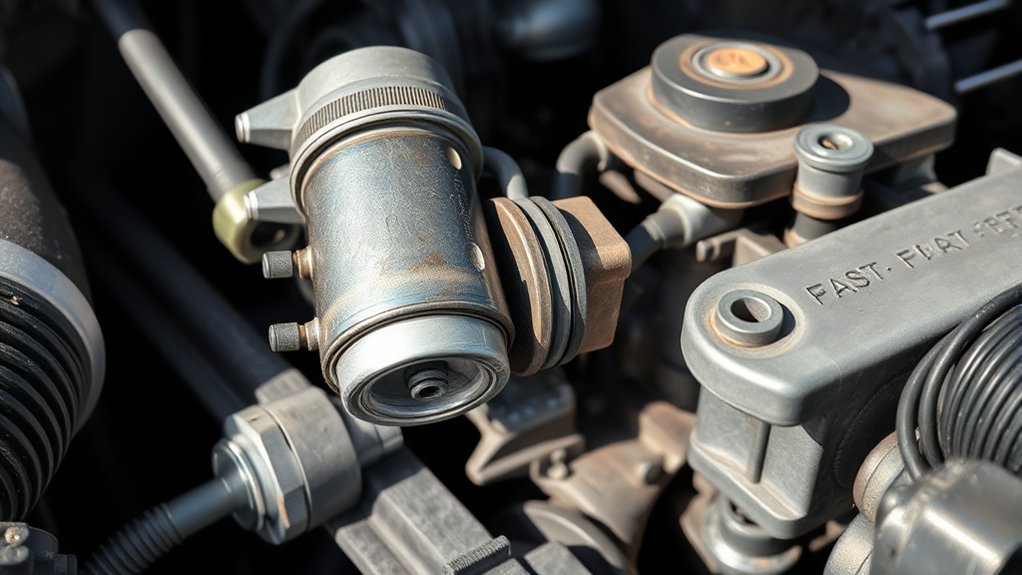
Before you replace the solenoid, confirm the basics: check the battery charge, clean and tighten the cable ends, and make sure the starter relay and ignition switch are sending power correctly. Then test for voltage at the solenoid’s large input terminal and the trigger terminal while an assistant turns the key to START.
If voltage is missing, trace the circuit instead of guessing. Inspect the engine and frame grounds for corrosion or looseness. Compare starter relay differences between the underhood relay and the mounted solenoid so you don’t swap parts unnecessarily.
During solenoid troubleshooting, listen for a click, then verify the starter motor spins. If the relay clicks but the engine won’t crank, the fault may be upstream or in the starter itself.
Frequently Asked Questions
What Tools Are Needed to Replace the Solenoid?
You’ll need a socket set, wrench set, screwdrivers, ratchet, safety glasses, and a test light. Follow starter wiring guidelines and verify solenoid location.
Disconnect the battery, then remove and install the replacement carefully.
Can a Bad Battery Mimic Solenoid Failure?
Yes, a bad battery can mimic solenoid failure; don’t judge a book by its cover. You’ll see slow cranking, dim dashboard gauges, and weak clicks.
Check voltage, cables, and bad wiring before replacing the solenoid.
How Much Does a Replacement Solenoid Cost?
You’ll usually pay $20–$60 for a solenoid replacement, depending on OEM or aftermarket parts. Watch for starter relay confusion, since diagnosis errors can add labor and inflate costs, especially if wiring’s corroded or weak.
Is the Solenoid the Same as the Starter Relay?
No you’re comparing starter relay vs solenoid, and they’re usually separate. About 70% of no-crank complaints need electrical diagnosis.
You’ll test the relay to trigger the solenoid, which then engages the starter motor.
Should I Disconnect the Battery Before Working on It?
Yes, you should disconnect the battery first for battery safety. Remove the negative cable, then the positive.
You’ll prevent shorts while you work, and you can perform a wiring inspection before reconnecting everything.
Conclusion
On your 1995 Ford F-150, you’ll usually find the starter solenoid on the passenger-side inner fender near the battery. You can spot it by the heavy battery and starter cables on its large terminals and the small trigger wire from the ignition switch.
If your truck has been modified, verify the harness routing before replacing parts. Think of it like a traffic switchboard: one bad connection can stop the whole system fast.
Knowing exactly where the solenoid is located on a 1995 Ford F-150 will help you troubleshoot and fix starting issues more efficiently.


