What Year Did the f150 Go Aluminum
As an Amazon Associate we earn from qualifying purchases.
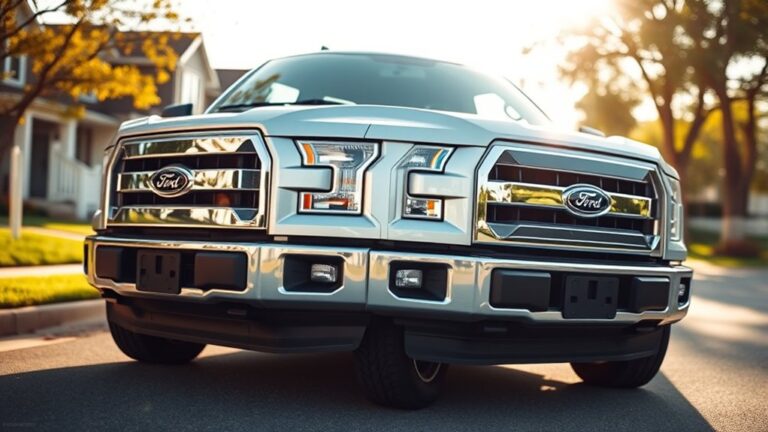
You can picture a work truck shedding pounds like armor removed from a machine: the Ford F-150 went aluminum starting with the 2015 model year. The cab, bed, hood, and doors all switched to aluminum, while the frame remained steel.
That change improved weight, fuel economy, and towing balance. However, it also altered repair methods, dent behavior, and corrosion concerns in ways you’ll want to understand before you buy or fix one.
Key Takeaways
- The Ford F-150 first switched to aluminum body panels for the 2015 model year.
- The aluminum change applied to the cab, doors, hood, and bed, not the entire truck.
- The frame stayed steel, so only the body became aluminum-alloy construction.
- 2014 and earlier F-150s used steel body panels instead of aluminum.
- Ford used aluminum to reduce weight and improve fuel economy, payload, and towing efficiency.
What Year Did the F-150 Go Aluminum?
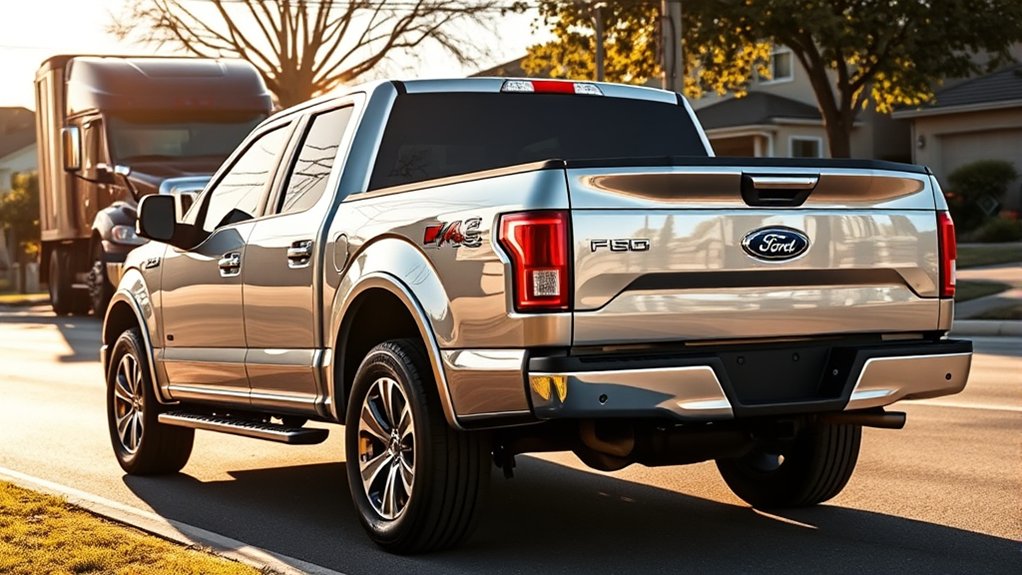
The Ford F-150 first went aluminum for the 2015 model year, when Ford switched the truck’s body and bed to an aluminum-alloy construction while keeping the frame steel.
You can identify this change by the redesigned 2015 F-150, which marked the first major use of aluminum in the lineup. If you’re comparing model years, 2014 and earlier trucks stayed with conventional steel body panels.
This shift applies to the F-150 nameplate, not every Ford pickup. For two word discussion ideas, you might note “body materials” or “model year.”
An unrelated topic, such as engine output, doesn’t determine when the aluminum body arrived. In practical terms, 2015 is the key year you should use when answering when the F-150 went aluminum.
Why Did Ford Switch the F-150 to Aluminum?
Ford switched the F-150 to aluminum mainly to cut weight without sacrificing capability, which helped improve fuel economy, payload, and towing efficiency while meeting tougher emissions and crash requirements. You get a lighter truck that can work harder with less strain on the powertrain, and that efficiency matters whether you’re hauling, towing, or driving daily.
Aluminum also resists corrosion better than steel, so Ford could improve long-term durability in harsh climates and work conditions. The change let engineers focus on strength where it mattered most, rather than adding mass everywhere.
If you compare ownership costs, the savings can also offset other expenses like cheap tires or routine maintenance. Ford even had to rethink details such as interior lighting packaging around the new structure.
What Changed on the 2015 F-150 Body?
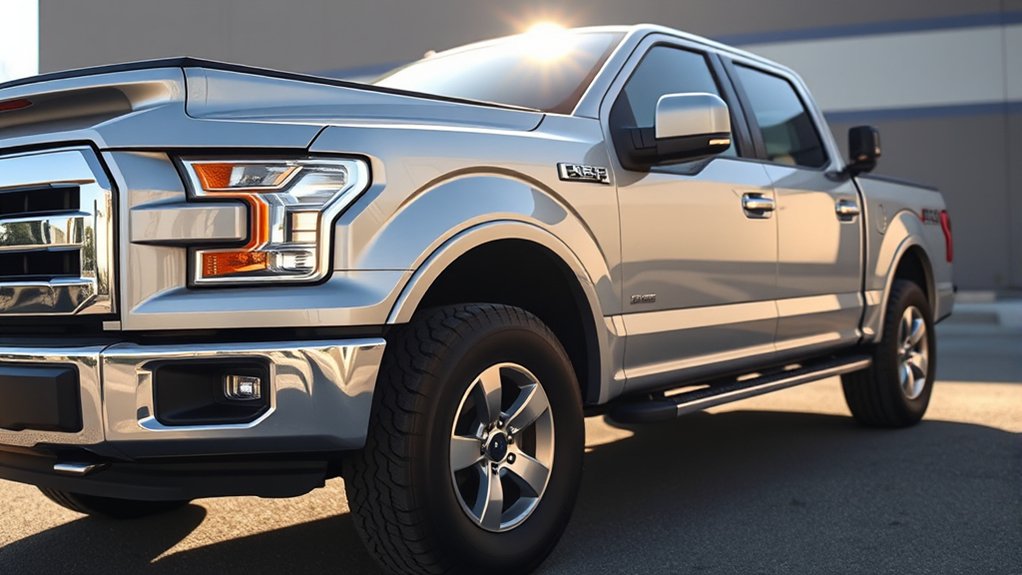
In 2015, you got an F-150 body with aluminum alloy panels on key exterior sections, which helped cut overall weight. Ford also paired those panels with a lighter frame, so you saw meaningful weight savings without giving up truck capability.
The exterior design changed too, with sharper lines and updated proportions that set the new body apart from earlier models.
Aluminum Body Panels
When the 2015 F-150 switched to aluminum body panels, Ford changed more than just the truck’s skin. You got a lighter body made from military-grade aluminum alloy on the cab, bed, hood, and doors, while the frame stayed high-strength steel. This shift also affected repair methods, aluminum costs, and paint durability.
| Panel | Material | Benefit |
|---|---|---|
| Hood | Aluminum | Resists corrosion |
| Doors | Aluminum | Cuts mass |
| Bed | Aluminum alloy | Improves dent resistance |
| Cab panels | Aluminum alloy | Enables redesign |
You’ll notice the panels needed specialized adhesives, rivets, and corrosion isolation to prevent galvanic issues. Ford also validated coatings and finishes to support long-term paint durability. Compared with steel, aluminum let engineers shape panels precisely, but it raised material and repair costs.
Frame Weight Savings
Beyond the aluminum body panels, the 2015 F-150 also changed under the skin to save weight where it mattered most. You’ll find that Ford didn’t rely on one trick; it trimmed frame weight with stronger, lighter materials and redesigned brackets, crossmembers, and mounting points.
That reduced mass without giving up towing or hauling capability. This matters because aluminum misconceptions often focus only on body panels, but the truck’s overall weight loss came from a broader engineering effort.
Exterior Design Updates
The 2015 F-150’s exterior changed more than a badge or a grille tweak, and Ford made those updates visible from nearly every angle. You’ll notice a taller, more squared front end, slimmer headlights, and a wider grille that gave the truck a stronger look.
Ford also reshaped the hood, tailgate, and bed sides to help airflow and improve function.
- Sharper front fascia
- More sculpted body panels
- LED lighting options
- Lightweight aluminum body panels
These changes didn’t just modernize the truck; they also supported efficiency and helped signal the new material shift. If you’re weighing reliability concerns or resale value, the design update matters because it marked Ford’s biggest visual reset in decades.
Which Parts of the F-150 Stayed Steel?
Even after the aluminum body arrived, you’ll still find a steel frame structure under the F-150, which preserves the truck’s core strength and load-carrying foundation.
You’ll also see steel used in key suspension components, where durability and impact resistance matter most. The engine and drivetrain stayed largely separate from the body material change, so you’re looking at a mixed-material truck rather than an all-aluminum design.
Steel Frame Structure
- Frame rails: steel
- Crossmembers: steel
- Cab mounts: steel
- Bed support points: steel
Suspension Components
While Ford changed the F-150’s body panels to aluminum, much of the suspension kept its familiar steel hardware. You’ll still find steel control arms, springs, brackets, and fasteners doing the hard work under the truck.
Ford paired these parts with revised suspension tuning to preserve ride quality, steering feel, and load control while the body lost weight. The lighter aluminum alloys helped reduce mass above the chassis, but they didn’t require a full redesign of the suspension.
| Component | Material |
|---|---|
| Control arms | Steel |
| Springs | Steel |
| Brackets | Steel |
| Fasteners | Steel |
| Links | Steel |
You can see the strategy clearly: keep proven steel where strength and durability matter most, and use lighter materials elsewhere.
Engine And Drivetrain
Under the hood, the F-150’s aluminum switch did not mean every engine or drivetrain part changed materials. You still get many steel components where strength, heat management, and cost matter most. Ford kept the engine block, cylinder heads, crankshaft, and many transmission internals in steel, cast iron, or other durable metals.
Driveshafts, axles, and suspension links also stayed largely unchanged, because they handle torque and impact loads.
- Engine blocks and heads
- Crankshaft and internal gears
- Transmission and transfer case parts
- Axles and driveshafts
Aluminum alloys mainly reduced body weight, while steel remained vital in high-stress mechanical systems. That split also supports corrosion resistance where the body meets road exposure, but it doesn’t replace the toughness you need in the drivetrain.
How Did Aluminum Affect F-150 Weight and MPG?
Ford’s switch to aluminum on the F-150 helped cut weight considerably, which in turn improved fuel economy. When you compare models, you’ll see how aluminum changed the truck’s weight impact by trimming hundreds of pounds from the body and panels.
That reduction let Ford improve acceleration, braking efficiency, and overall MPG without relying only on engine changes. In real-world driving, the lighter structure can help you use less fuel in city traffic and on longer highway trips.
The gains vary by cab, bed, and drivetrain, but the material change gave the F-150 a meaningful efficiency advantage. How aluminum helps isn’t just about one part; it’s about lowering the truck’s overall mass while preserving the full-size capability buyers expect.
Did the Aluminum F-150 Get Stronger or Weaker?
The aluminum F-150 was not simply stronger or weaker in every respect; it was redesigned to be both lighter and more resistant in key areas. You get high aluminum durability from a military-grade alloy body that resists corrosion better than older steel panels.
Ford also kept a fully boxed steel frame, so core structural strength didn’t disappear. In crash testing and daily use, you can see that strength depends on the component, not the material alone.
Consider these points:
- Body panels: lighter, corrosion-resistant.
- Frame: steel, preserving rigidity.
- Safety: engineered for impact management.
- Repair considerations: specialized techniques may affect service costs.
How Do F-150 Aluminum Repairs and Dents Work?
When an aluminum F-150 gets dented or damaged, repairs usually follow different methods than older steel-bodied trucks because aluminum behaves differently under impact and during reshaping. You’ll often need specialized aluminum repairs that use separate tools, clean work areas, and trained technicians to avoid cross-contamination with steel dust.
Minor dents may be removed with paintless methods if the finish stays intact, while deeper damage can require panel replacement or controlled reshaping. Heat and pressure must stay carefully managed, since aluminum can stretch or crack more easily.
Two word discussion ideas like dent repair and panel replacement help frame the process. You should also expect proper refinishing steps, because aluminum surfaces need correct priming and bonding for durable results.
What Should You Know Before Buying a Used F-150?
Before you buy a used F-150, you should check which model year and cab configuration it is, because those details affect price, payload, towing capacity, and available features. You should also verify whether it’s an aluminum-body truck, since that changes repair costs and corrosion concerns.
Review maintenance records, scan for accident history, and inspect the frame, suspension, and electronics for wear. Compare trim levels so you don’t overpay for options you won’t use. Keep two word ideas in mind when shopping: fuel economy and resale value.
Also, ignore unrelated topics that don’t affect truck condition.
- Confirm service history.
- Inspect body panels and undercarriage.
- Test drivetrain, brakes, and steering.
- Check recalls, title status, and mileage.
Frequently Asked Questions
Which F-150 Cab Styles First Received Aluminum Body Panels?
You’d first see aluminum body panels on 2015 F-150 cab styles: Regular Cab, SuperCab, and SuperCrew.
That change sparked reliability myths and maintenance myths, but Ford used aluminum mainly to cut weight and improve efficiency.
Did Aluminum Change F-150 Towing Capacity on All Trims?
No, you wouldn’t see a uniform towing capacity change across all trims. Aluminum adoption cut weight, but towing capacity still depends on engine, axle, and package choices. Ford’s ratings often varied by as much as 5,000 pounds.
Are F-150 Aluminum Panels Recyclable After Replacement?
Yes, you can recycle F-150 aluminum panels after replacement, but you should separate them from steel and coatings. This improves recycling implications and supports repair viability, while ensuring scrapyards process the material correctly.
Did Ford Use Different Aluminum Grades on the F-150 Body?
Yes, you’ll find Ford used different aluminum grades on the F-150 body. You’ll see high-strength alloys in structural body panels and lighter grades in less critical panels, balancing crash performance, weight, durability, and cost.
Can Aftermarket Accessories Damage F-150 Aluminum Body Panels?
Yes, you can damage F-150 aluminum panels with aftermarket accessories; a careless rack can scar paint like sandpaper on a window.
You should use proper mounts, torque specs, and aluminum care to avoid aftermarket damage.
Conclusion
So, if you’re asking what year the F-150 went aluminum, the answer is 2015. That’s when Ford switched the cab, bed, hood, and doors to aluminum, while keeping the frame steel. You’ll notice the payoff in weight savings, efficiency, and payload.
However, you’ll also need to think about repairs and tools. In a way, that one model year changed the truck’s future almost overnight.
And, yes, it still shapes what you drive today—this is the year the F-150 went aluminum.


