What Size Floor Jack for f150
As an Amazon Associate we earn from qualifying purchases.
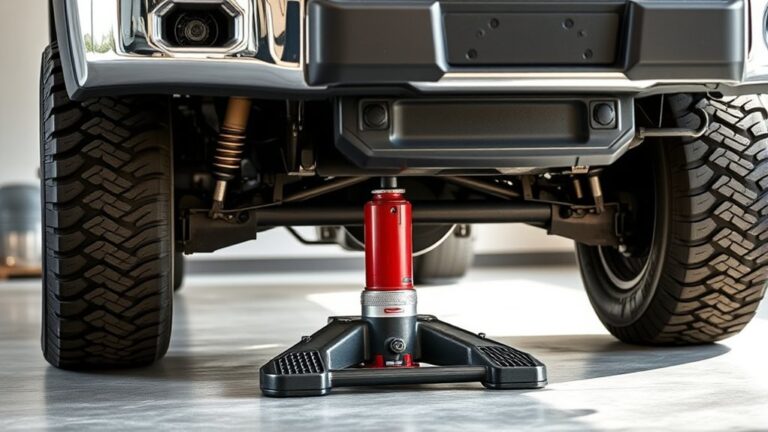
If you’re choosing a floor jack for an F-150, start with capacity and lift range, not just price. A 3-ton jack gives you the safest margin for a full-size truck, while a 2-ton unit can feel tight on heavier trims. You also need enough lift height to clear the tires and work comfortably under the frame.
The right jack matters more than most people think, and a few details can change the whole setup. Prioritize a sturdy, reliable model that can handle the weight and provide stability during lifting. This ensures safety and makes maintenance tasks much easier.
Key Takeaways
- A 3-ton floor jack is the practical minimum for most F-150 models.
- Match jack capacity to the heaviest axle end you will lift for proper safety margin.
- Choose a jack with at least 16 to 20 inches of lift height for typical F-150 work.
- Use a low-profile, wide-saddle jack with a controlled release valve and stable steel construction.
- Lift on level ground, use factory lift points, and support the truck with jack stands.
What Size Floor Jack Does an F-150 Need?
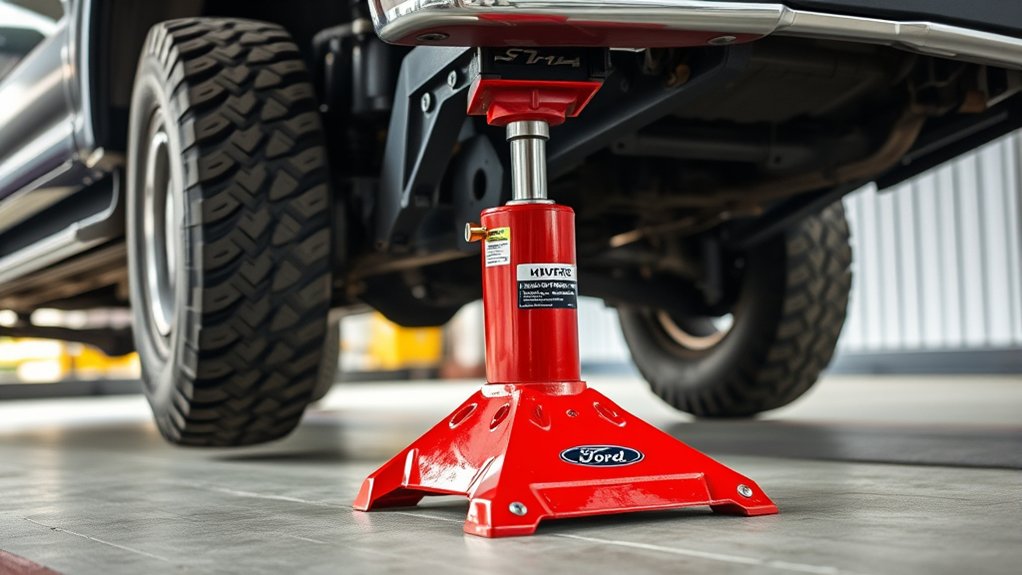
To lift an F-150 safely, you’ll want a floor jack with enough capacity to handle the truck’s curb weight, so a 3-ton jack is the practical minimum for most models. You should match jack capacity to the heaviest axle end you’ll raise, then verify the jack’s lift height reaches the frame or axle point without maxing out.
A low-profile design helps if your truck sits lower than stock, while a long handle improves control. Check the jack’s saddle diameter and wheel stability before you position it. Use the manufacturer’s jacking points, and never rely on the jack alone.
For uneven ground or lifted suspensions, choose extra margin beyond the minimum so you maintain safe clearance and smooth operation.
Best Floor Jack Capacity for an F-150
For most F-150 owners, a 3-ton floor jack is the best capacity choice because it gives you enough margin for the truck’s weight without being oversized or awkward to use. You can lift one corner or the front end confidently, and you’ll have reserve capacity for added gear, aftermarket bumpers, or heavier trims.
A 2-ton jack may work on some light-duty setups, but it leaves less safety margin and often feels underpowered during tire rotation or front end alignment work. A 3-ton unit also tends to offer better stability and a stronger frame, which matters when you’re positioning the truck precisely.
If you service your F-150 regularly, this capacity gives you the most practical balance of safety, control, and ease of use.
How Much Lift Height an F-150 Needs
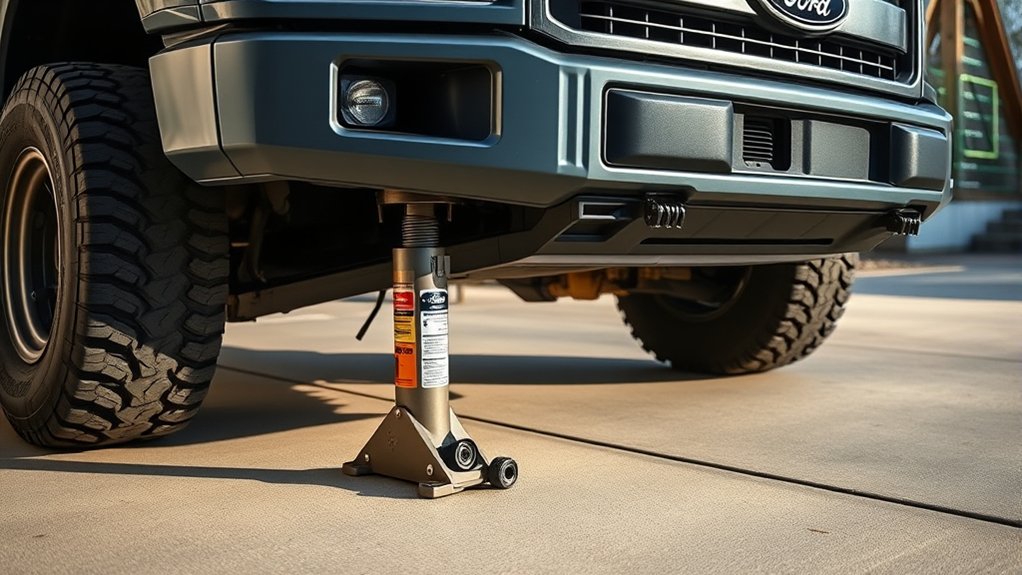
Lift height matters just as much as capacity, because the jack has to raise the truck high enough for your intended work without needing unsafe stacking or awkward positioning. For an F-150, you usually need enough travel to lift one corner for tire changes, brake work, or suspension checks.
Look for a jack that reaches roughly 16 to 20 inches minimum at the saddle, and more if you run taller tires or higher trim suspension. Don’t confuse low-profile reach with lifting range; both affect fit under the truck. If you’re comparing two word discussion ideas, stay focused on actual under-truck clearance, not marketing claims.
Details that seem subtopic irrelevant or off topic can still matter if they change how high the wheel clears the ground.
Safer Floor Jack Features for an F-150
When you’re choosing a floor jack for an F-150, safety features matter as much as capacity and height. Look for a wide steel saddle, a low-profile frame if your truck sits lower, and a controlled release valve that lets you lower the load smoothly.
A dual-piston pump can reduce handle effort, but stable construction matters more. Large rear casters improve positioning, and a long handle gives you better control while you work.
A bypass valve prevents overextension, and a safety overload system protects the jack from excess load. For tire rotation or wheel alignment, choose a jack with a lifting range that matches your truck and a saddle that grips the frame securely.
Check for solid welds, durable seals, and a rated capacity of at least 3 tons.
How to Lift an F-150 Safely
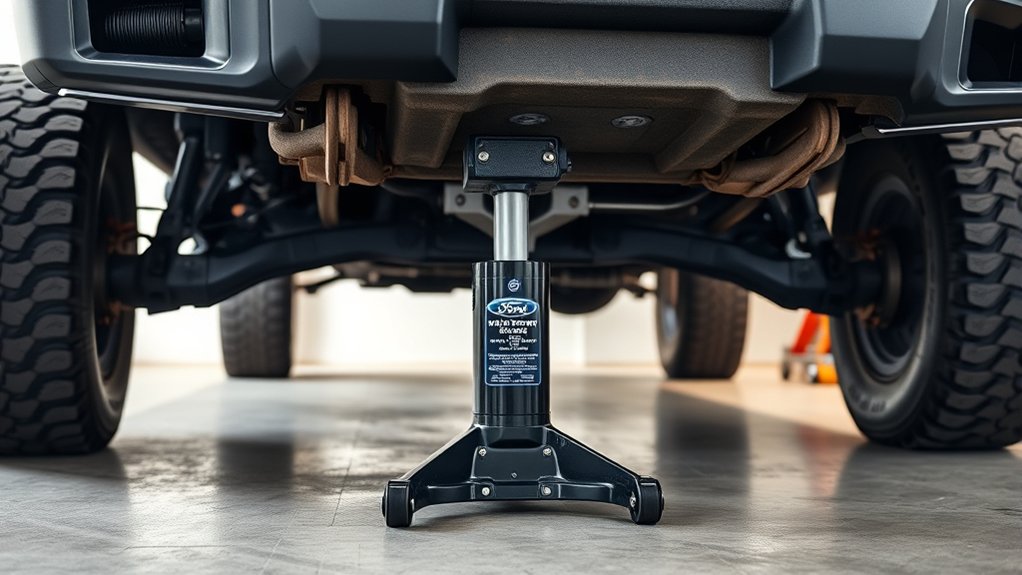
Before you lift an F-150, park on level ground, set the parking brake, and chock the wheels that stay on the ground. Position the floor jack under the factory lift point or approved frame section. Confirm the jack’s weight capacity exceeds the truck’s front or rear axle load.
Pump the handle slowly until the tire clears the ground, then stop. Never place any part of your body under a vehicle supported only by a jack. Slide jack stands under solid support points, lower the truck onto them, and verify stability before working.
Keep the jack in place as a backup only. Follow jack safety practices, lift one end at a time, and recheck that the truck sits level before removing stands or moving the vehicle.
Frequently Asked Questions
Can a Bottle Jack Replace a Floor Jack for an F-150?
Yes, you can use a bottle jack for an F-150, but only for lifting points. You’ll need safety considerations, and two word discussion ideas include axle support, jack stands, and load stability.
Do All F-150 Models Have the Same Jack Points?
No, you can’t assume every F-150 shares identical jack points. You’ll usually find frame pinch welds or reinforced pads, but trims, cab styles, and suspensions vary. Ignore irrelevant topic and check two word discussion ideas in your manual.
Can I Lift an F-150 on Gravel Safely?
Not safely. You should jack an F-150 on firm, level pavement; gravel can shift. Set the parking brake, chock wheels, and check tire pressure and tire wear before lifting to reduce slipping or instability.
Should I Use Jack Stands With an F-150?
Yes, you should always use jack stands with your F-150; the truck can drop like a stone. They keep you safe, prevent tire wear issues from wheel shifts, and avoid fuel economy losses from misaligned suspension.
Does an F-150’s Ground Clearance Affect Jack Choice?
Yes, your F-150’s ground clearance affects jack choice because you need enough low-profile reach and lift height to access the jack points safely. Measure clearance, then choose a jack that fits under the frame and raises adequately.
Conclusion
For your F-150, a 3-ton floor jack gives you the strongest footing, while a 2-ton jack can work in a pinch with less safety margin. Make sure you get about 16–20 inches of lift height so the truck rises like a gate opening wide enough to work under.
Choose a low-profile jack with a wide saddle, controlled release, and sturdy wheels, and you’ll lift your truck with confidence, not guesswork. When selecting the right equipment, always consider the size floor jack for F150 to ensure safe and effective lifting.


