What Is Zone Lighting f150
As an Amazon Associate we earn from qualifying purchases.
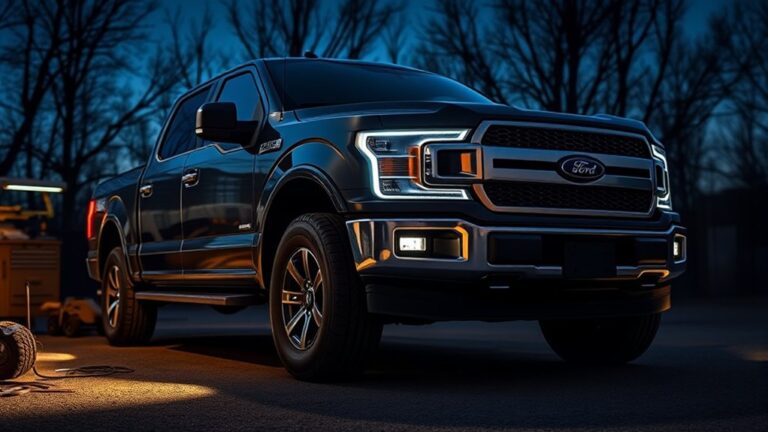
Your F-150 features Zone Lighting, which allows you to split its exterior lighting into five separate zones. This gives you much more control over your truck’s lights than you might expect.
Instead of illuminating the entire vehicle, you can choose to activate only the front, sides, bed, or rear as needed. This targeted lighting reduces glare and helps manage power consumption efficiently.
Zone Lighting changes how you work at night by providing customizable light placement. The key details on operation, setup, and limitations are what make this feature truly useful.
Key Takeaways
- Zone Lighting is Ford’s exterior LED system that lets you control multiple light zones around the F-150 independently.
- It provides five selectable zones to illuminate the front, sides, bed, and rear without turning on every lamp.
- You can control zones through the truck’s touchscreen, steering wheel menus, preset keys, or a master switch.
- It is useful for loading, camping, job sites, trailer hookups, and roadside tasks that need targeted lighting.
- Zone Lighting is available only on certain F-150 trims and packages, so verify your build sheet or window sticker.
What Is Zone Lighting on an F-150?
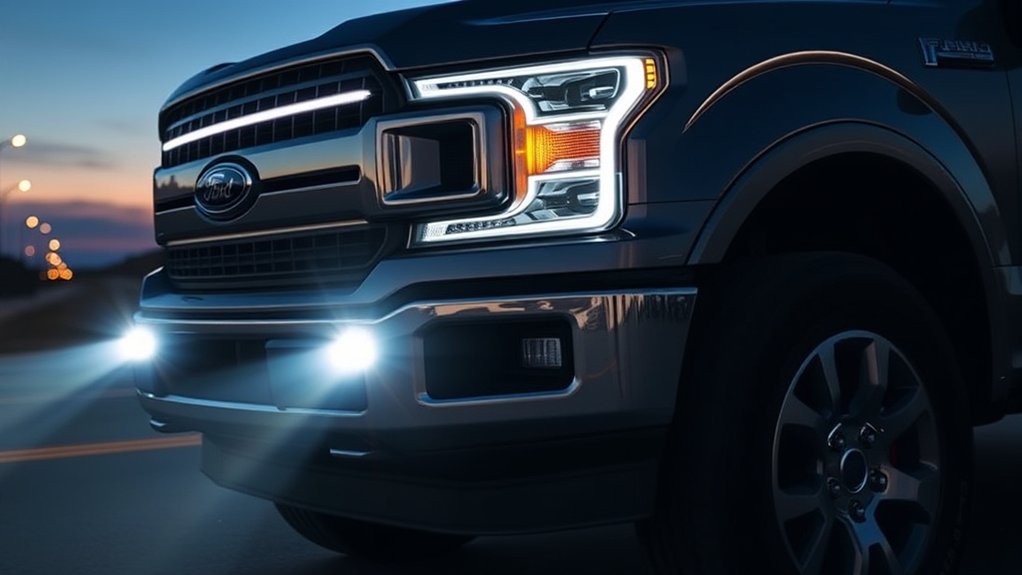
Zone Lighting on an F-150 is Ford’s exterior lighting system that lets you control multiple LED light zones around the truck independently. You can illuminate specific areas, such as the front grille, bed, sides, and rear, without powering every light at once.
That gives you Zone Lighting benefits like improved visibility, lower battery load, and more focused light where you need it. For off-road usage, you can light your immediate surroundings while limiting glare and unnecessary spill.
You’ll find it useful when you’re loading cargo at night, working in a dark yard, or setting up camp. The system gives you targeted exterior illumination, so you can operate with more control and less waste than with a single all-around lighting setup.
How F-150 Zone Lighting Works
You control F-150 Zone Lighting through the truck’s interface, where you can switch specific exterior lights on or off. The system divides the vehicle’s surroundings into defined coverage areas, so you can illuminate only the zones you need.
This setup gives you targeted visibility for loading, setup, or inspection without lighting the entire area.
Zone Lighting Controls
How does F-150 Zone Lighting work? You control each lighting zone through the center display or steering-wheel controls, then select an individual circuit and set its output state. The system lets you toggle zones on, off, or all at once without starting the truck.
Use the menu to reach zone presets quickly; this avoids irrelevant topic clutter and distracted reading when you’re learning the interface.
| Control | Function |
|---|---|
| Touchscreen | Select zones |
| Steering wheel | Navigate menus |
| Preset keys | Recall settings |
| Master switch | Enable all zones |
| Vehicle status | Confirm output |
You’ll see a clear command path, so you can manage lighting precisely and return to the same configuration later.
Light Coverage Areas
Where does F-150 Zone Lighting reach? You control multiple exterior light zones, and each one projects light coverage to a specific area around the truck. Front zones illuminate the grille, bumper, and path ahead; rear zones cover the tailgate, hitch, and trailer hookup area.
Side zones extend visibility along the bed sides and nearby work space. Zone lighting lets you target one side or several zones at once, so you can direct output where you need it most.
Because the LEDs are distributed around the body, you get broad but controlled light coverage without relying on the headlights alone. This setup helps you inspect cargo, connect equipment, and move safely in low-light conditions.
Zone lighting works best when you match zones to the task.
Where Are the Lighting Zones on an F-150?
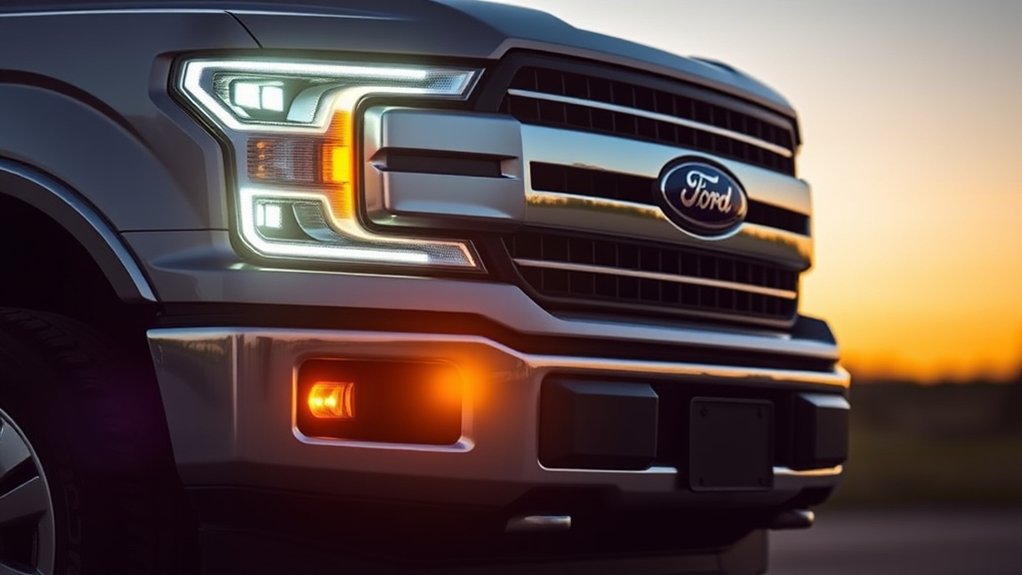
Ford places the F-150’s lighting zones around the truck’s exterior, with control typically split between the front grille area, mirror-mounted lights, bed lighting, and rear-facing zones near the tailgate. You’ll usually find zone lighting assigned to distinct circuits so each area can operate independently through the lighting controls.
The front zone illuminates the grille and ground ahead of you, while mirror lamps extend side visibility. Bed lighting covers cargo access and loading. Rear zones light the hitch, tailgate, and surrounding work area.
On some trims, additional perimeter lamps add side coverage near the cab and bed rails. This layout lets you match illumination to the task without flooding the entire truck with light, improving efficiency and targeted visibility in low-light conditions.
How to Turn On Zone Lighting
To turn on zone lighting in an F-150, press the lighting or zone-lighting control in the truck’s touchscreen or overhead switch panel, then select the zones you want active. You’ll see the available zones on the display, and you can enable zone lighting with a tap or button press.
If the system doesn’t respond, confirm the ignition is on and the truck is in a supported state. You can also use the overhead console controls on equipped models. This is the basic process for how to turn on zone lighting without changing any settings.
Once active, the selected exterior lights stay on until you switch them off or the system times out. Always verify the zones you’ve selected before exiting the cab.
How to Customize Zone Lighting
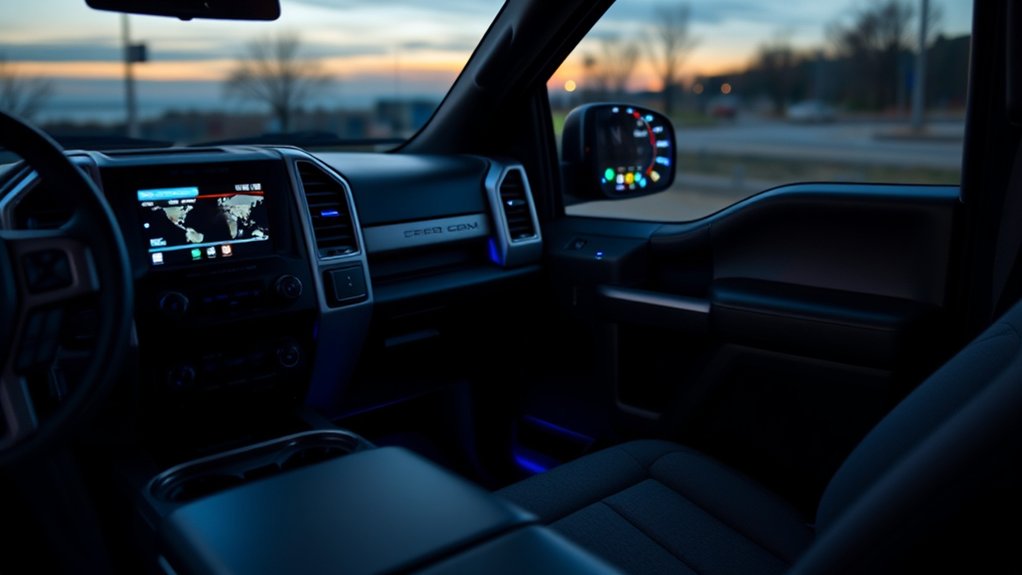
You can customize F-150 zone lighting through the truck’s touchscreen or connected vehicle settings, depending on model and trim. Open the lighting menu, select zone lighting, then choose each zone you want to control.
You can assign individual zones, adjust brightness, and switch zones on or off independently. If your system supports schedules, set timers so the lights activate automatically at specific times.
Use the app if available to save presets and sync changes remotely. These customization options help you target light where you need it, whether you’re working, loading gear, or improving visibility around the truck.
After you make changes, confirm the settings on the display so the selected zones match your intended layout.
Which F-150s Have Zone Lighting?
Zone Lighting isn’t on every F-150; it’s typically tied to higher trim levels and selected equipment packages. You’ll also need to check the model year, since feature availability can change across production cycles.
To verify support, compare the trim, model year, and package content on the specific truck you’re considering.
F-150 Trim Availability
Ford offers Zone Lighting on select F-150 trims, so availability depends on the exact model year and configuration. You’ll typically find zone lighting on higher-content F-150 trims and certain equipment packages, not every base truck.
For F-150 availability, check the trim’s build sheet or window sticker, because Ford ties the feature to specific option groups and electrical hardware. If you’re shopping, compare trims by factory equipment rather than assuming a standard feature set.
You can also verify it in the truck’s SYNC settings or exterior lighting controls once you’ve confirmed the truck is equipped. That keeps you from confusing dealer-installed accessories with the factory zone lighting system.
Model Year Support
Which model years actually include Zone Lighting on the F-150? You’ll find zone lighting on late-model F-150 trucks, with support tied to specific model year updates and electronic architecture. Ford expanded availability as the truck gained more advanced body control modules and lighting integration.
To verify your truck, check the model year first, then confirm the feature in the owner’s manual or menu.
- 2021+ trucks commonly support zone lighting.
- Earlier model years may not have the required hardware.
- The feature uses exterior lamps around the truck perimeter.
- Model year alone doesn’t guarantee activation; software and build matter.
If you’re shopping, use the model year as your first filter, then inspect vehicle-specific configuration data.
Package Equipment Levels
Higher trim and well-equipped F-150 packages are the most likely to include Zone Lighting, because Ford ties the feature to specific equipment groups rather than every truck in the lineup. You’ll usually find it on higher series such as Lariat, King Ranch, Platinum, Tremor, and Limited, especially when you select tech-focused or luxury packages.
Lower trims may need an optional package, while base work-truck builds often skip it. If you want the feature, check the window sticker and option codes, not just the trim name. That matters for concept resale, because buyers often pay more for integrated factory lighting. It also helps aftermarket compatibility, since factory zones can affect how you plan auxiliary lights, switches, and wiring.
Best Uses for F-150 Zone Lighting
Zone Lighting on the F-150 works best when you need broad, adjustable illumination around the truck without relying on a handheld lamp. You can use it for tasks that need controlled visibility at the vehicle perimeter, not as an unrelated topic or off topic feature.
- Load beds: you can light cargo, tie-down points, and toolboxes during night loading.
- Campsites: you can illuminate steps, gear, and ground hazards around the truck.
- Job sites: you can inspect materials, connectors, and work areas with less guesswork.
- Trailer setups: you can see hitch points, couplers, and safety chains clearly.
Use it when you need directed coverage, fast access, and hands-free operation.
How Does Zone Lighting Compare to Standard F-150 Lights?
How does Zone Lighting differ from standard F-150 lights? Zone lighting gives you five selectable exterior zones, so you can illuminate specific areas around the truck without turning on every lamp.
In a standard comparison, factory headlights, taillamps, and cargo lamps provide fixed, broad coverage with limited control. You can target the front, sides, bed, or rear independently, which improves task visibility and reduces wasted light.
Standard F-150 lights still work well for driving and basic loading, but they don’t match the directional flexibility of zone lighting. You control zone lighting through the truck’s interface or app, making it more adaptable for work sites, camping, or roadside tasks.
It’s a purpose-built system, not just brighter lighting.
Common Zone Lighting Problems and Fixes
If your F-150 zone lighting malfunctions, start by checking the wiring and connector seating at each lamp circuit.
If a zone light stays on, inspect the switch input and module commands for a stuck signal or short to power.
If the system is still inoperative, test the fuse and switch assembly for continuity and replace any failed component.
Wiring And Connection Issues
Electrical faults in an F-150 zone lighting system usually trace back to loose connectors, damaged harnesses, poor grounds, or corroded terminals. You should inspect the zone lighting wiring issues first, because a bad connection can interrupt power or signal to each lamp circuit. Use a multimeter to verify continuity, then check for pin fit, insulation cuts, and moisture intrusion.
- Unplug each connector and look for bent pins.
- Trace the harness near hinges, frame rails, and bed corners.
- Clean ground points to bare metal, then retighten.
- Replace any cracked or heat-damaged section.
After repairs, cycle the system and confirm each zone responds normally. If voltage drops remain, isolate the affected branch and retest the load side.
Light Stays On
A zone light that stays on usually points to a stuck relay, a shorted control wire, or a module that isn’t shutting the circuit off after command. You should verify the light source and inspect the harness for abrasion, moisture, or pinched insulation.
Use this quick check:
| Check | Result |
|---|---|
| Command off at switch | Light still active |
| Zone module output | Voltage present |
| Harness continuity | Abnormal resistance |
| Connector condition | Corrosion or damage |
If the lamp remains on, isolate the zone and compare the output response. That diagnosis belongs here; an irrelevant topic or unrelated concept won’t help you fix the fault.
Keep your test focused on control logic and output behavior, not exterior accessories.
Fuse And Switch Failures
Fuse failures and a faulty switch can shut down zone lighting even when the lamp and wiring look intact. You should check the fuse first, then test the switch for continuity and proper output.
In zone lighting, fuse failures often point to overload, corrosion, or a short downstream. Switch failures usually show up as intermittent operation, no response, or heat at the control housing.
- Inspect the fuse element for breaks or discoloration.
- Verify battery voltage reaches the switch.
- Replace a worn switch with the correct OEM part.
- Recheck operation after clearing related fault codes.
If the fuse blows again, trace the circuit for chafed insulation, moisture intrusion, or a damaged connector.
Tips for Getting the Most From Zone Lighting
To get the most from F-150 Zone Lighting, start by planning each light zone around the task at hand so you only illuminate the areas you need. Use the SYNC or overhead controls to test each zone before work starts, then adjust angles to reduce glare and shadows.
Keep lenses clean, because dirt cuts output and spreads light unevenly. If you’re working at a campsite or jobsite, activate only the zones that cover your immediate area to conserve battery and avoid disturbing others.
Check for fuse and switch faults before assuming the system failed. If you drift into an irrelevant topic or off topic discussion, you’ll miss the setup details that make zone lighting efficient, safe, and reliable.
Frequently Asked Questions
Can Zone Lighting Drain My F-150 Battery Overnight?
Yes, zone lighting can drain your F-150 battery overnight if it’s left on long enough, though battery drain myths often overstate risk. You should use zone lighting safety settings and verify auto-off timing.
Does Zone Lighting Work While the Truck Is Moving?
Yes, zone lighting can work while you’re moving, though you’ll notice its electrical impact is tiny, almost laughably so.
You can activate it through the truck’s controls, and it’ll keep illuminating selected zones.
Is Zone Lighting Available on Older F-150 Model Years?
No, you typically won’t find zone lighting on older F-150 model years; you need newer hardware and software for older F-150 compatibility.
You can retrofit some trucks, but factory support’s usually limited.
Can I Replace a Damaged Zone Light Myself?
Yes, you can replace a damaged zone light yourself if you’re comfortable with basic trim removal. You’ll need to replace the LED module, inspect wiring, and verify seals. Otherwise, have a technician handle it.
Does Zone Lighting Affect My Truck Warranty?
Zone lighting usually won’t void your truck warranty, unless you install it improperly or damage related wiring.
You should keep factory parts, document repairs, and check your warranty terms, because hidden sparks can scorch coverage.
Conclusion
Zone lighting on your F-150 gives you five separate exterior lighting zones, so you can illuminate only the areas you need. That means less battery draw, less glare, and better control for tasks like loading gear or setting up at night.
Ford built it for convenience, and nearly 1 in 3 truck owners say nighttime utility features matter most. If you use the zones well, you’ll make your truck safer, smarter, and more efficient.
Overall, zone lighting on your F-150 enhances usability and ensures you get the most out of your truck’s lighting capabilities.


