What Is the Bolt Pattern on a Ford f150
As an Amazon Associate we earn from qualifying purchases.

If you’re checking the bolt pattern on a Ford F-150, you need the lug count and the pitch circle diameter to match the hub exactly. Most newer F-150s use a 6×135 bolt pattern, but older trucks can have different specifications. One wrong measurement can cause fitment problems.
You also need to confirm the center bore, offset, and backspacing before you buy a wheel. The exact year of your truck changes everything, and that’s where it gets specific. Always verify these details to ensure proper fitment and safety.
Key Takeaways
- Most 2004–2025 Ford F-150 trucks use a 6×135 bolt pattern.
- The bolt pattern means six lug holes on a 135 mm circle.
- Always verify your exact model year, since Ford has used different patterns across generations.
- Match both lug count and circle diameter before buying wheels or spacers.
- Also check center bore, offset, and load rating for proper fitment and safety.
What Is the Ford F-150 Bolt Pattern?
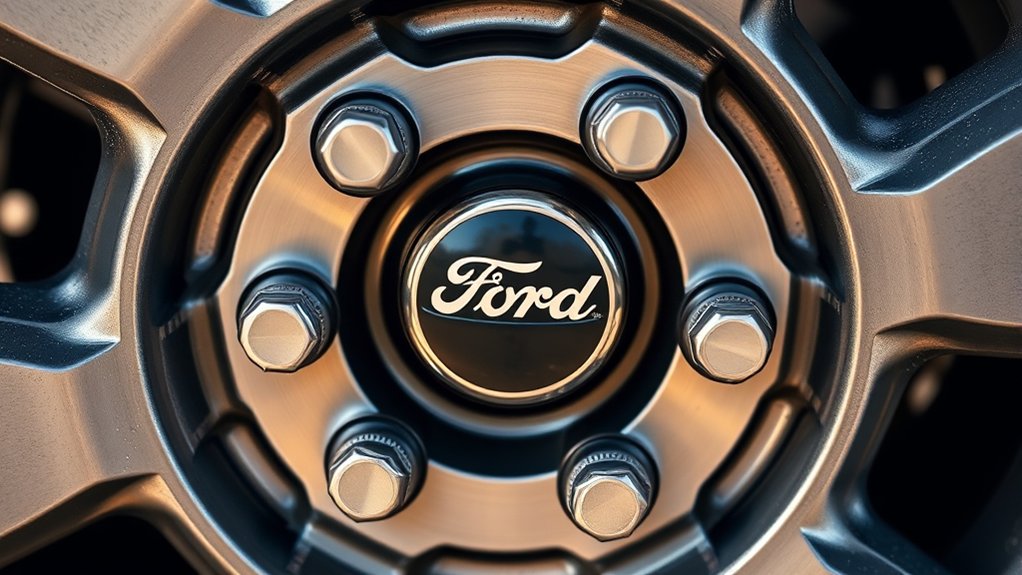
The Ford F-150 bolt pattern is the specific layout of the wheel lug holes on the hub, and it tells you how a wheel mounts to the truck. You need this measurement before you buy replacement wheels or spacers.
In bolt pattern basics, you match the number of lug holes and the circle they form to your F-150’s hub so the wheel seats correctly. If you skip this check, you can create fitment errors, vibration, and wheel compatibility safety issues.
You should verify the pattern for your model year, because Ford has used different setups across generations. Check the owner’s manual, door label, or wheel specifications. When you confirm the correct pattern, you help ensure proper centering, lug engagement, and reliable road performance.
What Do Ford F-150 Bolt Pattern Numbers Mean?
Ford F-150 bolt pattern numbers tell you how the wheel mounts by showing the number of lug holes and the diameter of the bolt circle. You read them as lug count plus circle size, so 6×135 means six lugs on a 135 mm circle. That spec lets you match wheels correctly and avoid bolt pattern differences that prevent proper seating.
| Example | Meaning |
|---|---|
| 5×120 | 5 lugs, 120 mm circle |
| 6×135 | 6 lugs, 135 mm circle |
Don’t trust wheel hub myths that claim any hub-centered wheel fits if the center bore matches. The bolt pattern still has to align exactly. When you verify both values, you reduce vibration, protect studs, and choose compatible wheels with confidence.
Ford F-150 Bolt Pattern by Generation
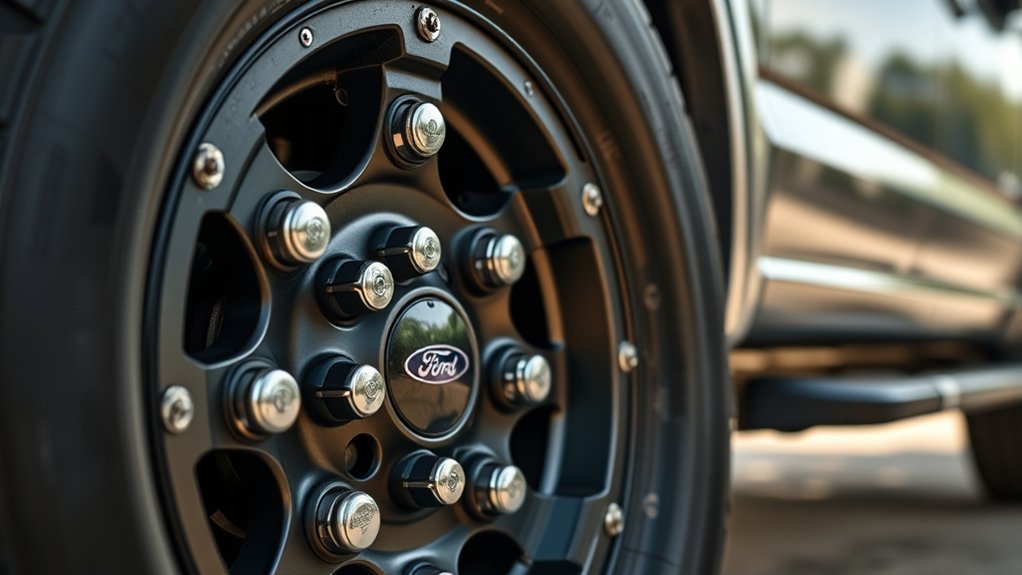
Across F-150 generations, you need to verify the exact bolt pattern before buying wheels, because Ford has used different lug counts and circle diameters over time. You should treat each generation as its own fitment spec and check the wheel hub before ordering.
Early trucks commonly used different five-lug layouts, while later models standardized around larger truck patterns, so bolt pattern basics matter here. Match both the number of lugs and the bolt circle diameter, and confirm the center bore and offset too.
When you compare generations, don’t assume a wheel from one year fits another. For lug nut safety, torque every fastener to Ford’s specification and recheck after driving. Correct pattern selection prevents vibration, stud damage, and wheel loss.
Which Ford F-150 Years Use 6×135?
Which F-150 years use 6×135? You’ll find this bolt pattern on most 2004–2025 F-150 models, including the 2004–2008, 2009–2014, 2015–2020, and 2021–2025 generations. Ford standardized the 6×135 layout across these trucks, so your wheel fitment usually stays consistent within that range.
Don’t confuse trim level with bolt pattern; bolt pattern misconceptions often come from mixing wheel size, offset, and hub bore with the actual lug circle. You should also keep lug thread terminology straight: the F-150’s wheel studs use a separate thread specification from the 6×135 pattern itself.
If you’re matching wheels, focus on the six-lug, 135 mm circle first, then verify the correct hardware and wheel specs for your exact truck.
How Do You Measure the Bolt Pattern on an F-150?
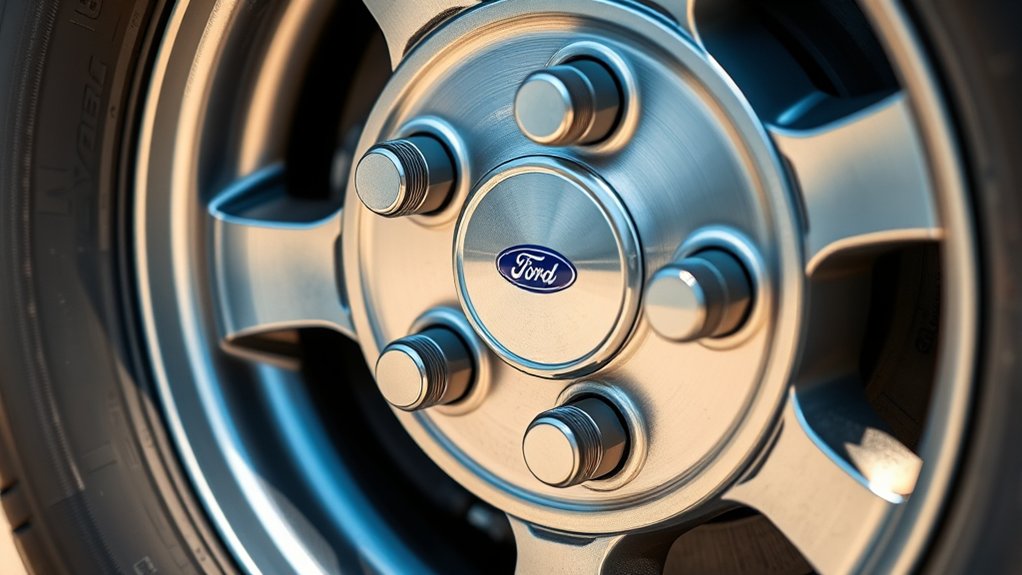
To measure an F-150 bolt pattern, you count the lug holes and measure the diameter of the imaginary circle they form. First, identify the number of wheel studs, then check whether the pattern uses five or six positions.
For six-lug wheels, measure from the center of one stud straight across to the center of the opposite stud. For five-lug wheels, use a bolt sizing gauge or measure from the center of one stud to the far edge of the opposite stud.
Record the result in millimeters. Keep the wheel flat and use a precise ruler or caliper. Make sure the lug nuts are removed before measuring. Accurate bolt sizing helps you match replacement wheels and avoid fitment errors.
Ford F-150 Bolt Pattern vs. Lug Pattern
You’ll often hear “bolt pattern” and “lug pattern” used interchangeably on an F-150, but they refer to the same wheel-mounting specification. When you check bolt compatibility, you’re comparing the number of lug holes and the spacing between them, not two different features.
Bolt pattern and lug pattern mean the same thing on an F-150, so always match the wheel-mounting spec exactly.
This distinction matters because wheel installation depends on matching the truck’s hub pattern exactly. If the pattern doesn’t align, the wheel won’t seat correctly, and you can’t safely tighten the lugs.
You should treat both terms as equivalent in parts listings, fitment charts, and service documents. What matters is the exact measurement, such as 6-lug spacing on many F-150s.
Once you confirm that spec, you can verify fitment with confidence and avoid installation errors, vibration, or damage.
What Wheel Sizes Fit a Ford F-150?
Once you’ve confirmed the bolt pattern, the next fitment factor is wheel size, which includes diameter, width, offset, and backspacing. You can run common Ford F-150 wheel fitment ranges from 17 to 20 inches on many trims, with larger sizes available when tire choice and suspension allow.
Match width to your tire plan so you don’t crowd the sidewall or lose steering clearance. Check two word discussion ideas like tire size and load rating before you buy.
- A 17-inch wheel with a rugged all-terrain tire.
- An 18-inch wheel tucked under a work-ready truck.
- A 20-inch wheel filling the fender with a street-focused look.
Use exact specs for your model year, because wheel fitment changes across generations.
What Offset and Backspacing Work on an F-150?
On your F-150, proper wheel offset sets how far the wheel sits in or out from the hub, and it directly affects clearance, stance, and steering geometry. You’ll also need the correct backspacing so the wheel doesn’t contact the suspension, brake components, or fender liner.
Matching offset and backspacing to your truck’s setup is key to safe fitment.
Proper Wheel Offset
Wheel offset determines how far the wheel sits in or out relative to the hub, and on an F-150 the right setup depends on wheel width, tire size, and suspension clearance. You should match offset to your truck’s load and steering geometry to avoid bolt pattern misconceptions and protect wheel mounting safety.
Too much positive offset can tuck the wheel inward and crowd components; too much negative offset can push the tire outward and change handling.
- Picture the wheel face sitting flush with the fender line.
- Picture the tire clearing the upper control arm at full lock.
- Picture the hub-centered wheel clamping evenly under torque.
Check manufacturer specs, then verify actual fitment on your exact trim. Different cab, bed, and package combinations can alter clearance, so measure before you buy.
Correct Backspacing Choices
Backspacing works with offset to determine where the wheel sits in the F-150 wheel well, and you need the right balance to clear suspension parts, brake components, and fender lips. For most stock setups, you’ll stay in a moderate range that preserves steering feel and load capacity.
If you choose a wider wheel, you must reduce backspacing or adjust offset to prevent inner rubbing. Your backspacing calibration should match tire width, lift height, and hub clearance. Check wheel compatibility against factory brake calipers and control arms before you buy.
Small changes can move the tire inward or outward several millimeters, which affects wear and tracking. Use exact measurements, not guesses, because F-150 fitment leaves little margin.
What Fitment Problems Should You Avoid?
What fitment problems should you avoid? You should avoid mismatched bolt compatibility, excessive offset, and tire fitment that crowds suspension parts. If the wheel’s center bore is wrong, you’ll get vibration and unsafe loading. If the offset pushes the rim too far out, you’ll stress bearings and alter steering feel.
Oversized tires can rub liners, control arms, or brake components during turns and compression.
- Bolt mismatch: holes don’t line up cleanly, so the wheel won’t seat correctly.
- Offset conflict: the wheel sits too far in or out, changing clearance.
- Tire interference: the sidewall contacts hardware under load.
Choose dimensions that match your truck’s hub, brake package, and suspension geometry to keep the assembly stable and serviceable.
How Do You Check Wheel Specs Before Buying?
Before you buy, verify the wheel’s bolt pattern matches your F-150’s hub exactly. Then measure the center bore and confirm it fits the hub without interference.
If either spec is off, the wheel won’t mount correctly.
Verify Bolt Pattern
To verify the bolt pattern before you buy wheels, match the wheel’s lug count and bolt-circle diameter to your F-150’s factory specs using the owner’s manual, door jamb placard, or a trusted fitment guide. Then verify dimensions against the exact year, cab, and trim, because small revisions change fitment.
Check standards for 5-lug layouts, and confirm the pattern is listed as 6×135 or another factory-approved size. Use the wheel’s stamped spec sheet, not marketing copy, to compare numbers.
- Picture a wheel face with five clean mounting holes.
- Picture a spec label showing bolt circle and offset data.
- Picture your truck’s placard beside the wheel box.
If the numbers don’t match exactly, don’t force the fit; choose a correct wheel.
Measure Center Bore
Next, measure the center bore so the wheel sits flush on the hub and doesn’t rely on the lug nuts to center it. Use a caliper to read the hub diameter, then compare it with the wheel’s center bore.
If the bore is smaller, the wheel won’t fit. If it’s larger, you may need hub-centric rings to maintain wheel compatibility and reduce vibration. Check this before you buy, even if the bolt pattern matches, because the pattern alone doesn’t guarantee a proper fit.
You should also confirm offset and load rating, but the center bore determines how well the wheel locates on your F-150. Accurate measurements prevent rubbing, wobble, and installation problems. Keep the numbers from both the truck and wheel specs handy.
Frequently Asked Questions
Can I Use Adapters to Fit Different Wheels on My F-150?
Yes, you can use adapters, but you must verify wheel fitment, tire compatibility, hub bore, load rating, and offset. Poorly matched adapters can cause vibration, bearing wear, or unsafe handling, so you should choose quality parts.
Do F-150 Bolt Patterns Differ Between 2WD and 4WD Models?
Yes, most F-150 2WD and 4WD models share the same bolt pattern. About 90% of recent trucks do.
You should still verify year-specific specs, because trim, axle, and wheel options can change fitment.
Will Aftermarket Wheels Affect My F-150’s Warranty?
Aftermarket wheels can affect your F-150’s warranty if you cause a failure. You should verify wheel compatibility and understand aftermarket implications.
Ford can deny related claims, but it can’t void unrelated warranty coverage.
Are F-150 Lug Nuts the Same Size Across All Years?
No, you’ll find F-150 lug nuts aren’t the same across all years; you need to verify lug nut torque and hub sizing, since thread pitch, seat style, and diameter can vary by generation.
Can I Rotate Tires With Different Wheel Offsets?
No, you shouldn’t rotate tires with different wheel offset; even a 2 mm mismatch can alter scrub radius and wear patterns.
You’ll compromise handling, so match offsets before tire rotation for predictable, technical results.
Conclusion
Before you buy, you should verify your Ford F-150’s exact bolt pattern, lug count, and lug circle diameter. Matching the pattern matters, but you also need the right center bore, offset, and backspacing to avoid fitment failures.
Check your owner’s manual, door placard, or wheel specs, then confirm everything against the hub. Careful checking prevents costly, clumsy clearance issues and keeps your truck rolling with safe, solid support.
Always ensure you know the correct bolt pattern on a Ford F150 to guarantee a proper fit and maintain optimal performance.


