What Is Ford F 150 Towing Capacity
As an Amazon Associate we earn from qualifying purchases.
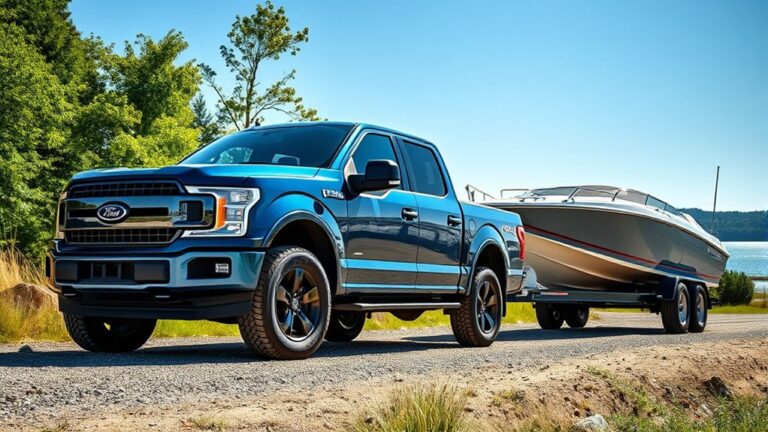
If you’re asking what Ford F-150 towing capacity really means, the answer depends on the exact truck you have, not just the badge on the grille. You need to factor in engine, axle ratio, cab style, drivetrain, payload, and tow package.
A properly equipped F-150 can handle a wide range of trailers, but the real limit comes from factory ratings and your truck’s specific specs. Understanding these details is key to knowing how much your Ford F-150 can safely tow.
Key Takeaways
- Ford F-150 towing capacity varies widely by exact configuration, including engine, axle ratio, cab style, bed length, drivetrain, and equipment.
- Engine choice matters: base V6 models usually tow less than turbocharged V6 and V8 F-150s.
- Regular Cab and 2WD models often tow more, while SuperCrew and 4WD models usually tow less.
- The safest towing limit is listed on the door-jamb sticker, owner’s manual, Ford towing guide, and VIN-based factory specs.
- Always include trailer weight, cargo, tongue weight, payload, and hitch ratings when determining safe towing capacity.
What Ford F-150 Towing Capacity Means
Ford F-150 towing capacity tells you the maximum trailer weight the truck can safely pull when properly equipped. You use it to match the truck to a trailer without exceeding limits set by the drivetrain, brakes, frame, and cooling system. It doesn’t describe payload, which covers weight in the cab and bed.
When you review engine comparisons, you see how output and torque affect towing potential, while cab aesthetics matter mainly for comfort and appearance, not tow rating. You should check the exact figure for your configuration, because axle ratio, wheelbase, and equipment package can change it.
This number helps you plan safe hauling, maintain control, and reduce stress on the powertrain during sustained towing.
What Changes F-150 Tow Ratings
Tow ratings change because the truck’s exact equipment changes. You’ll see different numbers when you compare axle ratio, cab style, bed length, drivetrain, suspension, and tire specification. Tow package hardware, cooling capacity, hitch class, and integrated trailer controls also affect the certified limit.
Payload matters too, because your truck must reserve enough capacity for passengers, cargo, and tongue weight. The manufacturer publishes ratings for a specific configuration, not a generic model. If you add accessories, you can reduce available towing margin.
If you’re looking at two word discussion ideas, focus on equipment codes and axle ratios. An unrelated topic like paint color won’t change the rating, but options tied to weight or cooling can. Always match your truck’s exact build to the official tow chart.
Ford F-150 Towing Capacity by Engine
Which engine your F-150 has plays a major role in its towing capacity, because output, torque curve, and calibration all shape how much load the truck can safely pull. You’ll usually see lower ratings with the base V6 and higher ratings with turbocharged V6 and V8 options, since stronger low-end torque helps you accelerate, merge, and hold speed under load.
The exact number depends on the engine’s powertrain tuning and cooling hardware, so check the truck’s door-jamb label and owner’s manual for your configuration. When you plan a heavy tow, verify trailer weight, hitch limits, and payload together.
If your trips are long or remote, consider towing insurance and roadside assistance, since both can reduce financial and logistical risk when you’re hauling.
How Cab Style Affects Tow Capacity
Cab style affects tow capacity because it changes curb weight, wheelbase, and how much payload you can carry. A Regular Cab usually gives you the highest tow ratings because it’s lighter, while a SuperCab adds some weight that can reduce capacity.
A SuperCrew gives you more passenger space, but that tradeoff often means lower maximum towing numbers than the lighter cab configurations.
Regular Cab Advantage
A regular cab Ford F-150 often delivers the highest towing figures in a given engine and drivetrain setup because it carries less body weight than longer cab configurations. You benefit from the lower curb weight when you compare tow ratings, since the truck can allocate more of its gross combination weight to the trailer.
This configuration can also improve fuel economy, especially when you tow less frequently or drive without extra passengers. Its shorter wheelbase may aid off road capabilities, but you should still match the rating to the engine, axle ratio, and package.
Always verify the specific towing chart, because axle, drivetrain, and equipment changes can shift capacity more than cab style alone.
SuperCab Weight Impact
How does a SuperCab affect Ford F-150 towing capacity? It usually adds more cab structure and hardware than a Regular Cab, so your truck’s curb weight increases. That extra curb weight can reduce the payload margin available for trailer tongue weight, and that can lower max tow ratings on certain configurations.
You should compare the exact engine, axle ratio, drivetrain, and package on the door sticker or Ford tow chart, because cab style doesn’t work alone. A SuperCab still gives you a strong towing platform, but the added body mass means engineers must balance passenger space against capacity.
For reliable results, keep up with car maintenance, check tire pressures, and verify that hitch equipment matches the truck’s rated limits before you tow.
SuperCrew Tradeoffs
SuperCrew models usually trade some towing margin for extra cabin space, since the larger cab adds weight and can reduce payload available for tongue weight. You should expect that added mass to affect tow ratings when you compare trims with identical engines, axles, and drivetrains.
Ford sets towing limits by the truck’s full configuration, not cab style alone, so you need to check the exact trailer rating for your VIN. If you plan heavy towing, the extra interior room may be worth the slight reduction in capacity.
It can also influence fuel economy and truck maintenance over time, because a heavier truck works harder under load. For best results, match cab style, axle ratio, and hitch equipment to your trailer.
2WD vs. 4WD Tow Ratings
When you compare Ford F-150 tow ratings, 2WD models often deliver a higher maximum towing capacity because they typically weigh less than 4WD versions. If you choose 4WD, you’ll usually give up some tow capacity in exchange for added traction and off-road capability.
You should check the exact engine, axle ratio, and drivetrain combination, since those details determine the final tow rating.
2WD Tow Capacity
In most Ford F-150 configurations, a 2WD setup can tow more than an otherwise similar 4WD model because it carries less drivetrain weight and places fewer demands on the engine and chassis. You’ll usually see this advantage in trim-specific tow charts, where axle ratio, engine choice, cab style, bed length, and payload package determine the final rating.
If you prioritize maximum towing, 2WD can also simplify truck maintenance and often improve fuel economy slightly under light-load driving. However, you still need to match trailer weight to the truck’s gross combined weight rating, hitch class, and cooling system limits.
Always verify the exact door-sticker payload and the factory tow package details before you hook up a trailer.
4WD Tow Capacity
A 4WD F-150 usually rates slightly lower for towing than a comparable 2WD model because the added transfer case, front differential, and driveshafts increase curb weight and can reduce available payload. You should check the door-jamb label and towing guide before you hitch anything.
- 4WD can lower max tow ratings.
- payload limits still govern real-world loading.
- tire inflation affects stability and capacity.
- axle ratio and engine choice matter.
- trailer brakes help manage heavier loads.
If you exceed payload limits, you’ll cut into safe tow margin fast. Proper tire inflation helps the truck carry weight, maintain steering response, and reduce heat buildup. Always match your trailer, passengers, and gear to the exact 4WD rating for your cab, bed, and axle configuration.
Tow Package Features That Boost Capacity
What actually lets an F-150 tow more is the factory tow package, which bundles hardware and calibration designed to improve stability, cooling, and control under load. You get upgraded hitches, wiring, and trailer-sway control that help the truck manage heavier trailers with less stress.
Larger transmission and engine cooling components keep temperatures in check during long pulls, while revised axle ratios can improve leverage at the wheels. Integrated brake controllers let you modulate trailer brakes from the cab, improving response and reducing setup time.
Proper tire balance also matters, because it helps the truck track straight and reduces vibration at speed. Paint protection won’t increase tow rating, but it preserves exposed surfaces from road debris, salt, and hitch-related wear.
How to Find Your Truck’s Max Tow Rating
Those tow-package upgrades improve capability, but your F-150’s max tow rating still depends on the exact truck configuration. You should verify the door-jamb certification label, the owner’s manual, and Ford’s towing guide, because engine, axle ratio, cab style, bed length, drivetrain, and installed equipment all change the limit.
Use the VIN to match factory specifications, then confirm the trailer-tow package if equipped.
- Check payload and GVWR
- Match axle ratio
- Confirm engine code
- Note cab and bed
- Review axle and hitch ratings
Don’t rely on a generic chart; it can become an unrelated topic or off topic discussion if it ignores your truck’s build. The certified rating on your specific truck is the authoritative source.
What You Can Safely Tow With an F-150
Once you know your truck’s certified tow rating, you can match it to the trailer you actually plan to pull. You should keep the trailer’s loaded weight at or below that number, including cargo, fluids, and accessories.
For stable handling, stay within the tow package’s payload and hitch limits too. If you’re towing a small utility trailer, a lightweight boat, or a modest camper, an F-150 often handles it safely when the numbers align.
Avoid guessing based on trailer size alone. Check axle ratings, tongue weight, and braking requirements before you hook up.
Regular tire lubrication of wheel bearings and proper transmission maintenance help preserve towing performance and reduce heat, especially during repeated pulls or long grades.
How to Choose the Right F-150 for Towing
Start by matching the F-150’s engine, axle ratio, cab style, bed length, and drive layout to the trailer weight you plan to tow, because each configuration changes the truck’s certified tow rating. Then verify the maximum trailer weight, payload, and GCWR on the door sticker and in the owner’s manual before you buy.
Use this checklist:
- Compare tow package equipment
- Check hitch and brake controller compatibility
- Confirm payload for passengers and cargo
- Review towing insurance requirements
- Plan road trip planning around fuel range
Choose the smallest configuration that meets your load, then add margin for hills, wind, and accessories. If you tow often, select the stronger cooling, axle, and suspension package.
This approach keeps the truck stable, legal, and ready for work.
Frequently Asked Questions
How Often Should F-150 Trailer Brakes Be Serviced?
You should service F-150 trailer brakes annually, or every 12,000 miles, and sooner if you notice noise, pulling, or reduced stopping.
Include tire maintenance and payload planning checks during each inspection for safer towing.
Does Altitude Affect F-150 Towing Performance?
Yes, higher altitude can thin your engine’s air like a fading breeze, reducing power and towing performance. You’ll feel the altitude impact most when climbing grades, because your F-150’s naturally aspirated engines breathe less efficiently.
Can an F-150 Tow a Fifth-Wheel Trailer?
Yes, you can tow a fifth-wheel trailer with an F-150 only if your truck’s payload, hitch setup, and trailer weight fit manufacturer limits.
You’ll need two word ideas and carefree towing planning.
What Fuel Type Is Best for Towing With an F-150?
For towing, you’ll usually do best with Ford’s EcoBoost gasoline engines; they balance engine torque, towing dynamics, and fuel efficiency well.
If you tow heavy often, choose the strongest gas turbo option for better cabin comfort.
How Does Towing Affect F-150 Transmission Lifespan?
Towing shortens your F-150’s transmission lifespan by increasing transmission wear, especially with heat and heavy loads. As they say, “an ounce of prevention is worth a pound of cure.” You’ll protect durability with fluid changes and cooling.
Conclusion
In short, your Ford F-150’s towing capacity depends on the exact build, not just the badge. Check your VIN, door-jamb label, and Ford towing guide before you hitch up. Think of towing ratings like a bridge weight limit: they’re only safe when you stay within the posted number.
If you match the truck, axle, cab, and package correctly, you’ll tow with confidence and keep braking, cooling, and stability systems working as intended. Always verify these details to ensure safety and performance.
Understanding your Ford F-150 towing capacity is essential for getting the most out of your truck while protecting both your vehicle and your load.


