What Is Ford Blue
As an Amazon Associate we earn from qualifying purchases.
If you’re trying to understand Ford Blue, you’re looking at Ford’s gas and traditional hybrid business. This segment includes its core trucks, SUVs, vans, and cars, which still generate much of the company’s cash. Ford Blue was separated from the EV efforts to track performance more clearly and allocate capital more precisely.
The real question is how far Ford can improve these vehicles now, and why that matters for what comes next.
Key Takeaways
- Ford Blue is Ford’s internal division for gas and hybrid vehicles.
- It covers core models like F-150, Explorer, Mustang gas variants, and Transit.
- The unit separates legacy combustion business from Ford’s EV arm, Ford Model e.
- Ford Blue helps Ford manage capital, pricing, and performance more clearly.
- Its profits support Ford’s transition to electric vehicles and fund future investment.
What Is Ford Blue?
Ford Blue is Ford Motor Company’s internal name for its core business that develops, builds, and sells traditional gasoline and hybrid vehicles, primarily in North America. You can view the Ford Blue concept as the segment that keeps Ford’s high-volume, internal-combustion lineup organized under one operational label.
It separates these products from EV branding, which helps you track strategy, reporting, and capital allocation more clearly. In practice, Ford Blue covers models that rely on established powertrains, manufacturing systems, and dealer channels. That distinction matters because you’re looking at a business with different cost structures, emissions profiles, and demand patterns than battery-electric operations.
Ford uses the label to make its portfolio easier to analyze, especially when comparing legacy vehicle performance against newer mobility initiatives.
Why Did Ford Create Ford Blue?
You can see Ford created Ford Blue to separate its core gas and hybrid business from its EV operations, which lets each unit track performance more clearly. This structure supports Ford’s EV strategy shift by reallocating capital and management attention toward electrification while keeping legacy revenue streams stable.
It also sharpens brand focus, so you can assess how Ford aims to optimize each segment for different market demands.
Core Business Separation
To sharpen focus and improve execution, Ford separated its legacy combustion-business operations into Ford Blue, giving the company a clearer way to manage the products that still generate most of its volume and near-term cash flow.
You can see the logic in the structure: one unit tracks mature trucks, SUVs, and commercial vehicles, while other teams pursue different growth paths. That separation lets Ford allocate capital, pricing, and supply decisions with more precision and measure each business on its own margin profile.
It also helps you understand how Ford Mobility and Market Partnerships fit around the core, since they can be evaluated against specific operational goals instead of a blended portfolio. In practice, Ford Blue improves accountability, reduces internal complexity, and supports tighter performance management.
EV Strategy Shift
As Ford sharpened its core combustion business, it also needed a cleaner way to fund and manage its push into electric vehicles. You can see Ford Blue as the cash-generating side that supports EV investment while Ford Model e handles electric development.
This split lets you track margins, capital needs, and execution more clearly.
- Combustion profits can offset EV losses
- Separate budgets improve capital discipline
- Management can compare performance faster
- Investors get clearer financial signals
- idea one and idea two guide allocation choices
You should read this as a strategy shift, not a retreat. Ford kept legacy demand stable while scaling EV capability, reducing cross-subsidy confusion and improving accountability across both paths.
Brand Focus Optimization
Why did Ford create Ford Blue? You can see the answer in portfolio segmentation: Ford separated combustion, hybrid, and commercial priorities from EV development to sharpen execution. That lets you compare costs, allocate capital, and protect margins while EV pricing remains volatile and demand varies.
It also improves customer experience by letting dealers and service teams focus on familiar products without EV distractions.
| Focus | Effect | Result |
|---|---|---|
| ICE/hybrid | Dedicated investment | Faster decisions |
| EVs | Separate planning | Clearer pricing |
| Dealers | Streamlined support | Better customer experience |
| Operations | Targeted metrics | Higher efficiency |
| Branding | Role clarity | Stronger market fit |
You get a more disciplined structure, fewer conflicts, and cleaner performance tracking across segments.
Which Vehicles Belong to Ford Blue?
Ford Blue covers Ford’s internal-combustion and traditional hybrid vehicles, so you’ll find the brand’s mainstream pickup trucks, SUVs, vans, and passenger cars in this group. You can think of it as Ford’s volume lineup, built around high-demand products rather than electric vehicles or autonomous fleets.
- F-150 and Super Duty trucks
- Explorer, Expedition, and Escape SUVs
- Transit and E-Series vans
- Mustang gas-powered variants
- Bronco and Maverick trims
These models usually use proven gasoline engines, with some offering hybrid options that improve fuel economy without changing the core platform. If you compare them, you’ll see Ford Blue concentrates on sales volume, towing, utility, and broad dealer availability. That makes it the clearest segment for customers who want familiar, data-backed choices.
How Does Ford Blue Support Ford’s EV Plans?
You can see Ford Blue as a cash-generating unit that helps fund Ford’s EV rollout by keeping profitable gas vehicles in production. That revenue supports battery, software, and charging investments that Ford can scale across the company.
Shared engineering and manufacturing spending also lets Ford spread development costs across both gas and electric programs.
Gas Vehicle Funding
More broadly, Ford Blue helps finance Ford’s electric progression by generating cash from the company’s profitable internal-combustion vehicle business. You can see this as a capital engine: strong gas segments create margins, and those margins support new funding for EV targets without overextending balance sheets.
- Higher unit volumes can stabilize cash flow
- Truck and SUV sales often lift operating profit
- Mature platforms usually carry lower development costs
- Cash conversion can offset EV startup losses
- Disciplined pricing improves funding flexibility
This structure lets Ford allocate resources where returns are highest today while still backing future electrification. In practical terms, you’re looking at a portfolio strategy: Ford Blue funds the transition, and EV investment scales as profitability allows.
Shared Technology Investments
Shared technology investments let Ford Blue lower the cost of building Ford’s EV future by spreading core engineering, software, and manufacturing work across multiple vehicle lines. You can see the effect in shared batteries, motors, controllers, and production tools, which reduce duplication and improve scale economics.
Ford Blue’s cash flow helps fund common architectures that serve both ICE and EV segments, so Ford can reuse validated components instead of engineering each model separately. That approach also supports software platforms that update features, manage energy use, and connect vehicles across brands.
When you standardize high-cost systems, you cut unit costs, shorten development cycles, and raise capital efficiency. For you, that means Ford can move faster into EV programs without sacrificing profitability in its existing business.
What Does Ford Blue Mean for Truck Buyers?
For truck buyers, Ford Blue signals a sharper focus on the core gasoline, hybrid, and commercial vehicles that still drive much of Ford’s sales and profit base. You’ll see concept contrasts in the lineup, where prioritization shifts favor proven trucks over speculative bets, helping allocate capital where demand is measurable.
That can mean steadier product updates, tighter trim strategies, and a clearer feature mix.
Steadier updates, tighter trims, and a clearer feature mix for buyers who value substance.
- More attention on high-volume pickups
- Continued hybrid truck development
- Faster refresh cycles on key models
- Better alignment with fleet demand
- Investment tied to profitability data
If you compare options, you can expect Ford to optimize around utilization rates, tow ratings, and cost-per-mile metrics, not just badges. For you, that usually translates into practical value rather than marketing noise.
How Is Ford Blue Different From Ford Pro?
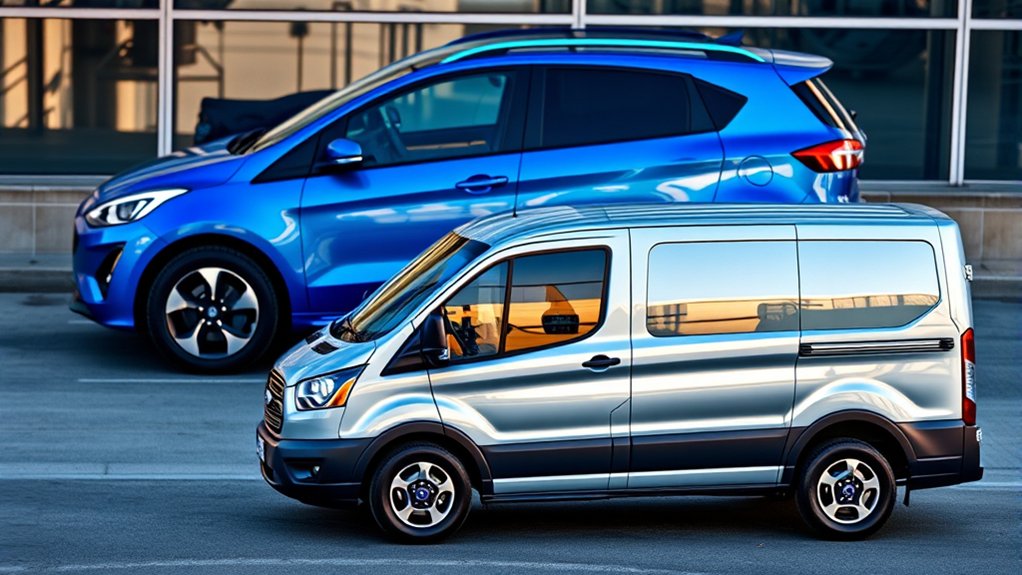
Ford Blue and Ford Pro serve different buyers and different business goals. In this Ford Blue overview, you see Ford Blue focus on retail customers who want cars, SUVs, and trucks for personal use. Ford Pro targets commercial buyers who need fleet tools, telematics, and service uptime.
In Ford Blue vs Pro comparisons, the key variable is ownership model: you buy for family mobility; businesses buy for productivity.
| Category | Ford Blue |
|---|---|
| Buyer | Individual |
| Use case | Personal |
| Sales focus | Retail |
| Support | Consumer |
| Category | Ford Pro |
| Buyer | Business |
| Use case | Fleet |
| Sales focus | Commercial |
| Support | Uptime |
This split helps you match product, pricing, and support to measurable needs.
How Is Ford Blue Upgrading Gas Vehicles?
You can see Ford Blue upgrading gas vehicles by focusing on more efficient engines, improved transmissions, smarter aerodynamics, and added software features that sharpen performance and fuel economy. You get measurable gains because Ford tunes gas engines for higher thermal efficiency and lower friction, while calibration software optimizes throttle response.
- Better power delivery at low rpm
- Improved shift logic for smoother driving
- Reduced drag for stronger highway mpg
- Digital tools that monitor vehicle health
- Lower maintenance cost through fewer wear spikes
You also benefit from broader parts commonality, which can streamline repairs and support more consistent reliability data. In practice, Ford Blue treats each update as an engineering tradeoff: keep combustion vehicles competitive, reduce operating costs, and preserve familiar driving behavior without sacrificing efficiency or usability.
Why Does Ford Blue Still Matter for Drivers?
Those upgrades matter because gas-powered vehicles still make up a large share of what people buy, drive, and maintain. Ford Blue keeps that segment competitive as regulations, fuel prices, and customer expectations shift.
You benefit when Ford invests in efficiency, reliability, and lower ownership costs, because those factors directly affect total cost per mile. Stronger customer satisfaction usually comes from fewer repairs, better service access, and simpler parts availability, which can improve service loyalty over time.
Ford Blue also supports dealer incentives and fleet pricing, helping you see more attractive transaction values in retail and commercial channels. For drivers who still depend on pickups, SUVs, and commuters, Ford Blue matters because it preserves choice while improving the economics of buying, owning, and reselling a conventional vehicle.
Frequently Asked Questions
Does Ford Blue Include Hybrid Models?
Yes, you’ll find hybrid models in Ford Blue’s lineup, and they often pair efficient powertrains with charging features in some variants.
You can compare specs objectively to verify which trims fit your driving needs.
Is Ford Blue a Separate Company Division?
Yes, you can view Ford Blue as a separate division within Ford’s corporate structure, not an independent company.
Ford organizes it to handle internal combustion and hybrid vehicles, while other units focus on EVs and services.
Will Ford Blue Vehicles Remain in Production Long-Term?
Yes, Ford Blue vehicles should remain in production for years, based on current product plans and demand. You should expect Ford Blue implications to favor long term production, especially for profitable trucks, SUVs, and core ICE models.
Does Ford Blue Affect Vehicle Warranties?
Ford Blue generally doesn’t change your Ford warranty; you’ll still get the standard Ford warranty coverage. Charging features stay governed by the vehicle’s separate terms, so you should verify model-specific details in your owner documents.
Can Ford Blue Customers Access EV Charging Features?
Yes, you can access EV charging features if your vehicle and account support them. You’ll see customer access through compatible apps and networks. Data shows availability depends on model, software, and subscription status.
Conclusion
In the end, Ford Blue helps you understand Ford’s quieter, more traditional side: the part that keeps its gas and hybrid vehicles current while the company moves toward electrification. You can think of it as Ford’s way of refining the familiar rather than replacing it overnight.
That approach supports efficiency, steadier performance, and stronger cash flow, which in turn helps fund future EV investments. For you, it means more choice without losing the trucks and SUVs you already know.
Ultimately, Ford Blue represents a balanced strategy that maintains what customers love today while paving the way for tomorrow’s innovations. This is what makes Ford Blue an essential part of Ford’s overall vision.


