What Is Flex Fuel Ford
As an Amazon Associate we earn from qualifying purchases.

A Flex Fuel Ford is a vehicle built to run on gasoline, E85, or a mix of approved ethanol blends. It adjusts fuel delivery automatically based on what’s in the tank. You don’t need to switch settings or change how you drive.
The key question is whether your specific Ford is actually equipped for it. Not every model can use E85, and the answer depends on details that aren’t always obvious.
Key Takeaways
- A Flex Fuel Ford is designed to run on gasoline, E85, or other approved ethanol blends. Its engine and fuel system automatically adjust to different ethanol levels.
- No special driver action or extra equipment is needed to use E85.
- Flex fuel vehicles differ from regular gasoline models by supporting higher ethanol content.
- Check the fuel door, owner’s manual, or VIN to confirm E85 compatibility.
What Is a Flex Fuel Ford?

A Flex Fuel Ford is a Ford vehicle designed to run on more than one type of fuel, typically gasoline, ethanol blends such as E85, or a combination of both. You’ll see this capability built into the engine and fuel system, which changes how the vehicle handles different fuel mixtures.
Ford uses this setup to offer flexibility without asking you to change how you drive. The design implications include compatible materials, calibrated controls, and fuel-management systems that can adapt to varying ethanol content.
From a product standpoint, the marketing angles focus on choice, convenience, and broader fuel options. You get a standard driving experience while the vehicle manages fuel compatibility behind the scenes.
Can Your Ford Use E85?
To know whether your Ford can use E85, check the fuel door label, owner’s manual, or vehicle specifications for a flex-fuel designation. If you see that label, your vehicle has e85 compatibility and can run on gasoline, E85, or any blend in between.
Check the fuel door label or owner’s manual for a flex-fuel designation to confirm E85 compatibility.
If it doesn’t, don’t assume it’s safe; standard engines may not tolerate ethanol-rich fuel well. You should also confirm the model year and trim, because availability varies by vehicle and market.
Using the correct fuel helps support fuel system maintenance and can reduce the risk of corrosion or drivability problems. When in doubt, verify through Ford’s official resources or a dealer before filling up.
That quick check helps you avoid damage and choose the right fuel for your Ford.
How Ford Flex Fuel Engines Use E85
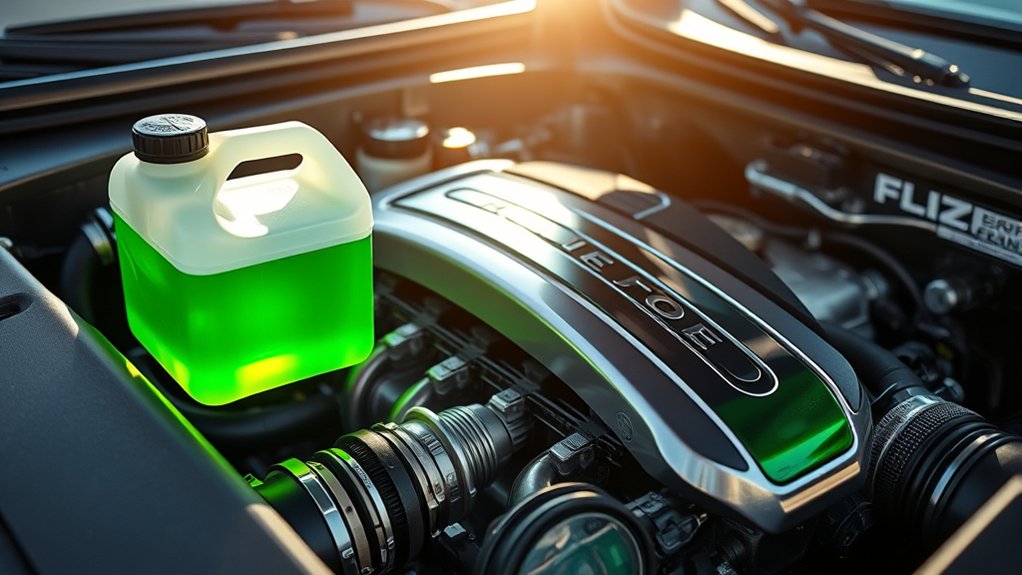
Ford flex-fuel engines adjust automatically when you use E85 by changing how much fuel they inject to match the ethanol blend. You don’t need to switch settings or add equipment because the engine’s sensors read the fuel and help the system deliver the right amount for combustion.
This built-in ethanol compatibility lets you use E85 in supported Ford models without manual changes. The engine management system also monitors air and fuel data to keep operation steady under varying conditions.
As a result, you get flexible performance that adapts to the fuel in the tank while keeping the engine running as designed. The system’s calibration is made for fuel mixtures with high ethanol content, so it can respond quickly and maintain consistent operation across approved blends.
Flex Fuel Ford vs. Regular Gasoline: What Changes?
Compared with regular gasoline, Flex Fuel Ford vehicles are built to handle higher ethanol blends, so the biggest changes happen in how the engine adjusts fuel delivery and manages combustion. You’ll notice the same driving basics, but the system can add more fuel because ethanol contains less energy per gallon than gasoline.
That means your vehicle may use fuel faster on E85, even though it can run on either blend. You gain flexibility tradeoffs: better access to alternative fuel, but potential changes in mileage. Cold starts and throttle response can also vary slightly because ethanol burns differently.
For you, the main advantage is choice, especially when ethanol availability makes E85 easier or cheaper to find than regular gasoline.
Which Ford Models Offer Flex Fuel?

Which Ford models offer flex fuel depends on the model year, trim, and engine, since Ford has equipped certain trucks, SUVs, and sedans with E85-capable engines over time. You’ll most often find flex-fuel options in F-150, Super Duty, Explorer, Expedition, and earlier Taurus and Flex trims, though availability varies by market and year.
To confirm, check the window sticker, owner’s manual, or fuel door for E85 or FFV markings. Flex-fuel Ford vehicles use a modified fuel system and engine calibration to manage gasoline, E85, or any blend in between.
You should verify the specific VIN before assuming a model can use E85, because not every engine in a given lineup is flex-fuel capable.
Frequently Asked Questions
How Can I Tell if My Ford Is Flex Fuel?
You can tell by checking the fuel door, owner’s manual, or VIN for an E85 badge; your engine sound won’t reveal it. Don’t confuse this with an unrelated topic like trim levels.
Does E85 Affect Ford Engine Warranty Coverage?
Yes, E85 can affect your warranty if your Ford isn’t flex-fuel approved. You should check owner guidelines and fuel system checks. Improper use may impact warranty coverage, depending on your specific engine and maintenance.
Where Is the Flex Fuel Badge Located on Ford Vehicles?
You’ll usually find the flex fuel badge on the rear tailgate, trunk lid, or side fender, depending on the model. Use these identification tips: look for “Flex Fuel,” “E85,” or matching fuel-door labels.
Can I Switch Between E85 and Gasoline Anytime?
Yes, you can switch like flipping a light switch, but you should check flex fuel myths and compatibility cautions first.
You’ll need a flex-fuel Ford, and you shouldn’t mix fuels beyond its approved range.
Does Flex Fuel Change Ford Maintenance Intervals?
Yes, flex fuel usually doesn’t change your Ford’s maintenance intervals, but you should follow the owner’s schedule. You’ll still need regular oil changes and inspections.
You should also verify flex fuel maintenance and fuel system compatibility.
Conclusion
If you drive a Flex Fuel Ford, you can think of the engine as a smart fuel translator. It quietly checks the ethanol level in the tank, then adjusts fuel delivery so you can run approved gasoline or E85 without changing a thing.
That flexibility can open up more fueling choices, but you still need to verify your vehicle’s labels first. When you do, you’ll know exactly what your Ford can handle.
Understanding this feature is key to making the most of your Flex Fuel Ford.


