What Is a Ford Ecoboost Engine
As an Amazon Associate we earn from qualifying purchases.
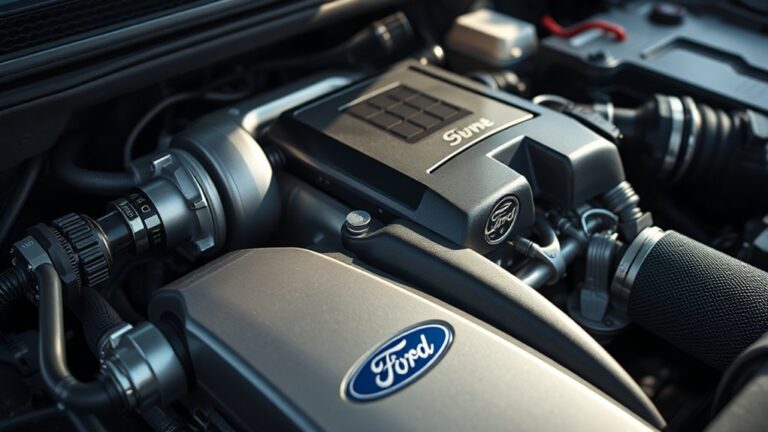
If you’re looking at a Ford EcoBoost engine, you’re seeing a turbocharged, direct-injection gasoline design that lets a smaller engine produce more torque and power than its size suggests.
The Ford EcoBoost engine uses boost, precise fuel delivery, and cooling control to balance performance with efficiency.
That sounds straightforward, but the real trade-offs show up in how it drives, what it costs to maintain, and where it fits in Ford’s lineup.
Understanding these aspects can help you decide if the EcoBoost is the right choice for your needs.
Key Takeaways
- Ford EcoBoost is a turbocharged, direct-injection gasoline engine designed to deliver strong power with better fuel efficiency.
- It uses exhaust-driven turbocharging to force more air into the engine, increasing torque and performance from a smaller displacement.
- EcoBoost engines come in several sizes, from 1.0L three-cylinders to larger V6s, across Ford cars, SUVs, and trucks.
- Direct injection, boost control, and intercooling help improve combustion, responsiveness, and overall efficiency.
- EcoBoost engines balance performance and economy well, but they need proper maintenance and cooling to stay reliable.
What Is a Ford EcoBoost Engine?
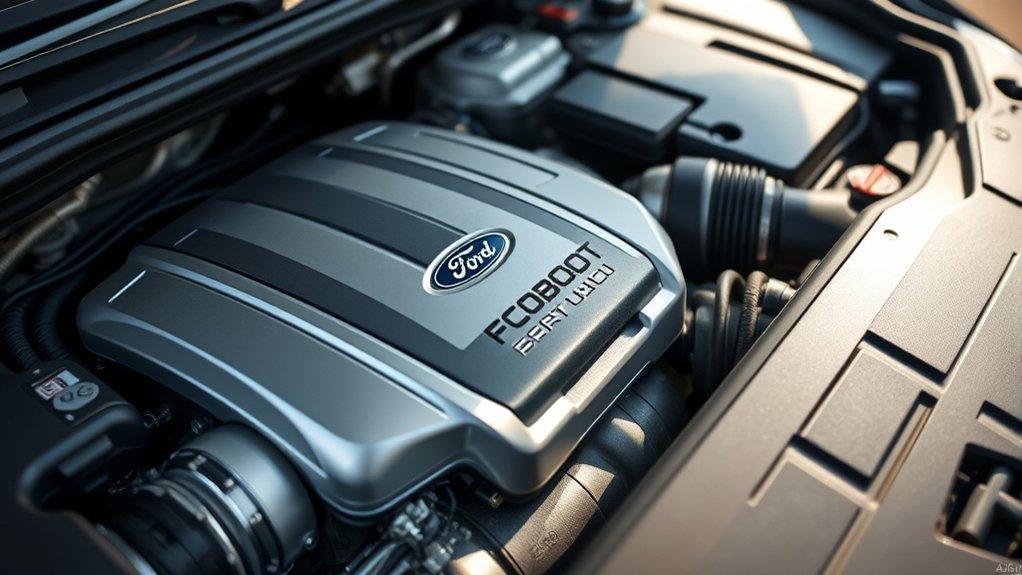
A Ford EcoBoost engine is a turbocharged, direct-injection gasoline engine designed to deliver strong power while improving fuel efficiency compared with a larger naturally aspirated engine. You get a compact powertrain that uses forced induction and precise fuel metering to achieve a high power-to-displacement ratio.
Ford applies the EcoBoost name to several engine sizes, so you may find it in cars, SUVs, and trucks. In operation, you benefit from responsive acceleration, lower pumping losses, and better efficiency than many conventional engines.
However, turbo reliability depends on proper maintenance, oil quality, and cooling practices. If you keep service intervals current, you can expect consistent performance and durability from the system over time.
How EcoBoost Turbocharging Works
EcoBoost turbocharging uses exhaust gas energy to spin a turbine, which drives a compressor that forces more air into the engine. You get denser intake airflow, and that lets the engine burn more fuel efficiently and produce more power from a smaller displacement.
The system regulates boost pressure to balance performance, response, and engine durability.
Turbocharger Basics
How does a Ford EcoBoost turbocharger make a small engine feel bigger? You use exhaust energy to spin a turbine, and that turbine drives a compressor on the same shaft. The compressor pushes more air into the cylinders than atmospheric pressure alone can provide.
With denser intake charge, you can burn more fuel efficiently and make stronger torque from a smaller displacement. Ford uses this approach to help EcoBoost engines stay eco friendly while offering practical diesel alternatives for drivers who want low-end response without diesel hardware.
A wastegate controls turbine speed, so you don’t overboost. Because the system recycles energy that’d otherwise leave through the exhaust, you get performance gains without needing a larger engine block or excessive fuel use.
Boosted Airflow Process
As boost builds, the turbo compressor forces extra air into the intake stream, raising manifold pressure above atmospheric levels. You then see denser charge air enter the cylinders, so Ford can inject more fuel without causing knock.
The intercooler cools that compressed air, increasing oxygen density and helping you maintain stable combustion. Exhaust energy drives the turbine, and the compressor side responds continuously, matching airflow demand across the rev range.
This closed-loop process improves torque delivery while reducing engine size. Ford’s creative design integrates boost control, bypass valves, and direct injection for efficiency and response.
That engineering also strengthens branding impact, because you associate EcoBoost with compact power, quick throttle response, and practical fuel economy.
Why EcoBoost Engines Save Fuel
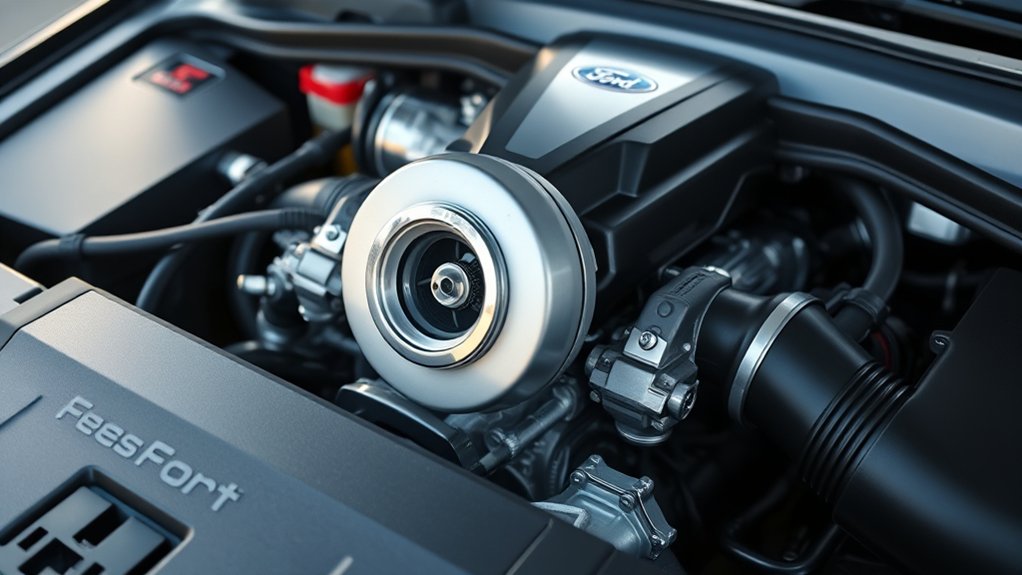
What makes EcoBoost engines save fuel is the way they pair a smaller displacement engine with turbocharging and direct fuel injection, so you get the power you need without burning as much fuel during normal driving. Because you can make more torque from less air and fuel, the engine runs efficiently at light loads.
You also avoid some horsepower myths, since peak output doesn’t mean constant fuel use. In diesel vs. gasoline comparisons, EcoBoost engines still use gasoline, but they close part of the efficiency gap by reducing pumping losses and improving combustion control.
When you cruise or accelerate moderately, the engine can stay in a lower-consumption range, so you waste less energy. That’s why Ford uses EcoBoost for balanced performance and economy.
Common Ford EcoBoost Engine Sizes
Ford EcoBoost engines come in several common sizes, and each one’s tuned for a different balance of power, fuel economy, and packaging. You’ll usually see 1.0-liter three-cylinder, 1.5-liter, 1.6-liter, 2.0-liter, 2.3-liter, and 2.7- or 3.0-liter V6 variants.
Smaller turbocharged engines rely on direct injection and boost to make strong output from low displacement, while larger versions increase airflow and torque capacity. That’s why horsepower myths often miss the point: displacement alone doesn’t determine performance.
You also shouldn’t confuse EcoBoost calibration with diesel misconceptions; gasoline turbo engines deliver torque differently, but they aren’t diesels. In practice, engine size mostly affects response, refinement, and thermal loading, so you can match the engine’s design to your driving priorities more intelligently.
Where EcoBoost Engines Are Used
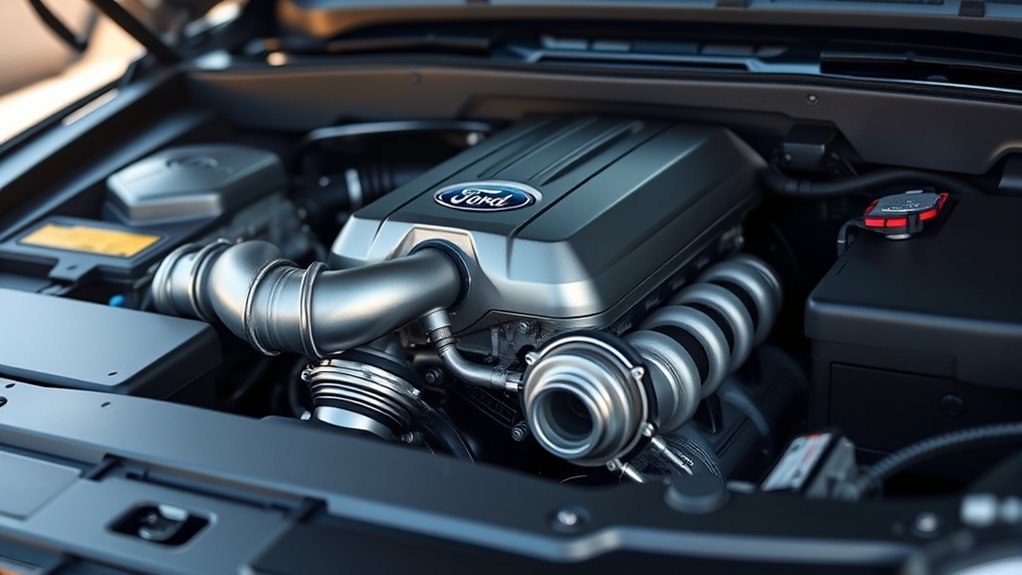
EcoBoost engines show up across a wide range of Ford vehicles, from compact cars and crossovers to full-size trucks and performance models. You’ll find them in the Escape, Explorer, F-150, Bronco, and Mustang, where Ford pairs turbocharging with direct injection for specific duty cycles.
| Vehicle type | Typical use |
|---|---|
| Compact crossover | Commuting |
| Full-size truck | Towing |
| Performance coupe | Track driving |
| Rally-inspired model | Eco friendly rallying |
This placement lets you compare Diesel vs gasoline packaging without changing the basic platform. You’re looking at one engine family adapted to different loads, temperatures, and airflow demands.
In practice, EcoBoost powers daily transport, hauling, and spirited driving while keeping the hardware compact.
Ford EcoBoost Benefits and Trade-Offs
You’ll notice that Ford EcoBoost engines can improve fuel efficiency by using smaller-displacement turbocharged designs to deliver the power you need with less fuel. At the same time, the turbocharging system gives you stronger low-end torque and quicker acceleration than a naturally aspirated engine of similar size.
You should also account for maintenance trade-offs, since turbo hardware, direct injection, and higher operating pressures can increase service complexity and long-term care needs.
Fuel Efficiency Gains
By pairing a small-displacement turbocharged engine with direct injection and variable valve timing, Ford EcoBoost can improve fuel economy compared with a larger naturally aspirated engine making similar power. You get better fuel economy because the engine can stay smaller and operate with lower pumping losses during light-load driving.
Direct injection also helps control combustion more precisely, which can reduce wasted fuel. In everyday use, you may see the biggest gains on highway commutes and steady-speed trips, where the engine doesn’t need much boost.
However, your results depend on driving style, vehicle weight, and transmission tuning. If you accelerate hard often, fuel economy drops quickly. Turbo lag can also influence how you drive, since smooth throttle inputs help the engine remain efficient and avoid unnecessary fuel use.
Turbocharged Performance
Turbocharging gives Ford EcoBoost engines a major performance advantage by forcing more air into the cylinders, which lets a relatively small engine produce output closer to a larger one. You get stronger low-end torque, quicker throttle response, and better passing power without moving to a bigger displacement.
This design helps you balance performance with fuel savings, which matters if you care about eco concerns and want a practical daily driver. Ford tunes these engines to deliver broad power bands, so you can accelerate confidently in city traffic or on the highway.
The trade-off is that turbocharged output can raise insurance costs in some markets, since insurers may associate higher performance with greater risk. Even so, you still gain responsive power in a compact package.
Maintenance Considerations
Maintenance matters with Ford EcoBoost engines because their turbocharged, direct-injection design asks more of the oil, cooling system, and spark plugs than a naturally aspirated engine usually does. You should use the correct oil grade, change it on time, and keep the cooling system at proper levels to protect turbo bearings and control heat soak.
Follow the manufacturer’s service intervals closely, since stretched intervals can create maintenance pitfalls such as carbon buildup, worn plugs, and oil contamination. You’ll also want to inspect charge pipes, intercooler connections, and hoses for leaks, because boost losses reduce efficiency and performance.
If your driving includes towing, short trips, or repeated hard acceleration, shorten inspection cycles. Consistent maintenance helps you preserve reliability, power, and fuel economy.
Is EcoBoost Right for You?
Whether an EcoBoost engine is right for you depends on how you drive and what you expect from your vehicle. If you want strong low-end torque, better fuel efficiency than a larger V8, and responsive passing power, you’ll likely appreciate the eco boost design.
Turbocharging gives you compact-engine performance, but it also increases thermal and mechanical stress, so turbo reliability matters. You should follow the maintenance schedule closely, use the recommended oil, and let the engine warm up before hard acceleration.
If you tow often, commute in traffic, or value a balanced power-to-efficiency ratio, EcoBoost can fit well. If you prefer simpler naturally aspirated engines with fewer turbo components, you may choose differently.
Frequently Asked Questions
How Often Should Ford Ecoboost Engines Be Serviced?
You should service your Ford EcoBoost engine every 5,000 to 7,500 miles, or as your manual specifies. You’ll check oil viscosity, inspect engine timing, and replace filters regularly to prevent wear, overheating, and performance loss.
What Maintenance Does an Ecoboost Turbo Need?
You need clean engine oil changes, quality filters, and proper turbocharger cooling after hard driving. Let it idle briefly, inspect hoses and intercooler connections, check for leaks, and follow prescribed service intervals exactly.
Are Ford Ecoboost Engines Reliable Long Term?
Yes, if you maintain them well, Ford EcoBoost engines can be reliable long term. I’ve seen 150,000-mile examples run strong.
Think of EcoBoost durability like a turbocharged marathoner: Turbo longevity depends on oil changes, cooling, and service.
Can Ecoboost Engines Run on Regular Gas?
Yes, you can usually run your EcoBoost on regular gas, but check your owner’s manual. You’ll want to follow the maintenance schedule and verify regular gas compatibility, because some engines recommend premium for best performance.
What Are Common Ecoboost Engine Problems?
You’ll often see carbon buildup, coolant leaks, turbo failure, and timing chain wear.
Your eco boost reliability depends on strict oil changes, quality fuel, and regular turbo maintenance to prevent overheating, sludge, and boost loss.
Conclusion
So, if you’re weighing a Ford EcoBoost, you’re really balancing power, efficiency, and complexity. You get turbocharged torque, direct injection, and better fuel economy from a smaller engine—but the real question is how well that fits your driving.
If you maintain it properly and drive it within its design, EcoBoost can deliver a lot. If you ignore it, the hidden costs can surface fast.
The decision, then, isn’t simple—it’s mechanical, especially when considering a Ford EcoBoost engine.


