What Is a Ford Coyote Engine
As an Amazon Associate we earn from qualifying purchases.
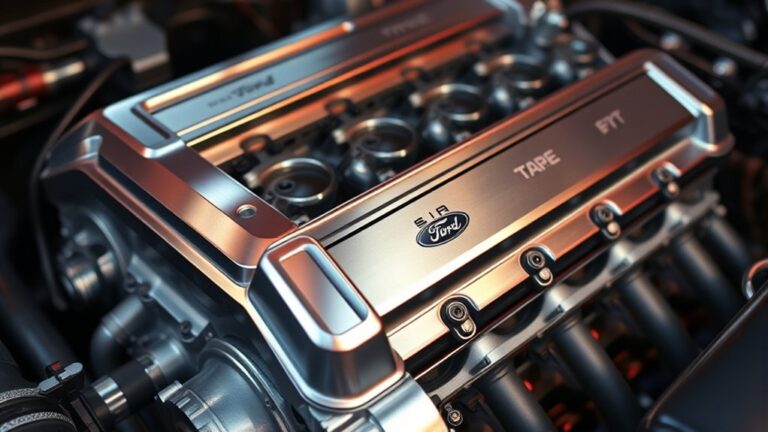
If you’re looking for a little more muscle under the hood, you’re probably talking about Ford’s Coyote engine. This powerhouse is Ford’s 5.0-liter naturally aspirated V8, designed to deliver impressive performance and reliability.
It features dual overhead cams, four valves per cylinder, and variable cam timing to balance power with drivability. You’ll find it in Mustangs and F-150s, where it’s earned a reputation for strong output and durability.
The details behind its generations and tuning potential get more interesting from here.
Key Takeaways
- The Ford Coyote engine is a modern 5.0-liter naturally aspirated V8 used in Mustangs, F-150s, and other Ford vehicles.
- It uses dual overhead camshafts, four valves per cylinder, and variable cam timing for strong airflow and broad power.
- Ford designed it to balance horsepower, torque, reliability, and everyday drivability.
- Coyote generations improved intake, cylinder heads, valve timing, and later added direct injection for better efficiency and output.
- Popular upgrades include intakes, tunes, exhausts, headers, and superchargers for much higher performance.
What Is a Ford Coyote Engine?
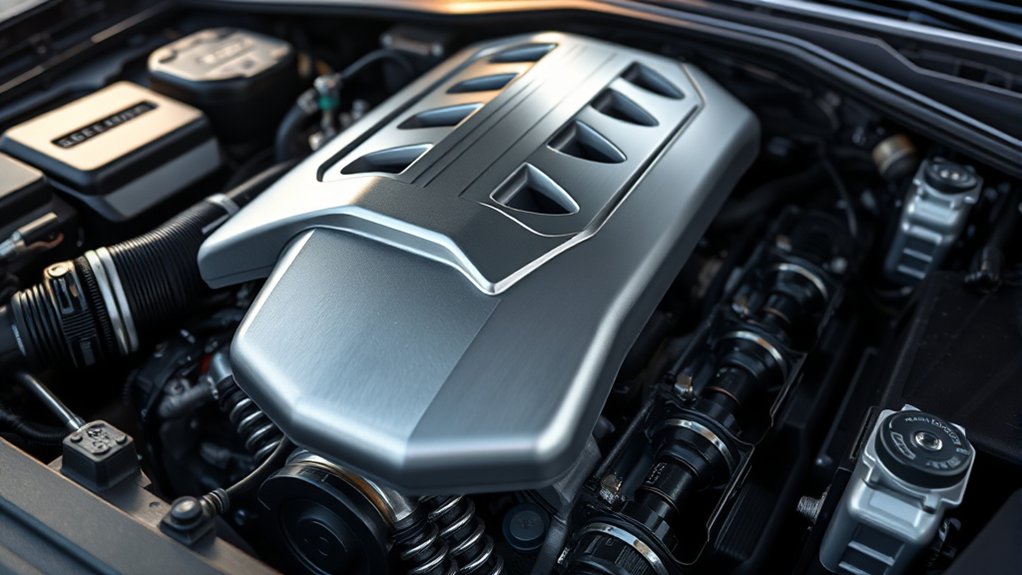
The Ford Coyote engine is Ford’s modern 5.0-liter naturally aspirated V8, designed for strong horsepower, broad torque, and everyday reliability. You’ll find it in Mustang, F-150, and other Ford performance and truck applications.
It pairs a compact aluminum block with overhead cam hardware, giving you a responsive, high-revving package that balances power and durability. Ford tuned it to improve engine reliability under heat, load, and long-mile use, while also helping fuel efficiency through better airflow management and reduced internal friction.
You get a versatile V8 that works for street driving, towing, and track use without forcing you into forced induction. In short, the Coyote is Ford’s core modern V8 platform, built to deliver usable power with proven service life.
How Ford’s DOHC V8 Makes Power?
At its core, Ford’s DOHC Coyote V8 makes power by combining dual overhead camshafts, four valves per cylinder, and variable cam timing to move air efficiently through the engine at both low and high rpm. You get strong cylinder filling because the intake and exhaust paths breathe freely, and the cam timing shifts to match load and speed. That design helps throttle response and supports broad torque without sacrificing top-end output.
| Feature | Effect |
|---|---|
| DOHC layout | Better valve control |
| Four valves | Improved airflow |
| Variable cam timing | Wider powerband |
You also benefit from engine reliability because the design manages heat and airflow well. Maintenance costs can stay reasonable, but regular oil changes and clean filters matter if you want it to keep performing properly.
Ford Coyote Specs and Generations
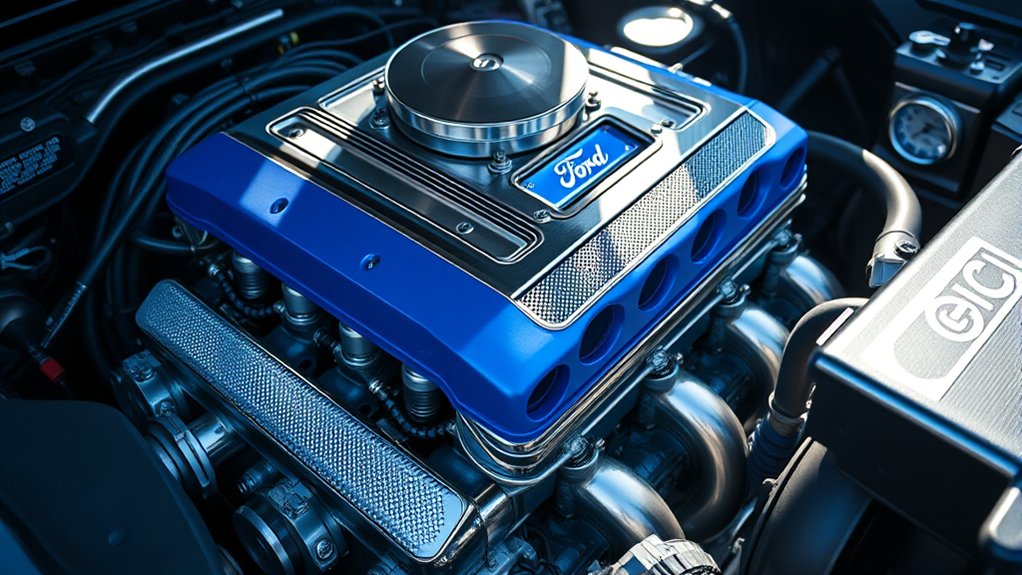
Ford Coyote specs vary by generation, but the engine has stayed true to a 5.0-liter V8 layout with aluminum block and heads, DOHC architecture, and four valves per cylinder. If you’re asking what is a Ford Coyote engine, you’re looking at a modular small-block design refined across several generations.
Ford Coyote specs vary by generation, but the engine remains a refined 5.0-liter DOHC V8 with aluminum construction.
Early versions used fixed cam timing, while later generations added dual independent variable cam timing and stronger internals. You’ll notice each update focuses on airflow, durability, and calibration.
- Gen 1: introduced the modern 5.0-liter formula.
- Gen 2: improved intake, heads, and valve timing.
- Gen 3 and newer: boosted efficiency and output with direct injection.
These generations define the Ford Coyote specs you compare today.
Why It’s So Popular in Mustangs and Trucks
What makes the Coyote such a favorite in Mustangs and trucks is its mix of high-revving power, modern efficiency, and strong aftermarket support. You get broad torque, crisp throttle response, and a design that fits both street cars and work rigs.
Ford durability helps it handle daily use, towing, and spirited driving without drama. In Mustang culture, it delivers the sound, rpm range, and V8 character enthusiasts expect.
| Benefit | Mustang | Truck |
|---|---|---|
| Power delivery | Quick acceleration | Strong towing pull |
| Packaging | Fits performance setups | Fits full-size bays |
| Appeal | Deeply rooted | Broad owner demand |
You also benefit from factory calibration that balances emissions, economy, and output. That makes the Coyote easy to live with and hard to ignore.
Common Coyote Mods and Upgrades
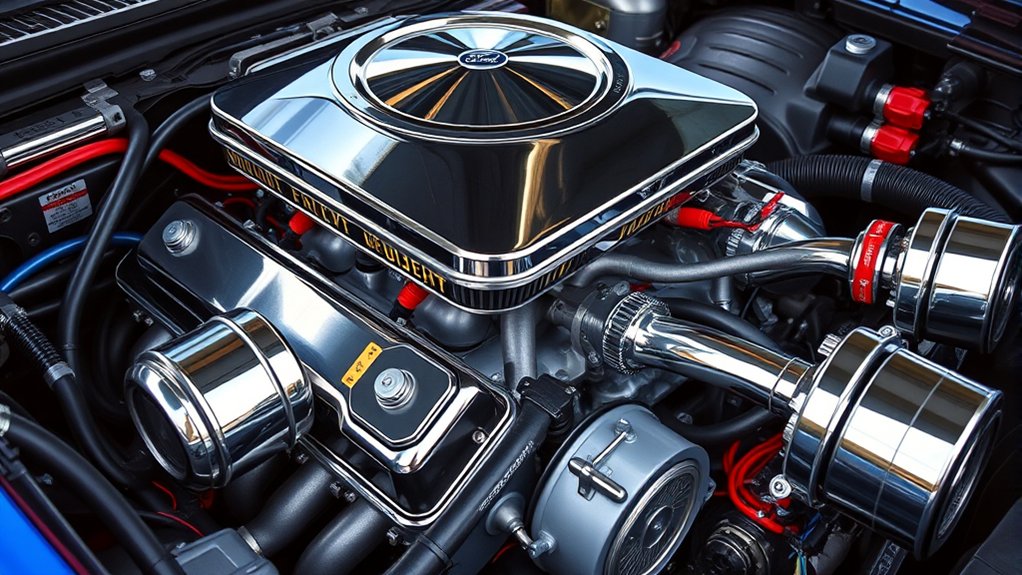
Common Coyote mods usually start with intake, tune, and exhaust upgrades because they sharpen throttle response and help the engine breathe better. You can then target the factory calibration to match higher airflow and fuel demand. A quality tune also optimizes variable valve timing, so you get stronger midrange torque and cleaner power delivery.
Intake, tune, and exhaust mods wake up the Coyote with sharper response, better breathing, and stronger midrange pull.
- Cold air intake: lowers restriction and supports more airflow.
- Headers and cat-back exhaust: reduce backpressure and improve sound.
- Cam, supercharger, or turbo kit: pushes turbocharging performance and raises output significantly.
If you’re planning bigger power, upgrade fuel injectors, pumps, and cooling first. That keeps the engine reliable when you add boost, higher rpm, or repeated track use.
Frequently Asked Questions
What Vehicles Originally Came With the Coyote Engine?
You’ll find the Ford Coyote engine originally in 2011+ Mustang GTs, 2011+ F-150s, and 2018+ Mustang Bullitt and Mach 1 models. Ford Coyote engine history shows factory applications compatibility across these platforms.
How Much Does a Coyote Engine Weigh?
You’ll typically find a Coyote engine weighs about 430 to 450 pounds dressed. That weight affects weight and fuel economy, so you should track maintenance schedules and common failures to keep it reliable.
What Fuel Octane Does a Coyote Engine Require?
You’ll usually run 87 octane in a stock Coyote, though 91–93 fuel octane helps with performance and knock resistance.
For tuning considerations, follow your calibration, compression, and boost level, not just the badge.
Can a Coyote Engine Be Swapped Into Older Ford Models?
Yes, you can swap one into older Ford models, though you’ll need engine swaps know-how and wiring work.
Don’t worry about fuel octane requirements yet; focus on mounts, transmission fitment, cooling, and ECU integration first.
What Are Common Coyote Engine Reliability Issues?
Common issues include oil consumption, cam phaser noise, and occasional timing chain wear. You should monitor oil level, use quality filters, and follow maintenance tips: change oil on schedule, inspect plugs, and address leaks early.
Conclusion
If you’re trying to sum up the Ford Coyote engine, think of it as Ford’s high-revving, durable 5.0-liter DOHC V8 that balances power, efficiency, and everyday drivability. You get strong naturally aspirated performance, especially in a Mustang or F-150.
For example, a stock Gen 3 Coyote can deliver impressive output without major work, while basic intake and tune upgrades can sharpen throttle response and add more usable power.
Overall, the Ford Coyote engine stands out as a versatile and reliable choice for enthusiasts seeking a blend of performance and practicality.


