What Does f150 Mean
As an Amazon Associate we earn from qualifying purchases.
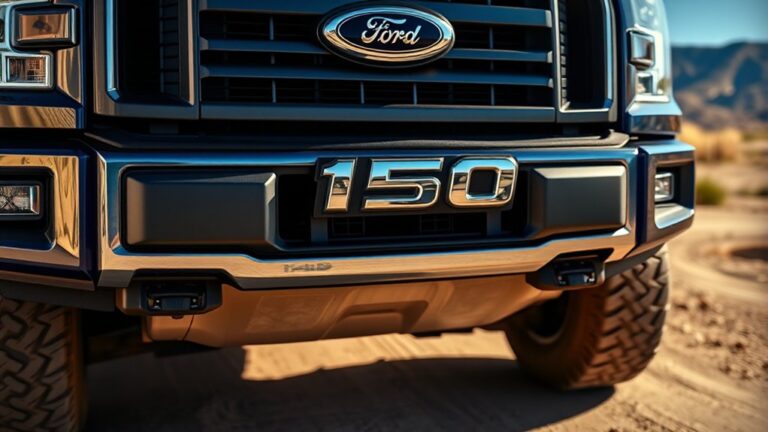
The F-150 name can seem bigger than the truck itself until you realize it’s actually Ford’s shorthand for its light-duty pickup line. The term “F150” represents the “F” for the F-Series family and “150” for its half-ton class position, not engine size or horsepower.
That label tells you where it fits in Ford’s lineup, and there’s more behind it than most buyers expect. Understanding what F150 means helps clarify its role among Ford trucks.
Key Takeaways
- “F” means Ford’s truck family, and “150” identifies a specific model within the F-Series lineup.
- The name signals a light-duty pickup, historically Ford’s standard half-ton-style truck.
- “150” does not mean engine size, horsepower, trim level, or luxury grade.
- The F-150 sits as Ford’s core full-size pickup, between smaller trucks and Super Duty models.
- The badge reflects Ford’s practical naming system, built for clear model identification and long-term continuity.
What Does F-150 Mean?
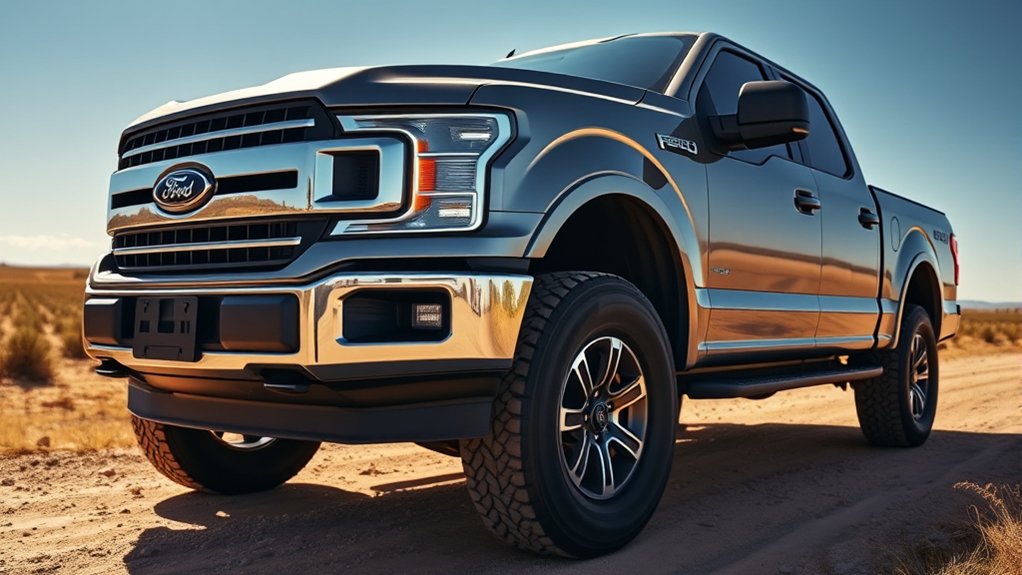
If you’ve ever wondered what “F-150” means, the name is simple but specific: the “F” identifies Ford’s truck line, while “150” is part of the model designation that places it within Ford’s F-Series lineup. You can read it as a product label, not a hidden code.
In practical terms, the badge tells you you’re looking at a pickup built within Ford’s broader truck family. The naming also reflects creative branding, because it gives the truck a clear identity that’s easy to recognize.
Some historical trivia adds context: Ford has used F-Series names for decades, so the designation carries continuity as well as familiarity. When you see F-150, you’re seeing a model name that signals lineage, market position, and brand consistency all at once.
Where Did the F-150 Name Come From?
The F-150 name comes from Ford’s long-running F-Series truck lineup, which began with a simple numerical system to distinguish one model from another. You can trace the name to Ford’s postwar pickup strategy, when the company used “F” to identify its truck line and added numbers to separate sizes and capability levels.
Over time, the F-150 became the standout badge for a specific light-duty model, and its abstracted design helped the name feel straightforward and durable. You’re looking at a label shaped by practical product organization rather than flashy rival branding.
That simplicity gave Ford room to build a recognizable identity around the truck, while the number itself signaled a distinct place in the lineup.
How Ford’s F-Series Naming Works
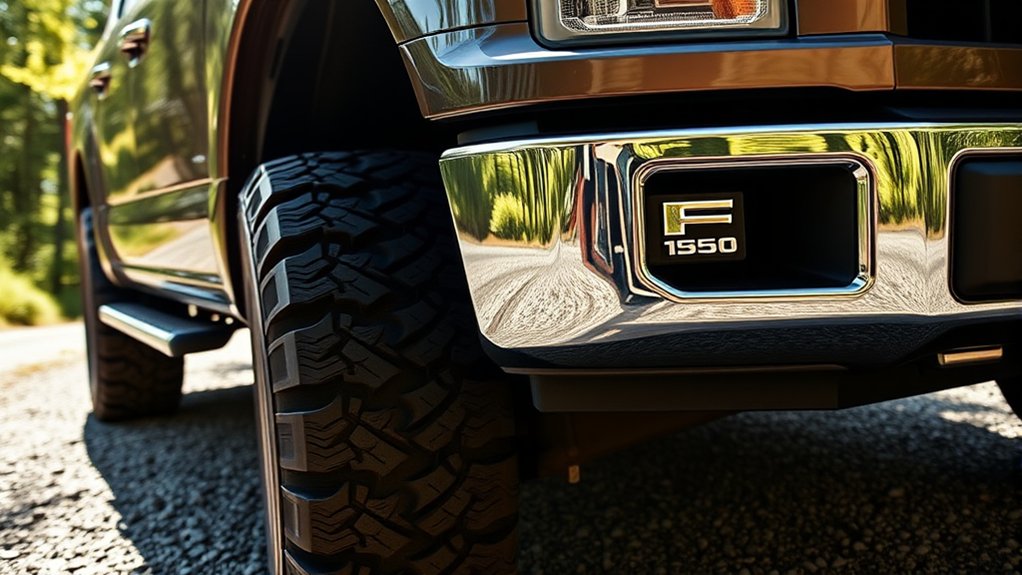
Ford’s F-Series naming system uses the “F” to identify the truck family and a number to show the model’s size, payload, and role within that lineup. When you look at the full range, you’ll see the number helps distinguish lighter-duty and heavier-duty versions without changing the core F-Series identity.
That structure lets Ford organize trucks for different jobs, from everyday use to demanding work applications. You can think of it as a practical label rather than a marketing phrase.
In two word discussion ideas, the name also fits broader naming logic across vehicles, though that’s an unrelated topic. For you, the key point is simple: the badge communicates where the truck sits in the lineup and how Ford groups its models for buyers.
What Does the “150” Number Mean?
While the “F” tells you the truck belongs to Ford’s F-Series, the “150” narrows down its position within that lineup. You can think of “150” as a model designation that historically signals a light-duty pickup in Ford’s naming system.
It doesn’t describe engine size, tow rating, or cab style by itself. Instead, it helps you identify the truck’s general class and compare it with other F-Series models.
If you’re looking for two word discussion ideas, the number can prompt questions about payload, trim levels, and intended use. Subtopic not relevant details like exact option packages belong elsewhere.
For now, focus on the fact that “150” marks the truck as a standard half-ton-style F-Series entry, which is why the name has stayed familiar for decades.
How the F-150 Fits Ford’s Truck Lineup
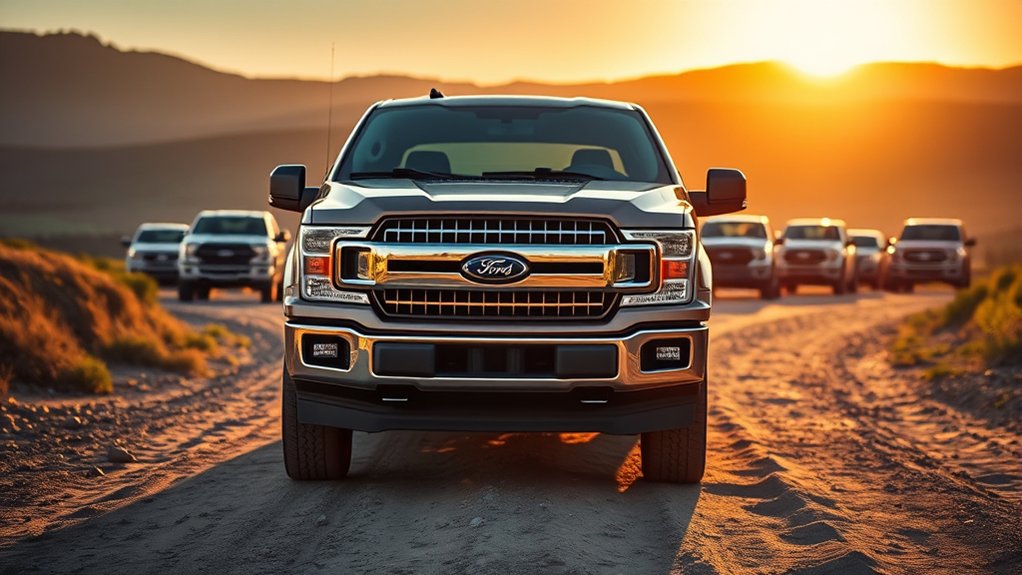
At the center of Ford’s truck range, the F-150 serves as the brand’s core full-size pickup, sitting above smaller compact or midsize trucks and below heavier-duty Super Duty models. You can choose it for daily driving, jobsite use, towing, or family hauling, because Ford positions it as a versatile balance of capability and comfort.
The lineup spans basic work trucks to well-equipped trims with luxury features, advanced technology, and premium materials. That broad range lets you match equipment to budget and needs, whether you care about payload, cabin refinement, or resale value.
Financing also matters, since interest rates can affect your monthly payment and overall ownership cost. In Ford’s lineup, the F-150 remains the mainstream truck most buyers consider first.
F-150 vs. Other Ford Trucks
When you compare the F-150 with other Ford trucks, you’ll notice clear differences in payload, towing, size, and overall capability. You can also see how trim levels and engine options shift the truck’s performance and comfort for different jobs.
That comparison helps you match the right Ford truck to your needs.
Payload And Towing
If you’re comparing Ford trucks by capability, the F-150 usually stands out as the light-duty benchmark for payload and towing, with ratings that vary by cab, bed, engine, drivetrain, and axle ratio. You’ll typically find it suited to everyday hauling, trailers, boats, and work gear without moving into heavier truck classes.
That’s why speculation myths about the name often miss the point: it’s not a secret code for size, but a model designation within Ford’s lineup. Branding trivia aside, you should check the exact sticker for your configuration, because payload and tow figures change with equipment.
Compared with Super Duty trucks, the F-150 generally offers less maximum capacity, but it can still deliver strong, practical performance for most jobs.
Size And Capability
In size and capability, the F-150 sits below Ford’s Super Duty models, but it’s still a full-size truck with enough strength for most daily work and recreation. You get a lighter, more maneuverable truck than an F-250 or F-350, which can make parking, commuting, and tight job sites easier.
At the same time, the F-150 gives you a larger cab and bed footprint than smaller Ford trucks, so you can carry passengers and cargo without feeling cramped. That balance makes it a practical choice when you need utility without the bulk of heavier trucks.
If you’re comparing models, think of two word discussion ideas like size range and work balance, not an unrelated topic pair. The F-150’s role is versatility, not maximum-duty specialization.
Trim And Engine Options
Trim choices and engine options help show where the F-150 sits between Ford’s smaller trucks and its heavier-duty models. You can pick work-focused trims or upscale versions with more comfort, tech, and towing aids.
Ford pairs the F-150 with engines that range from efficient V6 choices to stronger turbocharged and hybrid setups, so you can match power to your needs. Compared with Ranger models, you get more payload, towing, and drivetrain innovations.
Compared with Super Duty trucks, you sacrifice some extreme hauling ability, but you gain easier daily use and broader efficiency. Cab configurations also matter: regular, SuperCab, and SuperCrew setups let you choose between cargo space and passenger room.
That flexibility helps define why the F-150 remains Ford’s balanced full-size pickup.
How the F-150 Became Ford’s Best-Selling Truck
You can see the F-150’s rise through Ford’s steady truck evolution, which improved durability, capability, and everyday usefulness over time.
As Ford refined engines, payload capacity, and cabin comfort, the truck became more appealing to both workers and families. That mix of power and practicality helped the F-150 build lasting popularity and secure its place as Ford’s best-selling truck.
Early Truck Evolution
Ford didn’t arrive at the F-150 badge by accident; it earned that status through decades of steady truck development, changing customer needs, and smarter engineering. You can trace its early evolution from simple pickups built to haul tools, crops, and materials into more capable trucks with stronger frames and better cab options.
Ford kept refining size, payload, and comfort so you could use one vehicle for work and daily driving. That progress mattered more than any unrelated topic or random idea, because buyers wanted practical upgrades, not novelty.
Each redesign responded to real tasks, tighter regulations, and competition from other brands. Over time, those improvements helped Ford create a truck line people trusted, setting the stage for the F-150’s long-term success.
Power And Popularity
Power, durability, and everyday usefulness pushed the F-150 into a class of its own, helping it grow from a capable work truck into Ford’s best-selling model. You can see why buyers kept returning: strong engines, useful towing capacity, and a cabin that steadily improved made it practical for both job sites and family use.
Ford also benefited from a wide dealer network, so you didn’t have to deal with frustrating bureaucracy when you needed parts or service. Over time, the truck earned a reputation for unexpected reliability, which strengthened loyalty across generations.
As demand grew, Ford refined the F-150 with better efficiency, comfort, and technology, keeping it relevant while preserving the toughness that made it popular in the first place.
Common Misconceptions About the F-150
One common misconception about the F-150 is that the “150” refers to engine size, horsepower, or a specific trim level. It actually comes from Ford’s truck naming history and has long identified a half-ton pickup in the F-Series lineup.
You can also hear claims that the number tracks engine design, yet Ford never used it that way.
| Misconception | Clarification |
|---|---|
| “150” is engine size | It isn’t. |
| “150” shows horsepower | It doesn’t. |
| “150” is a trim name | It’s not. |
| F-150 is a luxury model | Interior materials vary by trim. |
| The badge changes the truck class | The naming convention does. |
When you see the badge, focus on the model’s place in Ford history, not myths.
What the F-150 Means for Buyers Today
For buyers today, the F-150 badge tells you you’re looking at Ford’s full-size pickup benchmark, not a code for engine size or luxury level. You’re choosing a truck known for capability, trim variety, and broad configuration options, so you can match it to work, family, or weekend use.
The name also signals a platform that balances towing strength, payload, and everyday comfort better than many rivals. If you care about design aesthetics, you’ll find styles from basic utility to upscale finishes. If fuel efficiency matters, newer powertrains and hybrid choices can help lower running costs.
In short, the F-150 means practicality with flexibility, and that’s why it remains a reference point for truck shoppers.
Frequently Asked Questions
Is the F-150 Name Used in Other Countries?
Yes, you’ll find the F-150 name in many countries through global branding, though market availability varies.
You can’t always buy the same version everywhere, because Ford tailors trims, engines, and regulations to local markets.
Has the F-150 Number Ever Changed?
Yes, you’ll find the F-150 number hasn’t dramatically changed; Ford has kept it for branding evolution, with occasional badge typography updates.
You can trace the same core designation across generations, despite styling revisions.
What Does the F-150 Badge Look Like?
You’ll see an F-150 badge as a rectangular emblem, usually bold block lettering in chrome, black, or red colorways. Badge placement varies by hood vs. door placement, and emblem history affects badge size and font style, plus aftermarket mods.
Are There Electric Versions of the F-150?
Yes, you can buy electric versions of the F-150, like the F-150 Lightning. You’ll get an electric pickup with battery options, strong towing capability, and fast charging, depending on the trim you choose.
Which F-150 Model Year Was the First?
You’d start with 1975: the F-150 first appeared then. Yet the lineup traces back to 1948 F-Series roots, with First Generation milestones and Naming conventions showing how Ford evolved its half-ton trucks.
Conclusion
So, when you see F-150, you’re not looking at engine size or a random badge—you’re seeing Ford’s clear way of placing this truck in its lineup.
By coincidence, the name is simple enough to remember and specific enough to matter, which is why it’s stuck for so long.
If you’re comparing trucks, that little “150” quickly tells you you’re looking at Ford’s half-ton workhorse built for everyday use.
Ultimately, understanding what F150 means helps you recognize the truck’s role and capability in Ford’s lineup.


