What Do You Need to e85 Tune a 5.0 f150
As an Amazon Associate we earn from qualifying purchases.
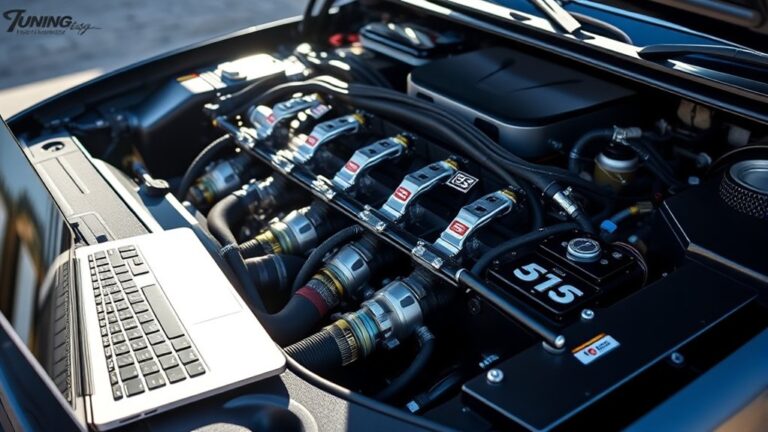
If your 2018 F-150 5.0 starts surging after an E85 flash, you’re likely missing a fuel-system check before the tune.
To properly E85 tune a 5.0 F150, you need to confirm model-year compatibility and verify ethanol-rated seals, hoses, rails, and tank components.
Make sure the pump and injectors can supply the extra volume required by E85.
From there, the right calibration, ethanol-content test, and datalogging setup determine whether the truck runs clean or falls short.
Proper preparation and tuning ensure your F-150 performs reliably on E85 without issues like surging or poor drivability.
Key Takeaways
- Confirm your 5.0 F-150 is E85-compatible by checking the owner’s manual, VIN data, and current fuel-system calibration.
- Inspect the fuel system for ethanol-safe components, including tank, lines, seals, rails, fittings, and filter media.
- Upgrade weak fuel parts as needed, especially the in-tank pump, injectors, hoses, and fittings for E85 flow demand.
- Use a tuner or custom calibration that matches your hardware, fuel pressure, and the truck’s exact ethanol content.
- Log data with a wideband O2 sensor and monitor trims, lambda, and fuel pressure for safe, accurate tuning.
Can Your 5.0 F150 Run E85?
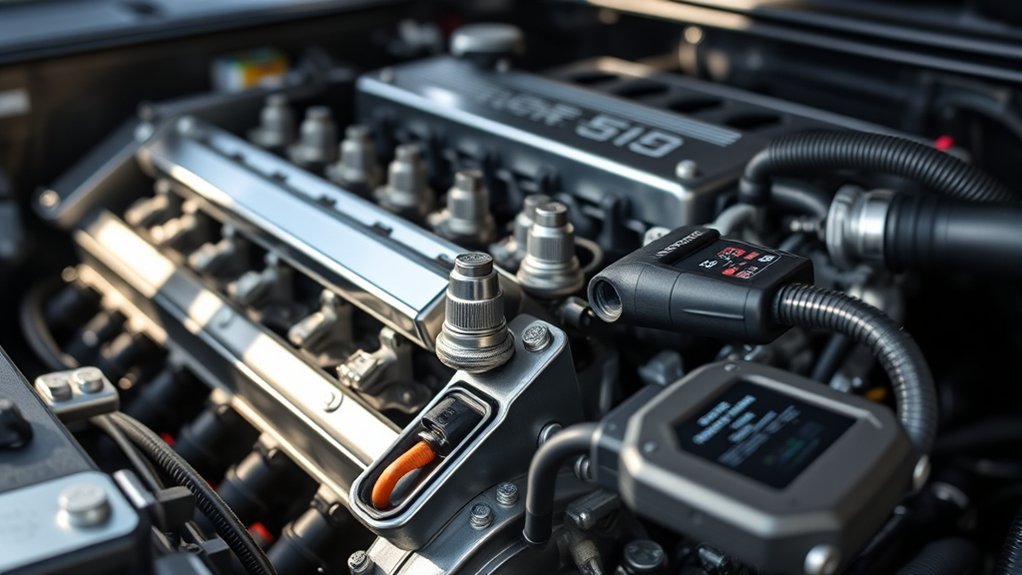
Before you tune for E85, you need to confirm that your 5.0 F-150 can safely support it. Start by checking the model year, factory fuel components, and current calibration. You should verify can e85 compatibility through the owner’s manual, VIN-specific data, or a reliable tuner.
E85 demands roughly 30% more fuel volume than gasoline, so your truck must have enough injector and pump capacity to maintain commanded air-fuel ratios under load. If you see hard-starts, lean trims, or fuel pressure drop, you may need fuel system upgrades before proceeding.
Also inspect hoses, seals, and filters for ethanol resistance. A proper diagnosis now prevents drivability issues, detonation, and costly damage after the tune.
Check Fuel System Compatibility First
Start by confirming your fuel system can handle E85’s higher volume demand. You need to check compatibility before tuning, because ethanol can expose weak seals, corroded metals, and aged rubber.
Confirm your fuel system can handle E85’s higher demand before tuning to avoid ethanol-related damage and compatibility issues.
Inspect the tank, rails, rails fittings, and factory lines for ethanol-safe materials, then verify components against Ford’s specs. If you see swelling, cracking, or discoloration, don’t proceed until you resolve it.
Also confirm the fuel filter media is rated for alcohol blends and that the return or returnless setup matches your truck’s calibration.
Identify ethanol-rated seals and hoses
Inspect aluminum, steel, and plastic parts
Verify component part numbers
Document any wear before tuning
Upgrade the Pump, Injectors, and Lines
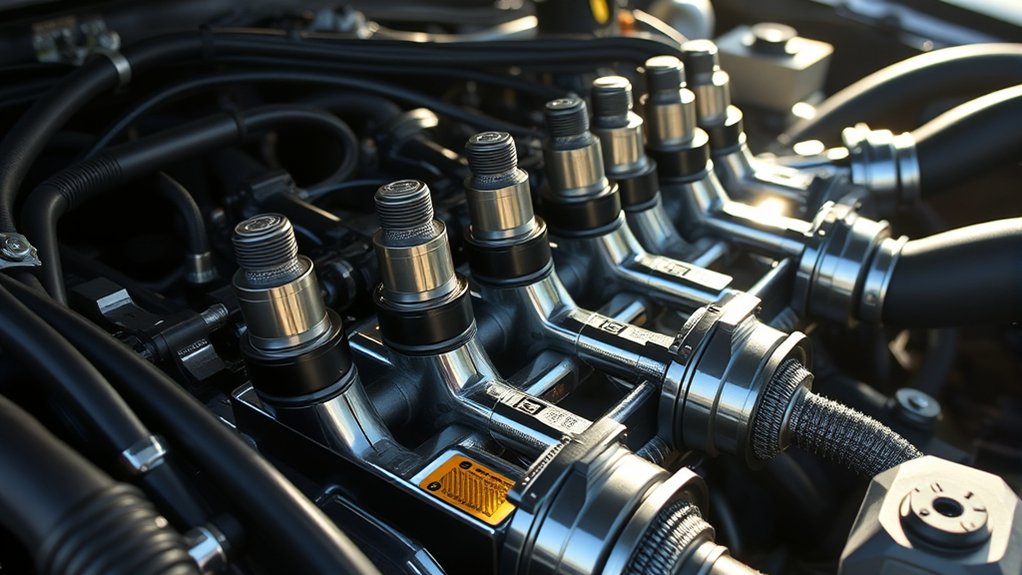
Next, you need to size the fuel system for E85’s higher flow demand, because ethanol requires roughly 30% more volume than gasoline. Upgrade the in-tank pump first, then verify injector sizing for your target horsepower and duty cycle. Don’t assume stock parts will cope with sustained ethanol flow.
Check upgrade compatibility before you buy anything, especially if you’re mixing OEM rails, aftermarket injectors, and return-style components.
| Component | Action |
|---|---|
| Pump | Install a higher-flow unit |
| Injectors | Match flow to ethanol demand |
| Lines | Use ethanol-safe hose |
Replace restrictive lines with ethanol-rated hose and fittings to prevent swelling, softening, and pressure loss. Confirm every part shares the same fuel pressure and connector spec, so the system works as one calibrated package.
Pick the Right E85 Tune and Tools
Once your fuel system can support E85 volume, you need a tune that matches the calibration, hardware, and octane behavior of ethanol. You should choose a proven E85 file or custom calibration that accounts for injector scaling, fuel tables, and cold-start enrichment. Use reliable tools so you can verify ethanol content, commanded lambda, and fuel trims during setup.
A handheld tuner or software suite with 5.0 F-150 support
A wideband O2 sensor for accurate air-fuel checks
An ethanol content tester to confirm blend consistency
Data-logging software for tuning considerations and ethanol compatibility
You’ll avoid drivability issues when your tune reflects your truck’s exact parts and fuel blend. Follow the tuner’s revision process, and keep your logs organized for quick corrections.
Understand the Power Limits on E85
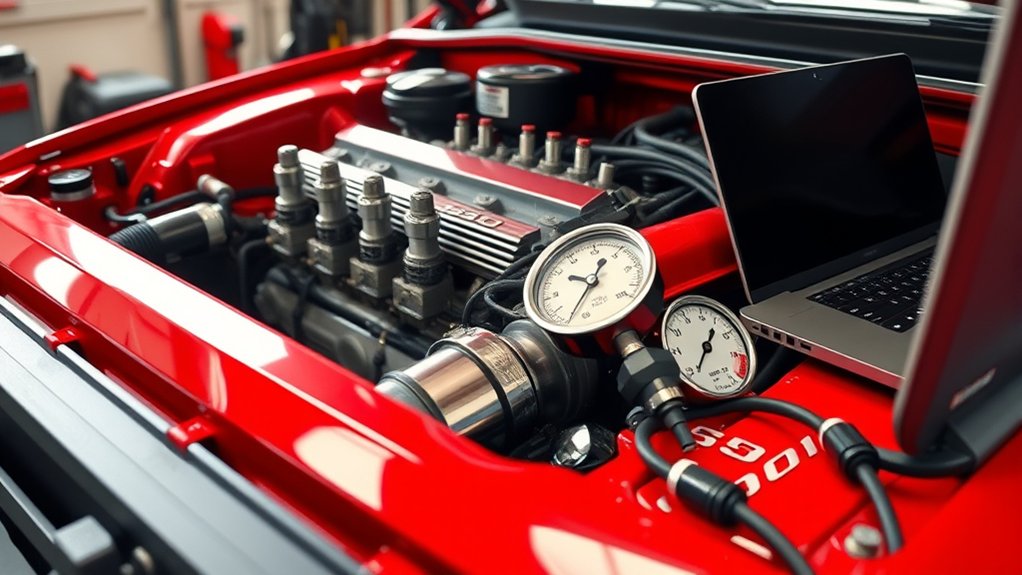
How much power can E85 really support? In your 5.0 F-150, the answer depends on fuel system capacity, boost, ignition timing, and the tune itself. E85’s higher octane and charge cooling let you add power safely, but only if you maintain proper fuel pressure and injector duty cycle.
Don’t fall for tuning misconceptions that E85 automatically fixes every limitation. You still need enough pump volume, and the actual ethanol content matters because seasonal blends vary. If ethanol content drops, knock resistance and commanded fueling shift too.
Watch wideband data, fuel trims, and lambda under load. For stock hardware, E85 can support strong gains; for boosted setups, you may need upgrades before you reach the fuel’s full potential.
Frequently Asked Questions
How Often Should I Retune for Seasonal Ethanol Changes?
You usually won’t need a full retune often; verify seasonal ethanol changes every fill-up, and adjust tuning frequency only if fuel trims, knock, or lambda drift beyond safe limits during wide-open throttle.
Can I Switch Between E85 and Gasoline Safely?
Yes, you can switch, but only if you’ve tuned correctly; incompatible mixtures can skew fueling and cause fuel system corrosion.
You’ll need a flex-fuel setup or separate tune, and you shouldn’t blend fuels casually.
Will Cold Starts Be Worse on E85?
Yes, you’ll usually notice worse cold starts on E85 because ethanol vaporizes poorly in cold weather.
You may face cold start challenges, and ethanol content variability can make startup fueling less consistent than gasoline.
Do I Need a Larger Fuel Tank for E85?
No, you don’t need a larger fuel tank for E85; you need enough tank capacity for your range.
Coincidentally, tuning considerations matter more: E85 burns faster, so plan more frequent fill-ups.
How Do I Test Actual Ethanol Content at the Pump?
Use a handheld ethanol tester or test tube with water, then sample pump fuel and read the separation. You’ll get accurate ethanol measurement, and this testing method quickly confirms if the blend matches E85.
Conclusion
To run E85 on your 5.0 F-150, you’ve got to verify model-year support, confirm ethanol-safe fuel parts, and make sure your pump, injectors, and lines can keep up.
With the right tune, ethanol-content testing, and wideband and datalogging feedback, you can dial in safe lambda and fuel trims.
Do it right, and your truck pulls like a storm front rolling in—hard, clean, and controlled—without pushing the fuel system past its limits. To achieve this level of performance, mastering what you need to E85 tune a 5.0 F-150 is essential.


