What Causes Ford Transit Connect Van to Down Shift Hard
As an Amazon Associate we earn from qualifying purchases.

If your Ford Transit Connect van experiences hard downshifting, it’s usually due to a control or hydraulic issue rather than normal wear. Common causes include low or contaminated transmission fluid, a faulty shift solenoid, or a malfunctioning speed or throttle sensor.
A brake switch signal problem can also trigger abrupt gear changes. Additionally, a worn valve body or outdated TCM (Transmission Control Module) calibration may worsen the issue.
The next step is to identify which input is causing the transmission to downshift hard incorrectly. Narrowing down the source will help in diagnosing and fixing the problem effectively.
Key Takeaways
- Low, burnt, or contaminated transmission fluid can cause harsh downshifts by reducing hydraulic pressure and shift control.
- Faulty shift solenoids or a sticking valve body can delay gear changes and make downshifts feel abrupt.
- Bad speed, throttle, or brake switch signals can confuse the TCM and trigger an early or hard downshift.
- Miscalibrated or outdated transmission software can command incorrect line pressure and shift timing.
- Engine issues, worn clutches, or damaged mounts can mimic transmission problems and worsen downshift behavior.
What Causes a Ford Transit Connect to Downshift Hard?

A hard downshift in a Ford Transit Connect usually points to a transmission control issue, low or contaminated fluid, or excessive wear in the valve body, solenoids, or internal clutch packs. You may also see harsh gear changes when the transmission control module misreads throttle, speed, or load signals and commands excessive line pressure.
Faulty shift strategy, sticking valves, or worn adaptive components can amplify the jolt. If the van downshifts sharply only under deceleration, suspect pressure control faults or sensor input errors. Diagnose stored codes, monitor live data, and compare commanded versus actual gear changes.
These two word discussion ideas help frame troubleshooting: control module, valve body, solenoid pack, clutch wear, pressure spike. Ignore unrelated noise and focus on transmission behavior, because symptom pattern tells you where the fault lives.
Check the Transmission Fluid First
Start with a transmission fluid level check, because low fluid can cause harsh downshifts. Inspect the fluid color and smell; dark fluid or a burnt odor points to overheating or contamination.
Look for leaks around the pan, since seepage can drop pressure and trigger shift complaints.
Fluid Level Check
Low transmission fluid can make a Ford Transit Connect shift harshly, so you should check the fluid level first before chasing more complex faults. Park on level ground, set the brake, and follow the factory procedure for the transmission temperature and dipstick position.
If the level is low, add only the specified fluid in small increments, then recheck. A low reading can result from a leak, improper service, or an alternate routing issue in the cooler lines that you can trace visually. Don’t assume the problem is internal until you confirm the level is correct.
Also review driver habit, because frequent abrupt throttle changes can expose marginal fluid supply and make downshifts feel worse. Once you restore the proper level, road test the van and see whether the harsh downshift returns.
Fluid Color And Smell
Once you’ve confirmed the fluid level, inspect the transmission fluid color and smell because they can point to wear, contamination, or overheating. Healthy fluid usually shows a clear red or light amber transmission fluid color and a faint petroleum odor. If you detect incorrect fluid color and smell, you need to diagnose further. Use this quick check:
- Bright red: normal condition, no immediate fluid degradation.
- Brown or dark: heat damage, oxidation, or clutch wear.
- Burnt odor: overheated fluid, often linked to hard shifts.
You should also look for cloudiness or metallic particles, which suggest internal wear. When the fluid looks or smells wrong, the transmission can’t control pressure and shift timing accurately, so downshifts may feel abrupt.
Leaks Around Pan
If you see fresh fluid around the transmission pan, check the transmission fluid level first because a leak can lower hydraulic pressure and trigger harsh downshifts. You should inspect the pan gasket, drain plug, and cooler line fittings for wetness, then verify the level with the engine idling and the van on level ground.
Low fluid can mimic shift faults, so don’t replace parts yet.
| Check | Action |
|---|---|
| Pan edge | Look for seepage, torn gasket |
| Fluid level | Measure against the dipstick spec |
| Nearby parts | Inspect engine mounts, exhaust leaks |
| Road test | Confirm if shift flare or bang returns |
If the pan is dry, look higher for source tracking. Tighten fasteners only to spec and repair leaks before diagnosing valve body or solenoid issues.
Look for Solenoid and Sensor Problems
If the fluid checks out, you should inspect the shift solenoids for sticking, electrical faults, or delayed actuation. You also need to verify sensor signals, especially the transmission speed and throttle position inputs, because bad data can trigger abrupt downshifts.
Scan for diagnostic codes and compare live readings to confirm whether a solenoid malfunction or sensor signal issue is causing the harsh shift.
Solenoid Malfunctions
Could a faulty solenoid be behind your Ford Transit Connect’s hard downshift? You can’t assume the valve body is fine until you test the shift solenoids and related circuits. A stuck, weak, or contaminated solenoid can disrupt hydraulic timing and make the transmission command an abrupt gear change.
In a non automatic transmission or a manual conversion, this fault may show up differently, but the same diagnostic logic applies.
- Scan for transmission codes and freeze-frame data.
- Measure solenoid resistance and compare it to spec.
- Inspect the connector, harness, and fluid condition for heat damage or debris.
If one solenoid lags, chatters, or fails to energize, replace it and retest line pressure. That’s often where the hard downshift starts.
Sensor Signal Issues
Sensor signals can also trigger a hard downshift when the transmission control module receives erratic input from the input speed sensor, output speed sensor, throttle position sensor, or brake switch. You may feel an abrupt gear change because the module can’t calculate load and vehicle speed accurately.
Inspect wiring, connectors, and grounds for corrosion, chafing, or intermittent opens. Scan for related trouble codes, then compare live data against commanded shifts. If one sensor drops out, the transmission may default to a protective strategy that hurts fuel efficiency and raises road noise.
A faulty brake switch can also mimic driver input and force an early downshift. Test each signal with a multimeter and oscilloscope, and replace any sensor that shows unstable voltage, delayed response, or inconsistent readings under vibration.
Worn Clutches and Valve Body Issues
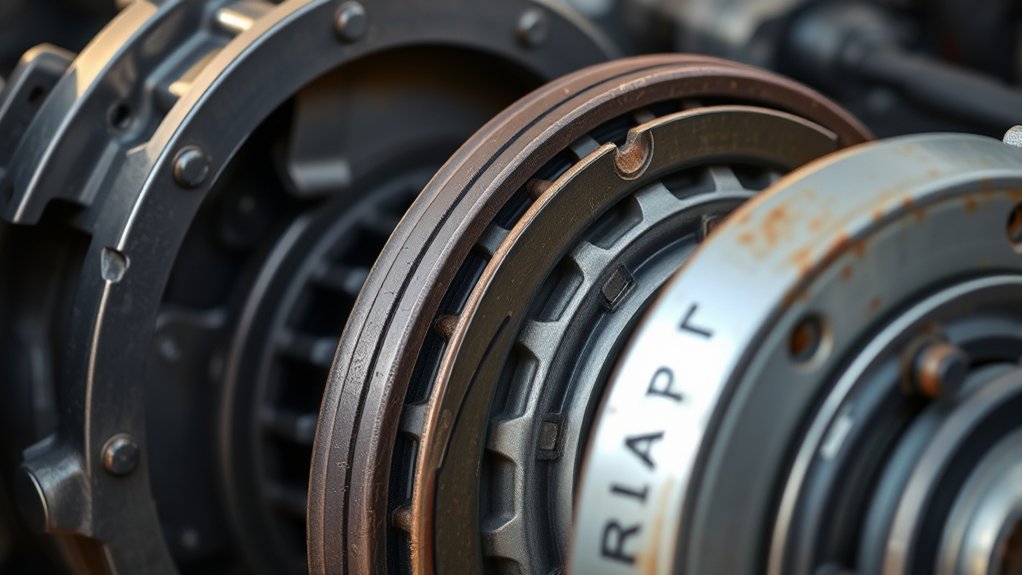
Worn clutches and a failing valve body can make your Ford Transit Connect downshift harshly because the transmission can no longer control gear changes with the right pressure and timing. You’ll often feel a flare, bang, or delayed engagement when you slow down.
Worn clutches or a failing valve body can cause harsh downshifts, flare, and delayed engagement in your Transit Connect.
Inspect for:
- Burnt or contaminated fluid, which signals clutch slip and heat damage.
- Metal debris in the pan, pointing to internal wear or valve body scoring.
- Pressure loss or sticking valves, which upset commanded shift quality.
This problem isn’t an unrelated topic or irrelevant theme; it directly affects hydraulic control. If you ignore it, the harsh downshift usually worsens as friction material sheds and spool valves bind. A transmission teardown or hydraulic test can confirm the fault quickly.
TCM and Shift Calibration Problems
A miscalibrated transmission control module can make your Ford Transit Connect downshift too aggressively because it commands the wrong line pressure, shift timing, or gear logic. You may feel a harsh jolt, delayed kickdown, or a flare before the gear engages.
When the TCM learns inaccurate shift adaptives, it can hold outdated values that no longer match clutch wear or fluid condition. Software glitches, battery resets, or improper programming can also corrupt calibration and trigger common symptoms like abrupt engine braking or inconsistent shift feel.
For reliable maintenance, keep the module software current and preserve stable battery voltage during service. If the van recently received transmission work, a relearn or correct calibration may be needed to restore smooth downshifts and proper control.
How to Diagnose Hard Downshifts
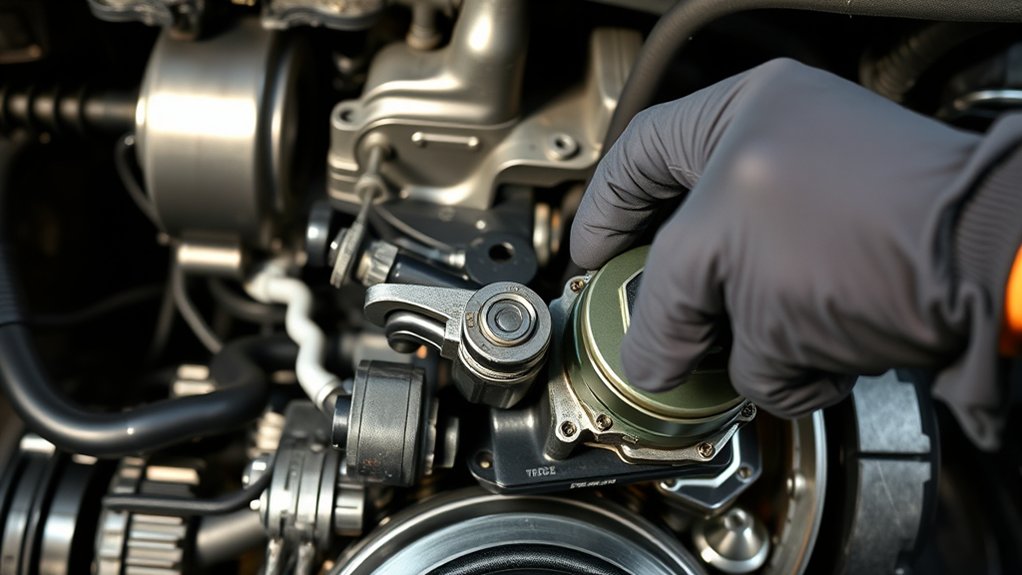
To diagnose a hard downshift in your Ford Transit Connect, start by confirming when the shift occurs and whether it happens under light throttle, braking, or during kickdown. Note vehicle speed, engine load, and any warning lights, then scan for TCM and PCM codes. Check live data for gear commanded versus gear achieved, line pressure, and throttle position.
- Inspect ATF level, condition, and service history; low fluid or wrong spec fluid can trigger harsh engagement.
- Verify engine performance first, because engine misfire symptoms can mimic transmission faults under deceleration.
- Measure mounts, shift cable, and valve body behavior, and confirm incorrect transmission torque specs weren’t used during prior repairs.
If codes are absent, road-test with a scanner and compare downshift timing to calibration targets.
Frequently Asked Questions
Can Cold Weather Make Hard Downshifts Worse?
Yes, cold weather can make hard downshifts worse because thicker fluid changes transmission behavior. You’ll notice delayed pressure response, harsher shift timing, and increased wear until the transmission warms and adapts.
Does Towing Cause Hard Downshifts in a Transit Connect?
Yes, towing can trigger hard downshifts in your Transit Connect. You’ll load the transmission harder, and shift programming may respond aggressively.
Check tire wear, fluid condition, and overheat data; mismatched tires can skew shifting too.
Will Low Battery Voltage Affect Downshifting?
Yes, low battery voltage can affect downshifting. You’ll often see poor transmission control, delayed solenoid response, and degraded engine performance.
Check charging output, battery health, and grounds first; voltage instability can trigger harsh shift behavior.
Can Aftermarket Tires Change Shift Behavior?
Yes, aftermarket tires can change shift behavior. If you’ve changed tire diameter, you’ve altered effective gearing, so your transmission may downshift sooner or harder.
You should verify tire size, rolling circumference, and calibration.
Is Hard Downshifting Safe to Drive With?
No, you shouldn’t keep driving it hard; safety considerations matter. You risk drivetrain damage and unpredictable braking.
Inaccurate diagnostics can hide a failing transmission, so you should inspect fluid, codes, mounts, and software calibration soon.
Conclusion
If your Ford Transit Connect suddenly downshifts hard, don’t blame the van for being “tough.” It’s usually reporting a control problem, not showing attitude. You should check the fluid level and condition first, then test solenoids, sensors, brake switch input, and valve body operation.
If those pass, you need to inspect the TCM calibration and adaptive data. When you diagnose it methodically, you’ll find the fault before the transmission keeps making dramatic choices.
Understanding what causes Ford Transit Connect van to downshift hard will help you address the issue effectively and avoid further transmission damage.


