What Bolt Pattern Is a Ford f150
As an Amazon Associate we earn from qualifying purchases.
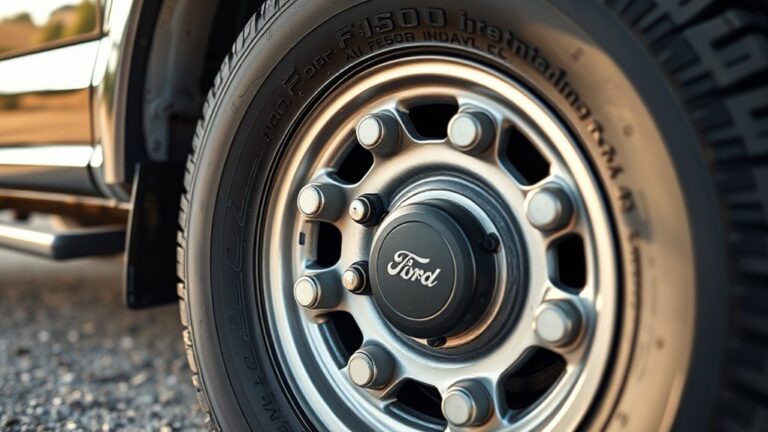
If you’re checking the bolt pattern of a Ford F-150 wheel fitment, the most common modern bolt pattern is 6×135 mm, but that isn’t universal across every year or trim. You also need to verify center bore, offset, and load rating, because bolt pattern alone won’t guarantee proper fit or safe mounting.
The details change enough by generation that a quick match can still be wrong, and that’s where the real issue starts.
Key Takeaways
- Most modern Ford F-150 models use a 6×135 mm bolt pattern.
- The first number is lug count; the second is the bolt-circle diameter.
- Older F-150 generations may use different bolt patterns, so verify by year.
- Lifts do not change bolt pattern, but they can affect offset and clearance.
- Confirm offset, center bore, load rating, and factory specs before buying wheels.
What Is the Ford F-150 Bolt Pattern?
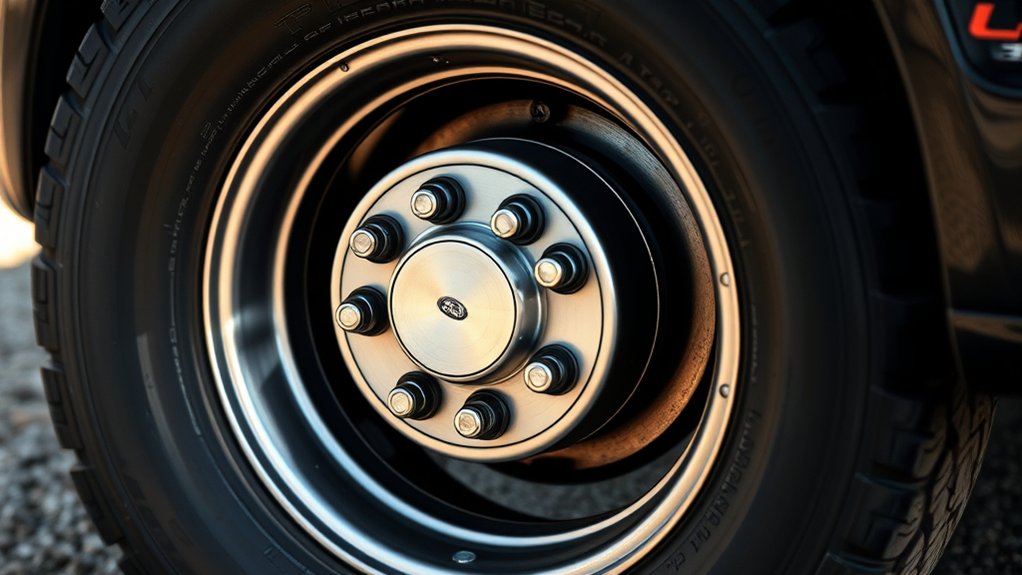
The Ford F-150 bolt pattern is the wheel lug arrangement used to mount a wheel to the hub, and for most modern F-150 models it is 6×135 mm, meaning six lug nuts spaced on a 135 mm bolt circle. You need this measurement to match wheels correctly and maintain safe fitment.
In bolt pattern basics, the first number tells you how many lugs the wheel uses, while the second number gives the circle diameter in millimeters. You should verify offset, center bore, and load rating too, because these factors affect tire compatibility and wheel alignment.
If any value is wrong, the wheel won’t seat properly, and you can risk vibration, stud damage, or reduced handling precision.
Ford F-150 Bolt Pattern by Model Year
Ford F-150 bolt patterns have stayed fairly consistent in recent years, but you should still check the model year before buying wheels, because older trucks used different lug arrangements. On most modern F-150s, you’ll see a 6×135 mm pattern, while earlier generations used other layouts, including 5-lug configurations on some older half-ton models.
This bolt pattern history matters when you compare factory wheels, aftermarket options, and trim-specific packages. You should also account for wheel offset and center bore compatibility, especially if you’re choosing alloy wheel materials that differ in weight and strength.
Ford’s long production timeline means the correct fit depends on generation, not just brand or size. Always match the year-specific specification before selecting replacement wheels.
How to Measure Your F-150 Bolt Pattern
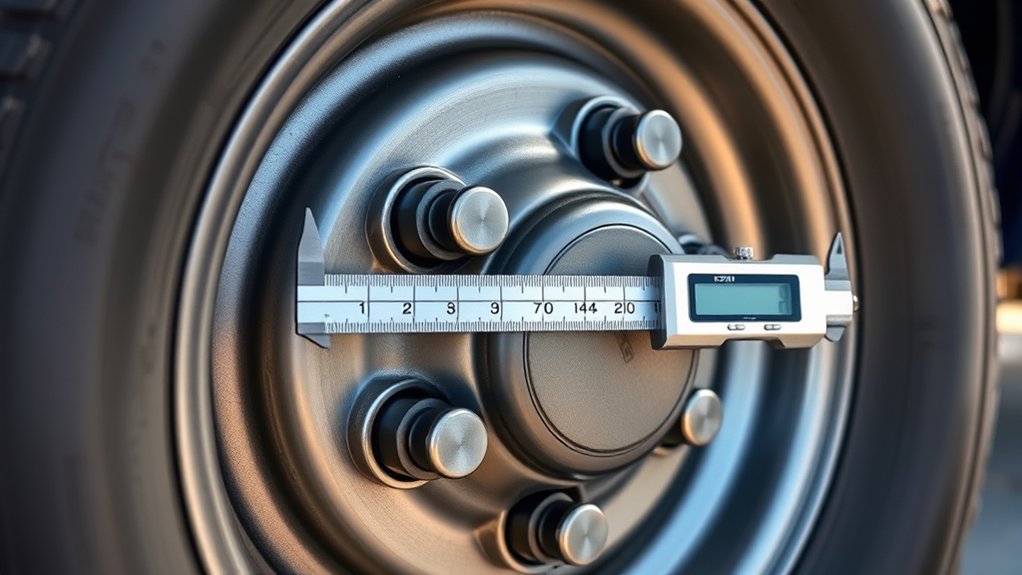
To measure your F-150 bolt pattern, count the number of lug holes on one wheel hub and measure the distance between the correct reference points based on that lug count. If your wheel has five lugs, measure from the center of one lug hole to the far edge of the opposite hole; for six lugs, measure center to center across the hub.
Record the diameter in inches or millimeters, since the bolt pattern combines lug count and circle size. Use a caliper or tape measure for accuracy, and keep the wheel flat so you don’t introduce error.
Before reinstalling, verify wheel torque with a calibrated wrench to match Ford’s specification. Recheck both wheels on the axle, because small measurement differences can affect fitment.
Why F-150 Bolt Pattern Matters
Why does the F-150 bolt pattern matter? It determines whether your wheels mount securely to the hub, which affects bolt pattern relevance and wheel compatibility. When you match the correct pattern, you reduce stress on studs, preserve hub centering, and maintain proper clamp load.
If you ignore it, you risk vibration, uneven wear, and hardware damage.
- Confirms safe wheel fitment
- Prevents stud and lug-seat mismatch
- Supports consistent load distribution
- Simplifies aftermarket wheel selection
You also need the correct pattern for reliable trailer or work-truck use, since repeated heavy loading amplifies fitment errors. In technical terms, the bolt pattern is a core interface spec, not a cosmetic detail.
Ford F-150 Bolt Pattern vs. Wheel Size
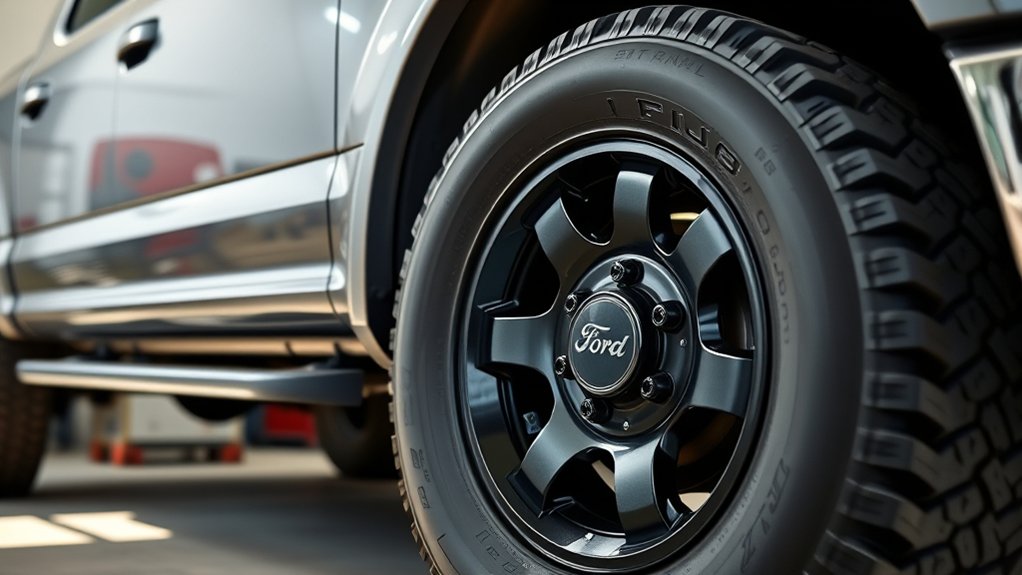
Wheel size doesn’t change the F-150’s bolt pattern, but it does affect whether the wheel assembly fits and functions correctly. You still need the correct bolt pattern, because that determines how the wheel mounts to the hub.
Wheel size, however, changes overall diameter, width, and offset requirements, which influence brake, suspension, and fender clearance. If you increase wheel size, you may also alter tire diameter and load behavior, so you should verify that the setup stays within manufacturer limits.
The bolt pattern and wheel size work together, but they solve different engineering problems. One secures the wheel to the truck; the other affects geometry, contact space, and vehicle dynamics. Check both specifications before you buy replacements.
Which Wheels Fit a Ford F-150?
The wheels that fit a Ford F-150 have to match more than just the bolt pattern; you also need the correct center bore, offset, width, diameter, and load rating for your model year and trim. You can verify fitment by checking:
- Bolt pattern and hub size
- Wheel diameter and tire clearance
- Offset and backspacing
- Load capacity for towing or hauling
If you choose the wrong spec, the wheel may contact suspension parts or reduce stability. For your truck, factory-style fitment usually keeps installation straightforward, but aftermarket wheels can work if their specs align.
This isn’t rocket science, but it does require precision. Treat wheel selection like gourmet sushi: every detail matters, and one mismatch can spoil the result.
Common F-150 Bolt Pattern Mistakes
When you match F-150 wheels, you can’t assume the lug count is correct without verifying the exact 5-lug pattern for your model year. You also need to confirm the center bore, since a wheel that won’t seat properly can create fitment and vibration issues.
If you mix model years, you can end up with similar-looking wheels that use different bolt specs and won’t bolt on safely.
Incorrect Lug Count
Counting the wrong number of lug holes is one of the most common F-150 bolt pattern errors, and it can lead you to buy a wheel that simply will not mount correctly. You need to count only the wheel’s lug holes, not decorative openings, or bolt pattern misconceptions and lug nut confusion can skew your selection.
Verify the count against your specific model year, because Ford has used different patterns across F-150 generations.
- Check the wheel face for actual lug holes.
- Count each hole once, then confirm spacing.
- Match the count to your truck’s factory spec.
- Recheck before ordering aftermarket wheels.
A correct lug count keeps fitment accurate and prevents installation delays.
Wrong Center Bore
A mismatched center bore can keep a wheel from seating properly on your F-150, even if the bolt pattern and lug count are correct. You need the wheel’s center bore to match the truck’s hub, or use a hub-centric ring that fits tightly.
If the bore is too small, the wheel won’t slide onto the incorrect hub. If it’s too large, the wheel may center on the studs instead of the hub, which can create vibration, uneven load transfer, and inconsistent wheel torque.
Always verify bore diameter before installation, especially with aftermarket wheels. Tighten the lugs in a star pattern, then recheck torque after driving.
Proper hub engagement helps the wheel run true, protects bearings, and reduces stress on fasteners and suspension components.
Mixed Model Years
Even with the correct center bore and lug count, you can still run into fitment problems if you mix up F-150 model years. Ford changed wheel specs across generations, so you need to verify the exact bolt pattern before you buy or install wheels.
A 2010 wheel may not match a 2021 truck, even if both look similar. Check these points:
- Model year range
- Hub size
- Offset and backspacing
- Brake clearance
You should confirm wheel compatibility using the factory service data for your specific trim, cab, and drivetrain. Don’t assume all F-150 wheels interchange. Even small changes in suspension or brake package can alter fitment.
When you match the wrong year, you risk vibration, interference, or unsafe clamping.
How to Check Your Truck’s Exact Specs
To confirm your truck’s exact specs, check the door sticker first, since it lists factory configuration details that identify the wheel and axle setup.
You should also review the owner’s manual, which can verify trim-specific specifications and original equipment data. If you still need confirmation, use the VIN lookup to match your truck’s build record with the correct bolt pattern and related fitment details.
Find The Door Sticker
Start by checking the driver-side door jamb, where Ford places the certification label that lists your truck’s exact factory specifications, including wheel and tire data that can confirm the correct bolt pattern.
Read the door sticker carefully; it also shows gross vehicle weight ratings and related build codes.
- Verify the tire size against the axle and trim data.
- Note the wheel offset if aftermarket wheels are installed.
- Match the label’s rim width to your current setup.
- Record the production date for reference.
You can use these details to narrow the factory configuration before measuring the hub. If the sticker is missing or damaged, inspect the jamb surface for adhesive residue and stamped codes. This method gives you precise, vehicle-specific information without guessing.
Check The Owner’s Manual
Your owner’s manual can confirm your F-150’s factory wheel specifications, including the bolt pattern, wheel size, and related fitment details. Check the wheel and tire section, then compare the listed data with your truck’s trim, axle, and model year.
You’ll usually find the bolt pattern written as a measurement such as 6×135, which identifies lug count and bolt circle diameter. If the manual includes option codes or package tables, use them to verify the exact factory setup, not a generic example.
Two word discussion ideas like wheel fitment and lug spacing help you read the specs accurately. Keep the manual’s figures as your baseline, since aftermarket parts can change dimensions and offsets. When the printed data matches your truck, you can confirm fitment with confidence.
Use The VIN Lookup
A VIN lookup gives you the exact factory data for your Ford F-150, including the original wheel size, axle code, and bolt pattern tied to that specific truck. You can use this data to confirm fitment before you buy wheels or tires. It also improves bolt pattern reliability because you’re checking the build record, not guessing from trim level.
- Enter the 17-digit VIN on Ford’s site or a trusted decoder.
- Match the wheel bolt pattern to the axle and model year.
- Verify rim width compatibility against the factory wheel specs.
- Compare offset, hub bore, and load rating before ordering.
This method helps you avoid fitment errors, vibration, and unsafe wheel swaps.
F-150 Bolt Pattern for Lifted Trucks
Lifted F-150s still use the same bolt pattern as the stock truck, so the wheel fitment spec doesn’t change just because the suspension sits higher. You still need to match the factory lug arrangement, typically 6×135 on most modern models, when you check wheel specs.
Lift height affects clearance, offset sensitivity, and suspension travel, but it doesn’t alter the hub’s bolt circle. That’s why bolt pattern myths often confuse lift kits with wheel mounting geometry.
You should verify aftermarket compatibility by matching bolt count, pitch circle diameter, and center bore, not by assuming a lifted truck needs a different pattern. If you compare wheels correctly, you can confirm fitment before you buy and avoid unnecessary confusion about lift-related changes.
Tips Before Buying F-150 Wheels
Before you buy F-150 wheels, verify the bolt pattern first so the wheel seats correctly on the hub. You should also check wheel offset to control fitment, clearance, and scrub radius.
Finally, match the wheel’s load rating to your truck’s axle and GVWR so it can safely support the vehicle.
Verify Bolt Pattern
To verify the bolt pattern on your Ford F-150 before buying wheels, match the wheel’s lug count and bolt-circle diameter to your truck’s exact model year and trim. Use the door-jamb label, owner’s manual, or factory wheel specs to confirm the pattern before you order.
- Count the lugs; most F-150s use five.
- Measure the bolt-circle diameter with a gauge or template.
- Check every wheel’s stamped fitment data for a bolt mismatch.
- Confirm lug nut torque matches the wheel design and fastener spec.
If any value differs, don’t force installation. A precise fit protects hub alignment, preserves clamping force, and avoids vibration or damage.
Check Wheel Offset
Wheel offset determines how far the wheel’s mounting surface sits inboard or outboard of the hub, and it directly affects fender clearance, suspension clearance, and steering feel on an F-150. You should compare offset in millimeters before buying, because even a correct bolt pattern won’t guarantee wheel compatibility.
Positive offset pulls the wheel inward, while lower or negative offset pushes it outward and can change scrub radius and track width. Check your truck’s trim, brake package, and factory wheel specs, then confirm the new wheel won’t contact control arms or liners at full lock.
If you change tire size, reassess tire pressures after installation, since sidewall shape and loading can alter fitment behavior. Measuring carefully helps you avoid rubbing, preserves alignment geometry, and keeps handling predictable.
Match Load Ratings
Check the wheel’s load rating against your F-150’s axle weight and gross vehicle weight ratings, because the correct bolt pattern and offset won’t matter if the wheel can’t safely support the truck. You should verify each wheel’s wheel load spec, not just its diameter or bolt pattern, since ratings vary by design, material, and intended use.
Undersized wheels can flex, crack, or fail under towing and payload stress.
- Read the stamped load rating on the wheel.
- Compare it with front and rear axle ratings.
- Include cargo, passengers, and tongue weight.
- Choose a margin above your maximum operating load.
If you run heavier tires or off-road use, increase your safety margin. Match the wheel’s rating to real use, not marketing claims.
Frequently Asked Questions
Can I Use Spacers With My F-150 Bolt Pattern?
Yes, you can use spacers if they match your bolt pattern and maintain proper hub centering. Verify spacer thickness, thread engagement, and load rating, especially with a spare wheel, to avoid vibration or fitment issues.
Do Aftermarket Hubs Change the F-150 Bolt Pattern?
No, aftermarket hubs usually don’t change your F-150’s bolt pattern; they only affect wheel mounting if engineered differently.
For this two word discussion, you’d consider bolt upgrades or wheel adapters to match fitment safely.
Are F-150 Bolt Patterns the Same on 2WD and 4WD?
Yes, you’ll usually find the same bolt pattern on 2WD and 4WD F-150s, so wheel compatibility often matches. You should still verify year, offset, and hub bore, since brake and suspension changes can affect fitment.
Will Damaged Lug Holes Affect Wheel Fitment?
Yes, damaged lug holes can distort fitment like a warped key in a lock. You’ll risk uneven seating, bolt corrosion, and incorrect lug nut torque, which can cause vibration, loosening, or wheel failure.
Do Spare Wheels Use the Same Bolt Pattern?
Yes, your spare wheels usually use the same bolt pattern as your main wheels, preserving F 150 wheel fitment. Check spacers compatibility too, because mismatched offsets or lug seats can still affect safe installation.
Conclusion
So, when you match your F-150’s bolt pattern, you’re choosing the right key for a steel gate: if the teeth don’t align, the door won’t open safely. Most modern trucks use 6×135 mm, but you should still confirm your year, offset, center bore, and load rating before buying wheels.
That way, you keep the hub centered, the lugs seated, and your truck rolling straight, whether it’s stock, lifted, or built for heavier work. Understanding the correct bolt pattern for a Ford F150 ensures a secure fit and optimal performance on the road.


