What Auto Companies Does Ford Own
As an Amazon Associate we earn from qualifying purchases.
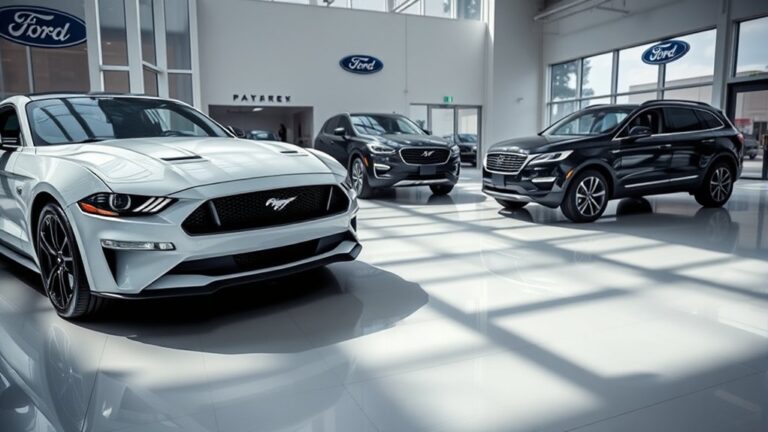
If you’re asking what auto companies Ford owns today, the answer is narrower than many expect. Ford’s core automotive brands are Ford and Lincoln, with Lincoln positioned as its luxury nameplate.
Ford has sold off or discontinued most other marques over time, which makes its current portfolio easier to track but also more strategic. The more interesting question is how that lean lineup shapes the vehicles you’ll see next.
Key Takeaways
- Ford primarily owns the Ford brand and Lincoln, its luxury division.
- Lincoln shares platforms and parts with Ford but has premium styling and pricing.
- Ford no longer owns Jaguar, Land Rover, Volvo Cars, or Aston Martin.
- Mercury and Merkur were discontinued and are not active Ford-owned brands.
- Ford now focuses on fewer core brands, electric vehicles, software, and commercial vehicles.
What Auto Companies Does Ford Own Today?
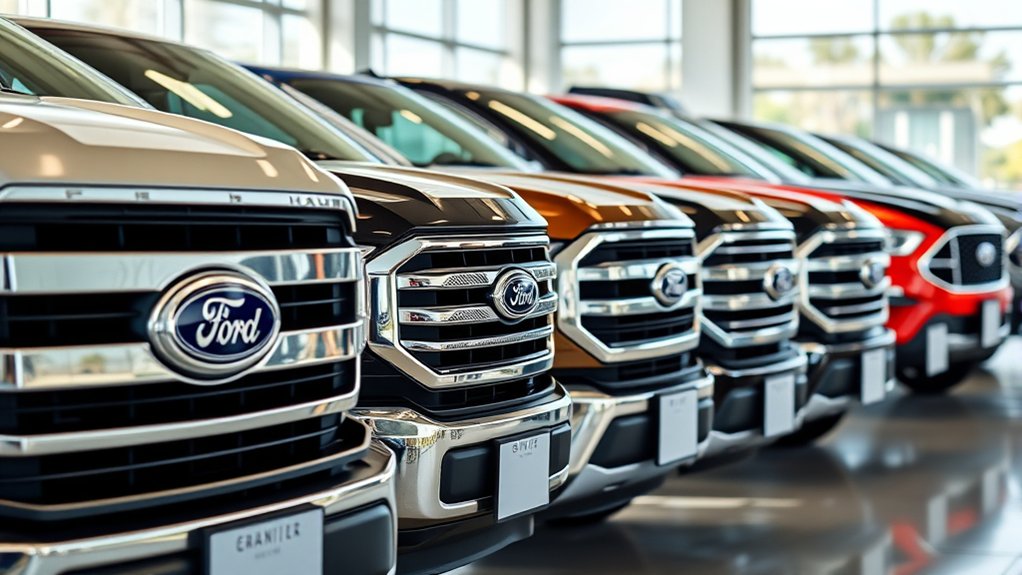
Today, Ford does not own a long list of separate auto brands. If you’re asking what auto companies Ford owns today, the answer is essentially none in the old conglomerate sense.
Ford today owns essentially no separate auto brands in the old conglomerate sense.
You’ll find Ford focused on its core nameplate and on products that now emphasize electric vehicles, software, and commercial use. That matters because ownership structure affects how you read revenue, margin, and market-share data.
Ford’s EV strategy depends partly on consumer demand and tax incentives, which can shift sales timing and profitability. When you evaluate Ford, you should look at the company as a single manufacturer with multiple vehicle lines, not as a parent company collecting independent automakers.
That distinction gives you a clearer, more accurate view of Ford’s current business model and risk profile.
Ford’s Current Brands
Ford’s brand lineup is much narrower than many people expect: the company primarily operates under the Ford name, while Lincoln serves as its luxury division. You won’t find a long list of separate car marques here; Ford has focused its portfolio on scale, integration, and margin control.
That means you’re looking at a business built around one core brand, not a holding company with widespread independent ownership. Its broader value also comes from disciplined capital allocation, including non automotive investments and mobility-related activities, rather than from acquiring extra vehicle badges.
For you, the key takeaway is simple: Ford’s current brands are limited, but that’s strategic. The company uses fewer nameplates, sharper positioning, and tighter operational control to compete efficiently in a crowded market.
Where Lincoln Fits
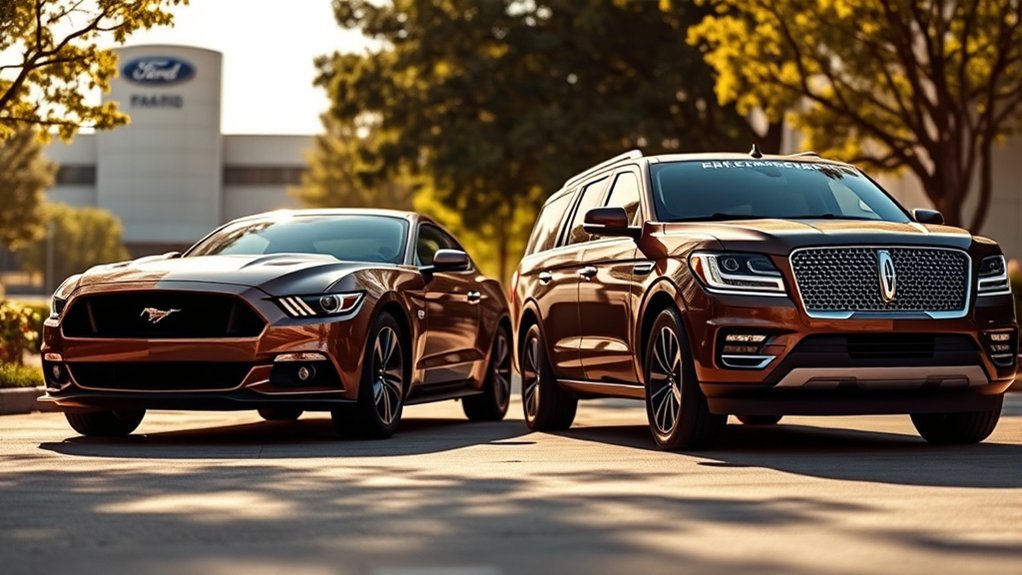
You can think of Lincoln as Ford’s luxury division, positioned above the mainstream Ford brand to target higher-margin buyers. It shares platforms, powertrains, and many parts with Ford models, which helps keep development and production costs lower.
That overlap lets Lincoln differentiate through design, features, and pricing rather than a fully separate engineering base.
Lincoln’s Brand Position
Lincoln sits at the top of Ford’s mainstream-to-premium lineup as the company’s luxury brand, positioned above Ford but below ultra-luxury marques like Cadillac in market perception. If you’re evaluating Lincoln branding, you’ll see Ford ownership shapes product strategy, dealer support, and platform sharing. That keeps costs controlled while aiming for a more refined customer experience.
- You get a quieter cabin focus.
- You see more upscale materials and design cues.
- You compare it against premium rivals on value, not exclusivity.
Analytically, Lincoln’s brand position matters because it targets buyers who want comfort and status without paying top-tier luxury prices. In short, Lincoln helps Ford capture a higher-margin segment while preserving clear separation from the core Ford lineup.
Ford’s Luxury Division
Within Ford’s luxury division, Lincoln serves as the sole premium nameplate, giving the company a focused way to compete in the higher-end market without diluting the Ford brand. You can view Lincoln as Ford ownership’s dedicated upscale channel, built to target buyers who want refinement, not just a badge.
Ford’s luxury strategy centers on separating Lincoln’s pricing, design, and customer experience from mainstream Ford vehicles, so you get a clearer hierarchy across the portfolio. That matters because luxury margins depend on brand perception as much as hardware.
Shared Platforms And Parts
How does Ford keep costs down while maintaining a luxury image? You see Lincoln benefit from Ford’s share platforms strategy, which spreads engineering costs across multiple vehicles. That means you get premium styling and tuning without paying for a fully unique architecture.
Ford also uses shared components like engines, transmissions, infotainment hardware, and safety systems, so Lincoln can launch faster and stay competitive.
- You get lower development costs.
- You get consistent reliability from proven parts.
- You still get distinct Lincoln design, materials, and ride calibration.
This approach lets Ford protect margins while giving Lincoln a clear luxury identity. In practice, shared platforms don’t erase exclusivity; they fund it.
Lincoln’s value comes from how Ford refines the package, not from reinventing every underlying part.
Brands Ford Sold or Discontinued
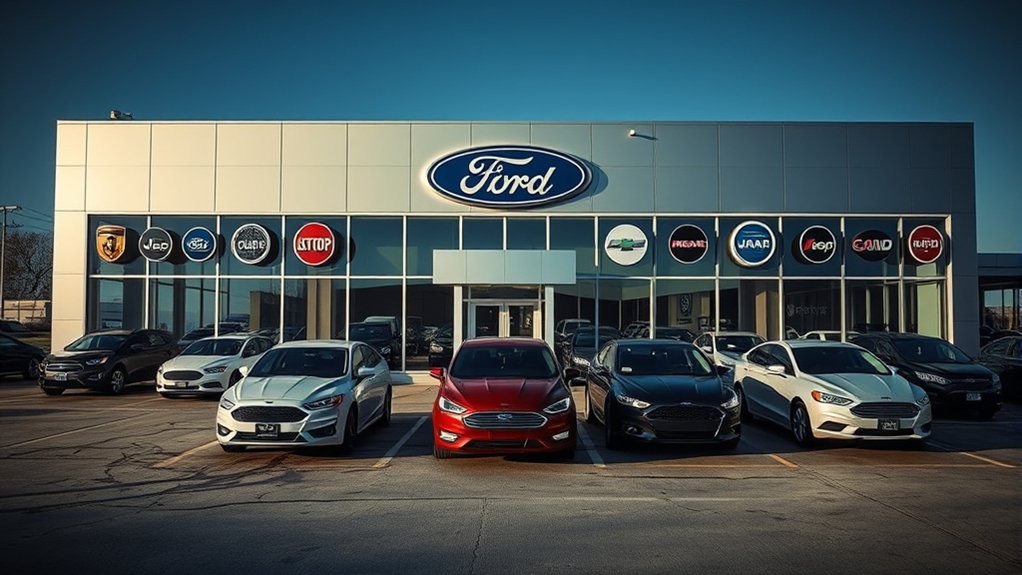
You can see Ford’s portfolio has changed over time through sold brands like Jaguar, Volvo, and Land Rover, which reduced its exposure to certain luxury segments.
You’ll also notice discontinued nameplates such as Mercury and Merkur, which show how Ford trimmed overlapping lines to improve efficiency. These divestments and exits helped Ford concentrate capital on core brands and higher-return products.
Sold Brands
Ford has also exited a long list of brands it once owned, selling or discontinuing them as it narrowed its focus on core businesses. You can see Ford’s portfolio shrink through major divestitures that improved capital efficiency and sharpened its electric strategy.
The clearest sold brands are:
- Jaguar and Land Rover, sold in 2008, letting you track Ford’s shift away from luxury volume.
- Volvo, sold in 2010, which freed cash for higher-return segments and innovative partnerships.
- Aston Martin, sold in stages, showing Ford’s decision to exit niche prestige brands.
These moves reduced complexity, cut overlap, and helped you understand Ford’s current structure: fewer owned marques, more disciplined allocation, and a stronger emphasis on core trucks, commercial vehicles, and electrified platforms.
Discontinued Nameplates
Beyond the brands Ford sold outright, its history also includes several discontinued nameplates that disappeared as consumer demand shifted and product strategies tightened. You can see a pattern: Ford pruned slow sellers and overlapping models to protect margins and simplify production.
Discontinued nameplates like Thunderbird, Freestyle, Five Hundred, Crown Victoria, and Ranger in some markets show how Ford adjusted to fuel economy rules, segment contraction, and changing buyer preferences. In each case, Ford redirected capital toward higher-volume trucks, crossovers, and core passenger cars.
That means the brands Ford sold and the discontinued nameplates both reflect a broader portfolio reset, not random exits. If you track Ford’s lineup over time, you’ll notice fewer niche badges and more emphasis on scalable platforms, shared components, and global demand alignment.
Divested Luxury Lines
A separate slice of Ford’s portfolio reset involved luxury and premium badges that no longer fit its core strategy. When you look at divested luxury, you see Ford narrowing capital allocation toward higher-volume, higher-margin operations. The clearest brand divestiture examples are:
- Jaguar and Land Rover, sold in 2008 to Tata Motors.
- Aston Martin, gradually exited between 2007 and 2013.
- Volvo Cars, sold in 2010 to Geely.
You can treat these moves as portfolio optimization, not retreat. Ford kept Lincoln, but it shed brands that demanded heavy investment and delivered limited scale. That shift reduced complexity, improved focus, and let you trace how Ford’s current structure reflects disciplined brand pruning rather than expansion.
Ford’s Partnerships Outside Its Own Brands
Although Ford doesn’t own many outside brands, its partnerships can still shape what you see in showrooms and on the road. You’ll notice that auto collaborations often let Ford share engineering, sourcing, or manufacturing capacity with other companies, which can lower per-unit costs and speed development.
These cross brand partnerships also help you compare platforms, safety systems, and software features across segments. When you evaluate a Ford product, you’re often seeing the results of supplier alliances, joint ventures, and technology exchanges, not just in-house work.
That matters because shared components can influence pricing, reliability, and feature availability. In practice, Ford’s outside ties extend its reach without adding new owned brands, so you get broader market access and more competitive vehicles.
How Ford’s Brand Portfolio Changed
Ford’s brand portfolio has narrowed sharply over time, shifting from a broader set of owned nameplates to a much more focused lineup built around Ford and Lincoln. You can trace the change through brand divestitures and Ford partnerships that reduced overlap and simplified operations.
In the late 20th and early 21st centuries, Ford sold or shut down several divisions as it prioritized scale and profitability.
- Mercury exited, eliminating a mid-tier badge.
- Jaguar, Land Rover, Aston Martin, and Volvo left the group through sales.
- Mazda remained a partnership, not a core owned brand.
Today, you see a leaner structure that concentrates capital, engineering, and marketing on fewer brands. That shift improved clarity and reduced internal competition across regions.
What Ford Ownership Means for Shoppers
For shoppers, Ford’s streamlined ownership structure means you’re choosing from fewer corporate brands, but with clearer positioning and more focused product investment. That matters because Ford can concentrate capital, engineering, and software development on the products you actually compare.
You’ll often see sharper feature differentiation, tighter pricing logic, and less overlap across nameplates. From a brand strategy standpoint, this can simplify your decision-making: Ford aims to make each badge’s role obvious, whether you want value, capability, or luxury.
It can also improve customer perception, since a cleaner portfolio may signal consistency and reliability. In practice, you should expect more direct competition within Ford’s lineup, faster updates, and fewer distractions from unrelated brands competing for the same buyer.
Frequently Asked Questions
Does Ford Own Any Luxury Car Brands Besides Lincoln?
No, you won’t find Ford owning other luxury brands besides Lincoln. Ford’s ownership scope is focused there; its luxury brand strategy relies on Lincoln rather than a broader premium portfolio.
Which Brands Did Ford Sell in the Past?
You can trace Ford ownership history like shedding armor: Ford sold Jaguar, Land Rover, Volvo, Aston Martin, Hertz, and its Mazda stake.
These automotive brand divestitures helped you see Ford refocus capital on core brands.
Does Ford Own Any Motorcycle Companies?
No, you don’t own any motorcycle companies through Ford; it hasn’t made motorcycle acquisitions. Ford’s brand diversification stays focused on cars, trucks, and mobility services, not two-wheelers, based on current corporate holdings.
How Do Ford Partnerships Differ From Ownership?
You’d distinguish partnership vs ownership by control and risk: partnerships share costs, tech, or platforms; ownership gives Ford direct control and profits.
That brand portfolio evolution lets Ford stay agile while expanding strategically.
Has Ford Ever Owned Electric Vehicle Startups?
Yes. Ford hasn’t broadly owned electric startups, but you’ll find it invested in EV ventures and incubators like Rivian stakes, Ford automotive ventures, and Ford EV incubators. Its Ford EV startups acquisitions history stays limited and selective.
Conclusion
So, if you thought Ford still owned a garage full of famous badges, the data says otherwise. You’ll find Ford mainly behind Ford and Lincoln today, with everything else long gone, sold off, or spun away.
That tidy lineup may seem boring, but it’s strategic: fewer brands, more shared tech, and clearer pricing. For you, that means less confusion when you shop—and a reminder that simpler corporate trees can still grow very profitable cars.
In conclusion, when considering what auto companies does Ford own, it’s clear the focus is now on just these two key brands.


