Is There a Super Charger Option for Ford f150
As an Amazon Associate we earn from qualifying purchases.
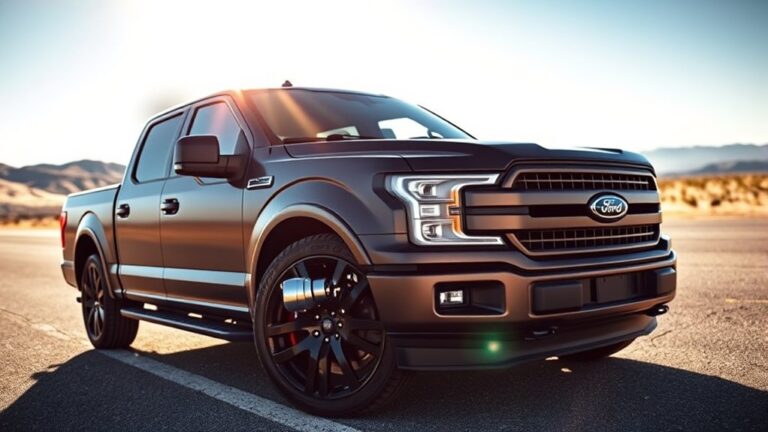
Nearly every discussion about a supercharger option for the Ford F-150 starts with one key fact: the 5.0L V8 and some EcoBoost trims can gain 100+ horsepower with the right kit. You can find options from Whipple, Roush, and ProCharger, but fitment, ECU calibration, and emissions rules vary by model year and engine.
If you’re weighing towing gains, warranty impact, and install cost, the real decision comes down to one detail that many owners miss.
Key Takeaways
- Yes, Ford F-150 supercharger options exist, but they are usually aftermarket or Ford Performance packages, not factory-standard on every trim.
- Most common supercharger targets are the 5.0L V8 and some EcoBoost engines; fitment depends on year and configuration.
- Before buying, verify ECU calibration, belt routing, fuel system support, and intercooler compatibility for your exact truck.
- Superchargers can add roughly 80 to 150 horsepower, with stronger throttle response and towing performance.
- Expect higher costs, more heat, possible warranty impact, and installation complexity compared with basic bolt-on upgrades.
Is There a Supercharger Option for Ford F-150?
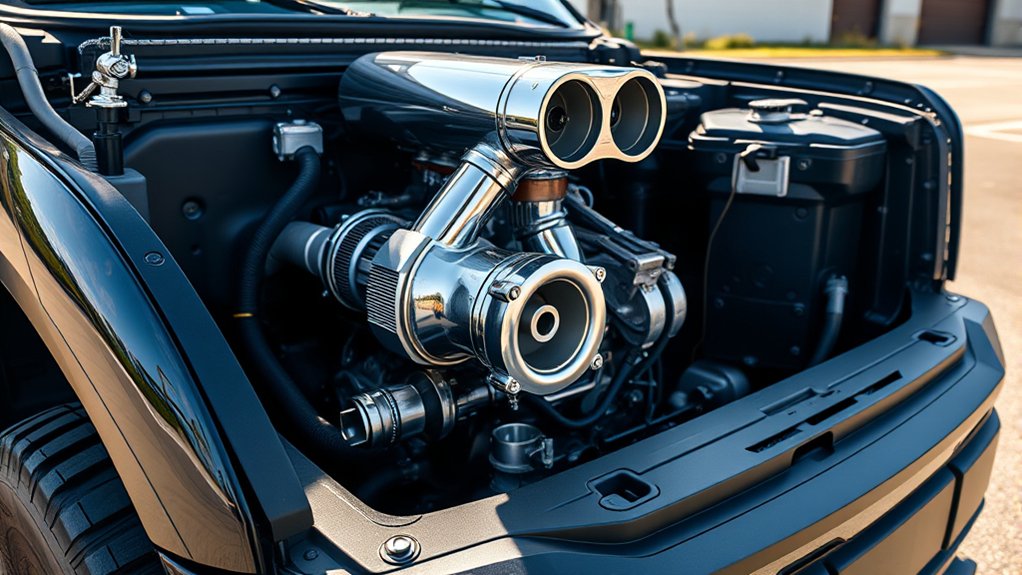
Yes, Ford does offer supercharger options for the F-150, but typically not as a factory-installed setup on every trim. You can find supercharger packages through Ford Performance or authorized aftermarket suppliers, and they’re designed to increase airflow and boost engine output.
You should verify compatibility, installation requirements, and warranty impact before buying. A dealer can help you match the kit to your truck’s configuration and emissions rules.
Don’t confuse this with an irrelevant topic or unrelated idea, like lift kits or exhaust tips, because those don’t address forced induction. If you want added horsepower and torque, a supercharger is a direct solution, but you’ll need proper calibration, premium fuel, and professional installation to keep the system reliable and efficient.
Which F-150 Engines Can Be Supercharged?
Most F-150 supercharger kits are designed for specific gas engines, especially the 5.0L V8 and the 3.5L EcoBoost. Those platforms have strong aftermarket support and can handle boost with the right tuning and supporting hardware. You can also find options for some 2.7L EcoBoost trucks, but output goals and calibration matter.
Most F-150 supercharger kits target the 5.0L V8 and 3.5L EcoBoost, with select 2.7L options too.
5.0L V8: common, durable, and boost-friendly
3.5L EcoBoost: already turbocharged, so it responds well
2.7L EcoBoost: possible, but check limits carefully
If you drive a 3.3L or hybrid setup, supercharging usually isn’t practical. When you add boost, you’ll change throttle response, ride quality, and exhaust tones, so you need supporting mods and a tune. Always verify your engine code before you buy.
Which Supercharger Kits Fit the F-150?
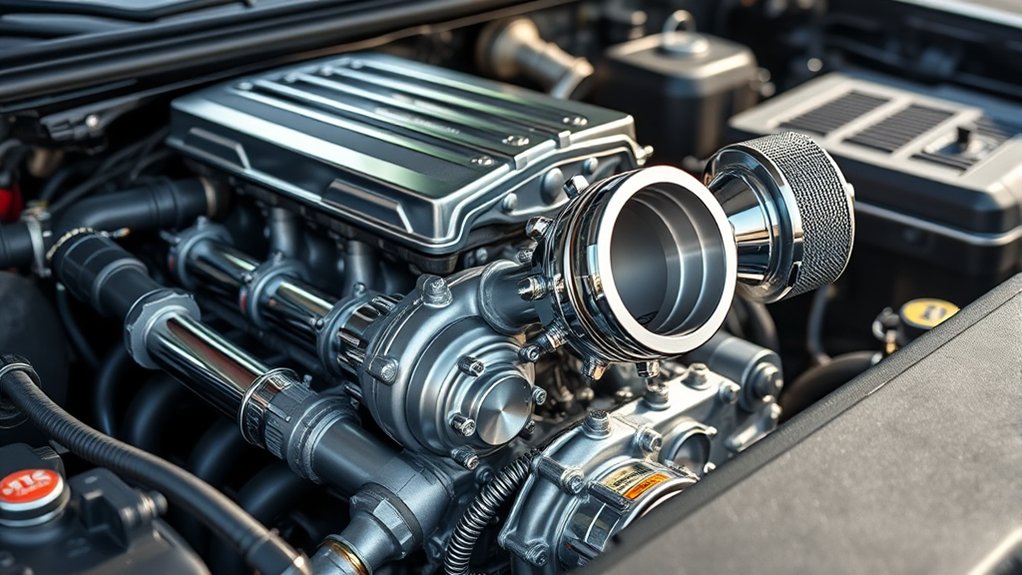
Once you know which F-150 engine you have, you can narrow the supercharger kits that actually fit your truck. For 5.0L V8 models, kits from Whipple, Roush, and ProCharger are common matches, but you still need the correct year-specific brackets, calibrations, and intake plumbing.
EcoBoost trucks use different packages, and many kits are built only for certain cab, bed, and drivetrain combinations. Always verify fuel system support, intercooler fitment, and ECM tuning compatibility before you buy.
You should also check emissions legality, side effects such as extra heat and driveline stress, and warranty impacts, because aftermarket forced-induction parts often alter dealer coverage. A kit that fits physically still may not fit your exact trim without additional hardware or software updates.
How a Supercharger Boosts F-150 Power
A supercharger forces more air into your F-150’s intake under pressure, which lets the engine burn more fuel per cycle. That forced-air induction raises both horsepower and torque by increasing cylinder filling and combustion output.
You get stronger acceleration and better load-carrying performance when the engine can produce more power across the rev range.
Forced Air Induction
Forced-air induction works by compressing intake air before it enters the F-150’s engine, letting the cylinders pack in more oxygen for each combustion cycle. With a supercharger, you get instant boost because the unit is driven mechanically, not by exhaust flow. That’s a key distinction in forced induction.
It raises manifold pressure quickly. It uses engine-driven airflow, not lag-prone exhaust energy. It helps debunk common turbo myths about delay and response.
You’ll notice the intake tract, belt drive, and intercooler all work together to manage air density and temperature. This setup keeps airflow consistent under load, which supports stable operation. In practical terms, you’re improving how efficiently the engine breathes without changing its basic architecture.
Horsepower And Torque
How much more power can an F-150 make with a supercharger? You can typically gain 80 to 150 horsepower, with some kits pushing even higher depending on fuel, boost, and tuning. A supercharger raises airflow, so your engine burns more fuel and makes more output per cycle.
That changes horsepower trends by adding strong gains across the midrange and top end, not just at peak rpm. It also reshapes torque curves, usually delivering a flatter, broader band of low- and mid-speed torque. You’ll feel quicker throttle response, stronger towing pull, and better acceleration under load.
Proper calibration matters, because excessive boost or lean conditions can damage your engine. Match the supercharger to your truck’s cooling and drivetrain limits.
How a Supercharger Helps With Towing and Driving
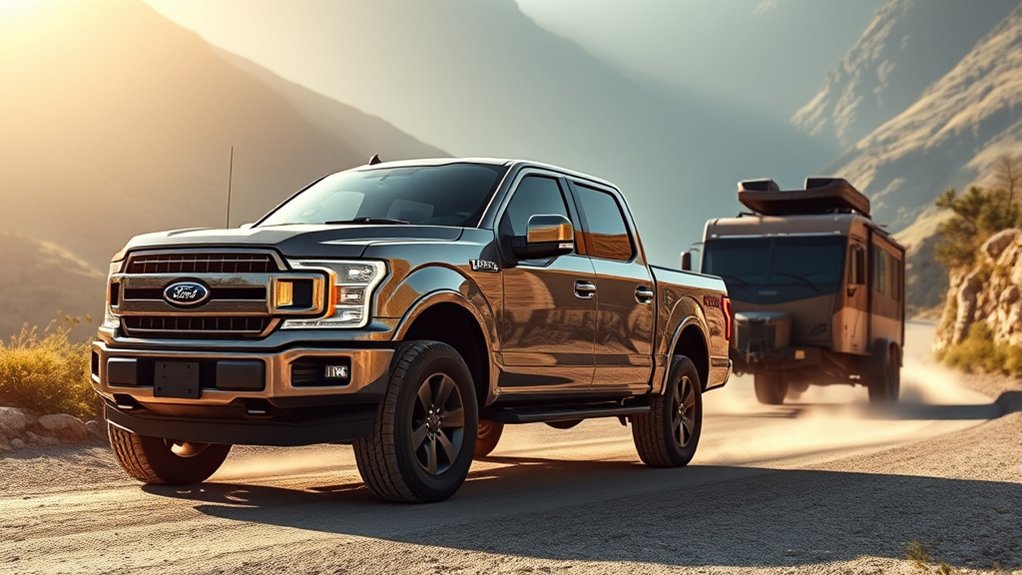
A supercharger gives your F-150 stronger low-end torque, which helps you pull heavier loads with less strain. You’ll also get better passing power on the highway, so you can merge and overtake more confidently while towing.
That added boost can improve drivability when your truck is under load, especially in demanding conditions.
Towing Power Boost
When you add a supercharger to an F-150, you increase low-end and midrange torque, which makes towing feel easier and more controlled. You’ll notice less strain when you start from a stop, climb grades, or hold speed with a trailer attached.
The added boost helps you keep engine rpm in a useful range, so the truck responds with less effort.
- Stronger launch with trailer weight
- Smoother hill pulls under load
- More stable throttle response
For best results, pair the setup with proper tire maintenance and realistic towing habits. Keep in mind that fuel economy usually drops when you demand more power, especially under sustained load.
A supercharger won’t increase payload limits, but it can make your approved towing range feel more manageable and consistent.
Better Passing Power
Need to pass slower traffic or merge with a trailer in tow? A supercharger raises intake air pressure, so your Ford F-150 makes more torque and horsepower at midrange rpm. That extra output helps you accelerate without a long downshift delay, which improves passing safety on two-lane roads and highway ramps.
You’ll feel stronger response when the truck is loaded, because boosted airflow helps maintain power where a naturally aspirated engine can fall off. This doesn’t replace proper gearing or careful driving, but it does reduce strain when you need a quick speed change.
Don’t confuse this with an unrelated topic or off topic discussion about cosmetics; the benefit here is measured, mechanical, and directly tied to towing performance and on-road acceleration.
What It Costs to Install a Supercharger
Installing a supercharger on an F-150 usually costs between $7,000 and $12,000 for the kit alone, and labor can add another $1,500 to $4,000 depending on engine type and shop rates. You’ll also budget for tuning, belts, fluids, and possible fuel-system upgrades.
Kit price: the main cost driver
Labor: varies with engine access and calibration needs
Extras: dyno tuning, hardware, and installation supplies
Expect the final bill to rise if you choose a premium system or a dealership install. You should also factor in fuel economy changes, since boost often lowers mileage, and warranty impact, since modifications can affect coverage. Compare itemized quotes so you can verify parts, labor, and tuning before you commit.
Supercharger vs. Other F-150 Power Upgrades
How does a supercharger stack up against other F-150 power upgrades? You get the largest horsepower and torque gain, but it also adds heat, complexity, and cost. If you’re asking is there a better bolt-on, compare the options below.
| Upgrade | Effect |
|---|---|
| Supercharger | Highest forced-induction gain |
| Turbo kit | Strong power, more plumbing |
| Tune only | Modest output increase |
| Intake/exhaust | Small gains, better response |
You should expect a supercharger to outperform intake, exhaust, and tuning alone in straight-line acceleration. Turbos can match power, but packaging and lag differ. Intake and exhaust improve airflow, yet they don’t multiply boost.
Aftermarket compatibility matters, because your truck needs supporting fuel, cooling, and calibration parts. For maximum output, a supercharger wins.
How to Choose the Right F-150 Supercharger
Choosing the right F-150 supercharger starts with your engine, model year, and power target. Match the kit to your 5.0L V8, EcoBoost, or other configuration, then verify ECU support, belt routing, and fuel requirements.
If you’re asking Is there a Super Charger Option for Ford f150, the answer depends on trim and calibration compatibility. To master how to choose the right f 150 supercharger, compare:
- OEM-backed fitment and emissions compliance
- Intercooler size, boost level, and heat management
- Tuning support, warranty impact, and installation complexity
Pick a system that keeps intake temperatures controlled and leaves headroom for towing or daily driving. Choose conservative boost for reliability, and confirm injector, pump, and spark-plug upgrades before you buy.
Frequently Asked Questions
Can a Supercharger Void My Ford F-150 Warranty?
Yes, it can void parts of your Ford F-150 warranty if the supercharger causes damage or you use it in renaming topics, legal loopholes; Ford must prove the modification caused the failure.
How Much Horsepower Does a Supercharged F-150 Gain?
You’ll usually gain 100–200 horsepower with a supercharged F-150, depending on engine, boost, and tune. In a supercharger comparison, gains vary widely.
Expect a fuel economy impact, since power increase usually lowers efficiency.
Is Supercharger Installation Legal in All States?
No, it’s not legal everywhere; laws vary like weather. You’ll need to check your state’s legal status and emissions rules.
Installation can affect insurance implications, so verify with your insurer and a certified installer.
Can I Add a Supercharger to a Leased F-150?
You can add a supercharger to a leased F-150 only with written lessor approval; otherwise, you’ll breach the lease.
Displacement myths and warranty myths aside, modifications can void coverage and trigger restoration costs at return.
How Often Does a Supercharged F-150 Need Maintenance?
You’ll usually need maintenance every 5,000 to 7,500 miles, with regular oil changes and belt inspections. Don’t worry about reliability concerns if you stay on schedule.
Maintenance frequency mostly depends on boost levels and driving habits.
Conclusion
Yes, you can supercharge your Ford F-150 if your engine and calibration support it. You’ll usually find the best fit on the 5.0L V8 and some EcoBoost setups, with kits from Whipple, Roush, and ProCharger.
You should confirm ECU compatibility, fuel needs, cooling, and emissions compliance before you buy. A dealer or qualified installer can match the right kit to your truck and protect drivability, because a mismatched setup can become a real Pandora’s box.
In conclusion, if you are considering a supercharger option for Ford F-150, proper research and professional guidance are essential to ensure the best performance and reliability.


