Is the Ford Everest Coming to the Us
As an Amazon Associate we earn from qualifying purchases.
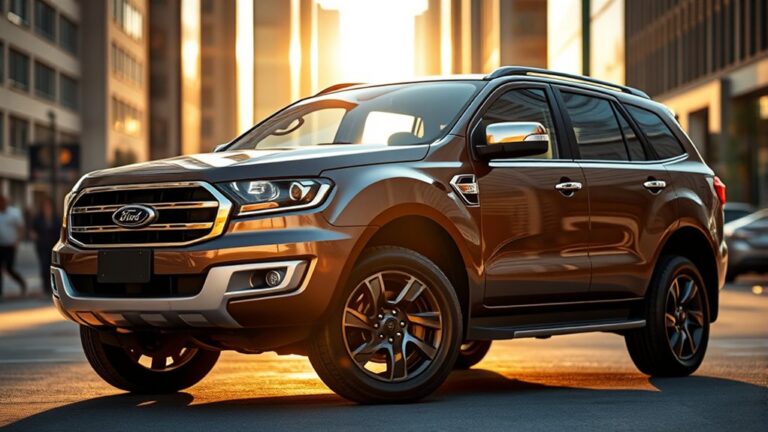
You want the Ford Everest in the U.S., and you want a clear answer. Right now, Ford hasn’t confirmed a launch, and the Everest’s global diesel setup, right-hand-drive focus, and certification costs make a U.S. release unlikely in the near term.
Still, the SUV’s Ranger-based design raises a real question: if Ford ever localizes it, what would change, and would it fit between Bronco, Explorer, and Expedition?
Key Takeaways
- The Ford Everest is a global, body-on-frame SUV based on the Ranger pickup, sold mainly outside the United States.
- Ford has not announced a U.S. release for the Everest, and its chances of coming to America are low.
- U.S. sale would require costly safety, emissions, and left-hand-drive changes, plus dealer and parts support.
- Ford already offers close U.S. alternatives like the Bronco, Explorer, and Expedition.
- If Ford ever brings it here, it would likely be a redesigned U.S.-specific version, not a direct import.
What Is the Ford Everest SUV?
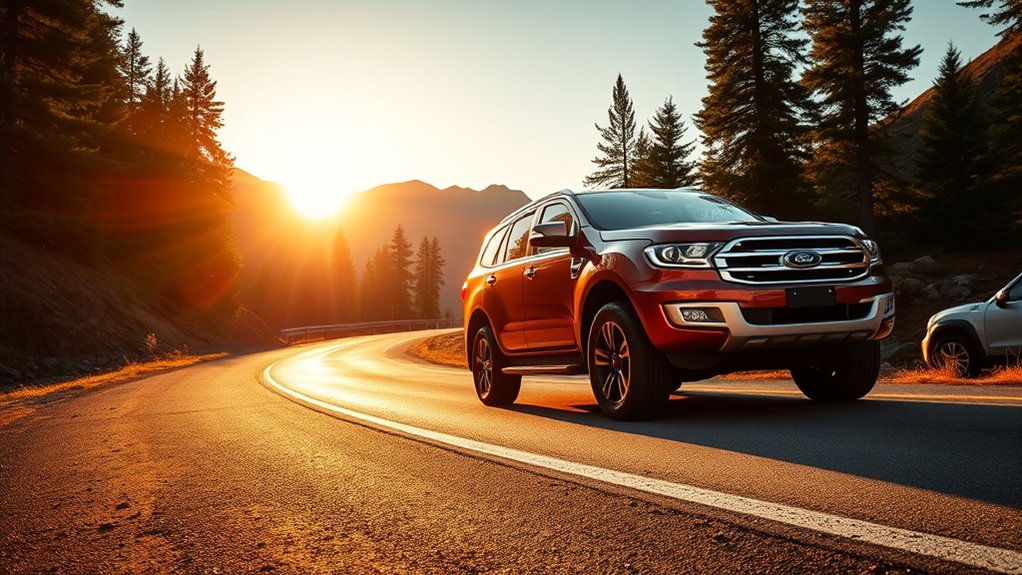
The Ford Everest is a midsize, body-on-frame SUV based on the Ford Ranger pickup platform, designed for markets outside the United States. You get a vehicle built for mixed-use duty, combining ladder-frame durability with three-row seating and SUV practicality.
Ford Everest typically uses turbocharged four-cylinder diesel or gasoline engines, depending on market, and pairs them with automatic transmissions and available four-wheel drive. You’ll notice its suspension tuning favors load carrying, towing, and rough-road capability over soft-road comfort.
Ford positions the Ford Everest within its global strategy by tailoring products to regional demand, regulations, and fuel preferences. That approach lets you compare it with other international SUVs that emphasize utility, versatility, and efficiency rather than U.S.-specific packaging or trim structures.
Why the Everest Isn’t Sold in the U.S.?
Several market and regulatory factors keep the Ford Everest out of the U.S. You’d face a vehicle built for regions with different taxation, emissions rules, and crash standards, so Ford hasn’t certified it for American sale.
The Everest design also targets right-hand-drive and diesel-oriented markets, while U.S. buyers usually expect left-hand-drive packaging, gasoline powertrains, and different towing and infotainment calibrations. Ford’s pricing strategy matters too: importing and reengineering the SUV would raise costs, and it would then compete against established models like the Explorer and Bronco Sport.
You’d also need federal compliance testing, dealer support, and parts logistics. That combination makes the Everest a niche product outside Ford’s current U.S. lineup and limits its business case today.
Will Ford Ever Bring the Everest to America?
Could Ford eventually sell the Everest in the U.S.? You can view the possibility as low, but not impossible. Ford would need to align safety certification, emissions calibration, and supply-chain economics before any launch. The model’s global platform helps, yet U.S. volume targets and pricing pressure still matter.
- You should watch regulatory fit: federal standards can force costly changes.
- You should consider market strategy: Ford may see the SUV as an unrelated topic to its current U.S. lineup.
- You should note brand positioning: an off topic pairing with existing trucks and SUVs could blur internal priorities.
If Ford acts, you’d likely see a localized variant, not a direct import. For now, the Everest remains a plausible future idea, not a confirmed plan.
Ford Everest vs. Bronco and Explorer
When you compare the Everest with Ford’s Bronco and Explorer, the key differences come down to platform intent, body style, and market role. You’ll see the Everest use a truck-based architecture tuned for global markets, while Bronco emphasizes off-road hardware and removable body features.
Explorer, by contrast, targets U.S. family buyers with a unibody layout and smoother road manners. If Ford ever evaluated U.S. sales, it would need to weigh imports logistics, certification costs, and a pricing strategy that doesn’t clash with Bronco or Explorer positioning.
You’d likely notice overlap in seating and utility, but not in engineering priorities. Everest fits a midsize ladder-frame SUV niche; Bronco and Explorer occupy more established domestic roles.
Ford Everest Alternatives for U.S. Buyers
If you’re shopping for something with Everest-like size and capability in the U.S., Ford’s closest alternatives are the Bronco, Explorer, and Expedition, each serving a different purpose. You can compare them on chassis type, towing, cargo volume, and off-road hardware, then match your use case to the right platform. Ford’s design timelines also matter, because each model follows a different refresh cadence and feature set.
- Bronco: body-on-frame, short-wheelbase, strong trail equipment.
- Explorer: unibody, three-row packaging, balanced road behavior.
- Expedition: full-size, maximum passenger and cargo capacity.
Ford’s pricing strategy positions these models across distinct budget bands, so you can avoid overlap and choose the trim that fits your needs.
What’s the Everest’s U.S. Future?
If you’re evaluating the Ford Everest’s U.S. future, you have to weigh its market fit against current buyer demand for midsize SUVs and off-road capability. You also need to contemplate Ford’s global product strategy, since it may prioritize regions where the Everest already aligns with local platforms and sales goals.
Import rules, crash standards, and emissions requirements could further limit a direct U.S. launch.
U.S. Market Viability
From a market-fit standpoint, the Ford Everest faces steep hurdles in the U.S. because it would overlap heavily with the Bronco, Explorer, and Expedition while lacking the brand’s existing midsize SUV positioning stateside. You’d also see pricing pressure from a pickup truck platform, and its fuel economy would need to beat established rivals to win showroom space.
- Overlap risk: You already have Ford SUVs covering similar size and capability bands.
- Certification costs: You’d face added expense for U.S. compliance, testing, and supply-chain changes.
- Demand uncertainty: You’d need strong consumer pull without a clear segment gap.
Technically, the Everest fits better in markets where body-on-frame SUVs fill a distinct utility niche. In the U.S., that niche isn’t empty, so its business case stays weak.
Ford’s Global Strategy
Ford’s global strategy makes the Everest’s U.S. prospects look even less likely, because the SUV is designed to support markets where a rugged, body-on-frame family hauler fills a clear role. In your analysis, you can see that Ford prioritizes regional models that match local demand, dealer networks, and platform sharing.
The Everest’s design aligns with markets in Asia, Australia, and parts of Africa, where midsize truck-based SUVs remain practical and profitable. Ford also uses the same architecture to spread development costs across several nameplates, which strengthens efficiency.
For the U.S., that strategy points elsewhere, toward products that already fit domestic expectations and brand positioning. So, you shouldn’t expect Ford to redirect the Everest unless its global plan shifts in a major way.
Import and Regulation Barriers
Even if the Everest were attractive to U.S. buyers, import and compliance hurdles would still stand in the way. You’d face import barriers tied to federalization, crash testing, emissions certification, and lighting requirements.
Ford would need to modify the SUV to meet FMVSS, EPA, and California standards, which raises cost and timing risk. Regulation barriers also affect labeling, cybersecurity, child-seat anchors, and pedestrian-safety rules.
- You’d need a compliant powertrain and software package.
- You’d need full safety validation for U.S. sale.
- You’d need a business case that offsets homologation costs.
Without those changes, Ford can’t simply ship the Everest into dealerships. That’s why its U.S. future depends less on demand and more on meeting regulatory thresholds efficiently.
Frequently Asked Questions
Does the Ford Everest Come With a Diesel Engine?
Yes, you can get the Ford Everest with a diesel engine in many markets, and Ford offers diesel options such as a 2.0-liter turbo-diesel or 3.0-liter V6, depending on trim and region.
How Many Passengers Can the Ford Everest Seat?
You can seat up to seven passengers in the Ford Everest, depending on trim and layout. Like patent disputes, marketing slogans, it’s a practical three-row SUV with flexible cargo space and adult-friendly second-row room.
What Is the Everest’s Towing Capacity?
You can tow up to about 7,700 pounds, but the exact figure depends on the engine, drivetrain, and towing capacity nuances.
Everest market viability aside, you’ll want to verify your specific trim’s rating first.
Which Countries Currently Sell the Ford Everest?
You’ll find Ford Everest availability mainly in Australia, New Zealand, Thailand, the Philippines, South Africa, parts of Southeast Asia, and select Middle Eastern markets. Regional pricing varies by trim, taxes, and drivetrain.
Does the Ford Everest Offer Four-Wheel Drive?
Yes, you can get the Ford Everest with four-wheel drive; it’s a beast on rough terrain. You’ll see design differences by trim, and future market availability varies, so check local specs for exact drivetrain options.
Conclusion
You should not expect the Ford Everest in the U.S. soon, because Ford is focused on higher-volume, U.S.-specific SUVs. You can see the barriers clearly: different powertrains, different certification rules, and different market demand.
You may find the Bronco, Explorer, or Expedition more practical, because they fit U.S. regulations, U.S. tastes, and U.S. pricing better. Until Ford localizes the Everest, it’ll remain a global model, not an American one.
For now, the Ford Everest is unlikely to make its way to the U.S. market.


