How Wide Is an f150
As an Amazon Associate we earn from qualifying purchases.
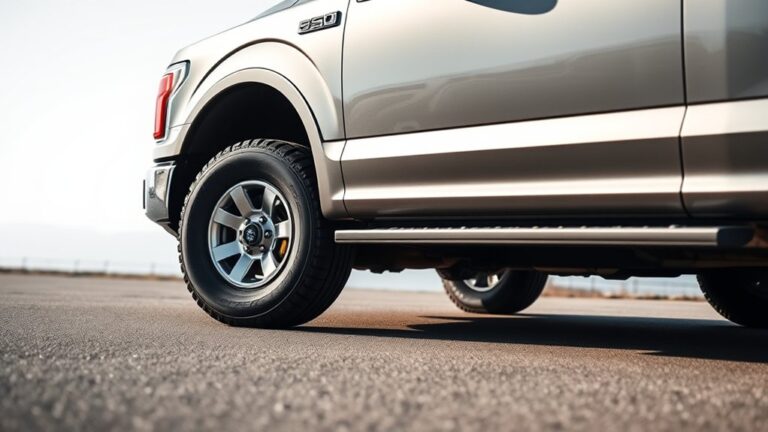
If you’re trying to park a 2024 F-150, knowing how wide an F-150 is will help you plan better. The truck is about 79.9 inches wide without mirrors, but the mirror-to-mirror span is wider and can affect clearance in lanes, driveways, and garage openings.
Cab style usually doesn’t change width much, yet trim, tires, and mirror design can shift the total enough to matter. So, you’ll want to measure more than the body alone when considering space.
This extra width can be crucial for fitting into standard garages or tight spots. Always factor in the mirrors to avoid surprises when parking or driving in narrow areas.
Key Takeaways
- Most current Ford F-150 models are about 79.9 inches wide without mirrors.
- Mirror-to-mirror width is wider than body width because of the side mirrors.
- Width stays nearly the same across Regular Cab, SuperCab, and SuperCrew trims.
- Bed length changes the truck’s overall footprint more than the body width.
- Always check the exact model year and options, since mirrors and packages can slightly change width.
How Wide Is an F-150?
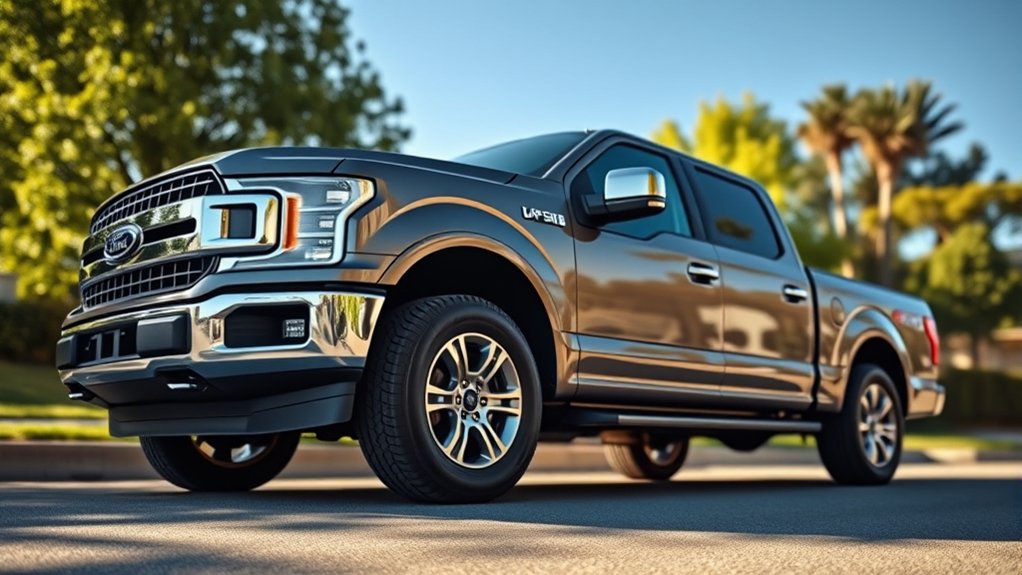
The Ford F-150’s width depends on the cab and trim, but most current models measure about 79.9 inches wide without mirrors. You can use that figure to gauge garage clearance, lane fit, and trailer maneuvering. This width supports a stable track, which helps when you tow, haul, or drive on uneven surfaces.
It also affects turning space and mirror-to-obstacle clearance in tight areas. When you compare trims, small changes can occur due to wheel options and body cladding, but the overall exterior width stays close to this standard.
Because width influences aerodynamics only slightly, it has limited impact on fuel economy. For off road capabilities, the truck’s width improves stance and control, though it can make narrow trails harder to navigate.
F-150 Width by Cab and Bed
You’ll find that F-150 width varies mainly with cab configuration, since Regular Cab, SuperCab, and SuperCrew layouts change the truck’s overall body dimensions.
Bed size also affects the final footprint, because longer beds extend the vehicle’s length but don’t change the core cab width as much as the body profile. Trim level can add small differences through wheel, tire, and fender styling, so you should check the exact configuration when comparing width.
Cab Width Differences
Cab and bed choices can change how the F-150 feels in practice, but they do not substantially alter the truck’s overall width, since Ford keeps the exterior body width nearly constant across most configurations. You’ll notice cab width differences mainly in interior layout, rear-door access, and occupant space, not in the truck’s outside measurement.
Regular, SuperCab, and SuperCrew versions share a similar body shell width, so your parking clearance and lane use stay consistent. For car width ethics, that consistency matters because it helps you compare vehicles fairly without treating cab style as a width change.
When you assess cab width differences, focus on shoulder room, step-in ease, and rear-passenger usability. The main variation is packaging, not exterior breadth, so your dimensional estimate remains stable across cab types.
Bed Size Impact
Bed length affects the F-150’s overall footprint more than its body width, since Ford generally holds the truck’s exterior width steady across bed configurations. You’ll see wide variations in bed measurements, but the cab-to-bed package mostly changes parking length, turning radius, and cargo volume, not mirror-to-mirror width.
The table below shows the typical pattern:
| Bed size | Effect |
|---|---|
| Short bed | Shortest footprint |
| Standard bed | Balanced cargo space |
| Long bed | Greatest overall length |
| Crew cab + short bed | Largest cabin bias |
| Regular cab + long bed | Most cargo-oriented |
When you compare configurations, measure the full truck, including bumpers and mirrors. That gives you the real on-road width impression and helps you plan garage clearance accurately.
Trim Level Variations
Trim level affects F-150 width only indirectly, because Ford keeps the truck’s core body width nearly consistent while cab style and mirror equipment can change the total measured span. You’ll usually see the same basic body width across XL, XLT, Lariat, King Ranch, Platinum, and Tremor models, but a larger cab can make the truck appear broader.
Longer trim length often corresponds to a crew cab paired with a longer bed, which changes overall footprint more than actual width. Higher trims may also add tow mirrors or off-road hardware that increase outside-to-outside width. Curb weight rises with added equipment, but it doesn’t materially widen the body shell.
F-150 Mirror-to-Mirror Width
The F-150’s mirror-to-mirror width is wider than its body width because the side mirrors extend past the fenders. That measurement matters when you’re judging garage clearance, parking access, or tight jobsite maneuvering.
When you check mirror to mirror width, you’re measuring the truck at its widest fixed points, which gives you a more practical footprint than sheet metal alone. This figure also affects curb to curb width decisions when you’re comparing lane fit, trailer positioning, and obstacle spacing.
On many F-150 configurations, the mirrors add several inches on each side, so you should use this dimension instead of the cab width for clearance planning. If you’re navigating posts, walls, or narrow driveways, the mirrored measurement gives you the most accurate real-world width.
F-150 Width Without Mirrors
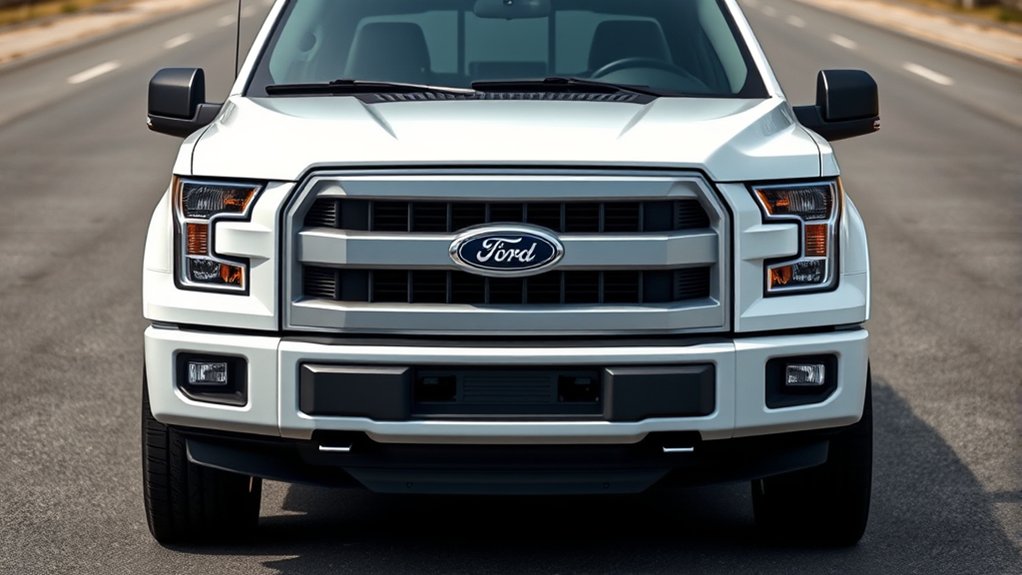
Without the mirrors, an F-150 is narrower by several inches on each side, and that body-only width is the figure you’d use for comparing cab clearance, garage fit, or trailer alignment. You should treat this measurement as the truck’s true exterior footprint, because mirrors add variable width that can distort planning.
Ford’s body width stays consistent across most trims, while wheel and tire choices can change the stance slightly. If you’re evaluating displacement considerations, the width doesn’t affect engine output, but it can influence how easily you maneuver a full-size pickup in confined spaces.
Interior packaging also benefits from the F-150’s broad cab design, since engineers maximize shoulder room without making the body excessively wide. Use the no-mirror width when you need a precise dimensional baseline for technical comparisons.
Can an F-150 Fit in Your Garage?
To determine whether an F-150 will fit in your garage, measure the garage’s clear width, door opening, and interior depth. Then compare those dimensions with the truck’s body width, overall length, and turning clearance. Use the fields overview below to assess fit, and inspect the interior layout for obstructions.
| Check | Requirement |
|---|---|
| Clear width | Must exceed truck width |
| Door opening | Must accept mirrorless body |
| Interior depth | Must exceed truck length |
| Ceiling height | Must clear roofline and opener |
| Floor layout | Must allow straight entry |
You should also account for shelving, tools, and wall protrusions because they reduce usable space. If your measurements leave only a small margin, the truck may enter but won’t park cleanly or allow normal door opening.
F-150 Parking Space Clearance
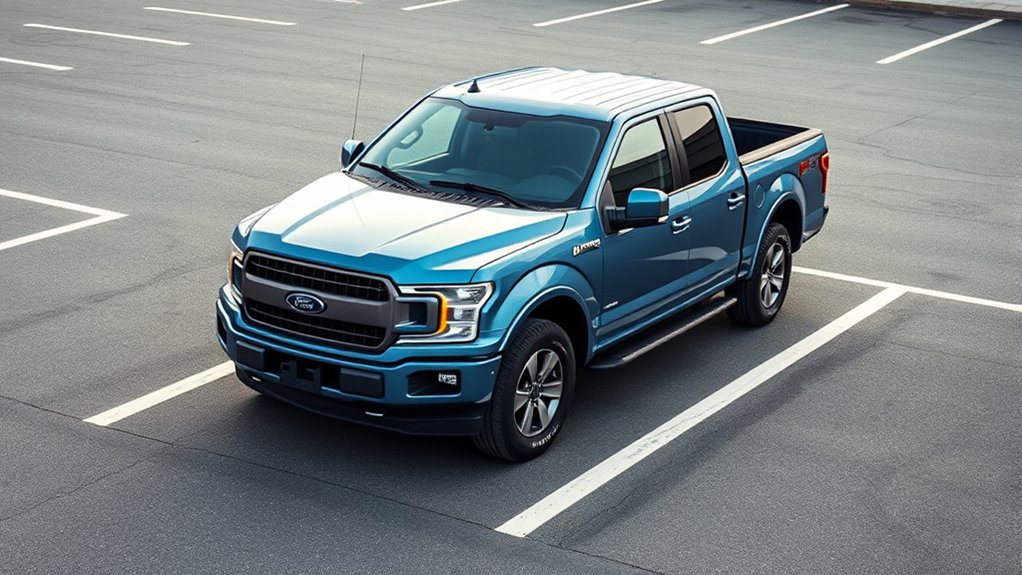
How much clearance do you actually need for an F-150 parking space? You should plan for more than the truck’s body width because mirrors, door swing, and entry alignment affect usable clearance.
A standard parking space may fit the truck’s footprint, but you’ll want extra side room for safe maneuvering and to reduce door contact with adjacent vehicles or walls. In practical terms, you should target a wider parking space or end space when possible, especially in tight lots.
Measure the stall width, then add margin for mirror extension and steering correction. Useful discussion ideas include angled access, curb placement, and pedestrian clearance.
If you’re parking daily, prioritize a layout that lets you enter, exit, and open doors without forcing precise repositioning.
How the F-150 Compares to Other Trucks
When you compare the F-150 with rival full-size trucks, you’ll see its width, cab size, and bed dimensions vary by trim and configuration. You can use these measurements to judge how it stacks up against competitors in garage clearance, parking fit, and cargo capacity.
The F-150’s overall footprint often lands near the middle of the segment, but specific cab and bed choices can shift that balance.
F-150 Size Versus Rivals
Compared with rival full-size pickups, the Ford F-150 typically sits near the middle of the class in exterior width, though exact figures vary by cab style, bed length, and mirror configuration. You’ll find it comparable to the Chevrolet Silverado 1500, Ram 1500, and Toyota Tundra, with only minor dimensional differences that usually affect parking clearance and lane positioning more than daily usability.
In practical terms, the F-150’s body width gives you a stable stance without pushing it into the widest-truck category. For two word discussion ideas, subtopic irrelevant details like trim badges or wheel design don’t change the core measurement. You should compare published mirror-to-mirror and body-only specs when you need precise sizing, since manufacturers often list different figures for the same truck platform.
Cab And Bed Dimensions
Cab and bed dimensions change the F-150’s overall footprint more than most buyers expect, because wheelbase, cab type, and box length all affect how the truck fits in a garage, on a jobsite, or in a parking space. You’ll see the shortest standard cabs prioritize maneuverability, while crew cabs and long beds increase wheelbase relevance and curb-to-curb space.
Compare dimensions carefully:
- Regular cab: shortest wheelbase, best turning radius
- SuperCab: mid-length compromise
- SuperCrew: more rear-seat room, longer frame
- Short bed: easier parking and loading
- Long bed: maximum cargo volume, reduced agility
These proportions also influence panel alignment, door swing clearance, and trailer hookup access. Against rivals, the F-150’s range is broad, so you can match size to task without guessing.
Do F-150 Trims Change Width?
Yes, F-150 trims can affect width, but usually only slightly, and most of the variation comes from mirrors, wheel packages, and bed or cab configurations rather than the trim name itself. When you compare trims, focus on width considerations such as standard versus extended mirrors, because mirror reductions can change the overall measurement more than the badge does.
Off-road or upscale trims may also use different fender treatments or tire packages that alter stance by a small amount. In practice, you’ll usually see the same basic body width across most trims, with minor differences tied to equipment. Always check the specific model year and factory specs, since Ford can revise dimensions between generations and option groups without changing the trim designation.
How F-150 Width Affects Towing and Driving
An F-150’s width can affect both towing control and everyday maneuvering, especially when you’re dealing with trailers, tight job sites, or narrow roads. You’ll notice that a wider stance can improve lateral stability when you’re pulling a load, but it can also demand more room in lanes, parking spaces, and turn paths.
Wider tire footprints can help distribute weight and support traction, yet they may increase scrub risk in confined spaces. Your driving ergonomics matter too, because mirror placement, seat height, and steering input all influence how accurately you place the truck.
- Better sway resistance at highway speed
- More precise trailer tracking
- Increased blind-spot awareness needs
- Tighter clearance in urban driving
- Greater confidence on uneven surfaces
Frequently Asked Questions
Does F-150 Width Change With Different Model Years?
Yes, your F-150 width does change slightly by model year, trim, and cab style. You’ll see width variations from design updates, tire dimensions, and mirror options, but the differences usually stay modest overall.
Is the F-150 Wider Than a Ford Ranger?
Yes, you’ll find the F-150’s wider than a Ford Ranger, like a heavyweight beside a middleweight. Its obscure design and interior materials don’t change that; you’re looking at roughly 6 to 8 inches more width.
How Does Tire Choice Affect F-150 Width?
Tire choice changes your F-150’s overall width mainly through tire width and wheel size.
Wider tires increase section width and can slightly alter track feel, but they don’t change the truck’s body width itself.
Are Aftermarket Running Boards Included in Width Measurements?
No, aftermarket running boards usually aren’t included in factory width figures. You’ll often see measurements exclude removable aftermarket accessories, because measurement conventions typically use the truck’s body width only, not bolt-on additions.
Does F-150 Width Impact Car Wash Compatibility?
Yes, your F-150’s width can affect car wash compatibility. You should check mirror clearance and track spacing, since model year variation changes dimensions slightly.
Measure with accessories installed, and confirm the wash’s maximum vehicle width first.
Conclusion
In the end, you should plan around both the F-150’s body width and its mirror span. At about 79.9 inches wide without mirrors, the truck’s core footprint stays fairly consistent across most configurations. However, the mirrors can add several more inches of clearance demand.
That matters most in garages, narrow lanes, and parking spots. If you compare specs carefully, you’ll see that wheelbase and bed length change more than width. This helps explain fit and maneuverability.
When considering how wide an F-150 is, remember that the width specification without mirrors gives a baseline, but including mirrors is crucial for practical space planning.


