How Wide Is a Ford Raptor
As an Amazon Associate we earn from qualifying purchases.
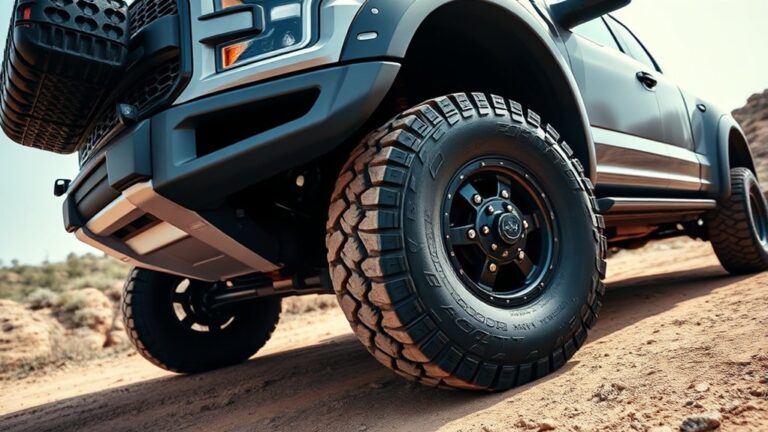
Like a wide-track machine built for the frontier, the width of a Ford Raptor measures about 86.6 inches across without mirrors. However, the exact figure can vary depending on the model year, cab, trim, wheels, and tires.
You’ll need to consider mirror width for garage, trail, and towing clearance, since folding them helps but doesn’t eliminate the total span.
The practical question isn’t just how wide it is—it’s whether that width works where you plan to take it.
Key Takeaways
- A Ford F-150 Raptor is about 86 inches wide without mirrors.
- Mirror-to-mirror width is wider and varies by model year and mirror design.
- Second-generation Raptors are roughly 86.6 inches wide without mirrors.
- The Raptor is wider than a standard F-150 because of its flared body and suspension.
- Exact width can vary with trim, tires, wheel offset, and factory options.
How Wide Is a Ford Raptor
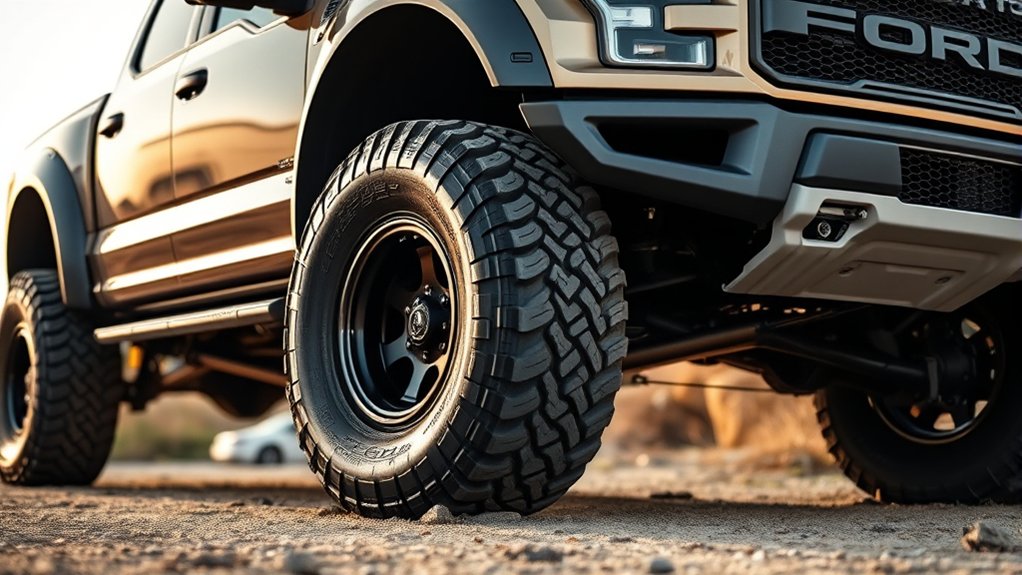
If you’re asking how wide a Ford Raptor is, the answer depends on the model year and configuration, but most modern F-150 Raptor trucks measure about 86 inches wide without mirrors. You should treat that figure as the body width, which affects garage clearance, trailer loading, and lane positioning.
Because Ford designs the Raptor for high-speed dirt use, the stance is broader than a standard F-150, and that helps stability on uneven terrain. You’ll also need to account for width constraints in narrow trails, car washes, and parking structures.
This width supports off road accessibility by improving track stability, suspension travel clearance, and wheel placement over obstacles. Exact measurements can vary slightly with trim, tires, and factory options, so you should verify your specific truck’s specifications before planning access.
Ford Raptor Width With Mirrors
With mirrors included, a Ford Raptor’s overall width increases enough to matter in tight spaces, and the exact figure depends on the model year and mirror design. You should treat the mirrors as part of the truck’s true footprint when measuring garage clearance, lane positioning, or trail access.
In width comparisons, the Raptor can appear manageable without mirrors but much larger once they’re extended. Folding mirrors reduce that span, yet you still need room for safe passage and door opening.
For off road concerns, the added width can limit brush clearance and increase the chance of contacting rocks, trees, or ruts. You’ll get the most accurate measurement by checking the truck with mirrors fully deployed before entering confined areas.
Raptor Width by Model Year
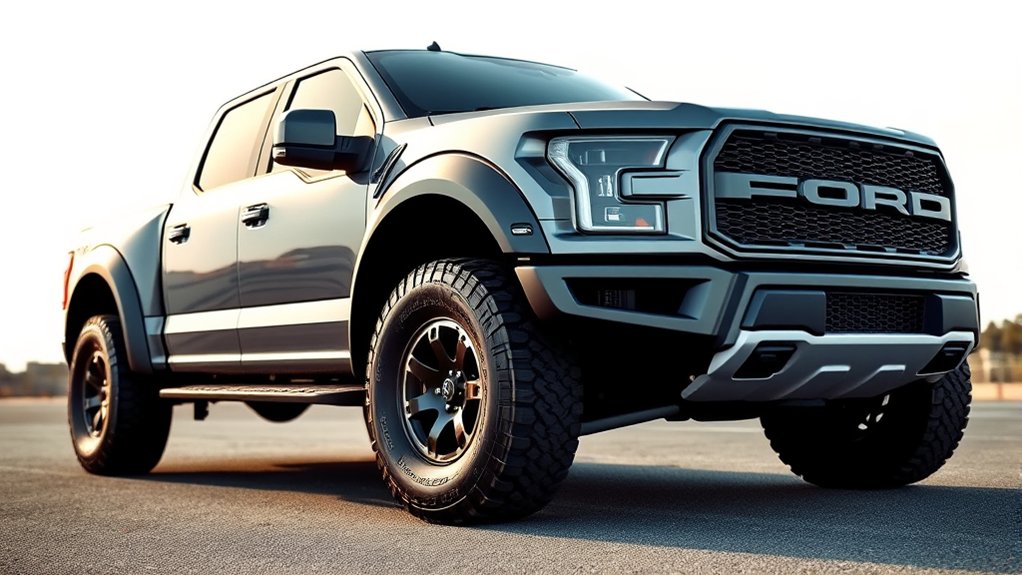
Raptor width has changed across model years, so the exact measurement depends on which generation you’re looking at. You’ll usually see first-generation trucks measure about 86 inches wide without mirrors, while later models grew slightly as the body and fender structure evolved.
The second-generation Raptor increased overall width to roughly 86.6 inches, and the current generation stays near that figure with minor trim-dependent variation. You should verify the specific year because factory equipment, wheel offset, and tire choice can affect the stated width.
A rusty brake caliper won’t change the dimension, but it can make visual inspection harder. Likewise, glossy paint can make the truck appear wider under bright light. Always compare factory specifications, not showroom impressions, when you need an accurate model-year width.
Raptor vs. F-150 Width
You can compare the Raptor’s width specs directly with the standard F-150 to see how the off-road package changes overall stance. You’ll usually find the Raptor is wider at the body and even more pronounced mirror to mirror, which affects garage fit and trail clearance.
That mirror-to-mirror difference matters because it shows the truck’s true outer width, not just the cab or fender measurement.
Raptor Width Specs
Compared with a standard F-150, the Ford Raptor is noticeably wider because of its off-road suspension, wider track, and flared bodywork. You’ll typically see the Raptor listed at about 86.3 inches wide without mirrors, which places it well beyond the base truck’s body width.
That extra stance improves off-road grip by widening the contact patch under load and helping the suspension stay stable on uneven terrain. You should also note that the broader chassis supports larger tires and stronger control at speed.
If you’re evaluating turbo reliability, the wider package doesn’t change engine design, but it can help the truck manage heat and stress better during demanding use. Overall, the Raptor’s width is a functional engineering choice, not just styling.
F-150 Width Comparison
Against the standard F-150, the Raptor’s wider body is easy to measure and easy to notice. You’ll typically see about a 7 to 8 inch increase in overall body width, depending on model year and measurement method.
That extra width comes from the Raptor’s dedicated suspension, fender flares, and track-oriented architecture, not from cosmetic trim alone. Compared with a regular F-150, you get a more aggressive off road stance and greater lateral stability on rough terrain.
The standard truck keeps a narrower profile for easier parking and tighter clearance, while the Raptor prioritizes wheel travel and stability. If you’re comparing dimensions, use body width, not mirror width, for the cleanest factory-to-factory reading. This difference defines the Raptor’s wide body identity.
Mirror-To-Mirror Difference
Mirror width changes the picture quite a bit, because Ford’s side mirrors add several inches on each side and narrow the practical gap between a Raptor and a standard F-150. When you measure mirror-to-mirror, you see that overall width can feel similar in tight lanes, even though the Raptor still has a broader body and a more aggressive wide stance.
That matters in garages, drive-thrus, and trail access where clearance depends on the outermost points, not the cab shell. You should also account for mirror fold-in capability, since it reduces curb impact risk during parking or low-speed maneuvering.
In technical terms, mirror hardware can shift the usable width figure enough to affect real-world placement, but it doesn’t change the Raptor’s underlying track width.
Will a Ford Raptor Fit in Your Garage?
To determine whether your Ford Raptor will fit in your garage, compare its overall width, including mirrors, to your garage opening and interior clearance. You should check the Raptor’s width dimensions against the usable space, not just the nominal door width, because wall offsets, trim, and storage can reduce clearance.
You also need enough mirror-to-wall space on both sides to open the doors and maneuver without contact.
Raptor Width Dimensions
How wide is a Ford Raptor, and will it fit in your garage? You need the Raptor width dimensions to answer that precisely. The truck’s body measures about 86.6 inches wide without mirrors, while the mirror-to-mirror span is wider.
That width supports stable handling and a broad stance, but it also affects parking access. Use these two word idea 1 and two word idea 2 measurements to compare against your space.
- Body width: 86.6 inches
- Mirror width: wider than body
- Stance: aggressive and stable
- Fit check: compare door opening
You should measure your garage opening and interior width directly. Exact trim and model year can shift dimensions slightly, so always verify specs before you rely on clearance.
Garage Clearance Check
Will a Ford Raptor fit in your garage? Measure the interior width, depth, and door opening before you park it. A typical Raptor is about 86 inches wide without mirrors, so you need more than the truck’s body width to enter safely.
Compare that figure with your garage’s clear width and allow room for door swing, storage, and walking paths. Check ceiling clearance if you use roof racks, lifts, or garage door hardware that hangs low.
You should also assess garage organization, because shelves, cabinets, and tools can reduce usable space quickly. If your bay is tight, test the turning angle at the entrance and verify floor space for opening doors, loading cargo, and maneuvering without contact.
Mirror-To-Wall Space
After you confirm the garage’s clear width, measure mirror-to-wall space so the truck can enter and sit without contact on either side. You should account for the Ford Raptor’s extended mirrors, because they often set the limiting dimension, not the body.
Use a tape measure from each mirror edge to the nearest wall, column, or stored item. Keep at least 6 inches per side for safe maneuvering, and more if you back in at an angle. Consider these checks:
- Door opening width at the narrowest point
- Mirror clearance with doors fully open
- Turning path from driveway to stall
- Space for exit and cargo access
Idea one: mark tire paths with painter’s tape. Idea two: test-fit at slow speed.
Ford Raptor Width on Narrow Roads
On narrow roads, the Ford Raptor’s width can make a noticeable difference in maneuverability, especially when you’re passing through tight lanes, old streets, or construction zones. You need to account for width considerations before you enter confined spaces, because lane width, curb clearance, and oncoming traffic all affect control.
The Raptor’s track and fender package leave less lateral margin than a midsize truck, so you should center the vehicle carefully and reduce speed. Good tire selection can also influence how confidently you place the truck, since tire sidewall and tread width affect perceived space at the edges.
You’ll want to use mirrors, lane markings, and extra following distance to avoid clipping obstacles. Precise steering inputs help you maintain a clean path and prevent unnecessary corrections.
Ford Raptor Width for Off-Road Trails
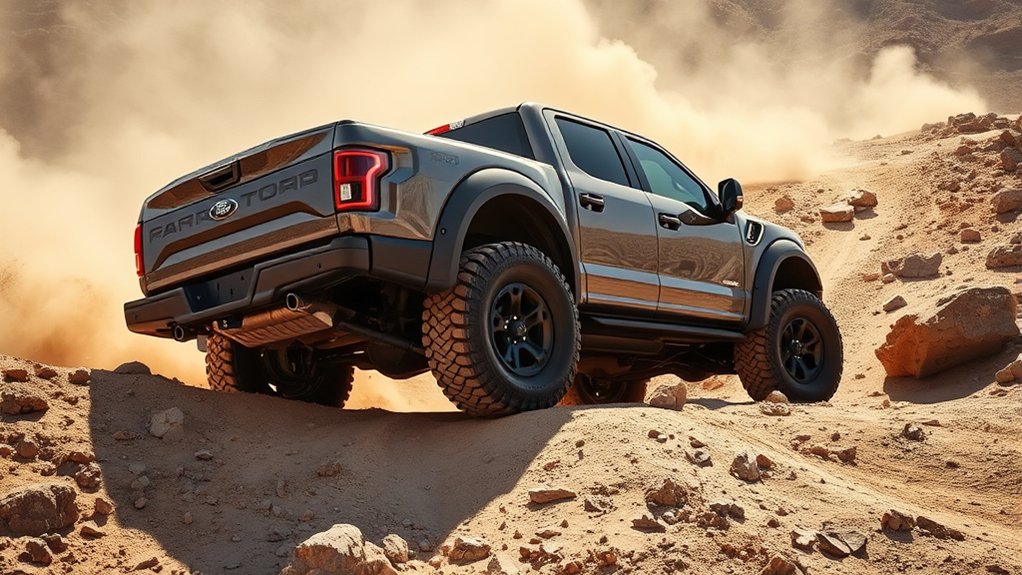
Off-road trails demand even more attention to the Ford Raptor’s width because rutted paths, rocks, trees, and steep embankments can reduce usable clearance well below the trail’s nominal size. You should measure not just the truck’s body but also mirror span, tire placement, and suspension articulation.
The off road suspension helps absorb uneven terrain, yet it can also shift the truck laterally over obstacles.
- Tight switchbacks force careful line choice.
- Deep ruts can tilt the truck toward brush.
- Boulder fields narrow the path between hazards.
- Overgrown branches often contact mirrors first.
You’ll also want to account for cargo space, since added load can change approach behavior and height, affecting how confidently you place the truck on narrow trails.
Is the Ford Raptor Safe for Towing?
When you tow with a Ford Raptor, its wide track can improve straight-line stability, but you still need to account for trailer weight, tongue load, and braking distance.
You should compare the truck’s tow rating with the trailer’s actual loaded weight, since exceeding the limit can reduce control and increase drivetrain stress. You also need to confirm that the hitch, suspension, and cooling systems match the towing setup you plan to use.
Towing Stability
Towing with a Ford Raptor can feel secure, but its stability depends on load size, trailer setup, and how you drive. You should keep the trailer level, because a nose-high or nose-low attitude can shift weight and amplify sway.
The Raptor’s wide track and tire clearance help you control lateral movement, while careful payload balance keeps the rear suspension from sagging and changing steering response.
- Center heavy cargo low in the trailer.
- Use a properly adjusted hitch and trailer brake controller.
- Check tire pressures before you move.
- Accelerate, brake, and steer smoothly.
When you’re on uneven pavement, the truck can transmit less pitch and roll if the load stays stable. Proper setup makes the tow feel predictable and controlled.
Tow Ratings and Limits
Can the Ford Raptor tow safely? You can tow within the Raptor’s published rating if you match load, hitch, and axle limits. Most modern Raptor trims are rated around 8,000 to 8,200 pounds, but your exact figure depends on cab, bed, drivetrain, and equipment.
You should verify gross vehicle weight rating, gross combined weight rating, tongue weight, and payload before you hook up. The truck’s wide stance helps tow compatibility by improving control, yet its suspension, tires, and off road challenges can reduce margin when you’re pulling a heavy trailer on uneven surfaces.
You’ll get the best results on pavement, with proper brake controllers, trailer sway control, and conservative loading. Always confirm numbers on the door placard and tow guide.
What Changes Raptor Width?
Raptor width changes based on the model year, cab and bed configuration, drivetrain hardware, suspension setup, and whether you’re measuring at the body, mirrors, or the widest exterior points. You’ll also see variation from trim-specific fender flares, wheel offset, and tire section width, which can push the outer stance outward.
In practice, these differences affect garage clearance, lane positioning, and off road etiquette, so you should verify the exact measurement standard before comparing trucks. Payload considerations can also influence suspension compression, which slightly alters real-world stance under load.
- Wider mirrors increase measured span.
- Flared fenders add body width.
- Larger tires extend the track visually.
- Suspension tuning changes ride height and stance.
Is the Ford Raptor Too Wide for You?
Whether the Ford Raptor feels too wide depends on how and where you drive it. You’ll notice its broader stance most in narrow lanes, older parking garages, and tight trail corridors.
If you commute in suburban traffic or tow on open roads, the width usually won’t be a problem. You should also consider mirror span, turning radius, and parking space size, since these affect daily usability more than body width alone.
The Raptor’s size can reduce maneuverability, but it also improves stability at speed and off-road control. Fuel economy isn’t ideal for any full-size performance truck, so width shouldn’t be your only concern.
If you value interior comfort, raised seating, and secure handling, the tradeoff may feel acceptable.
Frequently Asked Questions
Does Ford Raptor Width Affect Parking in Compact Spaces?
Yes, its width can make compact parking tougher. You’ll need extra parking space and careful curb clearance. The Raptor’s off-road width exceeds many stalls, though its highway width still fits standard lanes.
How Does Raptor Width Compare to Other Off-Road Trucks?
You’ll find the Raptor’s width sits near the top of the off road class, with width comparisons showing it’s broader than many midsize rivals but similar to full-size desert trucks like the Ram TRX.
Can a Ford Raptor Fit Through Standard Car Wash Lanes?
Yes, you can fit some Raptors through standard car wash lanes, but you should check clearance first. Like a river testing a bridge, you’ll need enough width and mirror margin for safe passage.
Does Tire Size Change the Raptor’s Overall Width?
Yes, tire size can change your Raptor’s overall width slightly, but tire width and wheel offset matter most.
Wider tires or more negative offset push the sidewalls outward, increasing track width and clearance requirements.
Are There Width Differences Between Cab Styles?
Yes, you’ll usually find cab width stays the same, oddly enough; only wheelbase changes. You should verify door clearance, though, since SuperCab and SuperCrew affect overall length, not the truck’s external width.
Conclusion
You see that a Ford Raptor is wide, and that width affects your garage, your trails, and your towing setup. You measure body width for comparison, you measure mirror width for clearance, and you check your exact model year for accuracy.
You gain stability on-road, you gain confidence off-road, and you gain capability when towing, but you also need more space, more planning, and more careful placement.
If you know the numbers, you can decide wisely about how wide a Ford Raptor really is and what that means for your driving and parking needs.


