How Wide Is a Ford Explorer
As an Amazon Associate we earn from qualifying purchases.
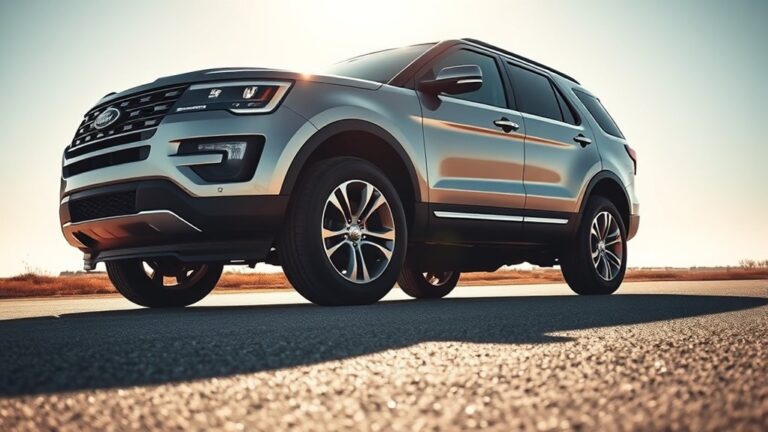
If you’re measuring a Ford Explorer, you’ll find it’s typically about 78.9 inches wide without mirrors, with small changes by year and trim. This width places the vehicle in a practical middle ground for space and parking, making it versatile for many drivers.
The real difference shows up when you factor in mirrors, garage clearance, and cabin room. Before you decide whether it fits your needs, there are a few width details worth checking. Understanding these measurements can help ensure the Ford Explorer meets your requirements.
Key Takeaways
- A Ford Explorer is about 78.9 inches wide without mirrors, though exact width varies by model year and trim. This makes it a midsize SUV with a wider footprint than compact crossovers.
- With mirrors folded, it is easier to fit in garages and tight parking spaces. With mirrors open, the Explorer needs noticeably more side clearance for driving and parking.
- Its width supports a roomy cabin and stable highway handling without being as bulky as full-size SUVs.
How Wide Is a Ford Explorer?
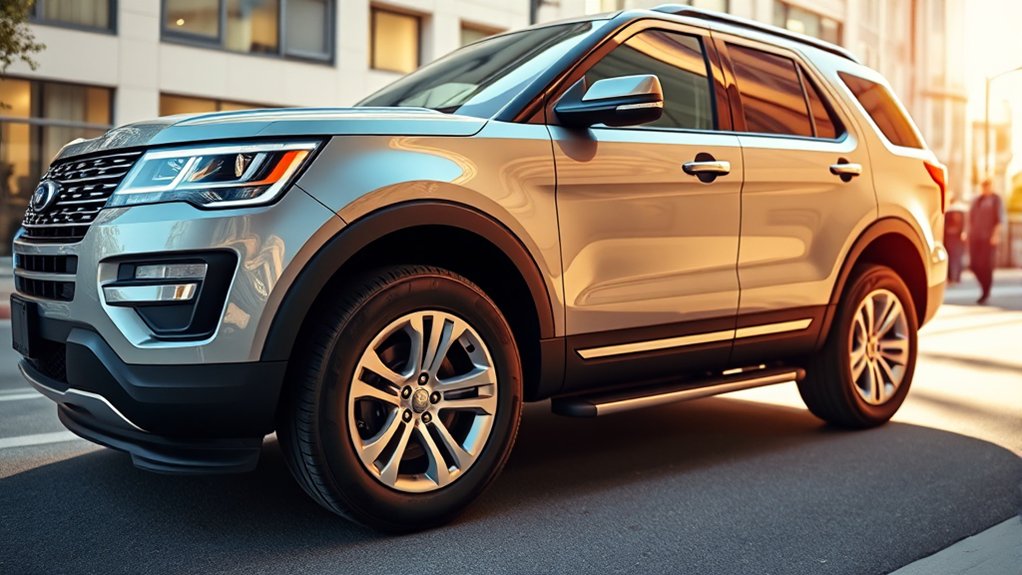
The Ford Explorer is about 78.9 inches wide without mirrors, depending on the trim and model year. You should expect a midsize SUV footprint that takes more room than a compact crossover.
That width can matter when you drive through narrow streets, tight garage openings, or wide corridors in parking structures. You’ll want to allow extra space when you open doors and pass other vehicles. Good parking etiquette helps you avoid blocking lanes or crowding adjacent spots.
In everyday use, the Explorer’s width still feels manageable, but you need to stay alert in confined areas. Check your surroundings before turning or parking, and use your mirrors to judge clearance. This helps you handle the vehicle confidently and safely.
Ford Explorer Width by Model Year
Ford Explorer width can vary a bit by model year, so it’s worth checking the exact version you’re comparing. You’ll see clear model year distinctions across generations, but the changes are usually modest rather than dramatic.
Earlier Explorers were generally narrower, while newer models widened slightly to improve cabin space, stability, and road presence. When you review width trends, look at the published overall width, which usually includes mirrors only when noted separately.
A model year change can affect parking fit, garage clearance, and lane feel, even if the difference is just an inch or two. To compare accurately, use the manufacturer’s specs for the exact year you need, since small updates can shift dimensions without changing the nameplate.
Explorer Width by Trim Level
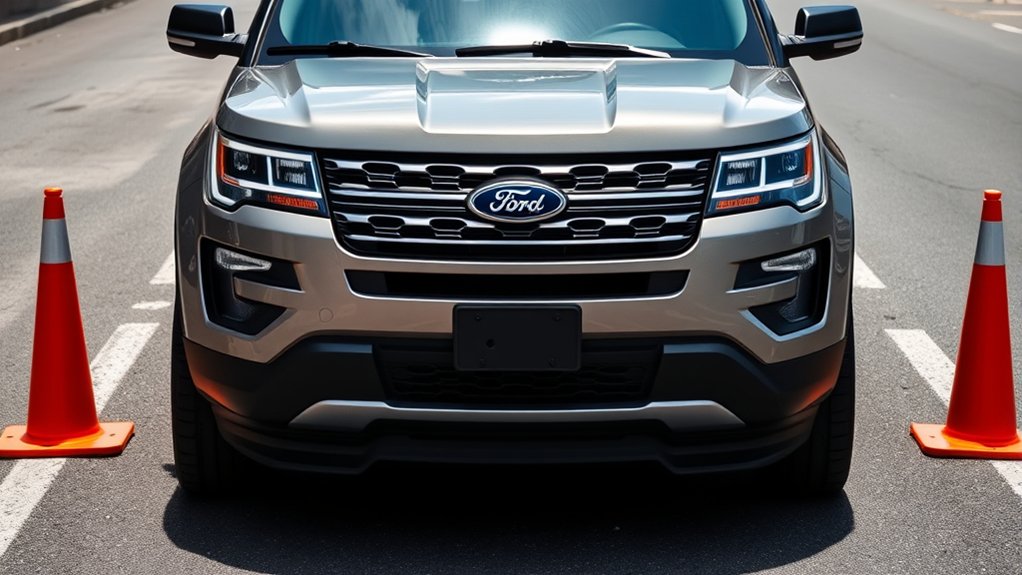
Trim level can also affect an Explorer’s width details, especially when different wheel and tire setups or added body cladding come into play. You’ll usually see small changes, not major ones, so a width comparison across trims mainly reflects trim specifics rather than a different body structure.
Standard body widths stay close, while sportier or off-road trims may look broader because of styling.
| Trim level | Width note |
|---|---|
| Base trims | Similar overall width |
| Sport trims | Wider visual stance |
| Off-road trims | Added cladding can change appearance |
For you, the key point is that trim choice rarely changes the core measurement much. Instead, it influences how wide the Explorer appears and how its equipment fits within the same basic footprint.
Width With Mirrors Folded and Open
With the side mirrors folded, an Explorer’s width is closer to its body-only measurement, which matters when you’re checking garage clearance or squeezing into a narrow space. When you open the mirrors, the width including mirrors increases noticeably, so you should use that measurement for real-world driving and parking comparisons.
The added span can affect how much room you need in tight lanes, drive-throughs, and curbside spots. Mirror position doesn’t change the turning radius, but it does change how much lateral space you occupy while maneuvering.
If you want the most accurate figure, compare both folded and open dimensions before planning a route. That way, you’ll understand the Explorer’s true footprint and avoid surprises in confined spaces or busy traffic areas.
Will an Explorer Fit in Your Garage?
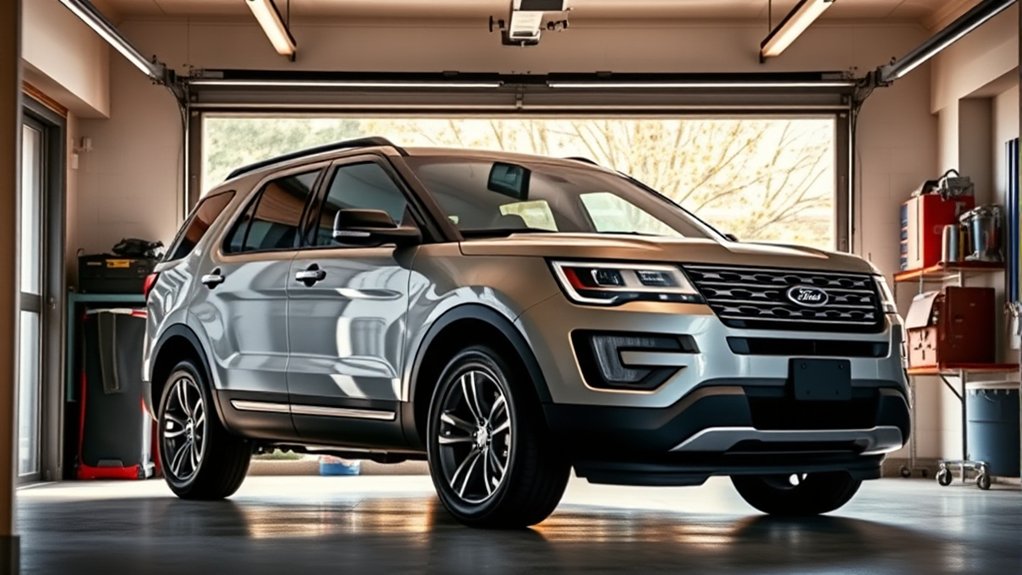
To see if an Explorer will fit in your garage, you need to compare its width with your available garage width clearance. You should also check the door opening space, since a narrower entrance can limit how easily you can drive in.
Measuring both the interior width and the opening helps you judge the fit more accurately.
Garage Width Clearance
Can a Ford Explorer fit in your garage? You need to compare your garage dimensions with the Explorer’s width and leave room for safe movement. The SUV is wide enough that tight stalls can feel cramped, especially if you store bikes, bins, or tools along the walls.
Check the space between obstructions and measure from wall to wall at the narrowest point. Also account for mirror clearance, since folded mirrors still need breathing room when you park. If your garage is only slightly wider than the vehicle, you’ll likely manage, but opening doors and walking around it may be awkward.
A wider bay gives you easier access, less stress, and fewer scrape risks.
Door Opening Space
Garage wall clearance is only part of the equation; you also need enough space to open the doors comfortably once the Explorer is parked. You should account for door clearance on both sides, especially if you plan to load kids, groceries, or gear in a tight garage.
The Explorer’s door swing is broad enough that narrow stalls can make entry awkward, even when the SUV fits between the walls. Measure from the parked vehicle to nearby walls, cabinets, or other cars, and leave extra room for mirrors and hands.
If you’re using a single-car garage, you may need to park off-center or choose compact storage solutions. Adequate opening space improves daily use and reduces the chance of dings, scraped paint, and frustrated passengers.
How Explorer Width Affects Cabin Room
The Explorer’s width helps you get more shoulder room up front and in the second row, which can make the cabin feel less cramped. It also supports more usable third-row space, though that area still works best for shorter trips or smaller passengers.
In general, you’ll see the width trade off between passenger comfort and cargo space, especially when you use all three rows.
Shoulder Room Benefits
With its broad body, the Ford Explorer gives you more shoulder room than you’d expect from a midsize SUV. That extra width improves width ergonomics, so you and your front passenger can sit with less contact at the upper body. It also helps door clearance, making entry and exit feel less tight in parking lots and garages.
| Area | Benefit | Effect |
|---|---|---|
| Front seats | More lateral space | Fewer shoulder clashes |
| Rear seats | Wider seating span | Better comfort for two |
| Doors | Greater opening feel | Easier access |
| Cabin layout | Improved spacing | Less crowding |
You’ll notice the cabin feels open without sacrificing seat support. The wider footprint doesn’t change the SUV’s size class, but it does make everyday travel more comfortable for you and your passengers.
Third-Row Space
Third-row space in the Ford Explorer benefits from the SUV’s wider body, which gives you a bit more room to settle in and move your shoulders without feeling pinched. That extra width can improve third row clearance, so you’re less likely to feel boxed in when you sit back there.
You also get easier side-to-side movement when climbing in or adjusting your position. The added cabin width can make the third row feel more usable for short trips, especially when you need to seat extra passengers without immediate crowding.
Wider proportions can also help with cargo access, since you can reach into the rear area more easily when the seats are folded. Overall, width supports practical rear-seat usability.
Cargo Versus Passenger Space
How does the Explorer’s width shape its cabin? You get a layout that balances cargo spacing with passenger comfort. The extra width lets you fit wider seats, broader center storage, and easier shoulder room for adults in both rows.
When you fold the rear seats, you open a flatter load area that supports bulky bags, strollers, or sports gear without crowding the cabin. In daily use, that width helps you move between seats more easily and reduces the feeling of confinement on longer trips.
You still have to choose between people and gear, but the Explorer’s cabin gives you enough room to manage both better than many midsize SUVs. That balance makes the vehicle more practical for family duty and travel.
Compare Explorer Width to Rivals
Compared with other midsize SUVs, the Ford Explorer sits near the middle of the pack in width, so it’s neither especially slim nor unusually broad. When you compare explorer width with rivals width, you’ll notice it aligns closely with many three-row competitors.
- The Explorer’s body is wider than some compact crossovers.
- It matches several midsize SUVs that target family buyers.
- It can feel a bit narrower than a few full-size alternatives.
- It avoids the oversized footprint that some larger SUVs carry.
This balance means you get a familiar cabin layout without stepping up to a much bigger vehicle. If you’re shopping by size alone, you can use width as one clear comparison point among rival models.
How Width Affects Handling
A wider SUV like the Ford Explorer can feel more planted at speed, which helps improve straight-line stability and confidence on the road. You’ll usually notice calmer body motion during lane changes and highway cruising because added width can support more balanced driving dynamics.
That broader stance can also reduce the sense of top-heaviness in corners, although tire grip, suspension tuning, and wheelbase effects matter just as much. If you steer quickly, the Explorer may still respond with a bit more lean than a smaller crossover, but its width helps it track predictably.
In daily driving, that stable feel can make it easier to hold a lane and stay composed over uneven pavement, especially when the road gets rough or winds pick up.
What to Measure Before Buying
Before you buy, measure the garage opening, driveway clearance, and any tight parking spaces you use most often. Compare those numbers with the Explorer’s width, including mirrors if they stay extended.
Check door swing space so you can open doors without hitting walls or another vehicle. Use width comparisons with your current SUV or a similar model to judge whether the Explorer will fit your routine.
Also note curb weight, because a heavier vehicle may affect driveway traction, loading ramps, and parking ease on slopes.
- Garage width
- Side clearance
- Turning space
- Mirror-to-mirror width
Frequently Asked Questions
Does the Ford Explorer Width Include Side Mirrors?
No, you usually don’t include side mirrors in the Ford Explorer’s width measurement.
You’ll see two word ideas like body width or track width, which exclude mirrors unless a spec sheet explicitly says mirror-to-mirror.
Is the Explorer Wider Than a Ford Edge?
Yes, you’ll find the Explorer is generally wider than a Ford Edge.
In Explorer width comparisons, Mirror inclusion can affect measurements, but the Explorer still exceeds the Edge’s body width in most specs.
Can Three Child Seats Fit Across the Rear Bench?
Yes, you can fit three child seats across the rear bench in some Explorer trims, but it’s tight. You’ll need slim seats and careful installation to preserve child seat safety and achieve true three across seating.
Does Wider Explorer Trim Affect Parking Ease?
A wider Explorer trim can make parking feel like threading a needle in a hurricane, but you’ll still manage it. The extra car width slightly reduces parking ease, especially in tight city spaces.
Are Roof Rails Included in the Width Measurement?
No, you typically don’t include roof rails in the main width figure; automakers measure body width, often excluding side mirrors too.
If you’re parking or comparing specs, check whether the listing notes mirrors separately.
Conclusion
So, how wide is a Ford Explorer? You’re looking at roughly 78.9 inches without mirrors, with small differences by year and trim. That places it in the practical middle of the midsize SUV class: roomy enough for comfort, but not so wide that it becomes difficult to park.
If you’re checking garage fit or tight-driveway clearance, measure carefully. The theory that wider SUVs always feel harder to manage mostly holds, but mirrors matter most.
When considering overall dimensions, the width of a Ford Explorer balances space and maneuverability, making it a solid choice in the midsize SUV segment.


