How to Check Transmission Fluid f150
As an Amazon Associate we earn from qualifying purchases.
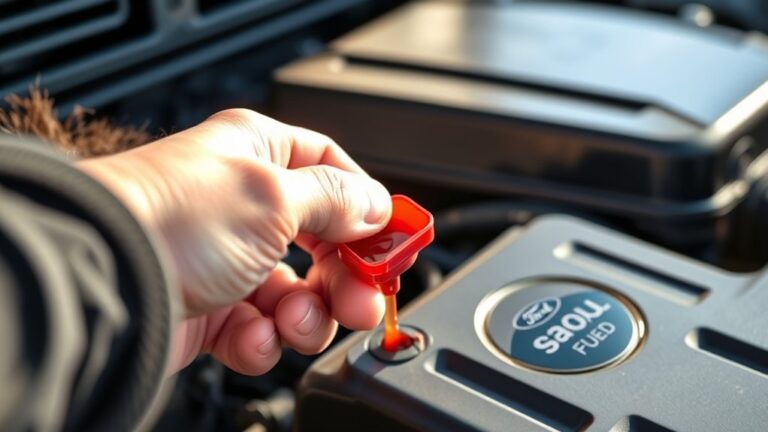
Your F-150’s transmission fluid can show warning signs long before a shift problem appears, but only if you know where to look.
To check transmission fluid on your F-150, park on level ground and warm the truck to operating temperature. Then find the dipstick near the back of the engine.
Pull the dipstick out, wipe it clean, and reinsert it fully. Check the fluid level, color, and odor. These details will help you determine whether you need a top-off or service.
Key Takeaways
- Park the F-150 on level ground, set the parking brake, and shift into Park before checking transmission fluid.
- Warm the engine and transmission to normal operating temperature if your owner’s manual requires a hot check.
- Locate the transmission dipstick near the back of the engine on the passenger side, if your F-150 has one.
- Pull the dipstick, wipe it clean, reinsert fully, then check that fluid level is between the hot or cold marks.
- Healthy fluid is bright red and clean; dark, burnt, or low fluid can cause slipping, delayed engagement, or warning lights.
Park Your F-150 on Level Ground

Before you check the transmission fluid on your F-150, park the truck on level ground so the fluid settles evenly in the transmission pan. Set the parking brake, shift into Park, and keep the engine off unless your procedure specifically calls for a running check.
A flat surface gives you an accurate reading, which helps you avoid overfilling or underfilling the system. If you’re working in a driveway, confirm the truck isn’t pitched forward, backward, or side to side.
Level positioning also matters during winter storage, when cold temperatures can affect fluid behavior and inspection timing. This simple setup keeps the process repeatable and protects your checking budget by reducing errors, wasted fluid, and unnecessary service costs.
Warm Up the Transmission Safely
Start the engine and let the transmission warm up to normal operating temperature if your F-150’s fluid check procedure requires it. Keep the truck in Park, apply the parking brake, and let it idle long enough for the fluid to circulate. You don’t need high rpm; steady idle is enough.
Watch the dash for warning lights and listen for unusual noises that could signal a problem before you continue. If the weather’s cold, give it extra time so the fluid reaches a stable reading range. Stay focused on the procedure and ignore unrelated topics and random ideas until the transmission is ready.
Don’t rev the engine or shift repeatedly unless the owner’s manual specifically calls for it. A controlled warm-up gives you a more accurate check and helps prevent bad measurements.
Locate the Transmission Fluid Dipstick
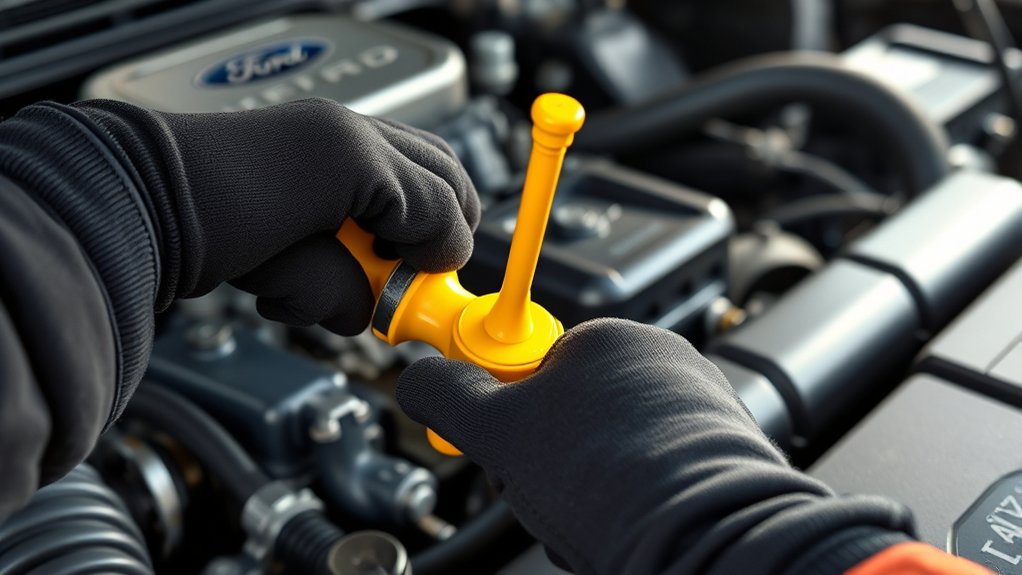
Open the hood and inspect the engine bay for the transmission dipstick handle, which is typically positioned near the back of the engine on the passenger side.
You’ll usually spot it by its bright color, often yellow or orange, which makes it easy to identify quickly. Once you locate the handle, confirm that you can reach it without moving any components before you check the fluid.
Dipstick Handle Location
Where’s the transmission fluid dipstick on an F-150? You’ll find the dipstick handle near the back of the engine compartment, usually on the passenger side, where the transmission sits. Identify the transmission dipstick location by looking for a small looped or T-shaped handle attached to a slender metal tube.
The handle may be yellow, red, or black, but color can vary by model year and engine. Don’t confuse it with nearby oil or coolant service points. Grip the dipstick handle firmly and pull it straight up to access the tube.
If your F-150 uses a sealed transmission, you won’t see a conventional dipstick, so verify your trim and powertrain before proceeding. Once located, keep the area clean to avoid contamination during inspection.
Engine Bay Access
With the dipstick handle identified, move to the engine bay and clear away any loose covers or hoses that block access to the tube. Keep engine bay safety in mind by working with the engine off and the parking brake set. Use fluid containment practices: place a clean rag under the opening so any drips stay off hot components.
- Stand on the side that gives you a straight line to the dipstick tube.
- Trace the tube from the handle to confirm you’re at the correct access point.
- Grip the handle firmly and pull the dipstick straight out without twisting.
Inspect the surrounding area for heat sources, moving belts, and sharp edges before you continue. A clear workspace helps you reach the tube fast and reduces the chance of contamination or spills.
Bright Color Identifier
Look for a brightly colored transmission dipstick handle, since Ford often uses a red, yellow, or orange loop or tab to make it easier to spot in the engine bay. Use that bright color as your first cue, then scan the passenger-side rear of the engine compartment, where the tube usually sits near the firewall.
If you can’t see it immediately, use identification techniques like tracing the transmission case upward or checking for a marked service loop. Keep the engine off and cool while you inspect, and avoid pulling on any hose that doesn’t match the dipstick’s shape.
Once you find the handle, confirm it’s seated in a narrow metal or plastic tube before you check fluid level.
Check the Fluid Level on the Dipstick
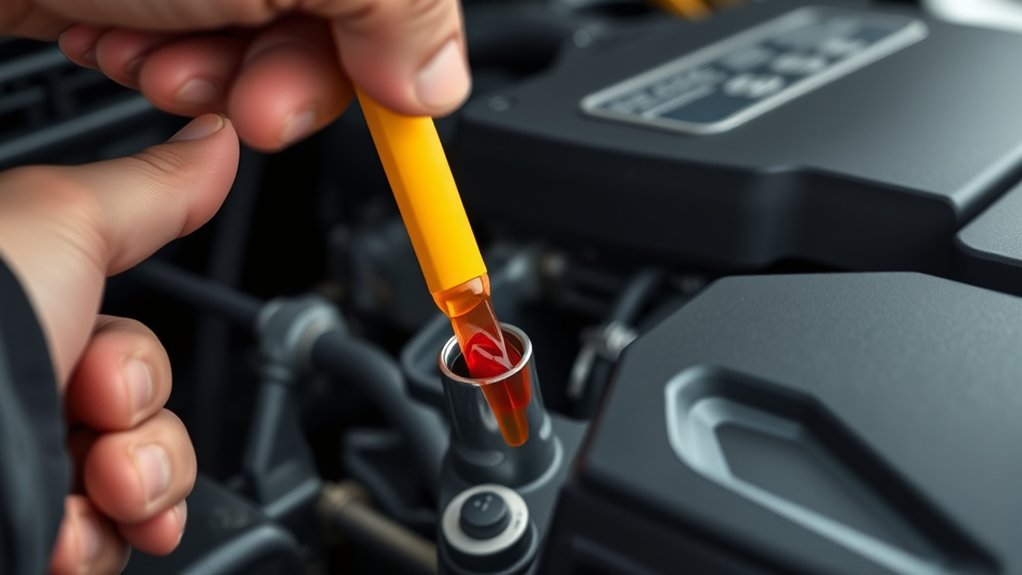
Next, check the transmission fluid level on the dipstick to confirm it falls within the safe operating range. With the engine idling and the truck on level ground, pull the dipstick, wipe it clean, reinstall it fully, then remove it again for the reading.
Check the transmission fluid with the engine idling and the truck level, then read the dipstick after reinserting it.
You should see fluid between the marked lines; if it’s low, add the specified fluid in small increments. Use these checks:
- Verify the truck’s position is level.
- Read the hot or cold mark that matches current conditions.
- Compare the level against oil viscosity expectations and note any leak diagnosis clues.
Don’t overfill, since excess fluid can aerate and affect shifting. If the level keeps dropping after topping off, inspect seals, cooler lines, and the pan gasket for leaks.
Inspect Fluid Color and Smell
Inspect the transmission fluid’s color and smell to gauge its condition. Pull a small sample from the dipstick and compare it under bright light. Healthy ATF usually looks bright red or pink and feels smooth.
If you see dark brown fluid, black contamination, or metallic sheen, the fluid has degraded and may need service. A burnt odor signals overheating and internal wear, so don’t ignore it.
When you’re inspecting leaks around the pan, cooler lines, and case, note any stained areas that can help with identifying seals that may be failing. Wipe the dipstick clean before reinserting it, then recheck the sample to confirm your reading. Use consistent lighting and a white towel so you can spot discoloration accurately.
Signs Your F-150 Is Low on Fluid
If your F-150 has low transmission fluid, you may notice delayed gear engagement when you shift from Park into Drive or Reverse.
Under load, the transmission can slip, flare, or hesitate as it struggles to maintain hydraulic pressure. You might also see a transmission warning light on the dash, which means you should check the fluid level right away.
Delayed Gear Engagement
When you shift your F-150 into Drive or Reverse and it hesitates before engaging, low transmission fluid is a common cause. You should check the fluid level with the engine warm and the truck idling on level ground. If the level’s low, add the correct Mercon specification fluid gradually and recheck.
Delayed engagement can also follow leaks, so inspect the pan, lines, and cooler fittings.
- Verify the dipstick reading matches the hot range.
- Look for reddish residue under the truck.
- Note any delay after cold starts or after towing.
Use detailing maintenance ideas to keep the undercarriage clean, and separate transmission checks from fuel system concerns so you don’t misdiagnose the issue. If the delay persists, schedule service before more damage occurs.
Slipping Under Load
A slipping transmission under load often points to low fluid in your F-150, especially if engine speed rises but road speed doesn’t keep up during acceleration, hill climbing, or towing. You may feel flare between shifts, weak pull, or a brief loss of drive when torque demand increases.
Check the dipstick on level ground with the engine warm and idling, then verify the fluid sits within the marked range. If it’s low, inspect for leaks at the pan, cooler lines, and seals.
Also confirm the cooling system works properly, because overheating breaks fluid down and causes slip. Don’t confuse transmission slip with a rear differential problem; differential noise affects the axle, not engine flare.
Correct the fluid level and monitor performance immediately.
Warning Light On
Another sign of low transmission fluid in your F-150 is an illuminated warning light on the dash, especially if it appears alongside harsh shifting, delayed engagement, or slipping under load. You should treat a transmission warning as a prompt for immediate fluid inspection, not a reset issue.
Check for stored codes, then verify the fluid level, color, and odor with the engine at operating temperature and the truck on level ground. Low fluid can trigger pressure loss, overheating, and erratic gear changes.
- Confirm the light with a scan tool.
- Inspect for leaks at the pan, cooler lines, and seals.
- Top off only with the specified ATF.
Add Transmission Fluid to Your F-150
Before you add transmission fluid to your F-150, verify the engine is running at operating temperature, the truck is on level ground, and the transmission dipstick shows a low level. Use only the ATF specified in your owner’s manual, then insert a clean funnel into the fill tube.
Add fluid in small increments, waiting a few seconds between pours so the level stabilizes. Recheck the dipstick after each addition and stop at the marked hot range; overfilling can aerate the fluid and affect shift quality. Wipe the dipstick clean before each reading for accuracy.
This simple engine maintenance step supports smooth operation and can help protect fuel economy by reducing drivetrain drag. Tighten the cap, inspect for leaks, and keep the area clean.
Know When Your F-150 Needs Service
You should service your F-150 if you notice warning signs such as delayed engagement, slipping, or unusual noises. Check the fluid color as well; healthy transmission fluid is typically bright red or amber, while dark, burnt, or contaminated fluid points to trouble.
If the truck shifts roughly, hunts between gears, or hesitates, have the system inspected right away.
Warning Signs
How do you know when your F-150’s transmission fluid needs attention? Watch for clear warning signs, not an unrelated topic or irrelevant subject. You may notice delayed engagement, slipping between gears, or harsh shifts under light throttle. These symptoms usually point to low pressure, degraded fluid, or internal wear.
If the transmission hesitates before moving, shudders during acceleration, or struggles to stay in gear, schedule service soon. Heat and contamination can also raise operating temperatures and reduce hydraulic performance.
- Slipping gears during acceleration or towing.
- Delayed drive or reverse engagement after shifting.
- Unusual noises, shuddering, or warning lights on the dash.
Don’t ignore these signs; prompt diagnosis helps prevent costly transmission damage and keeps your F-150 operating reliably.
Fluid Color Check
What color is your F-150’s transmission fluid? You should inspect it on the dipstick or sample it on a white towel. Healthy fluid usually looks bright red or pink and feels smooth.
If you see dark brown fluid, suspended particles, or a burnt odor, schedule transmission maintenance soon. Those changes indicate heat stress and fluid breakdown, which reduce protection for clutches, gears, and seals.
During a fluid color inspection, compare the sample under good light and wipe the stick clean before rechecking for consistency. Fresh fluid should stay clear, not cloudy or opaque.
If the color shifts from red toward brown, or if you notice blackening, service the system promptly. Regular checks help you catch degradation early and keep your F-150’s transmission operating within specification.
Shifting Problems
If your F-150 starts slipping between gears, delaying shifts, or hunting for the right gear, the transmission fluid may be low, degraded, or contaminated. You should treat these symptoms as service alerts, not minor annoyances. Check fluid level, inspect for leaks, and review service records before the condition worsens.
- Watch for flare shifts, harsh engagement, or rpm spikes during acceleration.
- Use diagnostic tools to read transmission codes and confirm shift-related faults.
- Update maintenance scheduling if the fluid is dark, smells burnt, or the truck tows heavy loads often.
When you catch shifting problems early, you can prevent clutch wear, overheating, and expensive repairs. If symptoms persist after a fluid check, have the transmission inspected by a qualified technician.
Check Fluid on Sealed F-150 Transmissions
On sealed F-150 transmissions, you won’t find a dipstick, so you have to verify fluid level through the fill and check plug or service port on the transmission case. Before you open anything, inspect seal integrity around the plug, pan, and connectors.
Use the correct tool to avoid rounding fasteners, then remove the plug only with the vehicle level and the transmission at the specified temperature range. Fluid should sit at the bottom edge of the opening, not pour out or fall short.
If you add fluid, use only the specified type and reinstall the plug with the right torque specs. Wipe the area clean, then recheck for seepage. If the fluid smells burnt, looks dark, or you find metal debris, stop and diagnose the transmission before driving.
How to Check Transmission Fluid on an F-150
To check transmission fluid on an F-150, park on level ground, set the parking brake, and bring the transmission up to the recommended temperature so you get an accurate reading. Then leave the engine idling, move the shifter through each gear, and return it to Park.
Park level, warm the transmission, cycle the shifter through each gear, then check the fluid in Park.
- Pull the dipstick, wipe it clean, reinsert it fully, and remove it again to read the level.
- Inspect the fluid color and smell; dark, burnt fluid means you should service it soon.
- If the level’s low, add the specified ATF slowly, then recheck.
If you find leaks around the pan, inspect the gasket replacement area and confirm the torque specs on the pan bolts. Don’t overfill; excess fluid can foam and damage shifting performance.
Frequently Asked Questions
How Often Should F-150 Transmission Fluid Be Changed?
You should change your F-150 transmission fluid every 30,000 to 60,000 miles, or per your owner’s manual. Don’t follow a random tangent or unrelated concept; service interval depends on towing, heat, and driving conditions.
What Type of Transmission Fluid Does My F-150 Need?
You need the Ford-specified MERCON LV, or the exact fluid listed in your owner’s manual. Check type compatibility carefully; fluid color should be red. Using the wrong ATF can cause shifting problems and damage.
Can I Check Transmission Fluid When the Engine Is Cold?
No, you shouldn’t. You need to check the temperature first, because a cold engine state can give a false level reading.
Warm the truck, cycle the gears, then check the dipstick exactly as specified.
Why Is My F-150 Transmission Fluid Foamy?
Foamy fluid usually means you’ve invited air in through overfilled fluid, a leaking suction seal, or low fluid. Check foaming causes, then your maintenance checklist, because your F-150’s transmission hates bubble baths.
Does Towing Affect Transmission Fluid Levels in My F-150?
Yes, towing can affect your F-150’s transmission fluid level indirectly by raising temperature and causing expansion; it doesn’t usually reduce volume.
You should watch for towing impact and fluid level myths, then inspect hot, level, and idling.
Conclusion
By checking your F-150’s transmission fluid on level ground, with the truck warmed up and safely parked, you can catch problems early and keep shifting smooth.
Pull the dipstick, wipe it clean, reinsert it fully, and confirm the level, color, and smell. If you need to top it off, add fluid in small amounts and recheck.
Remember, an ounce of prevention is worth a pound of cure. If anything looks off, get service soon to maintain your F-150’s transmission fluid properly.


