How to Charge an Electric Ford Mustang Mach-E
As an Amazon Associate we earn from qualifying purchases.
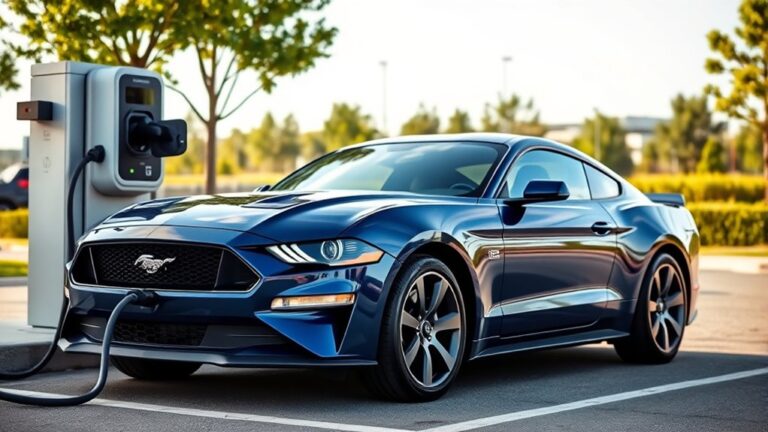
Like a pit stop in a race, charging your electric Ford Mustang Mach-E starts with choosing the right power source for your routine: Level 1 for basic overnight top-offs, Level 2 for faster home charging, or DC fast charging when distance matters.
You’ll want to match charge level to trip length, manage schedules in FordPass, and keep the battery near 20–80% when possible. The details change the outcome.
Key Takeaways
- Use Level 1 charging with a standard 120-volt outlet for slow, steady home charging.
- Use Level 2 charging on a 240-volt circuit for faster, practical home or workplace charging.
- Use DC fast charging for the quickest refill, especially on road trips, and leave before the taper slows charging.
- In FordPass, set charge limits, departure times, and preferred schedules, then confirm they sync with the Mach-E.
- Follow charging etiquette, keep cables and connectors dry, and avoid repeated 100% charges unless you need full range.
What Charging Options Does the Mustang Mach-E Offer?
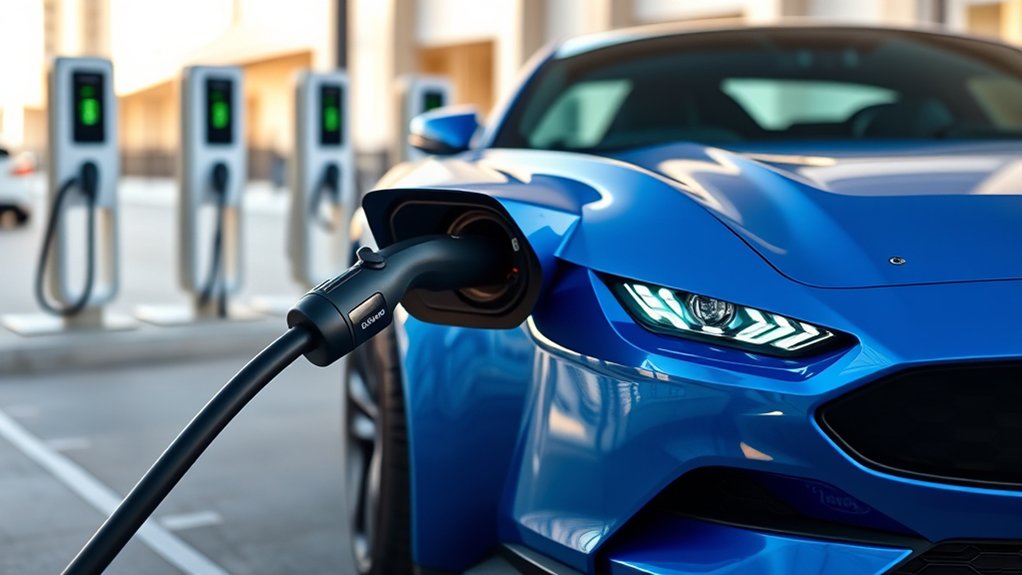
The Mustang Mach-E gives you three primary charging options: Level 1, Level 2, and DC fast charging. Level 1 uses a standard 120-volt outlet and adds range slowly, so you’ll use it mainly for low daily demand.
Level 2 operates on 240 volts and delivers far higher power, making it the practical home or workplace solution. DC fast charging bypasses the onboard AC conversion path and sends high-voltage direct current straight to the battery, restoring range rapidly during trips.
You should follow charging etiquette by leaving public stations when your session ends and by checking connector compatibility before plugging in. Ignore battery myths about frequent full charges ruining the pack; the Mach-E’s battery management system controls charging to protect longevity and thermal stability.
Which Mach-E Charging Level Fits Your Routine?
Your charging level should match how many miles you add each day and where you park most often. Level 1 works if you drive short distances and can leave the car plugged in for many hours; it adds range slowly, but it’s electrically simple.
Level 2 suits most daily routines because it delivers far more power without stressing your schedule, so you can recover commuting mileage with margin. DC fast charging fits high-mileage travel, not routine use, because repeated rapid charging can increase heat and reduce charging efficiency.
You should also consider battery safety by avoiding unnecessary high-rate sessions and keeping the pack within normal operating limits. Good charging etiquette means you don’t occupy a public charger longer than needed, especially when others are waiting.
How to Charge Your Mach-E at Home
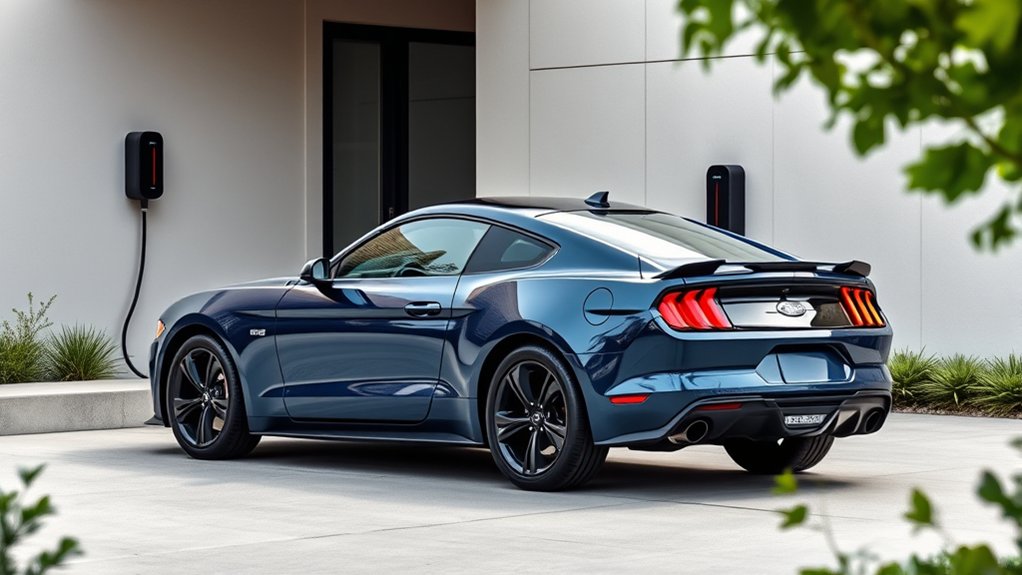
At home, you’ll usually charge a Mach-E with either a standard 120-volt outlet or a 240-volt Level 2 setup, and the right choice depends on how quickly you need to replenish range. You should evaluate your home infrastructure first: circuit capacity, panel space, and outlet location determine installation feasibility.
| Option | Effect |
|---|---|
| 120-volt | Slow, steady replenishment |
| 240-volt Level 2 | Much faster charging |
| Dedicated circuit | Reduces overload risk |
| Smart timer | Aligns charging with off-peak rates |
You’ll get the best results by keeping the connector dry, avoiding damaged cords, and following charging etiquette if you share a driveway or garage. Monitor the vehicle’s charge settings, confirm amperage limits, and let the system stop automatically when full. This approach keeps charging efficient, safe, and predictable.
How to Use Public Charging Stations
When you use public charging stations, first locate a compatible DC fast charger or Level 2 unit through your vehicle’s navigation system or a charging app. Next, align the connector with the Mach-E’s charge port, insert it fully, and confirm that the session starts.
Then monitor charging status on the charger display, the FordPass app, or the instrument cluster so you can track power flow and estimated completion time.
Finding Charging Stations
Public charging starts with locating a compatible station before your Mach-E’s battery gets critically low. Use in-car navigation, charger apps, and map filters to verify connector type, power level, and real-time availability.
Prioritize stations near your route, because detours increase energy use and reduce efficiency. Compare session pricing, idle fees, and access rules so you can estimate cost before arrival.
Check user ratings for reliability and maintenance history; these data points help you avoid broken stalls. Apply charging etiquette by leaving space for other drivers and following posted time limits.
Use parking tips like backing in only when required and selecting a stall with clear maneuvering room. Confirm site hours and lighting, especially for late-night stops.
Plugging In Correctly
Before you plug in, confirm the connector matches your Mach-E and the station’s output suits your charging goal. Inspect the cable, port, and handle for damage, then position the car so the cord reaches without strain.
Unlock the charge port, remove any debris, and insert the connector fully until it clicks. If the station requires authentication, complete it before or immediately after connection, following the unit’s instructions.
Maintain plug in safety by keeping hands dry and avoiding cable contact with puddles or traffic lanes. Practice charging etiquette: don’t occupy a stall longer than needed, and park squarely to preserve access for others.
If the connector resists, stop and re-seat it; forcing it can damage the latch or contacts.
Monitoring Charging Progress
Once your Mach-E is connected, monitor the charger’s display or app to confirm that the session has started and to verify the current power level, estimated time remaining, and state of charge. Watch for power tapering as the battery approaches higher SOC, since charging speed usually drops above about 80%.
Use battery awareness to decide whether to stay connected or relocate after reaching your target range. Check for fault messages, paused sessions, or reduced amperage, and reauthorize if the station times out.
Keep charging etiquette in mind: don’t block the stall after completion, and disconnect promptly when charging ends. If the app reports unexpected behavior, inspect cable seating and station status before contacting support.
Track progress at intervals, not continuously, to conserve time.
What Fast Charging Is Like in a Mach-E
When you use DC fast charging on a Mach-E, the charger sends high-power direct current straight to the battery, which can add range much faster than AC charging. You’ll see the charge rate rise quickly at lower state of charge, then taper as the battery fills, because the charging curve limits power to protect the pack.
For road trips, that means your stop time depends on how much energy you need, and the fastest sessions usually happen when you arrive with a low-to-moderate battery level.
DC Fast Charging Basics
DC fast charging lets you add range to a Mustang Mach-E much more quickly than AC charging, but the actual rate depends on battery state, charger output, and pack temperature. You plug into a CCS fast charger, and the vehicle’s battery management system negotiates power delivery automatically.
To get efficient results, arrive with a low-to-mid state of charge and a conditioned pack. You should monitor the session, confirm the connector seats fully, and verify that the charger’s rated power matches your expectations.
Good charging etiquette means moving your vehicle when the session ends so others can charge. For maintenance tips, keep the charge port clean, inspect the cable for damage, and avoid forcing a connector that resists insertion or removal.
Charging Curve Behavior
What does fast charging actually look like in a Mustang Mach-E? You’ll see a charging curve that starts strong, then tapers as state of charge rises. At low battery percentages, the pack accepts higher power, so you gain range quickly.
As voltage and temperature climb, the vehicle reduces current to protect battery health and manage cell balance. That means your peak rate won’t hold for the entire session; instead, the curve gradually slopes downward.
You’ll get the most aggressive charging when the battery is warm and the charge level is lower. Cold packs or high charge levels push the curve lower. This behavior is normal, engineered, and predictable, not a defect.
Watch the curve, not just the headline kilowatts, and you’ll understand how the Mach-E charges.
Road Trip Stop Timing
On a road trip, Mach-E charging stops are usually planned around the battery’s most efficient charging window, not around empty-to-full sessions. You’ll get the best results by arriving with enough state of charge to exploit the steep initial fast-charge segment, then leaving before tapering slows power delivery.
In practice, your charge timing depends on route length, charger power, ambient temperature, and battery preconditioning status. At 150 kW stations, you can often add substantial range in 20 to 30 minutes, but the last 20% takes longer and reduces trip efficiency.
Monitor the nav-estimated arrival buffer and keep a small reserve. Good charging etiquette means unplugging promptly once the useful rate drops, so you don’t block the stall or waste time.
How Long Does Mach-E Charging Take?
Charging time for the Mustang Mach-E depends on the charger type, battery size, and current state of charge. You’ll see the fastest refill on DC fast charging, while Level 2 charging takes longer but fits routine use.
An irrelevant topic like paint color, or a stray concept such as wheel size, doesn’t change charging speed. Consider these factors:
- Battery capacity: larger packs need more energy.
- Charger power: higher kilowatts reduce time.
- SOC window: charging slows near full.
- Temperature: cold cells often accept power more slowly.
You can estimate time by dividing usable battery energy by average charging power, then adding taper losses. In practice, expect minutes for a substantial DC boost and hours for a full Level 2 charge.
How to Set Up Charging in FordPass
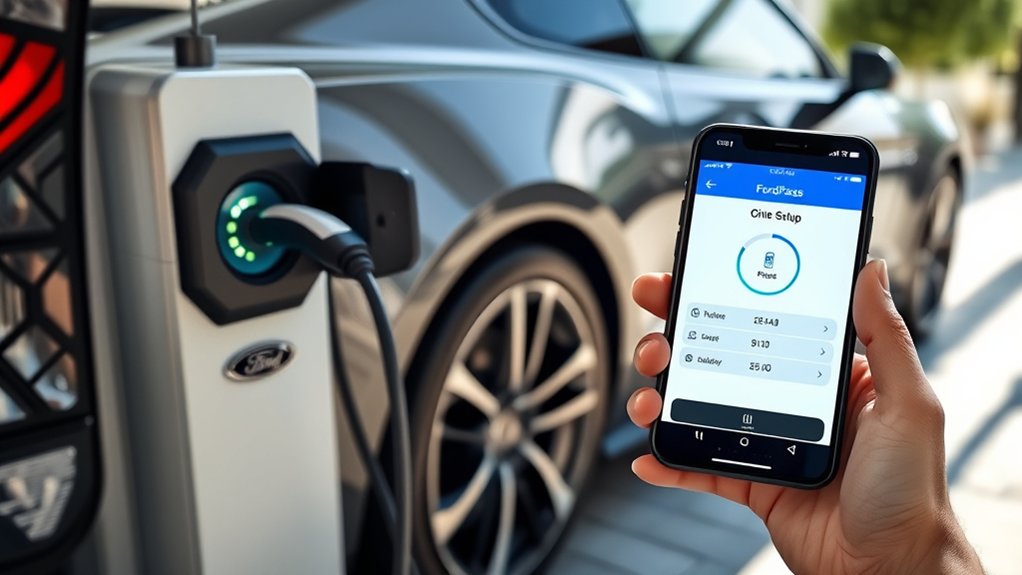
Open the FordPass app and connect it to your Mach-E so you can manage charging settings from your phone. Then select Vehicle, tap Charging, and define your preferred schedules, charge limits, and departure times. This setup helps you align charging with a home installation and local charging etiquette, especially when sharing utility capacity or wall space.
| Setting | Function |
|---|---|
| Charge Limit | Caps state of charge |
| Departure Time | Schedules cabin and battery prep |
| Preferred Charge Times | Shifts charging to set periods |
| Location-Based Charging | Applies rules at home |
After you save each parameter, FordPass syncs it to the vehicle through the cloud. Verify the status screen confirms your selections, then test one charging session to ensure the app and Mach-E respond as intended.
Simple Ways to Protect Mach-E Battery Health
With your charging schedule set, you can now use a few simple habits to slow battery wear and keep your Mach-E performing well over time. Your best battery protection comes from avoiding repeated 100% charges unless you need full range.
Keep the pack between roughly 20% and 80% for daily use, because lower stress preserves capacity. Follow smart charging etiquette by unplugging after reaching your target and minimizing unnecessary fast charging.
Park in shade or a garage when possible, since heat accelerates degradation.
- Set a daily charge limit.
- Use DC fast charging only when trips demand it.
- Avoid letting the battery sit near empty.
- Precondition the cabin while plugged in.
These steps reduce thermal and electrochemical strain without changing your driving routine.
Frequently Asked Questions
Can I Charge My Mach-E in the Rain?
Yes, you can charge your Mach-E in rain; its system includes rain safety protections. You should inspect connectors, keep hands dry, and follow charging etiquette by plugging in securely and avoiding damaged equipment.
Does Charging Work With a Regular Household Outlet?
Yes, you can charge your Mach-E from a regular household outlet; it’s like filling a pool with a garden hose. You’ll gain slowly, so follow charging etiquette and safety considerations, and use a dedicated grounded circuit.
Can I Use a Tesla Supercharger With My Mach-E?
Not directly. You can use a Tesla Supercharger only if it supports your Mach-E through compatible charging adapters and authorized network access.
Verify station eligibility, follow charging etiquette, and confirm DC fast-charging support first.
Will Charging Stop Automatically When the Battery Is Full?
Yes, it’ll stop automatically. You’ll see auto shutoff engage, protect battery health, and prevent overcharge.
You’ll plug in, you’ll monitor status, and you’ll unplug only when charging’s complete or the app alerts you.
Can I Charge While Using the Car’s Climate Control?
Yes, you can charge while you use climate control, and your Mustang Mach-E will manage both systems simultaneously.
Verify charging compatibility and monitor climate impact, since HVAC use can slightly reduce charging efficiency and range.
Conclusion
To charge your Mustang Mach-E well, you’ll want to match the charger to your use case: Level 1 for occasional home backup, Level 2 for daily convenience, and DC fast charging for road trips. You’ll save time by scheduling off-peak sessions, preconditioning while plugged in, and planning stops before charging tapers.
Keep your state of charge mostly between 20% and 80%, and you’ll have the basics covered—safety, speed, and battery longevity all in one go. Following these tips ensures you get the most out of your electric Ford Mustang Mach-E charging experience.


