How Often to Change Transfer Case Fluid f150
As an Amazon Associate we earn from qualifying purchases.
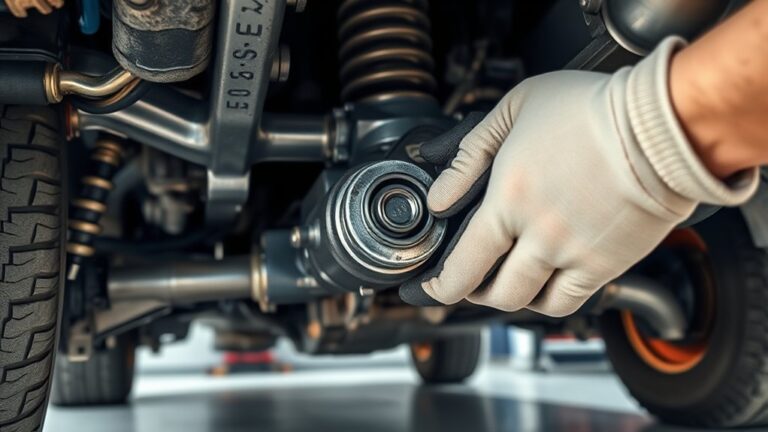
Your F-150’s transfer case fluid plays a crucial role in keeping the 4WD system ready when traction disappears. It acts as the quiet hinge that ensures smooth operation.
You should change the transfer case fluid according to the owner’s manual for your exact model year and drivetrain. As a practical guide, consider changing it every 30,000 to 60,000 miles if you frequently tow, plow, or drive off-road.
For lighter driving conditions, longer intervals between changes are usually acceptable. Always watch for signs like shuddering, whining, or dark fluid, since the right interval depends on more than mileage alone.
Key Takeaways
- Follow your F-150 owner’s manual; transfer case fluid intervals vary by model year and drivetrain.
- For towing, hauling, off-road, or plowing, change it sooner, often every 30,000 to 60,000 miles.
- Light, mostly highway driving can allow longer intervals, but fluid still degrades over time.
- Check sooner if you notice shudder, hard turning in 4WD, whining, rough engagement, or burnt or milky fluid.
- Use the specified Ford/Motorcraft fluid, and service after deep water crossings or if usage changes to severe duty.
Ford F-150 Transfer Case Fluid Change Interval
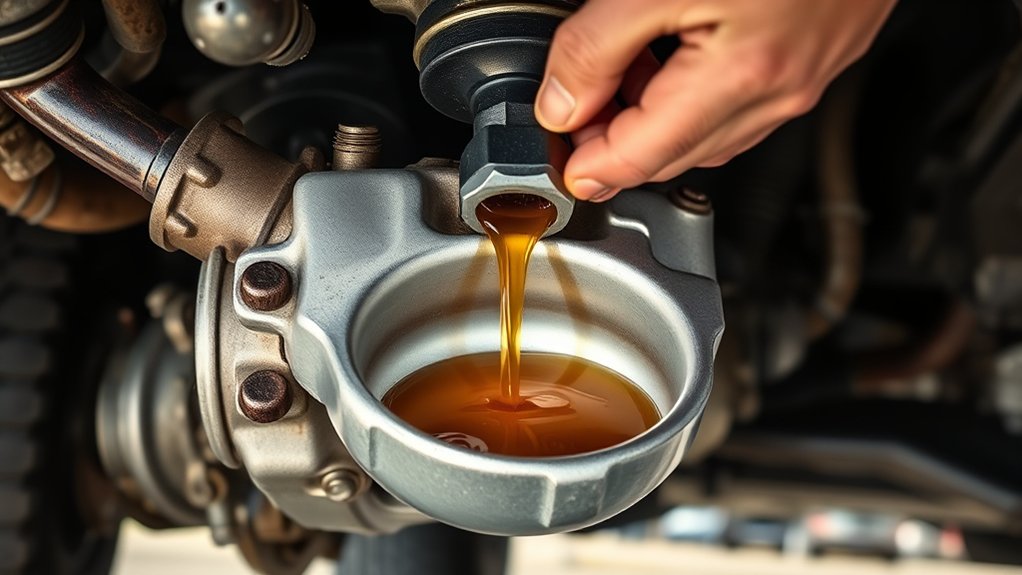
How often should you change the transfer case fluid in a Ford F-150? You should follow your owner’s manual, because Ford specifies the service interval by model year and drivetrain.
Follow your owner’s manual, since Ford sets transfer case service intervals by model year and drivetrain.
In practice, you usually replace the fluid every 30,000 to 60,000 miles if you tow, plow, or drive off-road, and longer under normal use. Don’t rely on maintenance myths that claim the fluid lasts forever; heat, moisture, and gear wear degrade it.
Use the correct fluid types listed for your transfer case, since the wrong spec can affect clutch operation and shift quality. Check the case for leaks, metal contamination, and darkened fluid at each service.
If you see these signs, change it sooner, not later.
How Often to Change It by Use
Under normal driving, you can usually stretch transfer case fluid changes toward the longer end of the factory interval, but once you tow, haul, plow, or spend time off-road, you should shorten it to about every 30,000 to 60,000 miles. That higher load raises heat and shear, so your service schedule should match the duty cycle, not just the odometer.
If you mostly commute, follow the severe-service end only when conditions demand it. If you switch between uses, default to the shorter interval. This two word discussion ideas approach keeps maintenance tied to operating stress.
Subtopic irrelevant, because the key factor is how hard you work the drivetrain. Check your owner’s manual for the exact mileage range, then record each change so you can stay consistent and protect the transfer case.
Signs Your F-150 Needs Service

Even if you stick to the right service interval, your F-150’s transfer case can still show warning signs before the next scheduled change. You may notice driveline shudder, tight turning, or a faint grinding that shouldn’t be ignored.
Those symptoms usually point to fluid breakdown, internal wear, or contamination, not an unrelated concept or random topic.
| Sign | What it can mean |
|---|---|
| Shudder on acceleration | Fluid loses protection |
| Hard turning in 4WD | Internal binding |
| New whining noise | Gear wear or low lubrication |
If the truck feels rough only in 4WD, treat it as a service issue and act fast. Delaying repairs can turn a minor fluid problem into expensive transfer case damage.
How to Check Transfer Case Fluid
Before you check the level, park your F-150 on level ground, let the transfer case cool, and locate the fill plug on the case housing. Remove the plug carefully with the correct square-drive or hex tool, then inspect the fluid at the hole. A proper level sits just below the opening and may barely seep out.
Use a clean finger or small probe to judge condition: the fluid should look amber to dark brown, not milky, burned, or full of metal debris. Wipe the plug threads, then reinstall it snugly.
These two word discussion ideas help you spot transfer case secrets and avoid maintenance myths. If the fluid is low or contaminated, don’t guess. Confirm the issue before adding anything.
4WD F-150 Transfer Case Interval
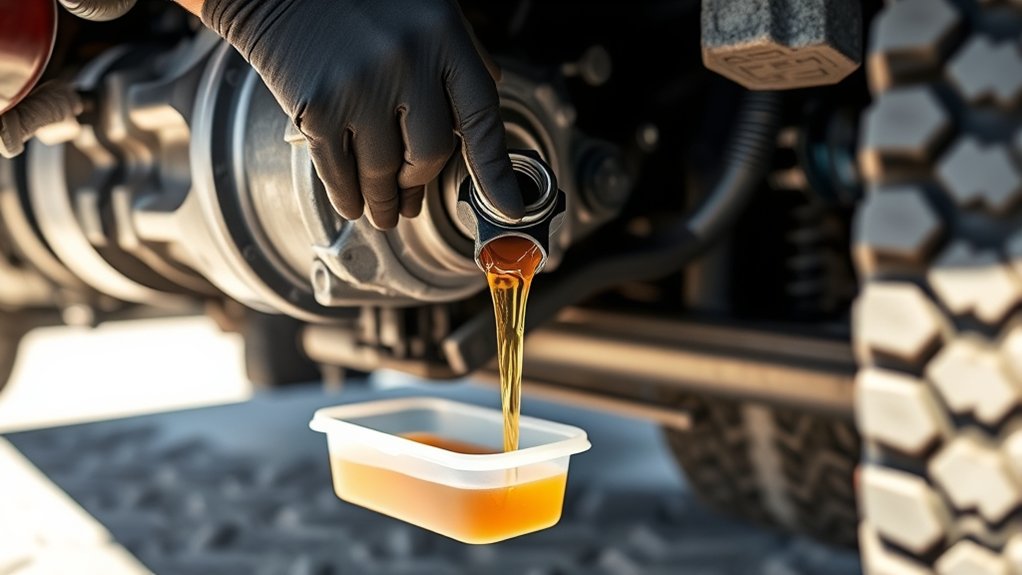
For a 4WD F-150, Ford typically ties transfer case service to the maintenance schedule rather than a universal mileage rule, so you should check your owner’s manual for the exact interval for your model year and drivetrain.
In practice, you’ll often inspect it during other scheduled service, especially if you tow, wheel off-road, or see fluid contamination. Keep these factors in mind:
- Severe use shortens the interval
- Inspect after deep water crossings
- Match service with tire maintenance checks
- Review engine cooling service records too
If you drive mostly on pavement, your interval may be longer, but don’t guess. You should replace the fluid when the manual calls for it or when inspection shows discoloration, metal, or odor. That keeps the 4WD system operating smoothly and reduces drivetrain wear.
Best Transfer Case Fluid for an F-150
What’s the best transfer case fluid for an F-150? You should use the Ford-spec fluid listed in your owner’s manual, usually Motorcraft Transfer Case Fluid or an equivalent that meets the exact MERCON requirement for your model year.
Match viscosity and friction characteristics, because your transfer case relies on controlled clutch engagement and stable shear performance. If you tow, off-road, or drive in extreme temperatures, stay with a premium synthetic that still meets spec; don’t guess based on unrelated topic claims or two word discussion ideas from forums.
Check the bottle for approval language, not vague marketing. Use clean tools, avoid mixing formulas, and fill only to the correct level. The right fluid protects shift quality, seals, and bearings while keeping your four-wheel-drive system operating as designed.
What Happens If You Skip Service
If you skip transfer case fluid service, you let heat, contamination, and lubricant breakdown accelerate wear on gears, bearings, and chains. You’ll also start to notice shifting problems, including binding, hesitation, or rough engagement between drive modes.
If you keep postponing service, that wear can turn into costly component damage and a much more expensive repair.
Transfer Case Wear
Over time, neglected transfer case fluid breaks down and stops protecting the gears, bearings, and clutches inside your F-150’s transfer case. You’ll see accelerated wear as heat, friction, and metal debris build up. That damage isn’t about lucky breaks or motorcycle upgrades; it’s about maintenance discipline.
- Gear teeth lose their hardened surface
- Bearings develop rough, noisy contact
- Clutch packs glaze and shed material
- Seal lips harden and leak fluid
If you keep driving, you let abrasive particles circulate and scar internal components. Fresh fluid keeps viscosity stable, controls temperature, and suspends contamination so filters and magnets can catch it. You protect the case by changing fluid on schedule, especially if you tow, off-road, or use four-wheel drive often.
Shifting Problems
Skip transfer case service long enough, and shifting problems usually show up first. You may notice delayed engagement, harsh clunks, or a brief bind when you move between 2WD and 4WD. These shifting quirks happen because degraded fluid can’t control friction and clutch action as well as fresh fluid.
You should also inspect fluid color during service; dark, burnt, or metallic fluid often points to contamination and reduced lubrication performance. If the transfer case hesitates or shifts unpredictably, don’t ignore it.
Those symptoms usually mean the fluid has lost its protective properties, and the control system isn’t getting clean hydraulic response. Staying ahead of service keeps shift quality consistent and helps you catch problems early, before they spread into more serious drivability issues.
Costly Component Damage
Those shifting quirks aren’t just annoying. They’re often the first sign that neglected transfer case fluid is starting to damage internal parts. If you keep driving, you can wear the chain, bearings, and mode fork, and heat can glaze the clutch pack.
Once contaminated fluid loses its film strength, metal-to-metal contact accelerates, and repairs get expensive fast.
- Chain stretch causes slack and gear noise
- Bearings pit and overheat under load
- Clutch packs slip, bind, or burn
- Case seals fail, causing leaks and contamination
You can avoid that by checking service intervals and using do it yourself inspections to catch leaks early. For maintenance budgeting, a fluid change costs far less than a rebuilt transfer case, so skipping service rarely saves money.
F-150 Transfer Case Service Cost
Your F-150 transfer case service cost depends on fluid type, labor time, and whether the technician finds leaks or worn seals.
A dealer usually charges more because of OEM parts and higher labor rates, while an independent shop may offer lower pricing for the same basic service. You should compare both quotes so you can balance cost, warranty coverage, and service quality.
Service Cost Factors
Transfer case service cost on an F-150 usually hinges on fluid type, labor time, drivetrain configuration, and whether the shop finds leaks or worn seals during inspection. 4×4 models often cost more than two-wheel-drive setups because the transfer case requires specific fluid and extra labor access.
You can trim surprises by tracking mileage and planning maintenance reminders before contamination starts. Use these topic ideas to compare expenses:
- Synthetic fluid spec
- Drain-and-fill labor hours
- Seal replacement needs
- Pan or housing access
If your truck sees towing, mud, or frequent short trips, you may need service sooner, and that can affect cost. Always ask for a written estimate that separates fluid, labor, and parts so you can judge value quickly.
Dealer Vs. Shop Pricing
When you compare dealer and independent shop pricing for F-150 transfer case service, the biggest difference usually comes down to labor rate, OEM parts markup, and how strictly each shop follows Ford’s service procedure.
| Provider | Typical Cost |
|---|---|
| Dealer | Higher |
| Independent shop | Lower |
Dealer pricing often includes factory-trained technicians, OEM fluid, and a scan of related modules if needed. Shop pricing can save you money, but you should confirm they use the correct fluid spec and replace sealing washers if Ford calls for it.
You also want a clear quote that separates labor, fluid, and any inspection charges. If you tow, off-road, or run 4×4 often, paying more for dealer service can reduce the risk of improper fill level or contamination.
Transfer Case Maintenance Tips
Regular inspections help you catch transfer case issues before they turn into costly repairs. Check fluid level and color every oil change, and replace contaminated fluid with the spec listed in your F-150 manual. If you tow, off-road, or see leaks, shorten the interval.
Listen for binding, grinding, or shuddering during 4WD engagement; these symptoms often point to worn chains, seals, or shift components. Inspect the case for leaks at the seals, yokes, and vent. Also verify the drive belt and engine torque system aren’t causing vibration that can stress drivetrain parts.
- Use the correct fluid grade
- Torque drain and fill plugs to spec
- Keep the vent clear
- Test 4WD after service
Frequently Asked Questions
Does Transfer Case Fluid Affect Fuel Economy?
Yes, it can. You’ll see slight fuel-efficiency changes if fluid viscosity and gear lubrication aren’t right, because drag increases.
Your maintenance frequency should match specs, since degraded fluid can hurt efficiency and drivability.
Can I Drive With Low Transfer Case Fluid?
No, you shouldn’t drive with low transfer case fluid; it’s like running gears through sand. You’ll starve drivetrain lubrication, cause heat and wear, and your maintenance timing should demand immediate topping off and inspection.
Is Synthetic Fluid Better for My F-150 Transfer Case?
Yes, synthetic fluid’s usually better for your F-150 transfer case because it resists heat, shear, and oxidation better. Use transfer case fluid, then verify spec compliance, not just brand claims, for reliable lubrication and shifting.
Does Towing Void Transfer Case Maintenance Recommendations?
No, towing doesn’t void transfer case maintenance recommendations; it’s a wrench in the works, not a free pass.
You should follow severe-duty intervals, and your discussion idea one, discussion idea two, to protect driveline components.
Can Transfer Case Service Fix Drivetrain Vibrations?
Transfer case service can fix some drivetrain vibrations if worn fluid or contaminated components caused them. You’ll still need diagnosis, because drivetrain myths and maintenance timing often distract from u-joints, tires, mounts, or differential issues.
Conclusion
So, you should change your F-150 transfer case fluid based on use: roughly every 30,000 to 60,000 miles for towing, plowing, or off-road driving, and closer to the manual’s longer interval for light highway use.
For example, if you tow a trailer every weekend, you’ll want to service it sooner. Don’t wait for shudder, whining, or dark fluid.
Use Ford-spec MERCON fluid, and inspect it early if you suspect heat or contamination. Following these guidelines will help maintain your F-150 transfer case fluid in optimal condition.


