How Many Gallons Does a Ford f150 Hold
As an Amazon Associate we earn from qualifying purchases.
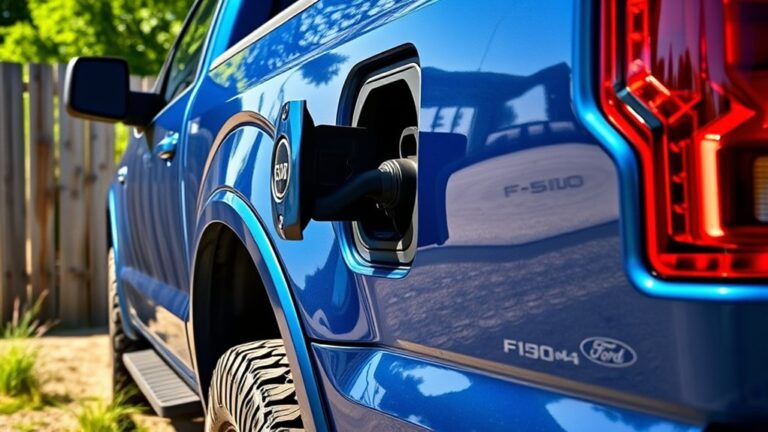
Like a moving reference to the open road, the fuel tank size of a Ford F-150 isn’t one-size-fits-all. You’ll usually see capacities from about 23 to 36 gallons, depending on model year, cab, bed, drivetrain, and trim.
Bigger setups often carry more fuel, but the usable range still depends on mpg and load. To know your exact tank size, you’ll need to check the sticker, manual, or VIN build data.
Key Takeaways
- Most Ford F-150 models hold between 23 and 36 gallons, depending on year and configuration.
- Cab style, bed length, drivetrain, and trim affect the exact fuel tank capacity.
- Regular Cab, SuperCab, and SuperCrew versions can each have different tank sizes.
- A larger tank increases driving range, but it does not improve fuel economy.
- Check the owner’s manual, window sticker, or VIN build sheet for the exact capacity.
How Many Gallons Does a Ford F-150 Hold?
The Ford F-150’s fuel tank capacity varies by model year, cab configuration, and powertrain, but most versions hold between 23 and 36 gallons of fuel. You can use that range to estimate driving distance, refueling frequency, and operating cost.
A larger tank lets you cover more miles between stops, but it doesn’t change fuel efficiency directly. Your actual range depends on engine output, drivetrain, load, and driving conditions.
If you compare trucks, check the exact factory tank specification for the model you’re evaluating. That detail helps you plan long trips and manage maintenance costs more accurately.
For the most precise answer, review the owner’s manual or the vehicle’s build sheet, since Ford has used different tank sizes across generations and trims over time.
Ford F-150 Fuel Tank Sizes by Cab and Bed
Your Ford F-150’s fuel tank size can vary by cab and bed configuration. Regular Cab, SuperCab, and SuperCrew models each offer different tank capacities depending on the setup.
You’ll need the exact body style to identify the correct gallon capacity.
Regular Cab Tank Sizes
For Regular Cab Ford F-150 models, fuel tank size typically depends more on the specific trim, drivetrain, and wheelbase than on the cab style alone. You’ll usually see smaller tanks on short-wheelbase trucks and larger tanks on long-wheelbase versions.
Depending on configuration, your Regular Cab F-150 may hold about 23 to 36 gallons. That range affects driving range, fuel economy, and towing impact, since a larger tank lets you cover more miles between stops but adds weight when full.
You should check the window sticker or owner’s manual for the exact rating on your truck. If you tow frequently, tank capacity matters because it can reduce fuel-stop frequency on long trips.
SuperCab Tank Sizes
SuperCab Ford F-150 tank sizes usually fall between about 23 and 36 gallons, depending on the truck’s wheelbase, bed length, drivetrain, and trim level. You should verify the VIN label or owner’s manual before you plan range estimates, since payload setup can affect usable capacity and fuel economy.
| Bed length | Typical tank | Range impact |
|---|---|---|
| Short bed | ~23–26 gal | Lower range |
| Standard bed | ~26–30 gal | Moderate range |
| Long wheelbase | ~30–36 gal | Higher range |
When you compare specs, focus on capacity, not assumptions. Larger tanks can extend trips, but they also add weight and may raise safety concerns during storage or fueling.
SuperCrew Tank Sizes
SuperCrew F-150 models typically carry tanks in the same general 23- to 36-gallon range, but exact capacity depends on wheelbase, bed length, drivetrain, and trim. You’ll often see shorter-wheelbase SuperCrew trucks with 23- or 26-gallon tanks, while longer configurations can use 36 gallons for extended range.
You should verify capacity by VIN or door-jamb labels, since model-year changes can alter specifications. If you’re comparing trims, don’t rely on an irrelevant topic or unrelated discussion; those details don’t change the fuel tank itself.
Instead, focus on cab style, optional equipment, and factory axle setup. With the correct configuration, you can estimate refueling intervals, towing range, and trip planning more accurately for your SuperCrew F-150.
Which F-150 Configurations Have the Biggest Tanks?
When you compare F-150 fuel capacity by cab and bed setup, the biggest tanks are typically found on configurations built for maximum range, not minimum size. You’ll usually see the largest capacity on longer-wheelbase models, especially certain SuperCrew and regular-cab trucks with the long bed.
Those layouts leave more packaging room under the frame for a larger tank.
| Configuration | Typical tank size |
|---|---|
| Regular Cab long bed | Largest |
| SuperCab long bed | Large |
| SuperCrew long bed | Large |
| Short-bed trims | Moderate |
| Off-road packages | Varies |
You should still verify by trim, since equipment changes tank placement. Horsepower ratings and paint colors don’t affect capacity, but they often appear alongside build data in specs sheets.
How Far Can a Ford F-150 Go on a Tank?
Fuel capacity only tells part of the story; range depends on tank size, engine choice, drivetrain, and real-world fuel economy. You can estimate distance by multiplying usable gallons by your truck’s average mpg.
A 36-gallon tank at 20 mpg gives roughly 720 miles, while a 23-gallon tank at 20 mpg yields about 460 miles. Your actual range will drop in city traffic, cold weather, and stop-and-go use, so treat EPA numbers as a baseline, not a guarantee.
You should also factor in non-fuel considerations, including payload, tire pressure, route elevation, and maintenance scheduling, because each can shift consumption. For planning, keep a reserve margin and track your own fill-up data. That approach gives you a more accurate range estimate.
How Does Towing Affect F-150 Fuel Range?
When you tow, the added weight increases engine load and raises fuel demand. Heavier trailers and higher aerodynamic drag reduce fuel economy, so your F-150’s range drops faster than it does in normal driving.
The exact impact depends on tow weight, speed, terrain, and payload.
Tow Weight Impact
Towing heavy loads increases drag and engine load, which reduces an F-150’s fuel range per tank. You’ll notice the effect most when trailer mass approaches the truck’s maximum tow rating.
Heavier loads demand more throttle, keep the transmission working harder, and increase the energy needed to maintain speed. In practical terms, your usable range drops because each gallon covers fewer miles under load.
Your vehicle’s fuel tank capacity stays the same, but the distance you can travel before refueling shrinks. For accurate trip planning, check payload, axle ratios, and trailer weight together.
Good car maintenance, from proper tire pressure to clean filters, helps preserve efficiency. F-150 model history shows towing capacity has improved, yet tow weight still determines how far you can go on a tank.
Reduced Fuel Economy
Towing reduces your F-150’s fuel economy because the engine has to work harder to move extra weight and overcome added aerodynamic drag. You’ll typically see lower miles per gallon, especially at highway speeds, steep grades, and in stop-and-go traffic. That reduction shortens your fuel range, so you’ll need to refuel more often and plan trips with more care.
- Expect higher fuel costs when towing near max capacity.
- Monitor tire pressure and speed to limit drag and wasted fuel.
- Follow maintenance tips like clean filters and proper fluid service to keep efficiency stable.
If you tow frequently, calculate range using your loaded mpg, not the EPA rating. Wind, payload, and trailer shape can change consumption quickly.
How Do You Check Your F-150’s Tank Size?
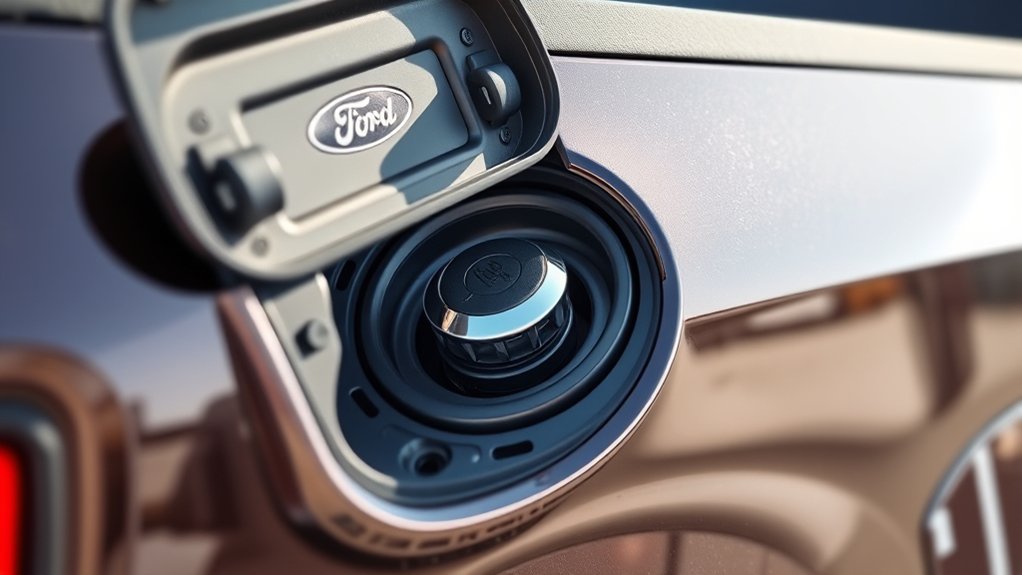
To check your F-150’s tank size, start with the owner’s manual or the fuel-capacity label, if your trim includes one. You can also verify it on the Monroney sticker, door-jamb label, or Ford’s build sheet. Match the fuel system code to your exact model year and cab configuration, because tank sizes vary.
| Check method | What you learn |
|---|---|
| Owner’s manual | Factory tank capacity |
| Fuel label/build sheet | Installed tank size |
| VIN lookup | Trim-specific configuration |
If you track range, pair capacity with your average mpg. That helps you plan fuel saving tips and compare alternative fuels without guessing. If the numbers disagree, trust the installed equipment, not a generic trim chart.
Frequently Asked Questions
Does the F-150 Offer a Dual Fuel Tank Option?
No, you generally can’t get a dual fuel tank option on the F-150. You’ll find two word topics, unrelated, ideas, discussion in specs, but Ford typically offers one tank, varying by cab, bed, and engine.
Can I Upgrade My F-150’s Fuel Tank Size?
You can, but only if you verify aftermarket tanks and engine compatibility. The theory that bigger tanks always preserve fuel efficiency doesn’t hold.
You’ll need model-specific approvals, emissions compliance, and safe installation to avoid issues.
How Much Does a Full F-150 Tank Weigh?
A full F-150 tank usually weighs about 117 to 166 pounds, depending on tank size and fuel type; the irrelevant topic and unrelated matter don’t affect it.
You’ll add roughly 6 pounds per gallon.
What Fuel Type Does the F-150 Use?
You’ll usually use regular gasoline in your F-150; some models accept flex-fuel or diesel, depending on engine. Like a chameleon, it adapts.
Check your owner’s manual for gas mileage, maintenance rituals, and exact requirements.
How Often Should I Replace the F-150 Fuel Cap?
You should replace your F-150 fuel cap when it cracks, won’t seal, or fails a check-engine diagnostic, not on a fixed schedule.
Ignore two word discussion ideas and irrelevant topics; inspect it regularly.
Conclusion
To find out how many gallons your Ford F-150 holds, you need to check your exact model because tank size varies by cab, bed, drivetrain, and trim. You can use the owner’s manual, window sticker, or VIN/build sheet to confirm it.
Once you know the capacity, you can estimate your range, compare towing impact, and plan fuel stops with more accuracy.
That way, you’ll drive farther, tow smarter, and fill up with confidence knowing exactly how many gallons your Ford F-150 holds.


