How Heavy Are Ford f250s
As an Amazon Associate we earn from qualifying purchases.
If you’re trying to figure out how heavy a Ford F-250 is, you’ll find that the answer depends on cab size, bed length, drivetrain, and engine.
Most models fall between about 6,000 and 8,000 pounds curb weight, but a regular cab 4×2 won’t weigh the same as a crew cab 4×4 diesel.
Those differences matter more than you might expect, especially once towing and payload enter the picture.
Understanding the specific configuration of the F-250 is key to knowing its exact weight and capabilities.
Key Takeaways
- Ford F-250 curb weight usually ranges from about 6,000 to 8,000 pounds, depending on configuration.
- Regular cab models are lighter, while crew cab 4×4 models are typically the heaviest.
- Engine choice affects weight most, with diesel versions usually heavier than gasoline models.
- Four-wheel drive adds weight from the transfer case, front axle hardware, and driveshafts.
- Check the door-jamb label or factory specs for the exact weight of a specific F-250.
How Much Does a Ford F-250 Weigh?
A Ford F-250’s weight depends on the cab, bed, drivetrain, engine, and trim, but most models fall in the roughly 6,000- to 8,000-pound range at curb weight. You’ll usually see lighter regular cab configurations near the lower end and heavier crew cab 4×4 trucks near the upper end.
That mass gives you substantial towing and payload capability, and it also shapes weight distribution across the front and rear axles. When you compare trims, cabin aesthetics can add minor differences through interior materials and equipment, but the overall impact on weight stays modest.
You should check the door-jamb label or factory specifications for the exact figure on your truck, since published ratings can vary by model year and configuration.
What Affects Ford F-250 Weight?
Several design and equipment choices determine how much a Ford F-250 weighs, and each one can shift curb weight by hundreds of pounds. You’ll see the biggest changes in powertrain hardware, frame reinforcement, suspension tuning, axle ratings, and installed factory options.
Diesel components usually add more mass than gasoline parts, while heavy-duty cooling systems, larger brakes, and upgraded driveline pieces also increase weight. Two-wheel-drive and four-wheel-drive configurations don’t weigh the same because transfer cases and front axle hardware add mass.
Wheel and tire packages matter too, since heavier assemblies affect unsprung weight and overall weight distribution. When you compare trucks, check the door sticker and axle ratings, because equipment content directly influences payload limits and how much load you can safely carry.
How Cab and Bed Length Affect Weight
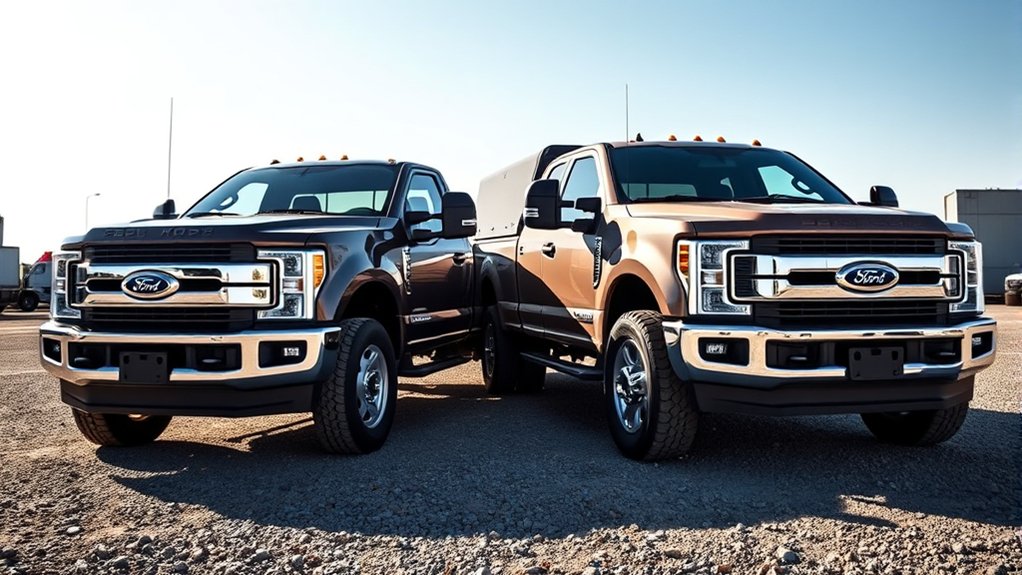
Cab and bed length change a Ford F-250’s weight because they alter the truck’s structure, body panels, and chassis length, along with the amount of material needed for support and mounting points. When you choose a larger cab, you add cab weight through extra roof, door, floor, and pillar structure.
A longer bed increases bed weight because it requires more sheet metal, frame coverage, and reinforcement to maintain stiffness under load. You also change the truck’s overall wheelbase, which can raise curb weight slightly as Ford uses additional framing and attachment hardware.
The effect is usually modest, but it’s measurable across trims and configurations. If you compare two F-250s with different cab and bed layouts, the longer configuration will generally weigh more.
How Engine and Drivetrain Change Weight
Engine and drivetrain choices also change an F-250’s curb weight, sometimes by a noticeable margin. You’ll see the biggest differences when you compare engine options, since larger blocks, turbo hardware, cooling components, and heavier transmissions add mass.
Diesel configurations usually weigh more than gas setups, and four-wheel drive adds transfer-case, driveshaft, and front-axle weight.
- Gas V8s typically keep curb weight lower
- Diesel engine options add substantial front-end mass
- 4×4 systems increase drivetrain weight versus 2WD
- Extra weight can reduce payload impact
These changes aren’t cosmetic; they shift axle loads and alter the truck’s base configuration. When you’re comparing models, check the exact powertrain because a seemingly small hardware change can affect the final curb weight by hundreds of pounds.
Why Weight Matters When You Tow
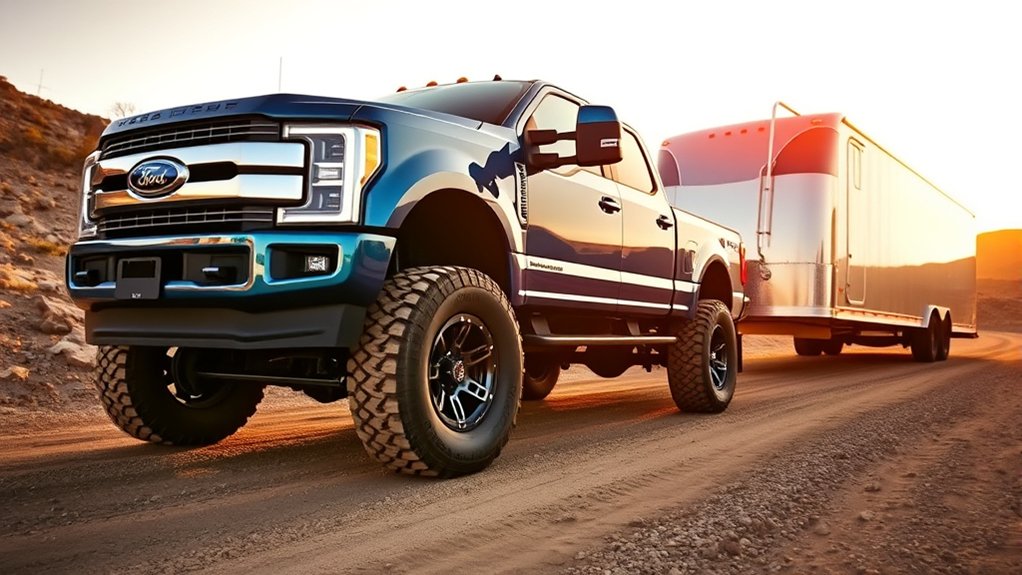
When you tow, weight isn’t just a spec on a page; it directly affects how much load the truck can safely manage, how stable the trailer feels, and how hard the powertrain has to work. You need to account for curb weight, tongue weight, payload, and hitch rating before you hook up.
Heavier trucks usually improve control because they resist trailer-induced sway and braking instability, but they also consume more payload capacity. In heavy duty towing, that tradeoff matters because every passenger, tool, and accessory changes your available margin.
You should verify payload balance so the rear axle doesn’t overload and the front axle keeps enough steering traction. When you match truck weight to trailer mass correctly, you reduce strain, improve braking, and tow with more confidence overall.
Frequently Asked Questions
How Much Can a Ford F-250 Payload Carry?
Your Ford F-250 can typically carry about 3,000 to 4,300 pounds of payload, depending on cab, bed, drivetrain, and options.
You should check the door-jamb sticker, because curb weight directly affects payload capacity.
What Is the F-250’s Curb Weight Range?
You’re looking at a curb weight range that starts near 5,600 pounds and climbs to about 7,800 pounds. Heavy steel, longer frames, and drivetrain choices create weight ranges that shift noticeably between trims and configurations.
Does Trim Level Change the F-250’s Weight?
Yes, trim level can change your F-250’s trim weight because added options, cab features, and driveline choices affect mass.
You’ll also see gearing impact from heavier packages, though payload-rated trims usually stay close together.
How Does Suspension Equipment Affect Weight?
Suspension equipment adds surprisingly little, often 50-200 pounds, yet you’ll feel it. You’ll gain suspension stiffness, higher tire load ratings, and stronger springs or shocks, which increase capability without dramatically changing your F-250’s curb weight.
Are Diesel F-250s Heavier Than Gas Models?
Yes, you’ll usually find diesel F-250s heavier than gas models because the engine, cooling, and exhaust systems add mass.
Don’t trust weight rumors; diesel vs. gas differences vary by trim, drivetrain, and options.
Conclusion
In the end, when you’re sizing up a Ford F-250, think of its weight as the truck’s anchor in the road. You’ll usually see curb weights from about 6,000 to 8,000 pounds, with cab, bed, engine, and drivetrain all shifting the scale. The heavier diesel and 4×4 setups can tip the balance, while lighter regular-cab models stay leaner.
Knowing the exact figure helps you tow with confidence and keep your load within safe limits. Understanding how heavy Ford F-250s are is key to making the most of this powerful truck.


