How Do You Open the Hood on a Ford Escape
As an Amazon Associate we earn from qualifying purchases.
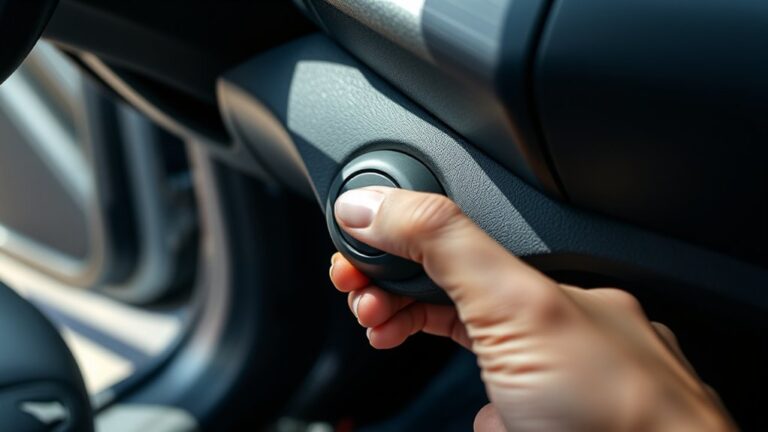
If your Ford Escape hood won’t lift after a quick fuel check, you first pull the interior release low in the driver’s footwell until it pops.
Then, move to the front grille and work the safety latch while raising the hood slightly.
You’ll need to know the exact latch motion and the proper way to support the hood so you don’t force it or damage the mechanism.
Handling the hood carefully ensures it opens smoothly without causing any harm to the components.
Key Takeaways
- Pull the interior hood release lever in the driver-side footwell until you feel the hood pop open slightly.
- Go to the front of the Ford Escape and locate the secondary safety latch under the hood edge.
- Lift the hood slightly while sliding or pressing the safety latch to fully release it.
- Raise the hood fully and secure it with the prop rod or gas struts.
- To close, lower the hood slowly and press the front edge until it latches securely.
Find the Ford Escape Hood Release Lever
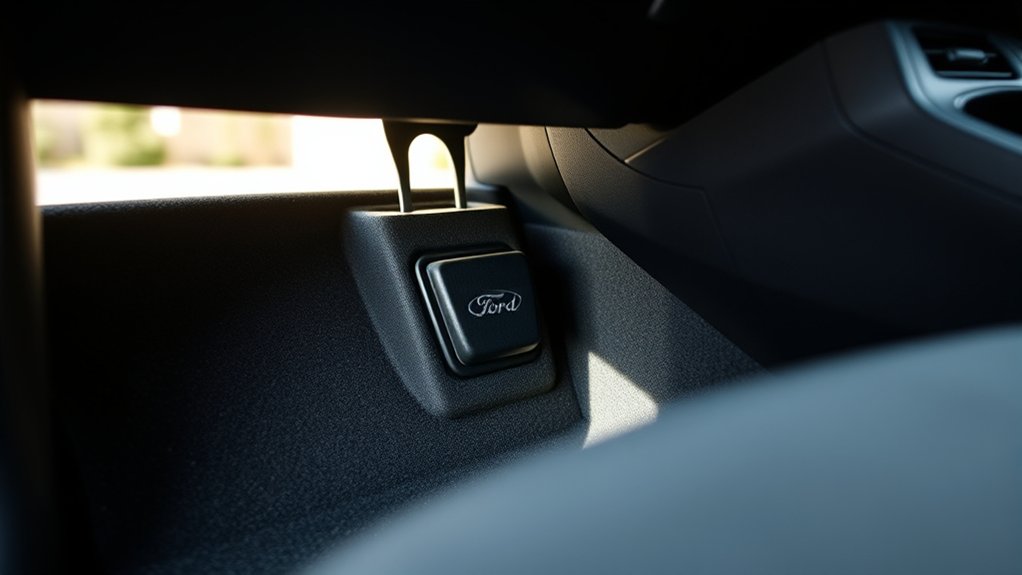
To find the hood release lever on a Ford Escape, look inside the driver-side footwell, just below the dashboard and to the left of the steering column. You should see a small, black lever marked with a hood icon.
Look in the driver-side footwell, just below the dashboard, for the black hood release lever marked with a hood icon.
Reach down and pull it firmly toward you until you feel resistance and hear the hood pop slightly. If you’re comparing two word discussion ideas for maintenance notes, this step stays the same across most model years.
Check that the lever moves freely and isn’t blocked by floor mats or debris. While you’re inspecting routine service items like roof maintenance and tire rotation, confirm the lever’s location so you can open the hood quickly when needed.
Keep the area clear for easy access later.
Release the Front Safety Latch
Move to the front of the Ford Escape and locate the secondary hood latch just below the hood edge. Slide the safety lever in the required direction while you keep slight upward pressure on the hood.
Once the latch releases, lift the hood a little to clear the catch.
Find Latch Location
Next, find the front safety latch under the center of the hood, just above the grille. You’ll feel for a narrow lever or tab that sits behind the hood edge after you’ve released the primary latch.
Keep one hand on the hood and use the other to locate the mechanism by touch. This step matters when you’re checking oil or finding fuel efficiency, since you need quick, repeatable access.
- Stand directly in front of the vehicle.
- Trace the lower hood edge at center.
- Identify the metal latch assembly.
- Confirm you can move it slightly before continuing.
Don’t force the latch. If it resists, reposition your hand and recheck the center area carefully.
Slide Safety Lever
Slide the safety lever sideways to release the front latch while you keep slight upward pressure on the hood. You’ll feel the mechanism move from locked to free, and the hood will stay caught only by the secondary latch.
Keep your hand centered near the front edge and don’t force the panel. If the lever resists, check for a misaligned door panel, debris, or an unusual bolt pattern from prior repairs that may affect fitment.
Use controlled motion, not jerking, to avoid bending the latch assembly.
| Action | Result |
|---|---|
| Move lever left or right | Front latch disengages |
| Maintain light lift | Tension stays balanced |
| Feel for click | Mechanism releases |
| Stop if binding occurs | Prevents damage |
| Verify alignment | Hood opens cleanly |
Lift Hood Slightly
Raise the hood slightly while keeping steady upward pressure so the secondary safety latch can clear. With your fingers under the front edge, feel for the latch at the center or slightly off center. Push the lever toward the release direction while you continue lifting.
Do not force the hood; if it resists, reposition your hand and try again. Once the latch disengages, raise the hood to its full open position and support it with the prop rod or gas struts, if equipped.
- Keep pressure upward.
- Move the safety latch.
- Lift only enough to clear it.
- Ignore any irrelevant topic or unrelated concept.
Lift the Ford Escape Hood
You’ll see the interior release location and use it to confirm the hood is ready to open. With the safety latch disengaged, place one hand under the hood edge and lift it upward.
Raise the Ford Escape hood fully until it reaches its open position and stays supported.
Locate Interior Release
Inside the Ford Escape cabin, find the hood release lever low on the driver’s side, usually beneath the dashboard near the kick panel. Reach down and identify the interior release by touch if visibility is limited. Pull the lever firmly to disengage the hood latch; you should feel and hear a distinct pop.
Then stop and confirm the hood has lifted slightly at the front edge. Use this sequence:
- Sit in the driver’s seat.
- Look under the lower dash.
- Pull the interior release straight back.
- Check for hood movement.
If the lever resists, reposition your hand and pull again with steady force. Don’t yank repeatedly. Keep your attention on the hood seam, because the latch has now released and the hood is ready for the next step.
Find Safety Latch
Walk to the front of the Ford Escape and move to the gap under the hood’s leading edge. You’ll feel the hood safety latch near the center, slightly offset to one side. Slide your fingers under the edge and press the latch in the release direction until the hood pops up a little.
Keep one hand on the hood as you locate the secondary catch.
| Checkpoint | Action |
|---|---|
| Hood edge | Lift slightly after release |
| Safety latch | Push in the release direction |
| Secondary catch | Hold the hood steady |
This step supports safe engine maintenance because it prevents accidental closure while you work. If the latch resists, reposition your hand and try again without forcing it.
Raise Hood Fully
Lift the hood fully by keeping one hand on the hood edge and releasing the secondary catch with your other hand. Guide the hood upward in a controlled motion until it reaches its full open position. Check that it stays supported before you let go.
This step improves hood safety and gives you clear engine accessibility for inspection or service. Follow these points:
- Keep fingers clear of hinge points.
- Raise the hood smoothly, not abruptly.
- Confirm the latch has disengaged.
- Verify the hood is stable before working below it.
If the hood drops or resists movement, stop and inspect the latch area. Never force the hood, because damage or injury can occur.
Support the Hood Securely
Once the hood is open, secure it with the prop rod or hood strut so it can’t drop while you work. Check that the rod’s tip seats fully in the hood support hole and that the base locks into its bracket.
If your Escape uses gas struts, verify they hold the hood at full extension without sagging. Apply gentle upward pressure before letting go to confirm stability. Keep your hands clear of pinch points near the hinges and latch area.
Don’t use unrelated topic, off topic brainstorming, or any loose tool to prop the hood. A secure hood prevents accidental closure, protects painted edges, and gives you stable access to the engine bay.
If the support feels weak, stop and inspect it before continuing maintenance tasks.
Close the Hood Safely
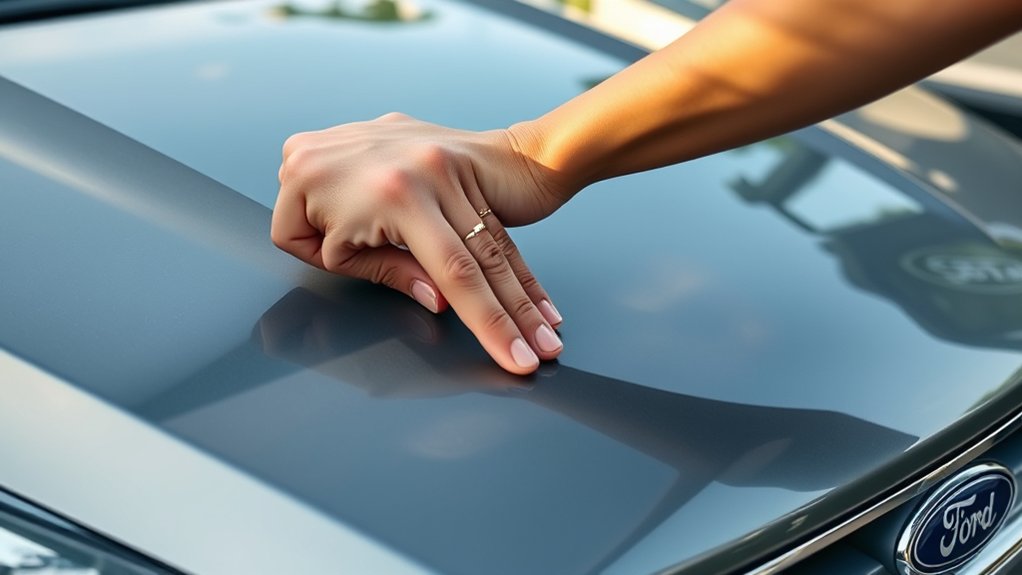
To close the hood safely, lower it slowly with both hands until it sits about a foot above the latch, then release it so it drops under its own weight and fully engages. Keep your fingers clear of the gap and stand centered in front of the vehicle.
After the drop, press down gently on the front edge to confirm it’s locked. Use these safety tips:
- Check that no tools remain in the engine bay.
- Verify the hood sits flush on both sides.
- Tug upward lightly to confirm full latch engagement.
- Reopen and repeat if it feels loose.
These discussion ideas help you avoid misalignment and ensure secure closure. Always listen for the solid click, and never slam the hood from a high position.
Troubleshoot a Ford Escape Hood That Won’t Open
If the hood won’t pop open on your Ford Escape, start by checking the release handle inside the cabin and make sure you’re pulling it fully. Have a helper press down on the hood while you pull the handle again; this can relieve latch tension.
If it still won’t release, inspect the cable for slack, binding, or breakage near the handle and latch. Spray a light lubricant into the latch opening, then work the hood gently to free corrosion or debris.
Avoid forcing the panel, which can bend the latch or damage paint. If the secondary safety catch is stuck, reach under the front edge and move it manually.
For discussion ideas, focus on latch wear, cable routing, and alignment. Ignore unrelated topics until the hood opens safely.
Frequently Asked Questions
How Do I Find the Hood Release Lever in the Dark?
Use your left hand to feel under the dashboard, low near the driver’s side kick panel; the hood release lever sits there.
Turn on finding headlights first. Parking brakes, ignition switches aren’t relevant.
What if the Hood Release Cable Snaps on a Ford Escape?
If the release cable snaps, you’ll need to access the hood latch directly through the grille or wheel well, then manually trip the hood latch.
Replace the release cable immediately to restore normal operation.
Can I Open the Hood With a Dead Battery?
Yes, you can open the hood with a dead battery; the latch is mechanical, not electrical.
If you’ve got a hood no start issue, pull the interior release, then the exterior safety catch carefully.
Is It Safe to Drive With a Loose Hood Latch?
No, you shouldn’t drive with a loose hood latch; you risk sudden hood release. Inspect hood latch safety, secure the mechanism, and follow maintenance tips.
If it won’t lock firmly, stop driving and repair it immediately.
How Often Should Ford Escape Hood Hinges Be Lubricated?
You should lubricate your Ford Escape hood hinges every 6 months or 5,000 miles. Inspect for squeaks, rust, and stiffness during safety checks.
If wear appears, discuss replacement components before they seize.
Conclusion
In short, you open a Ford Escape hood by pulling the interior release lever located in the driver’s footwell. Then, move to the front of the vehicle and slide the safety latch while lifting the hood slightly.
Once the secondary latch disengages, raise the hood fully and secure the support. When closing, lower the hood gently until it catches, then press down firmly to ensure it is latched properly.
If the hood won’t open, check the cable and latch, as they can become as tight as a stubborn lock. Following these steps will help you successfully open the hood on a Ford Escape.


