Does Ford Still Make the Excursion
As an Amazon Associate we earn from qualifying purchases.
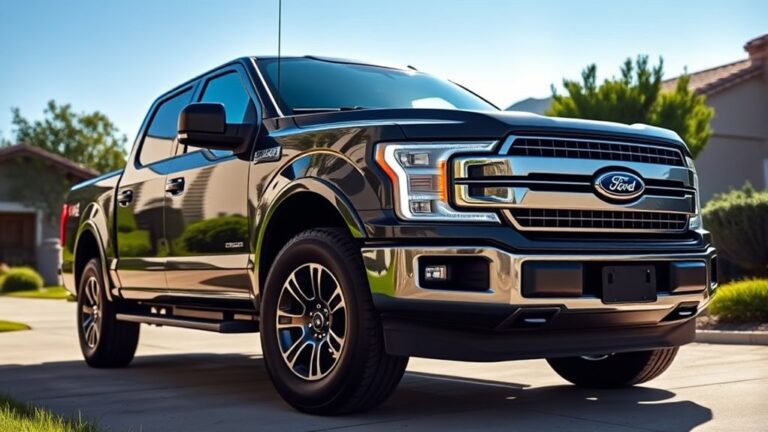
Like spotting a blue whale in a neighborhood pool, you don’t see a Ford Excursion on dealer lots anymore.
The Ford Excursion is no longer in production, and no current model carries that name. Ford ended Excursion production years ago, so if you’re considering one, you’ll need to focus on used-market examples.
Pay close attention to service history, drivetrain condition, and parts support when shopping for a Ford Excursion.
The real question is whether its towing strength and size still justify the tradeoffs—or if a modern SUV fits your needs better.
Key Takeaways
- No, Ford no longer makes the Excursion; production ended years ago.
- There is no current Ford Excursion model at dealerships.
- If you want one, you’ll need to look on the used market.
- Used prices depend on mileage, condition, trim, drivetrain, and maintenance history.
- Closest alternatives include the Chevrolet Suburban, GMC Yukon XL, and Ford Expedition Max.
Does Ford Still Make the Excursion?
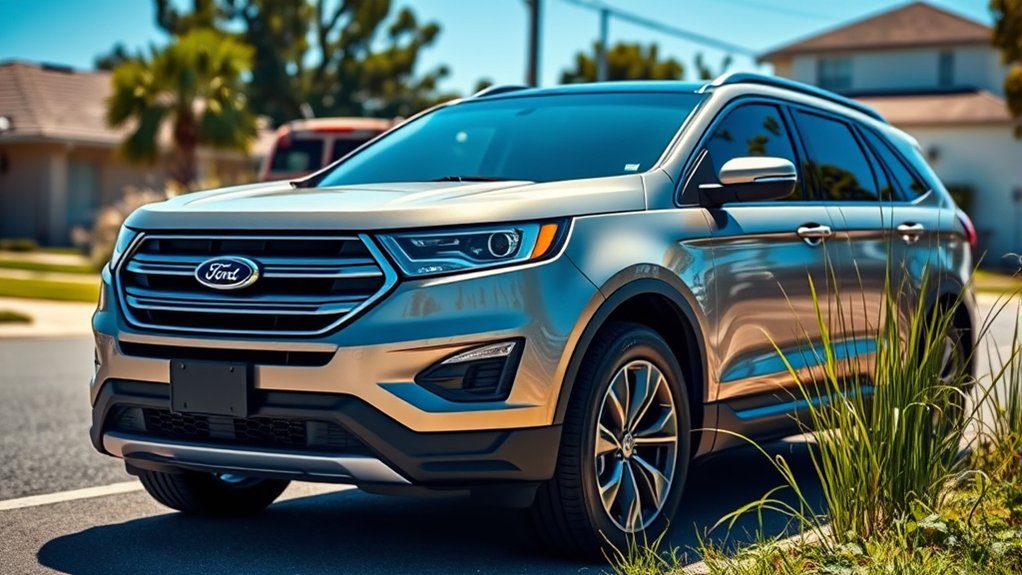
No, Ford doesn’t still make the Excursion. If you’re looking for one, you’ll find that Ford ended production years ago, and no current model carries that name.
You can still research excursion pricing on the used market, where condition, mileage, trim, and drivetrain drive value. Because the Excursion used large gasoline engines, you’ll usually compare fuel consumption, maintenance history, and parts availability before buying.
You may also notice that clean examples command stronger prices, especially in higher trims or 4×4 form. When you evaluate listings, you should verify title status, rust, and service records to judge whether the asking price matches the vehicle’s actual condition.
In short, you won’t find a new Excursion at a dealership, but you can still assess older examples carefully.
Why Ford Discontinued the Excursion
You can trace the Ford Excursion’s discontinuation to two main factors: fuel economy concerns and shifting market demand. Its large size and heavy-duty design led to poor efficiency at a time when buyers and regulators were placing more value on lower operating costs.
At the same time, consumer interest moved toward smaller SUVs and trucks, reducing demand for a vehicle like the Excursion.
Fuel Economy Concerns
Fuel economy played a major role in why Ford discontinued the Excursion, as the SUV’s heavy-duty truck-based design delivered very poor gas mileage compared with smaller family vehicles and even many rival full-size SUVs. You’ll notice that its large V8 engines and nearly 7,000-pound curb weight pushed fuel economy well below what many shoppers expected, especially as gasoline prices rose.
If you compare it with newer SUVs, you’ll see that manufacturers increasingly focused on efficiency, including hybrid options, while the Excursion remained tied to older truck engineering. That gap made it harder for Ford to justify continued production. You also faced higher ownership costs, since frequent fill-ups added up quickly.
For many buyers, efficiency became a practical priority, and the Excursion couldn’t compete.
Market Demand Shift
As buyer preferences shifted toward more efficient, easier-to-park SUVs and crossovers, the Excursion’s size and truck-like compromises became harder to justify. You can see how Ford faced a shrinking audience for full-size, body-on-frame family haulers as suburban buyers moved toward lighter vehicles with better everyday usability.
Dealers reported stronger interest in models that balanced space, fuel savings, and convenience, while the Excursion appealed to a narrower group needing maximum towing and cargo capacity. That market disruption, combined with exploration bias toward newer crossover designs, reduced the model’s long-term fit.
Ford responded by reallocating resources to products with broader demand, which helped explain why the Excursion ended production after 2005 rather than continuing in a market that had clearly shifted.
What Made the Ford Excursion So Popular
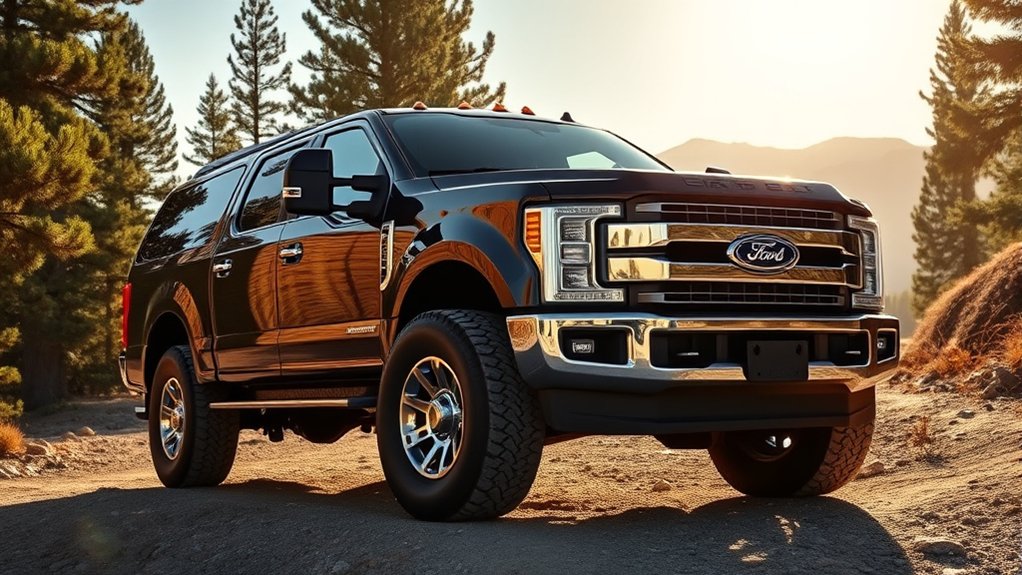
What made the Ford Excursion stand out was its sheer size, heavy-duty truck platform, and towing capability, which appealed to buyers who needed a large SUV with real work credentials. You saw a vehicle that borrowed legacy engineering from Ford’s Super Duty lineup, giving it a rugged reputation uncommon in family SUVs.
That mattered if you wanted space for passengers, cargo, and gear without stepping down to a minivan or crossover. Its boxy design also helped create excursion nostalgia among buyers who valued traditional, no-nonsense utility.
You could trust its body-on-frame construction to feel durable, and that perception boosted its popularity with ranchers, large families, and commercial users. In short, it offered capability, size, and identity in one package.
What Are the Ford Excursion Engine and Towing Specs?
Under the hood, the Ford Excursion was offered with heavy-duty gasoline and diesel engines built for torque and towing rather than efficiency. You could get a 5.4-liter V8, a 6.8-liter V10, or a 7.3-liter Power Stroke diesel, with later models adding a 6.0-liter diesel.
The V10 and diesel options delivered the strongest hauling performance, while the gasoline V8 served lighter-duty use. Properly equipped, you could tow up to about 11,000 pounds, depending on engine, drivetrain, and axle ratio.
That capacity still exceeds many explorer alternatives and far outpaces most mid size trucks. You should expect low fuel economy and a large turning radius, but the Excursion’s specs made it a serious tow rig for trailers, boats, and work use.
What Are the Best Used Ford Excursion Models?
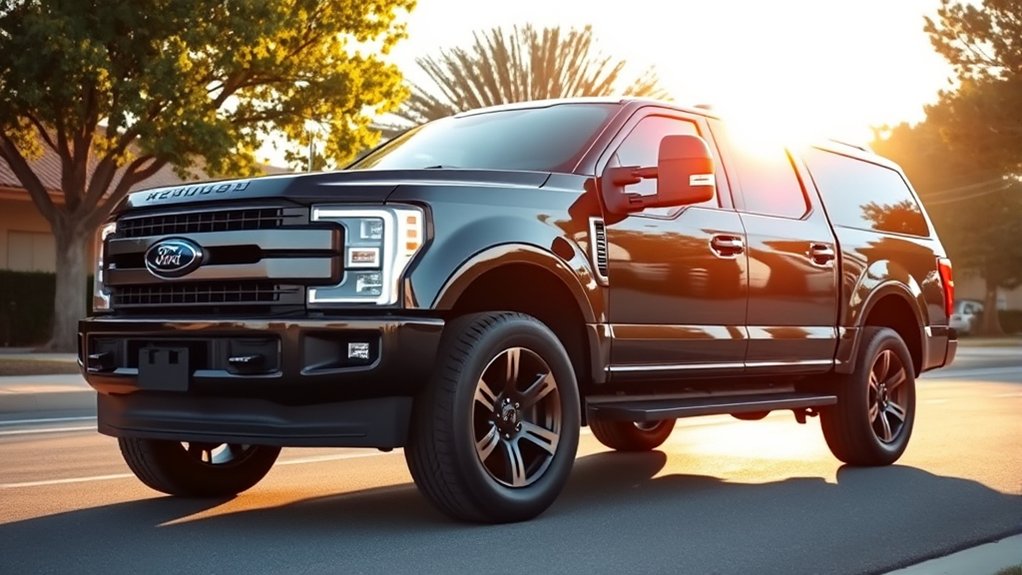
If you’re shopping for a used Ford Excursion, the 2005 and 2006 models are usually the best starting point because they benefit from the most refined versions of the truck’s drivetrain and interior features.
You should also consider 2004 trucks, especially if you find one with a solid service history and desirable equipment. These later years give you the most developed package, which matters if you want a large SUV for towing, hauling, or family travel.
Focus on examples with documented maintenance, clean ownership records, and original components. Research shows these model years tend to offer the best balance of capability, comfort, and value.
When you compare listings, think in two word ideas and avoid unrelated topics like paint colors or audio systems unless they affect price.
What Common Ford Excursion Problems Should You Know?
Even the best Ford Excursion years can come with a few well-known issues, so it’s smart to check for them before you buy. You should watch for:
- Transmission wear, especially on high-mileage V10 and diesel models.
- Front-end suspension and steering play, which can affect handling and tire wear.
- Cooling-system leaks or head-gasket concerns on some engines.
You’ll also want to inspect brakes, rust, and electrical accessories, because age and weight stress these parts. Strong drivetrain reliability depends on maintenance records, fluid condition, and prior repairs. Fortunately, aftermarket support is broad, so you can replace many worn components without much trouble.
A careful inspection and service history review can help you spot issues early and avoid surprises.
Is the Ford Excursion Worth Buying Now?
Yes, Ford Excursions can still be worth buying, but only if you match the truck to your needs and budget. You’re choosing a heavy-duty SUV with real towing talent, stout frame hardware, and strong diesel availability in some trims.
Compared with newer family haulers, it’s less efficient and far less refined, yet it can outperform many large SUVs in payload and trailer stability. If you value old-school durability over carlike manners, the Excursion may fit better than an Isuzu roadhug or similar utility vehicle.
| Factor | Value |
|---|---|
| Towing | High |
| Space | Excellent |
| Fuel economy | Poor |
| Diesel option | Available |
| Modern comfort | Limited |
What Should You Check Before Buying One?
Before you buy a Ford Excursion, inspect its service records, rust-prone areas, and drivetrain condition so you know what you’re getting into. You should verify frame corrosion, suspension wear, and leaks during viewing locations like lift ramps or well-lit lots.
- Check maintenance history for oil changes, transmission service, and cooling-system repairs.
- Inspect interior materials for seat cracking, headliner sag, broken switches, and water damage.
- Test the engine, 4WD system, brakes, and steering for noise, vibration, or delayed response.
You’ll also want a cold start, a highway drive, and a scan for warning codes. A thorough inspection helps you judge repair costs objectively and avoid hidden problems that can outweigh the truck’s utility.
How Does the Excursion Compare to Modern SUVs?
You’ll notice the Excursion still stands out against most modern SUVs because it was built on a heavy-duty truck platform with far greater towing and payload capacity. Its larger size also gives you more interior volume and a stronger capability focus, though that comes with less maneuverability and higher fuel use than many newer models.
When you compare it with today’s SUVs, you should weigh whether you need maximum strength and space or more efficient everyday drivability.
Towing And Payload
When it comes to towing and payload, the Ford Excursion still stands out because it was built on a heavy-duty truck platform rather than a lighter SUV chassis. If you compare it with modern SUVs, you’ll see that its towing capacity and payload metrics were designed for work, not just commuting.
- It can handle larger trailers with less strain.
- It offers higher payload metrics for cargo and passengers.
- It delivers truck-like stability under load.
Today’s SUVs often add efficiency and comfort, but they usually can’t match the Excursion’s raw numbers. If you need a vehicle for frequent towing, you’ll likely find its specifications more comparable to a pickup than a typical family SUV.
Size And Capability
Beyond towing and payload, the Ford Excursion’s most striking advantage is its size. You get a full-size SUV that’s longer, taller, and wider than most modern three-row models, which gives you exceptional cabin space and cargo room.
Compared with today’s SUVs, the Excursion feels more truck-like, with heavier steering and a larger turning radius, but you also gain substantial structural presence and stability. If you need to carry people, gear, or both, its capability still stands out.
You should also weigh excursion reliability carefully, since age affects maintenance costs more than design alone. In the used market, used pricing often reflects condition, mileage, and diesel demand rather than rarity alone, so research service records before you buy.
What Are the Best Alternatives to the Ford Excursion?
If you’re looking for a Ford Excursion alternative, the best options depend on how much towing, passenger space, and cargo capacity you need. For a true excursion replacement, you’ll usually compare full-size SUVs with strong frames and available towing packages.
- Chevrolet Suburban: Offers three rows, impressive cargo room, and solid tow ratings.
- GMC Yukon XL: Gives you similar size and comfort, with upscale trims and strong V8 choices.
- Ford Expedition Max: Delivers modern tech, better fuel efficiency, and strong towing in a long-wheelbase body.
If you need maximum space, these alternative SUVs are the closest matches. If you want easier parking and lower running costs, consider a midsize SUV, but you’ll give up some capacity.
Frequently Asked Questions
What Years Was the Ford Excursion Sold?
You can buy the Ford Excursion from 2000 through 2005. Those model years cover its full run. You’ll find strong Excursion durability plus many aftermarket options if you’re researching ownership or restoration.
How Many Passengers Could the Excursion Seat?
You could seat up to nine passengers in the Ford Excursion, depending on your setup. Like a rolling family freighter, you’d find three rows available, with capacity varying by trim and seating configuration.
Did Ford Build the Excursion on an F-250 Chassis?
Yes, you’re right: Ford built the Excursion on a Super Duty chassis closely related to the F-250. That themed design and audience targeting helped you get heavy-duty towing, big interior space, and truck-based durability.
What Was the Excursion’s Fuel Economy Like?
You’d see poor fuel economy: the Excursion typically returned about 10–12 mpg city and 12–15 mpg highway, depending on engine and drivetrain. Its towing capacity was strong, but efficiency wasn’t its priority.
How Much Did a New Ford Excursion Cost?
You’d have paid about $34,000 to $52,000 new, depending on trim and engine. That price reflected nostalgia vs practicality and towing capability vs luxury, since Ford balanced heavy-duty utility with upscale family comfort features.
Conclusion
If you’re still looking for a Ford Excursion, you’ll need to shop the used market, since Ford discontinued it years ago. Like a heavyweight relic built for serious work, it still stands out for towing, space, and truck-based durability.
But you should weigh its age, fuel costs, and maintenance needs carefully before buying. If you need a newer full-size SUV, you’ll likely find better efficiency, easier parts access, and more modern safety features in today’s alternatives.
In conclusion, while the Ford Excursion remains a notable option on the used market, it is no longer in production.


